
The Password That Dies With You
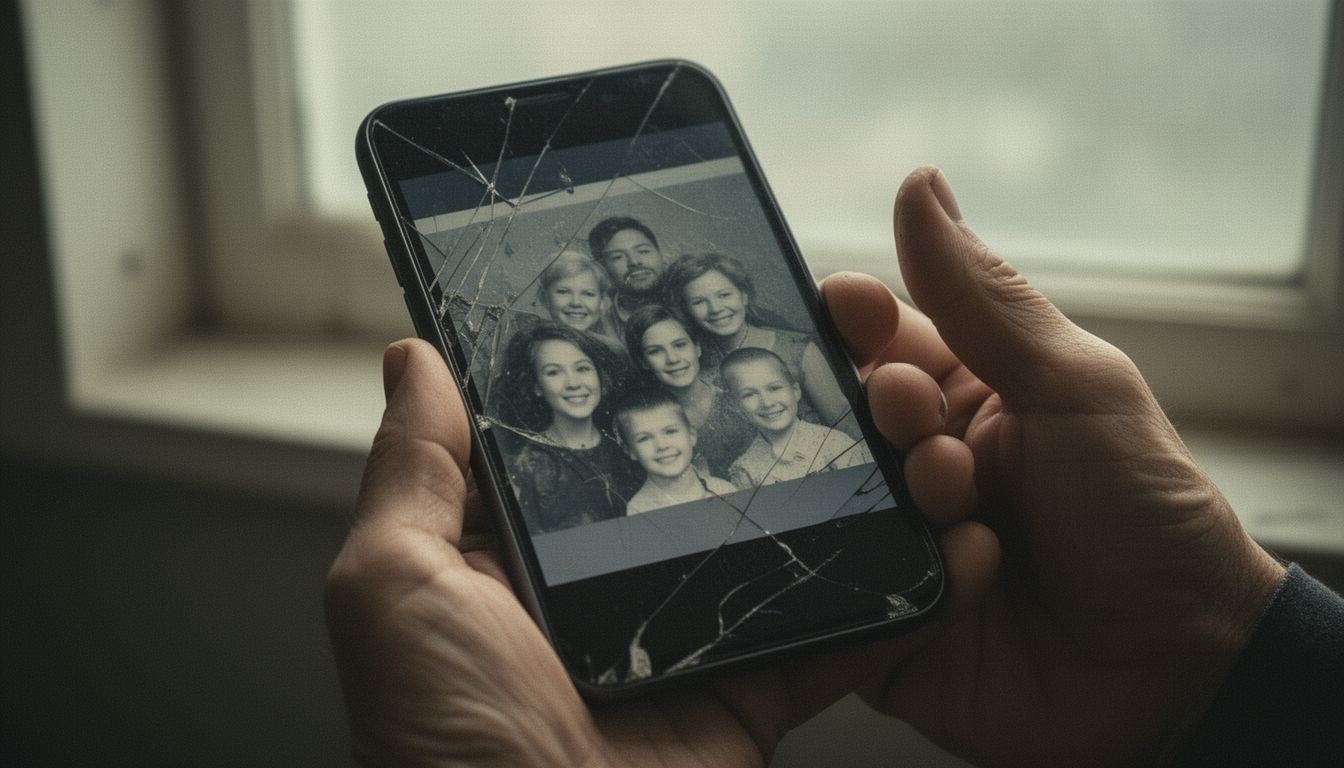
Your mother kept letters. You know this because you found them after the funeral, rubber-banded in a shoebox beneath her bed—your father's wartime correspondence, your own childhood scrawl, the hospital discharge papers from your birth. She never owned much, but she owned that. The proof that she had been loved, that she had mattered, that time had passed through her and left something behind.
You keep nothing in shoeboxes. Your love letters live in Gmail threads. Your child's first steps are on iCloud. Your midnight fears, your career triumphs, your slow reconciliation with your father—all of it exists as electricity on someone else's servers, governed by terms of service you never read, vulnerable to breaches you cannot prevent, subject to deletion the moment you stop paying or the platform stops profiting.
This is the central loneliness of digital life: you have built a self without owning it.
The Architecture of Forgetting
We have been sold a lie about permanence. The cloud promises immortality—your photos "backed up forever," your memories "safe"—but this is a linguistic sleight of hand. What they mean is indefinite storage at their discretion, not yours. The distinction matters more than we admit.
Consider what we have already lost. GeoCities. MySpace's first iteration. Google Reader. The contents of countless phones dropped in toilets, laptops stolen from cars, hard drives that simply stopped spinning. Each disappearance was a small death—a version of someone rendered inaccessible, sometimes permanently. And these are merely the accidental losses. The intentional ones are coming.
Artificial intelligence now trains on our unguarded data. Platforms adjust algorithms to bury what we once shared prominently. The right to be forgotten, enshrined in European law, exists precisely because we have built systems that remember too much and too permanently, yet somehow also fail to remember what we actually value.
Digital privacy is not, at its core, about hiding. It is about curating—deciding which versions of yourself persist, and on what terms.
The Breach You Don't Know About Yet
You have been breached. Statistically, this is almost certain. Your email, your passwords, your home address, your children's names—these details circulate through dark web markets in combinations you cannot track or recall. The average person discovers a breach years after it occurs, if ever. By then, the damage is ambient: slightly worse loan terms, a mysteriously rejected apartment application, the creeping sense that your identity is not quite your own.
But the breach that should truly concern you is the slow one, the legal one, the terms-of-service breach. The platform that sells your photo metadata to advertisers. The voice assistant that keeps recordings you believed deleted. The social network that experiments with your emotional state because you agreed, in 2011, to a 14,000-word document you could not possibly have read.
We have normalized a relationship with technology that we would never accept in human form: a friendship where one party records everything, shares strategically, and reserves the right to end the relationship—and destroy all evidence it existed—without warning.
What Your Heirs Will Not Find
Estate attorneys report a recurring phenomenon: the digital asset problem. A client dies. The family knows about the bank accounts, the property, the physical valuables. But the photographs? The correspondence? The creative work? These are locked behind passwords no one knows, on platforms no one can access, subject to policies that terminate accounts upon proof of death.
Your digital legacy is, in most cases, a legacy of absence. The story of your life exists in fragments your loved ones cannot assemble, on infrastructure designed for engagement, not inheritance.
This is where the philosophical turns practical. Preserving your digital privacy means, paradoxically, making deliberate choices about what should not remain private—what should be extractable, ownable, transmissible across generations. It requires building systems of your own, outside the platforms, where your narrative persists on terms you define.

Reclaiming the Narrative
The solution is not Luddism. The platforms serve genuine purposes: connection, convenience, the spontaneous documentation of daily life. The solution is complementarity—using these tools while building parallel systems that you control.
Start with inventory. What do you actually have? Export your Google data. Download your Facebook archive. Recognize how much of your life exists only in forms you do not possess.
Then: intention. What deserves to survive you? Not everything. The impulse toward total preservation is itself a form of digital hoarding, a refusal to curate, to decide what mattered. The best archives are selective. They represent judgment, love, the hard work of determining what future versions of yourself—or your family—might need.
Finally: mechanism. Encryption. Local storage. Physical media in safety deposit boxes. And increasingly, services designed specifically for temporal transmission—tools that let you send messages forward, to specific dates, to specific people, with guarantees of delivery that do not depend on platform longevity or your own continued existence.
The Letter as Technology
There is a reason we return to the letter, even now. It is slow. It is deliberate. It requires material commitment—paper, ink, postage, time. These constraints are features, not bugs. They enforce the seriousness that digital communication often erodes.
A letter to your future self operates on different principles than a social media post. It assumes change—the you who receives it will be someone else, requiring explanation, context, forgiveness. It assumes persistence—the medium must survive years, decades, perhaps generations. And it assumes privacy—the communication is addressed, specific, not subject to algorithmic amplification or advertiser targeting.
The technologies we need now are not more sophisticated platforms. They are simpler systems that restore agency: the ability to choose when something is revealed, to whom, and under what conditions.

The Ethics of Remembrance
We owe something to the future. Not everything—curation remains essential—but something. A coherent account of who we were, what we valued, how we failed and recovered. The alternative is the digital equivalent of archaeological ruins: fragments without context, data without narrative, the fact of existence without its meaning.
Digital privacy, properly understood, is the precondition for this gift. Without control over our data, we cannot control our story. Without security, we cannot guarantee transmission. Without intention, we leave only noise.
The platforms will not solve this for us. Their interests are not aligned with long-term memory, with familial inheritance, with the slow work of meaning-making across generations. They are aligned with engagement, with advertising, with the present tense of consumption.
To preserve your digital life is to resist this presentism. It is to insist that you exist in time, that your story extends backward and forward, that someone not yet born might need to know what you learned.
Beginning Where You Are
I built EterMail during one of those 3 AM sessions—just me, the glow of the monitor, and the strange conviction that I was constructing a bridge between now and later. I'd spent the weekend before skiing in conditions that turned my knuckles white on the poles, and something about that raw, uncontrolled descent clarified what I wanted from the digital world: not more noise, but more intention. More moments chosen rather than accumulated.
You don't need to solve everything today. The work of digital preservation is incremental, like all meaningful work. Start with one category: photographs, perhaps, or correspondence with someone you love. Export them. Organize them. Choose what deserves to survive.
Then consider the temporal dimension. What would you tell yourself in five years? Your child at thirty? Your partner on your fiftieth anniversary? These are not hypothetical exercises. They are acts of love that technology now makes possible—messages that can wait, encrypted and secure, for the moment they are needed.
This is exactly why I obsessed over end-to-end encryption and extreme server redundancy when building EterMail. Because I know that a letter written to the future needs to be guarded even more fiercely than a bank password. The best way to fight forgetting isn't taking another screenshot; it's setting an alarm for the future. By using EterMail to set a delivery date 5 years from now, you completely free yourself from the anxiety of the present.
Your digital self is not less real than your physical self. It is, increasingly, more documented, more detailed, more vulnerable to loss. The question is whether you will treat it with the seriousness it deserves—whether you will build systems of preservation that match the weight of what you have lived.
The shoebox under the bed was never perfect. Papers yellowed. Ink faded. Floods and fires took their toll. But it was yours. You could hold it. You could pass it on. The digital equivalent requires more intention, more technical awareness, more ongoing commitment. But the principle remains: memory is not automatic. It is built, maintained, and transmitted through deliberate acts of care.
Your future self is waiting. Your family is waiting. The only question is whether you will reach them, and what you will have preserved to say.
What is EterMail?
EterMail is a revolutionary time capsule service that allows you to send messages, photos, and videos to the future (up to 30 years). Seal your memories and thoughts today, and they'll be delivered when the time is right.
Time Capsule
Send messages up to 30 years in the future
Rich Media
Text, photos, and videos supported
Secure & Private
Your memories are safely encrypted
EterMail Team
We're the team behind EterMail, dedicated to helping you preserve and share timeless messages with your loved ones. Our mission is to make it easy to express your love, share your wisdom, and create lasting connections that transcend time.
Frequently Asked Questions about Digital Privacy & Security
How do I start creating a digital legacy for my family?
What happens to my social media accounts when I die?
How can I ensure my private messages remain private after I'm gone?
Related Articles

The Passwords Died With You: Why Digital Privacy Is the Last Act of Memory Preservation
Your digital self lives on servers you don't own. What happens when platforms fail, breaches hit, or passwords die? Reclaim your story before it's erased.

The Architecture of Forgetfulness: How Our Digital Habits Build the Traps We Don't See Coming
How mundane digital habits—study aids, reused passwords, forgotten shares—become invisible vulnerabilities. Protect your digital future with intentionality.
Why I Built EterMail: A Time Capsule for the People I Love Most
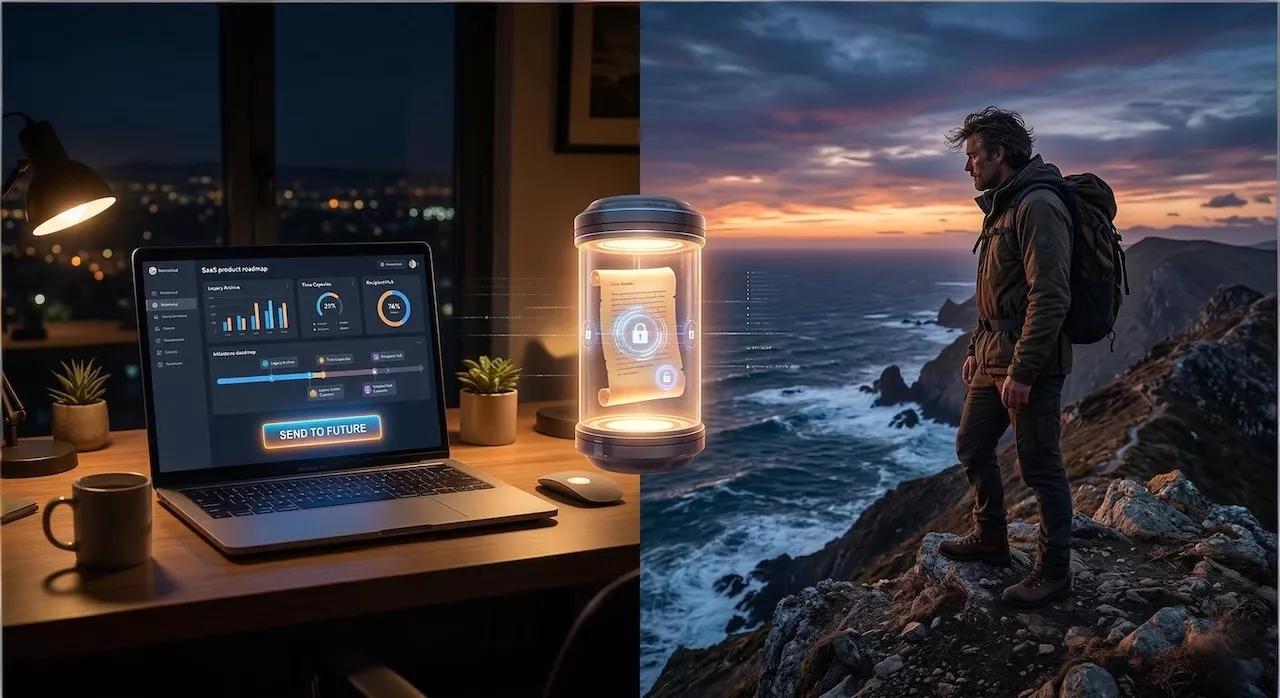
I’m a Product Manager who spends all week optimizing for the "immediate now." But getting lost off the grid on a mountain ridge made me realize I had zero infrastructure for the "forever." Here’s why I stopped worrying about conversion rates for a moment and built EterMail—a secure, tamper-proof digital time capsule for the people I love most.