
The Portrait You Never Sat For
Last spring, a friend downloaded her Google data archive on a whim. Forty-seven gigabytes. She called me at midnight, voice hollow, reading fragments aloud: a search for pregnancy symptoms three days before she told her husband; a Maps route to a therapist's office she'd convinced herself was anonymous; a YouTube rabbit hole at 3 a.m. during her mother's final weeks. "I don't remember being this person," she said. But the servers did.
This is the quiet horror of our era—not that we're watched, but that we're assembled. Every query, pause, and half-deleted draft becomes pigment in a portrait we never authorized. The platforms don't merely record behavior; they construct narrative. And the narrative they build is not the one you would tell about yourself. It is flattened, commercialized, stripped of context and intention. Your grief becomes a targeting vector. Your curiosity, a prediction model. Your midnight vulnerability, inventory.
The question is no longer whether you can opt out. You cannot, not fully. The deeper question: what version of yourself persists when the systems that remember everything finally outlast you?
The Asymmetry of Memory
We have entered an unprecedented era of mnemonic inequality. Human memory is selective, charitable, prone to the soft erasures that allow us to become new people. Digital memory is absolute, unforgiving, and—crucially—not yours.
Consider the mathematics of persistence. Your brain will lose approximately 50% of experiential detail within a month. A server farm in Virginia retains your 2012 Spotify playlists, your ex's address, that email you drafted drunk and discarded. The forgetting that once defined human consciousness—Freud's "repression," Nietzsche's "active forgetting" as prerequisite for health—has been outsourced to architectures with no interest in your becoming.
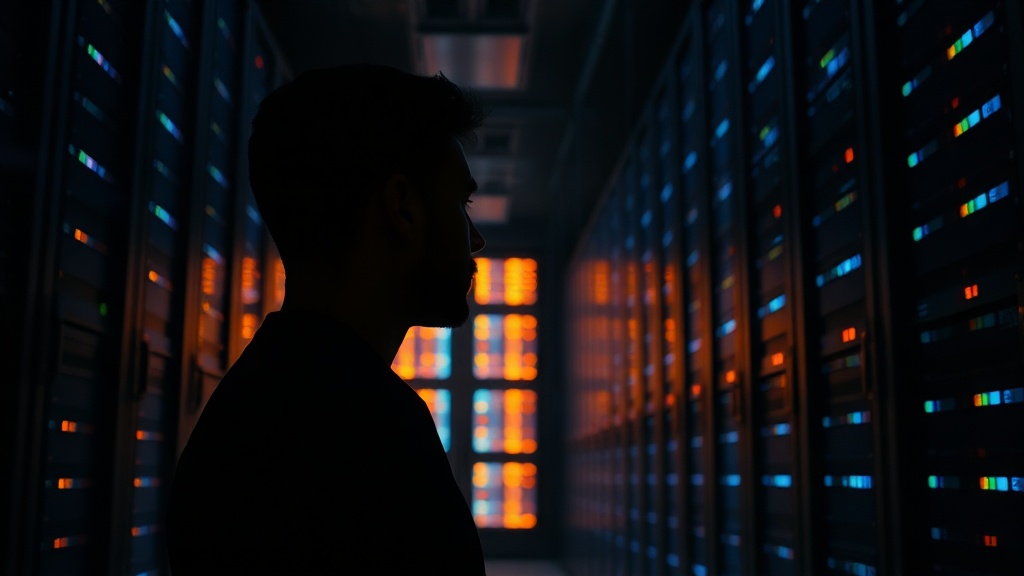
This asymmetry creates a peculiar grief. We mourn not just privacy but temporal sovereignty—the right to evolve without our past selves haunting us in perfect fidelity. The teenager who posted recklessly in 2009 did not consent to be eternal evidence against the adult she became. Yet here she remains, searchable, quotable, stripped of the narrative arc that would make her comprehensible.
The Myth of the Clean Escape
The privacy industry's seductive promise: encryption, VPNs, burner accounts, the fantasy of digital invisibility. I've tried this path. The result was not liberation but paranoid performance—a life organized around avoidance rather than expression. The off-grid fantasy mistakes the problem. The issue isn't that you're visible; it's that you're visible without agency.
Going dark is a privilege of the few and a full-time job for the fewer. More honest is the middle path: deliberate curation in an age of passive exposure. This means understanding that every digital act is archival, then choosing what deserves to survive.
The Stoics practiced premeditatio malorum—the contemplation of worst cases to rob them of terror. We need something adjacent: premeditatio digitalis, the contemplation of our data's afterlife. What would you want excavated? What deserves the quiet dignity of true disappearance? The answer varies—financial records, perhaps, should persist; your 3 a.m. search history, perhaps not.
Authorship as Resistance
Reclaiming your narrative requires a shift from defensive privacy to offensive legacy. The surveillance economy profits from your fragmentation—you as consumer, as demographic, as engagement metric. Wholeness is the resistance. Intention is the resistance.
This is where the ancient practice of letter-writing becomes unexpectedly radical. A letter is curated memory—selected, contextualized, offered with explicit intention. Unlike the data portrait, which assembles you from behavioral scraps, a letter constructs you from choice. You decide what matters. You supply the narrative frame. You choose the recipient, the moment of revelation, the tone of survival.

When you compose a letter to your future self, to a child not yet born, to a partner decades hence, you are performing an act of narrative reclamation. You are saying: this is the self I authorize. This is the story I want to persist.
The Ethics of What Survives
There's a responsibility here we rarely discuss. Your digital legacy is not merely about you; it is for others. The self-portrait assembled by algorithms will shape how your children understand your desires, how historians interpret your era, how strangers judge your character. You are, already, a historical figure. The only question is whether you'll participate in your own historiography.
This is not narcissism. It is care. The letters my grandfather didn't write, the context he didn't supply, the why of his silences—these gaps became family wounds. What survives by accident is always more damaging than what survives by design.
Digital legacy planning, then, is an extension of love. It is the recognition that your future recipients deserve more than your data exhaust. They deserve your account of yourself, with all the charity and complexity that conscious narration permits.
The Imperfect Archive
Let me be precise about what I'm not arguing. I am not suggesting you can control your full digital shadow. The credit bureaus and broker networks, the facial recognition databases, the cross-platform graphs—these operate beyond individual influence. Surrender this battlefield. It was never yours to hold.
What remains available is the meaningful archive: the communications you choose to preserve, the values you articulate, the love you make explicit. This smaller territory is where agency lives. A letter to your daughter when she turns eighteen, composed now while she is six, carries an emotional truth no algorithmic profile could approximate. The gap between her childhood perception and your adult intention—that space of revelation—is irreducibly human.
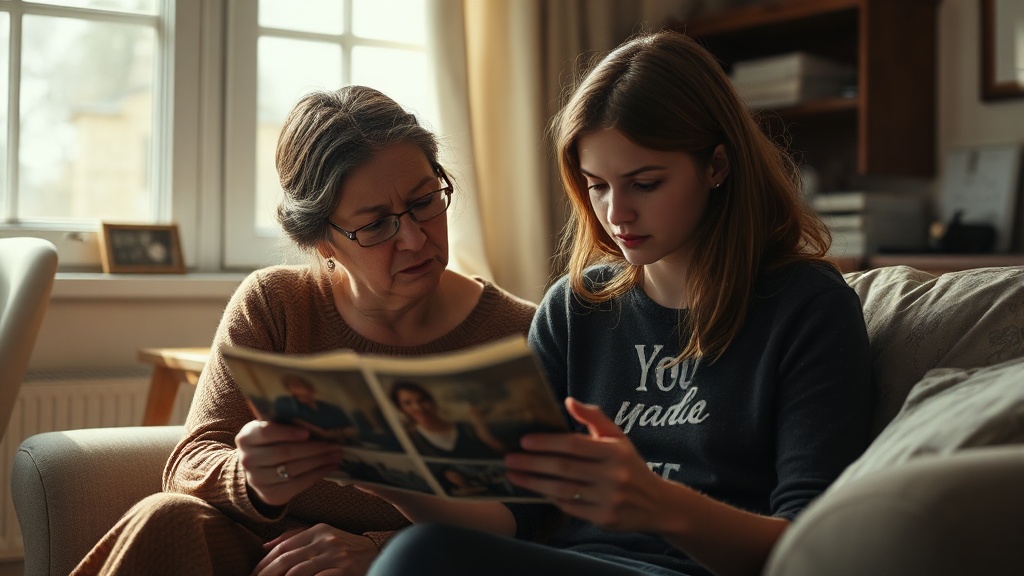
The imperfection is the point. Algorithmic portraits are flawless in their completeness and empty in their meaning. Human archives are partial, biased, lovingly incomplete—and therefore interpretable, discussable, alive.
Practicing Temporal Sovereignty
So what does deliberate curation look like? Not grand gestures but accumulated intention:
- Audit your existing persistence. What accounts will outlive you? What do they contain? The exercise is uncomfortable but clarifying.
- Compose against extraction. Write the letter, record the memory, save the image—but do so in spaces you control, with recipients you choose, under terms you understand.
- Embrace scheduled revelation. Some truths require temporal distance. The message that arrives at a milestone birthday, an anniversary, a moment of anticipated crisis—this is architecture of care, not mere communication.
- Accept productive forgetting. Not everything deserves preservation. The dignity of disappearance is as important as the power of memory.
The Story That Outlasts the Servers
I spend most nights alone, screen-glow on my face, building things with code until 2 or 3 AM. There's a particular loneliness to it—just you and the machine, trying to make something that outlives the session. But that same solitude taught me something: the servers will eventually fail. The platforms will transform or dissolve. The data portraits, for all their apparent permanence, are more fragile than they appear—dependent on electricity, corporate continuity, formats that obsolesce. What persists across these failures is intentional transmission: the letter passed hand to hand, the message composed for a specific future, the love made explicit rather than inferred from behavior.
Your surveillance shadow is not your story. It is a commercial approximation, useful to systems that do not love you. Your story is what you choose to tell, to whom, and when. The reclamation of this authority is not a technical problem but an existential one—and its resolution requires not better privacy tools but better practices of deliberate memory.
This is exactly why I obsessed over end-to-end encryption and extreme server redundancy when building EterMail. Because I know that a letter written to the future needs to be guarded even more fiercely than a bank password. The friend with the forty-seven-gigabyte archive? She spent a weekend composing letters. To her future self, five years hence. To her daughter, to be delivered at sixteen. To her husband, scheduled for their twentieth anniversary, containing what she could not yet articulate. She described it as the first time she'd felt real in the digital realm—not extracted, but offered. Not observed, but heard.
This is the possibility that remains. The surveillance is total; the authorship is still yours. What survives should be what you chose to leave—not what was harvested while you weren't looking.
What is EterMail?
EterMail is a revolutionary time capsule service that allows you to send messages, photos, and videos to the future (up to 30 years). Seal your memories and thoughts today, and they'll be delivered when the time is right.
Time Capsule
Send messages up to 30 years in the future
Rich Media
Text, photos, and videos supported
Secure & Private
Your memories are safely encrypted
EterMail Team
We're the team behind EterMail, dedicated to helping you preserve and share timeless messages with your loved ones. Our mission is to make it easy to express your love, share your wisdom, and create lasting connections that transcend time.
Frequently Asked Questions about Digital Privacy & Security
What should I include in a digital legacy plan?
How can I protect my personal story from being misused after I die?
Is complete digital privacy possible, or should I focus on something else?
Related Articles

The Examined Feed: Why Digital Privacy Is the Last Philosophical Act Left to Us
Can you question the cage from inside it? Explore why reclaiming your data may be the last truly examined life available in an age of algorithmic knowing.
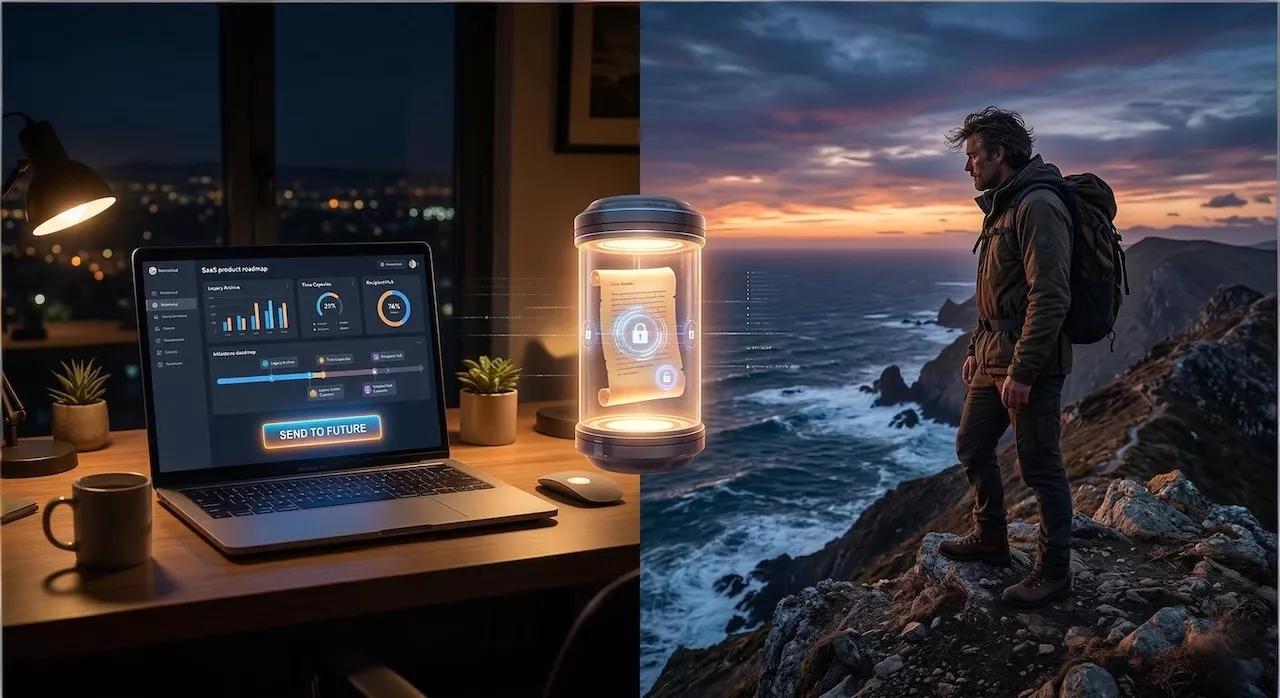
Why I Built EterMail: A Time Capsule for the People I Love Most
I’m a Product Manager who spends all week optimizing for the "immediate now." But getting lost off the grid on a mountain ridge made me realize I had zero infrastructure for the "forever." Here’s why I stopped worrying about conversion rates for a moment and built EterMail—a secure, tamper-proof digital time capsule for the people I love most.

The Cartography of Learned Forgetfulness: How Parents Unlearn Themselves to Teach Their Children to Leave
Why do parents deliberately forget what they know? The quiet art of unlearning—so our children learn to tie their own shoes, navigate alone, and eventually leave us behind.