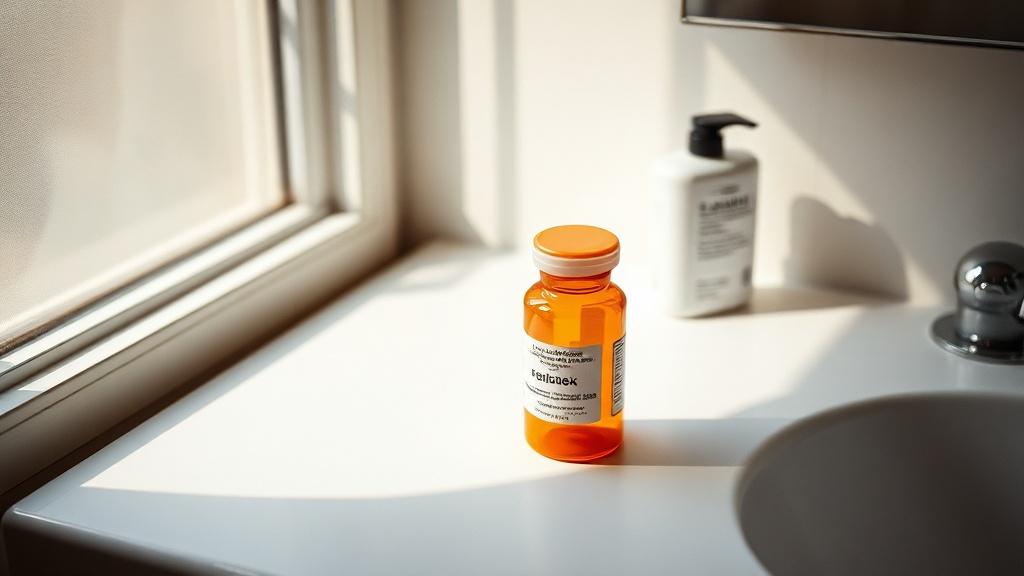
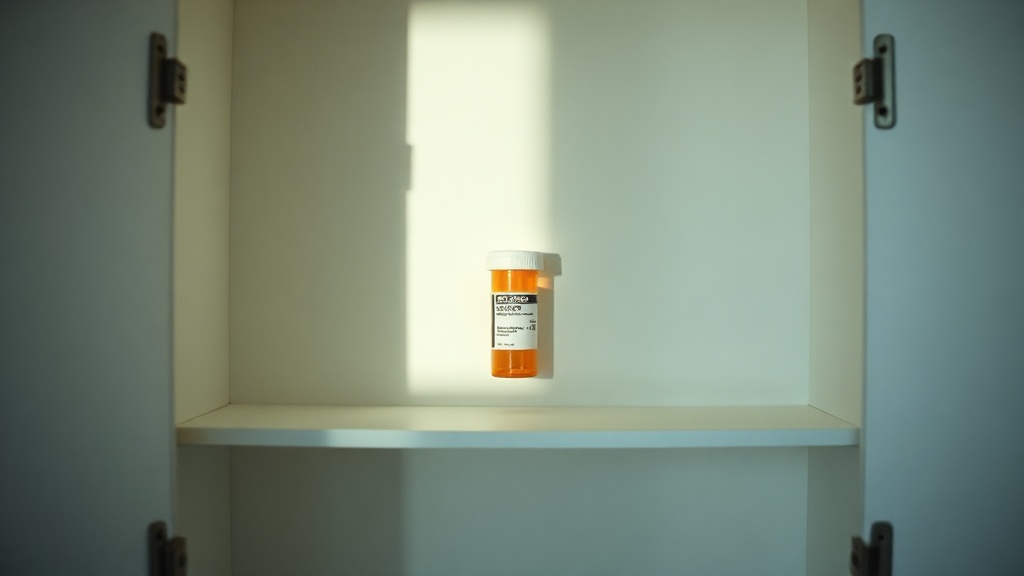
The orange bottle sat on the second shelf, behind the extra toothpaste and the cough syrup you bought during that winter you can't quite place. Three years past its refill date. Their name in all caps, the letters slightly faded, the label starting to curl at one corner. You reached for it that morning without thinking—muscle memory from a body that once organized its days around someone else's pill schedule, someone else's appointments, someone else's survival.
You threw it away without reading the label twice. And then you stood there, hand still on the cabinet door, waiting for the guilt that didn't come.
The Second Skeleton We Wear
Grief has a way of colonizing the body. Not just the heart, that tired metaphor, but the practical machinery of daily living. The pharmacy where you learned to pronounce medications you couldn't spell. The calendar alerts for oncology follow-ups that outlived the patient. The way you still flinch when your phone rings at 2 PM, the old appointment window, even though no one has called from that clinic in eighteen months.
We become curators of another person's decline without ever applying for the position. The role finds us. We learn the language of dosages and progression, of "we'll try this next" delivered in hallway conversations with white-coated strangers who never learned our names but knew our voices immediately when we called.
The medical history we carry becomes a second skeleton—visible only to us, weight-bearing in ways that deform our posture, our sleep, our sense of what body we actually inhabit. We move through the world as dual citizens: the living and the memorializer, the person who still breathes and the person who remembers exactly how the oxygen concentrator sounded at 3 AM.
When the Pharmacy Stops Asking
There is a specific humiliation in the bureaucratic forgetting. The appointment reminders that simply stop, not because anyone decided you were ready, but because the system purged inactive records on a schedule you were never consulted about. The pharmacy that once knew your combined last names, that watched you learn to navigate insurance authorizations and prior approvals, now treats you as any other customer picking up allergy medication.
You are no longer half of a medical unit. You are one. And "one" is the answer you write on intake forms now, the box you check without the pause that used to follow, the moment of recalculation: still two in my heart, but one in your system, and which truth matters more?
The first time you answer "just one" without the old catch in your throat, you may not notice. The tenth time, you do. You wonder if this is what healing looks like—this administrative normalization, this gradual removal from databases that once tracked the shared project of staying alive a little longer.
The Intimacy of Outlasting
What does it mean to outlast someone's medical history? To survive not just the person but the entire apparatus of their illness—the specialists, the protocols, the experimental trials, the hope that came in three-week cycles measured by CT scans and CA-125 markers?
You have become an archive that no institution needs anymore. The knowledge you accumulated—which anti-nausea medication worked, which nurse answered the phone after hours, which parking garage had spaces on Tuesdays—has no value in the marketplace of the living. You hold it like a dead language, fluent in a dialect no one speaks, proficient in a geography that no longer exists on any map.
This is the strange intimacy of grief's later stages: not the dramatic moments of anniversaries or gravestone unveilings, but the Tuesday morning realization that you no longer know which floor the infusion center is on, that the building has been renovated, that you could walk past it without the old magnetic pull of memory.

The Body That Belongs Only to the Living
There comes a moment—and it is almost always smaller than we expect—when you inhabit your body as solely yours. Not the caregiver's body, attuned to another's breathing in the next room. Not the vigil-keeper's body, sleeping in fragments, waking to check. Not the advocate's body, armed with questions and research and the particular ferocity of love under threat.
Just your body. Imperfect, continuing, singular. The body that aches in places that were never discussed in those examination rooms. The body that wants things—sleep, movement, touch—that were deferred, that seemed inappropriate to want while someone else was wanting breath.
This reclamation is not betrayal, though it may feel like it. The expired prescription in the trash is not evidence of forgetting. It is evidence of a different kind of memory: the kind that no longer requires physical proof to remain real. You do not need the orange bottle to prove you were there. You do not need to carry their ailments to prove you loved them.
The Role We Never Auditioned For
No one prepares us for the part of medical widow, of health orphan, of the person left holding the bag—literally, the plastic bag of discontinued medications, the equipment rental agreements, the passwords to patient portals that still send automated reminders about flu shots for the deceased.
We performed this role without rehearsal, without compensation, without a closing night that anyone announced. The show simply stopped running. The audience went home. And we remained in the empty theater, still blocking scenes that will never be performed again, still remembering lines for a character who has exited permanently.
The quiet surrender of throwing away that prescription is, finally, a resignation from this unpaid position. It is the recognition that you have been holding a job that no longer exists, performing duties for a patient who no longer needs care, maintaining expertise that serves no practical purpose except to keep you tethered to a version of yourself that was necessary once but is not required anymore.
What Remains When the Medicine Cabinet Clears
The bottle is gone. The cabinet holds only your own modest pharmacy now—the multivitamin you forget to take, the melatonin for nights that still resist sleep, the ibuprofen for a body that continues its ordinary deteriorations without drama.
What remains is not nothing. What remains is you. Not the you who existed before, because that person never knew this grief, never learned this language, never discovered the particular strength required to outlast a loved one's medical history. And not the you who existed during, because that person was defined by emergency, by the adrenaline of sustaining, by the narrow focus of getting through.
Someone else. Someone who carries the memory without the objects. Who honors the experience without reenacting it. Who has learned, finally, that love does not require suffering as its proof of authenticity.

Writing Toward the Living Self
There is a practice that helps with this transition, this gradual shift from shared medical history to singular future: the act of writing to yourself across time. Not the grief journaling that documents what was lost, but the future letter that imagines who you might become when the cabinet stays clear, when the pharmacy knows only your name, when "just one" feels less like diminishment and more like enough.
I know something about writing to futures that may not remember. I spend too many nights alone, screen-glow on my face at 2 AM, "pair programming" with AI models that feel like strange companions—intelligent, responsive, yet fundamentally unable to witness my life. That digital solitude taught me what it means to send messages into voids, hoping something on the other side still understands. When I hike steep trails on weekends, wind stripping away the illusions I build in code, I feel the difference between data stored and memory felt. That's why I became obsessed with building a bridge between those worlds—something that preserves human voice with the same ferocity I apply to server architecture.
EterMail was built for these moments of threshold. The platform lets you compose letters to your future self, scheduled to arrive when you specify—six months from now, two years, a decade. You might write to the person who finally threw away the last physical evidence of that medical life. You might congratulate her. You might ask if she remembers the sound of the oxygen concentrator, or if that memory has finally softened into something she can hold without wincing.
This is exactly why I obsessed over end-to-end encryption and extreme server redundancy when building EterMail. Because I know that a letter written to the future needs to be guarded even more fiercely than a bank password. The time-capsule architecture ensures your words surface when you need them most. Not to replace therapy or community or the slow work of mourning. But to create a continuity with the self who is still becoming, who is learning to occupy a body that belongs only to the living, who is discovering that healing is not the opposite of remembering but its natural evolution.
The Permission to Be Only One
You do not need to keep their prescriptions to keep them. You do not need to maintain their medical history to maintain your love. The intake form that asks how many in your household is not a moral examination. Your answer does not define your devotion.
The quiet surrender is not erasure. It is the body finally believing what the mind has known for some time: that you are allowed to continue, that your own ailments deserve attention, that your own future merits the care you once directed elsewhere.
The orange bottle sits in the trash now, or in whatever comes after trash—incineration, landfill, the slow decomposition of plastic and paper that outlasts even our longest griefs. Their name in all caps, dissolving into something unreadable. You closed the cabinet door. You went on with your morning. And somewhere in that ordinary continuation, healing arrived without announcement, without permission, without any form you needed to sign.
Just the living, continuing. Just the one, finally enough.
What is EterMail?
EterMail is a revolutionary time capsule service that allows you to send messages, photos, and videos to the future (up to 30 years). Seal your memories and thoughts today, and they'll be delivered when the time is right.
Time Capsule
Send messages up to 30 years in the future
Rich Media
Text, photos, and videos supported
Secure & Private
Your memories are safely encrypted
EterMail Team
We're the team behind EterMail, dedicated to helping you preserve and share timeless messages with your loved ones. Our mission is to make it easy to express your love, share your wisdom, and create lasting connections that transcend time.
Frequently Asked Questions about Healing & Remembrance
How do you know when you're ready to let go of a deceased loved one's belongings?
Is it normal to feel guilty when you stop grieving as intensely?
What are meaningful ways to preserve memories without keeping physical objects?
Related Articles

The Morning You Forget Which Side Was Theirs: On the Geography of Grief and the Slow Work of Remembering
What happens when you forget which side of the bed was theirs? A meditation on the strange, intimate geography of grief and how we learn to remember without pain.

The Year Their Birthday Became Just Another Tuesday: On Healing When Grief's Calendar Finally Stops
What happens when the anniversary of their death passes unnoticed? Explore the strange, guilty relief of outliving grief's calendar and finding peace beyond performance.

The Second Mug: On Keeping a Warm Seat for the Ghosts We Learn to Live Beside
What does healing look like when you stop performing grief and start keeping their seat warm by choice? A quiet reflection on memory, absence, and tender survival.