
The Indentation in the Mattress
You wake to gray light, and for a moment, the bed is simply bed—neutral territory, sheets rumpled only by your own restless turning. Then the question arrives, uninvited as a draft through a cracked window: which side was theirs?
You lie still. Test the left. No. The right? The pillowcase there is worn slightly softer, you realize, but perhaps that's just age, not devotion. You roll to the other side, then back, a tongue probing the socket of a missing tooth, searching for what should be familiar and finding only the smooth, healed gum of absence.
The panic comes not from forgetting, but from what forgetting means. This coordinate—this fundamental mapping of two bodies into one geography—once defined your nights. You never chose sides; you simply were left or right, a gravitational fact as certain as the floor beneath your feet. And now, in this ordinary morning, the compass has failed.

The Embarrassment of Erasure
There is a particular shame to this grief, small and sharp as a paper cut. You feel almost indecent forgetting, as if you've been caught discarding something precious in secret. You reconstruct: the way they always reached for water on the nightstand, which meant their side was—the left? The right? You remember the warmth of their back against yours, but suddenly cannot say whether you faced east or west.
The body remembers what the mind misplaces. You press your palm into the mattress, searching for the faint depression that once held their weight. It is there, barely—an archaeology of sleep, a ruin measured in millimeters. The relief when you finally locate it, when memory clicks into place like a key finding its lock, is indistinguishable from sorrow. You remembered. For now, you remembered.
But the deeper fear has already taken root. This is the first coordinate to dissolve, you understand. The first of many. What follows? The exact shade of their eyes in afternoon light? The particular cadence of their laugh? The way they said your name when worried, vowels stretched thin with care?
Muscle Memory and Its Limits
For months, perhaps years, your body carried them without consent. You reached across the bed in sleep, arm extended to familiar territory, and woke with the ache of collision against empty space. You made coffee for two. You flinched at sounds that once announced their arrival. The body, that stubborn historian, refused to accept the revised map.
Healing, then, is partly a process of unlearning your own architecture. The gradual cessation of phantom limb syndrome applied to the heart. You teach yourself to occupy the whole bed, starfishing into the abandoned territory, and feel simultaneously liberated and bereft.
But there comes this later stage—the one no one warned you about—when the body does learn. When you sleep soundly through the night without reaching. When you make exactly one cup of coffee, efficiently, without the ghost of ritual. When the mattress, rotated and flipped, slowly forgets the shape it held.
This should be victory. Instead, it feels like betrayal.
The Paradox of Intentional Remembering
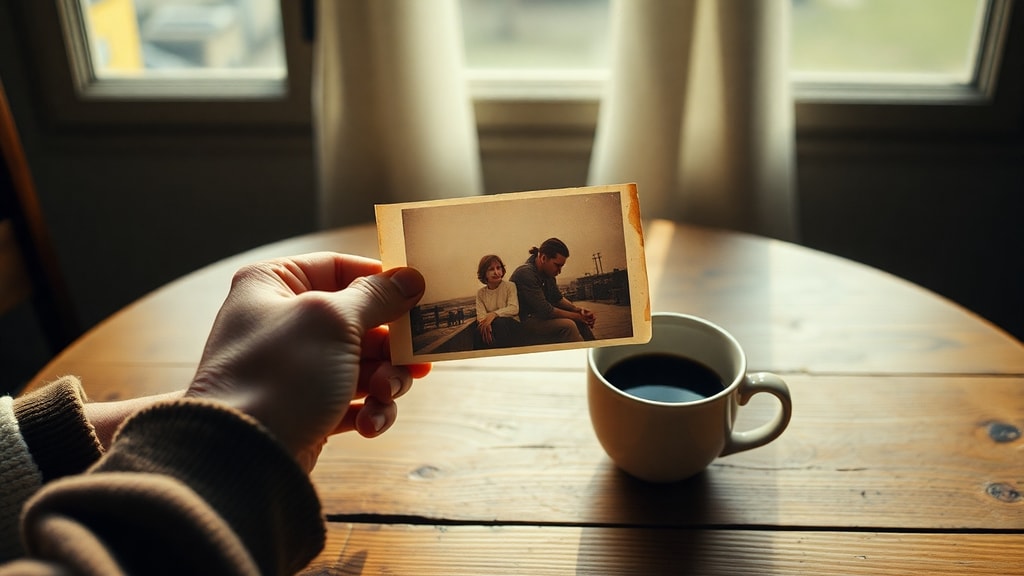
We are told to "move on," as if grief were a destination we might reach by walking determinedly forward. But what of the opposite impulse—the desire to stay, to preserve, to build a shrine in the architecture of daily life? The bed becomes museum. The voicemail, artifact. The birthday, uncelebrated but deeply felt, a private holiday of mourning.
There is wisdom, though, in distinguishing between memory and paralysis. The former keeps the beloved alive in narrative; the latter freezes the bereaved in a single frame of film, unable to advance the story. The question becomes: how do we remember without being consumed? How do we honor without being held hostage?
Some find answer in ritual. Others in writing. Still others in the strange, brave act of speaking aloud to absence, as if the air itself might carry message to where conventional geography fails.
Mapping a New Geography
The bed, eventually, holds only your weight. This is not failure; this is the slow, unglamorous work of survival. You learn to sleep in the center, or to prefer one side not because it was theirs but because it faces the window, because the morning light falls there kindly, because it is simply yours.
Yet the fear of forgetting remains, and it is not irrational. We are, in part, the stories we tell about who has loved us. When those stories blur, when the edges soften beyond recognition, some essential version of ourselves threatens to blur with them. Who were you, in the world that contained them? Who are you, in the world that does not?
The answer, perhaps, is that we become cartographers of a new order. We map not the territory as it was, but the territory as it has been changed by passage. The bed is not empty; it is different. The life is not diminished; it is rearranged.
The Letter as Anchor
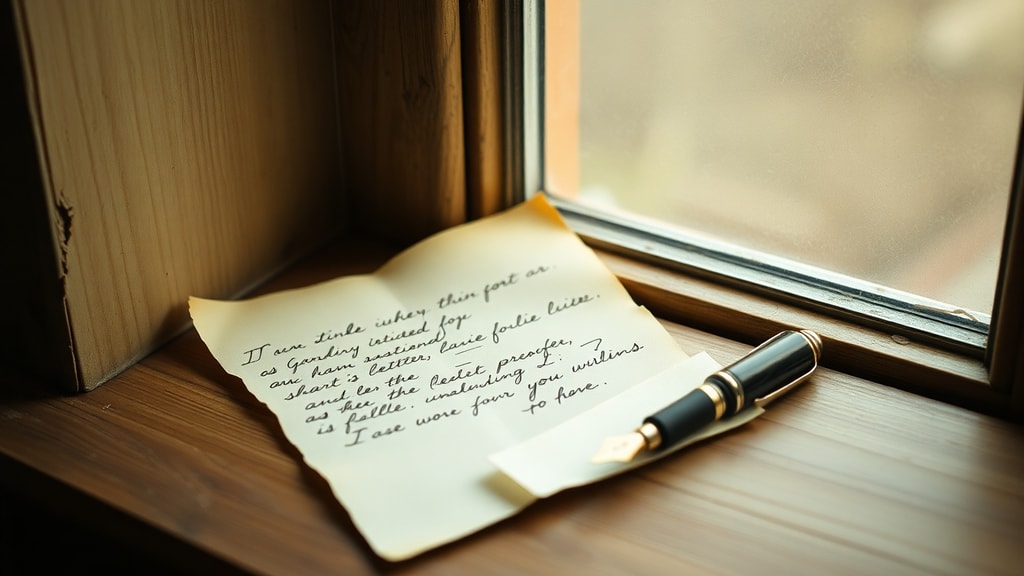
There are technologies of memory more reliable than the mind's fading photograph. The written word, fixed in time, does not suffer the erosion of pillowcases or the confusion of waking. A letter captures not just the facts of a person, but the quality of attention they commanded—the particular gravity they exerted on your orbit.
To write to the future self, or to preserve voice for those not yet born, is to refuse the slow dissolve. It is to say: this mattered. This shaped me. This is worth remembering accurately, not through the distorting lens of grief or the soft focus of nostalgia, but as it was lived.
I know this impulse intimately. I built things in Silicon Valley for years—e-commerce platforms, game engines, the usual parade of code and ambition—before I understood that what I was really chasing was a bridge between worlds. I'm the kind of person who stays up until 2 AM talking to LLMs, pair-programming with machines that have no memory of yesterday, no stake in tomorrow. That digital solitude taught me something: we are desperate to be heard across time, to leave signals that outlast our own flickering attention. The morning you forget which side was theirs need not be the morning you lose them entirely. Memory can be cultivated, tended, made resilient against the ordinary erasure of time.
What Healing Actually Looks Like
Healing is not the absence of pain. It is not the triumphant declaration that you have "moved on." It is, more honestly, the ability to hold contradiction: to forget and to remember, to occupy the whole bed and to miss the weight that once halved it, to build a life that does not require their presence while still honoring the depth of their absence.
The morning you cannot recall which side was theirs is not the end of love. It is simply evidence that love, like all living things, changes form. The body releases its muscle memory. The mind releases its obsessive rehearsal. What remains—what must be actively chosen—is the story you tell, the meaning you make, the legacy you preserve against the slow entropy of ordinary time.
The best way to fight forgetting isn't taking another screenshot; it's setting an alarm for the future. By using EterMail to set a delivery date 5 years from now, you completely free yourself from the anxiety of the present. Write the letter while the memory still has texture—the exact way they laughed, the specific shade of morning light on their shoulder, the side of the bed that was theirs. Set it to arrive when you need it most, when the mattress has long forgotten and you are ready to remember. The bed may forget; the page need not.
You rotate the mattress. You buy new pillowcases. You sleep, eventually, through the night. And somewhere—in a letter, in a photograph, in the particular way you now reach for water on what was once their nightstand—you keep the coordinates alive. Not as prison. As pilgrimage. As proof that even dissolved geography leaves its traces in the mapmaker's hand.
What is EterMail?
EterMail is a revolutionary time capsule service that allows you to send messages, photos, and videos to the future (up to 30 years). Seal your memories and thoughts today, and they'll be delivered when the time is right.
Time Capsule
Send messages up to 30 years in the future
Rich Media
Text, photos, and videos supported
Secure & Private
Your memories are safely encrypted
EterMail Team
We're the team behind EterMail, dedicated to helping you preserve and share timeless messages with your loved ones. Our mission is to make it easy to express your love, share your wisdom, and create lasting connections that transcend time.
Frequently Asked Questions about Healing & Remembrance
Why do we feel guilty when we start forgetting details about someone who died?
How can writing help process grief when memories begin to blur?
What does it mean to heal when you no longer feel the acute pain of loss?
Related Articles

The Solo Cello: On Reclaiming the Car, the Radio, and the Road After Loss
What happens when you finally change the radio preset they programmed? A meditation on vehicular grief, small ceremonies of letting go, and learning to carry only one.
The Unpotted Plant: On Healing When You Finally Stop Keeping Something Alive
What happens when you stop performing care for a life that was never yours to keep? A meditation on grief, the objects we inherit, and the strange relief of letting something die.
The Quiet Inheritance: When Their Clothes Become Your Continuation
What happens when you stop dressing around their absence and start wearing their clothes forward? An intimate exploration of grief, fabric, and continuation.