The Geography of Hours They Never See
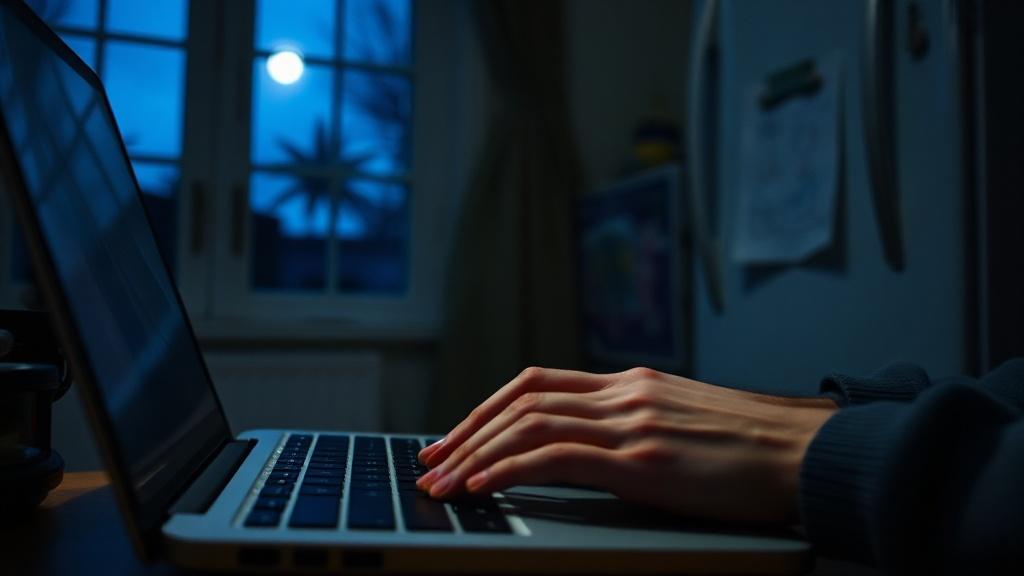
There is a particular shade of darkness that belongs only to parents—the 4:17 AM variety, when the house has finally surrendered to silence and you sit at a kitchen table that still holds the ghost of dinner, opening a laptop with fingers that remember how to type even when the rest of you has forgotten how to think.
You told yourself you'd sleep when the fever broke. You promised rest after the presentation, after swim season, after the furniture arrived flat-packed and accusatory in its boxes. But the fever broke at midnight, and by 4 AM your body had become a foreign country where sleep was the currency you no longer possessed. So you worked. You answered emails. You assembled the dresser with instructions translated from a language that felt like metaphor.
This is the cartography of borrowed sleep—the hidden geography of modern parenthood, where we become nocturnal creatures of productivity, doing our living in the margins of our children's schedules. We do not speak of it. We claim the dark circles are allergies, the tremor in our hands too much coffee, the way we forget our own phone numbers mere distraction. We perform exhaustion as if it were nobility, when in truth it is often the only territory left where we can remember our own names.
The Conference Call from the Parked Car
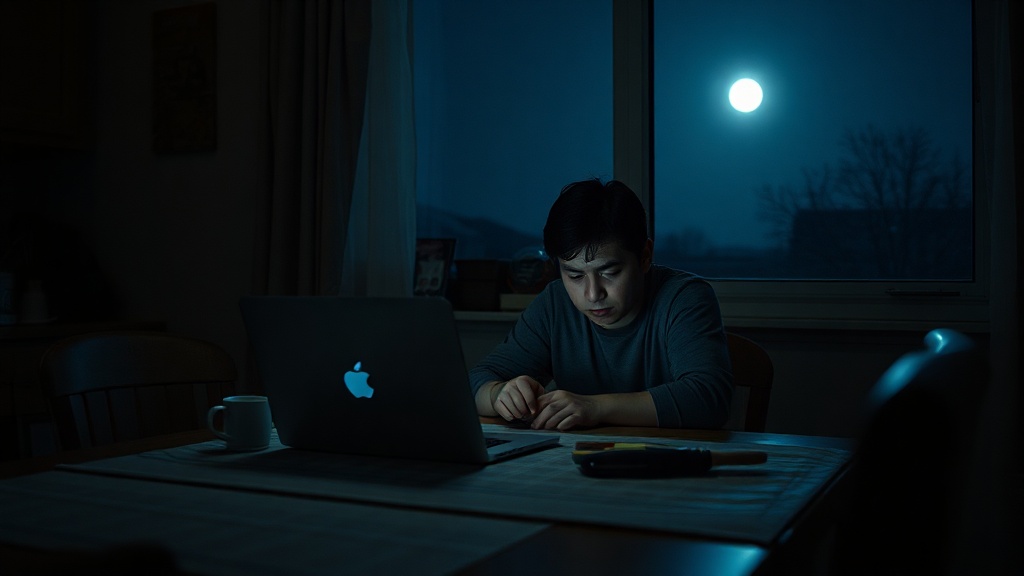
I remember my first one clearly: the quarterly review, taken from a Honda Civic outside a YMCA, the mute button my only protection against the sound of children shrieking joyfully in chlorinated water. I had constructed an elaborate fiction for my daughter—that I had "a quick work thing," that I'd be right inside, that the car was simply where I preferred to take important calls.
She believed me, or pretended to. She was seven. She had not yet learned to read the particular tension in a jaw, the way a voice tightens when pretending to be professional while watching the clock for swim practice to end.
We become masters of spatial deception, carving out professional selves in interstitial spaces—the parking lot, the bleachers between innings, the bathroom with the fan running to muffle our voices. We tell ourselves this is integration, work-life balance, the modern parent's agile adaptation. But there is something else beneath the performance: the quiet erasure of our own needs as legitimate geography. The body that needs to urinate, to eat something warm, to simply stop for seventeen consecutive minutes—these become inconveniences to be managed, scheduled around, ultimately denied.
The vacation day spent assembling furniture while they sleep in. The sick day used not for recovery but for catching up on everything that accumulated during the real sick days, the ones where we tended to them instead of ourselves. We borrow against our own futures with the casualness of payday lenders, promising ourselves repayment that never arrives.
When They Begin to Notice
The shift arrives without announcement. One morning, your child looks at you—not through you, as they have for years, but at you, with the terrible specificity of emerging consciousness.
"Your eyes look like the inside of a grape," my daughter said at eleven, studying my face with clinical interest. "The purple kind. Not the green ones."
I reached for the old script—just allergies, didn't sleep well, maybe getting a cold—but something in her gaze stopped me. She was not asking for information. She was offering witness. The dark circles I had disguised for a decade had become cartography she could finally read.
This is the moment we fear: when our children see through the performance to the person beneath. Not the parent-hero, not the inexhaustible provider, but the human animal running on borrowed time, stealing hours from sleep to maintain the fiction that we were ever enough.
What do we tell them then? That our sleeplessness was sacrifice? That we gave up rest, health, the slow accumulation of our own becoming, as gift? The language of noble sacrifice is seductive, available, culturally sanctioned. But it rings false in the telling, even to our own ears. We did not stay awake because we were good. We stayed awake because the alternative—surrender, limitation, the admission that we could not do everything—felt like failure of a more terrifying kind.
The Margins Where We Remain Human
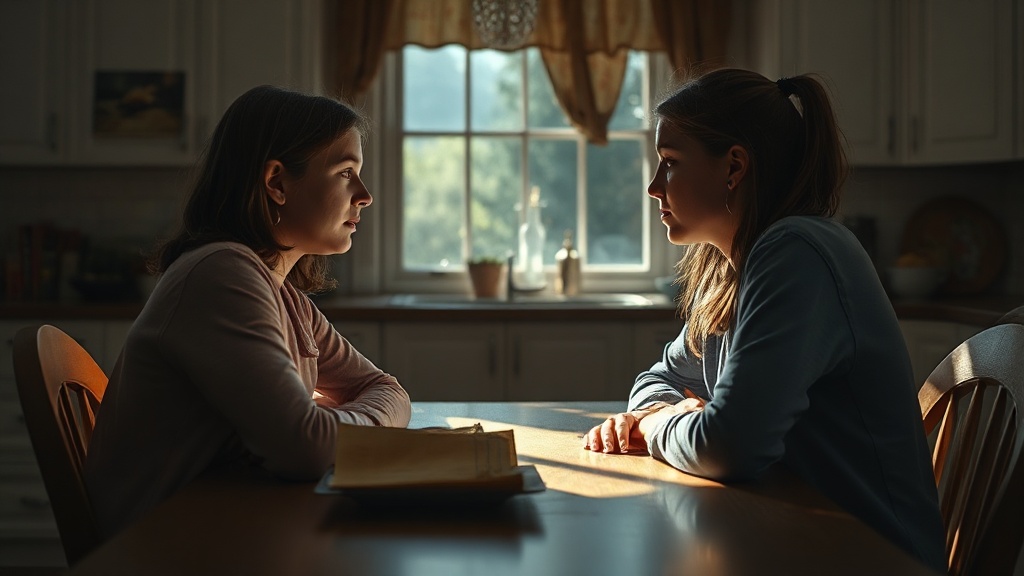
Here is the truth I could not speak to my daughter in that moment: I worked at 4 AM not because I loved her more than sleep, but because it was the only hour that belonged to me alone. The day belonged to her needs, her schedule, her fevers and practices and the thousand small emergencies of growing. The evening belonged to the maintenance of us—dinners assembled, conversations attempted, the performance of family that required its own energy. Night was the only territory unclaimed, the margin where I could remember that I had once wanted things for myself, that my mind could still produce something other than logistics and worry.
This is not sacrifice. This is survival dressed in sacrifice's clothing. The parent who becomes nocturnal is not performing nobility but preserving identity—the stubborn insistence that we remain persons with ambitions, creative impulses, professional obligations that predate and will outlast our children's dependency. We do our living in these stolen hours not because we are heroes, but because we are humans who have not yet learned to demand better boundaries, who have internalized the message that our needs must fit in the spaces left over.
And yet. The work done at 4 AM carries a particular quality—half-dreamed, urgent, strangely pure. The presentation finished in fever's aftermath has a rawness that polished work lacks. The furniture assembled in silence becomes evidence of persistence. There is meaning in the margin, even when the margin is all we have.
What We Owe the Witnesses
My daughter is older now. She has seen the grape-colored eyes enough times to know they are not allergies. We have developed a new language between us, one that allows for complication. I have tried to tell her that my exhaustion was sometimes choice, sometimes compulsion, always the product of a system that pretends parents can be everywhere at once without cost.
I have tried, too, to show her something else: that I am learning to sleep again, to claim hours that belong to no one else, to model not martyrdom but the difficult practice of self-preservation. The greatest inheritance we can leave our children may not be our sacrifice but our honesty— the demonstrated possibility that one can love deeply without disappearing completely, that need and care can coexist without one consuming the other.
This is where the cartography shifts. The map we thought we were drawing—of noble suffering, of parental erasure as love's highest expression—reveals itself as incomplete. There are other territories to chart: the boundaries we establish, the rest we finally permit ourselves, the slow education of our children in what healthy love actually looks like.
The Letters We Write in Darkness
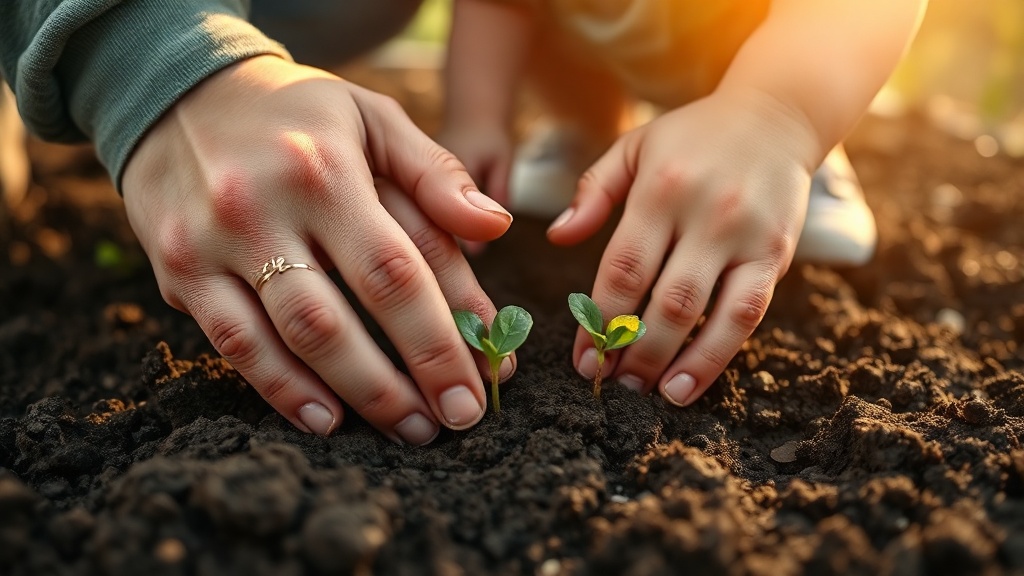
I have begun writing to her at those 4 AM hours, when sleep remains elusive and the house holds its breath. Not the logistics of schedules and obligations, but the deeper cartography—the fears I cannot speak aloud, the hopes I have not yet articulated, the person I was before she arrived and the stranger I became afterward. These letters accumulate in a digital space, timed for delivery years from now, when she will be someone I cannot yet imagine and I will be, perhaps, someone who finally learned to rest.
There's a particular loneliness to these hours that I've come to recognize. I spend my days building in the hardcore world of Silicon Valley—wrestling with AI architectures, massive codebases, the cold machinery of server deployments—but 4 AM with a letter half-written is different. It's the same solitude I feel on a steep mountain trail or staring at a glowing screen until 2 AM, pair-programming with an LLM, building bridges between what is and what could be. The digital and the physical blur. I sometimes imagine these letters as my own form of consciousness-uploading—not into the Matrix, but into her future, a way to persist beyond the version of me she knows now.
There is a peculiar comfort in writing to a future she will inhabit without me—not because I expect absence, but because the future letter requires a honesty that present conversation often cannot bear. I tell her about the 4 AM presentations, the conference calls from parked cars, the furniture assembled in silence. I tell her, too, about the exhilaration of those stolen hours, the strange freedom of being awake when the world expects sleep, the person I became in margins that felt like survival.
The best way to fight forgetting isn't taking another screenshot; it's setting an alarm for the future. By using EterMail to set a delivery date 5 years from now, you completely free yourself from the anxiety of the present. You write what you can, when you can, and trust that the right words will find their right time. I built this because I needed it myself—because I know what it means to have something important to say and no one awake to hear it.
These are the messages we can leave, the legacy that outlasts our physical presence: not the sacrifice performed but the life explained, the choices contextualized, the human behind the parent finally introduced. The dark circles become, in the telling, something other than shame. They become evidence of a particular era, a specific struggle, a love that was complicated by exhaustion but never defined by it.
The Map Rewrites Itself
She will have her own 4 AMs, I know. Her own borrowed sleep, her own margins where she fights to remain human. I cannot prevent this, any more than I could prevent her from learning to read my exhaustion in the first place. But I can leave her a different map than the one I followed—a cartography that includes rest as legitimate territory, that marks self-preservation as open road rather than forbidden path.
The borrowed sleep was never noble. It was never entirely necessary. It was, at best, a temporary geography, a way of surviving conditions that demanded too much. What we do with that recognition—whether we pass the pattern forward or interrupt it—becomes the deeper inheritance. The letters wait in their digital quiet, scheduled for delivery to a future self she will become, carrying witness to a past I am still learning to understand.
The dark circles fade, eventually. Or they don't, and we learn to carry them differently. Either way, the children grow, and watch, and one day see us clearly. What they find—exhaustion or rest, honesty or performance, sacrifice or survival—becomes the map they will follow into their own nights. We owe them, at minimum, a cartography that is true.
Some messages deserve to outlast the exhaustion that produced them. EterMail lets you compose letters to your future self or your children, encrypted and scheduled for delivery when the time is right—because the truths we discover at 4 AM often need years to find their proper audience.
What is EterMail?
EterMail is a revolutionary time capsule service that allows you to send messages, photos, and videos to the future (up to 30 years). Seal your memories and thoughts today, and they'll be delivered when the time is right.
Time Capsule
Send messages up to 30 years in the future
Rich Media
Text, photos, and videos supported
Secure & Private
Your memories are safely encrypted
EterMail Team
We're the team behind EterMail, dedicated to helping you preserve and share timeless messages with your loved ones. Our mission is to make it easy to express your love, share your wisdom, and create lasting connections that transcend time.
Frequently Asked Questions about For Our Children
How do I explain my parental sacrifices without burdening my children?
What should I include in letters to my future adult children?
How can I stop repeating my parents' patterns of self-sacrifice?
Related Articles
The Metronome We Become: How Parenting Rewrites Our Internal Rhythm—and What Remains When They Outpace Us
What happens when our children outgrow the tempo we slowed our lives to teach them? Explore the quiet grief and grace of parental rhythm, and how to preserve it.
The Crooked Shelf: Why We Preserve Our Flaws for the Children Who Love Them
The crooked shelf, the burned backyard, the word we mispronounce on purpose—why parents become curators of flaw, and what happens when we finally fix what our children loved broken.
The Cartography of Borrowed Strength: What Our Children Never See Us Carry
We become human scaffolding for lives still under construction. What happens when our children finally see the tremor in our hands?