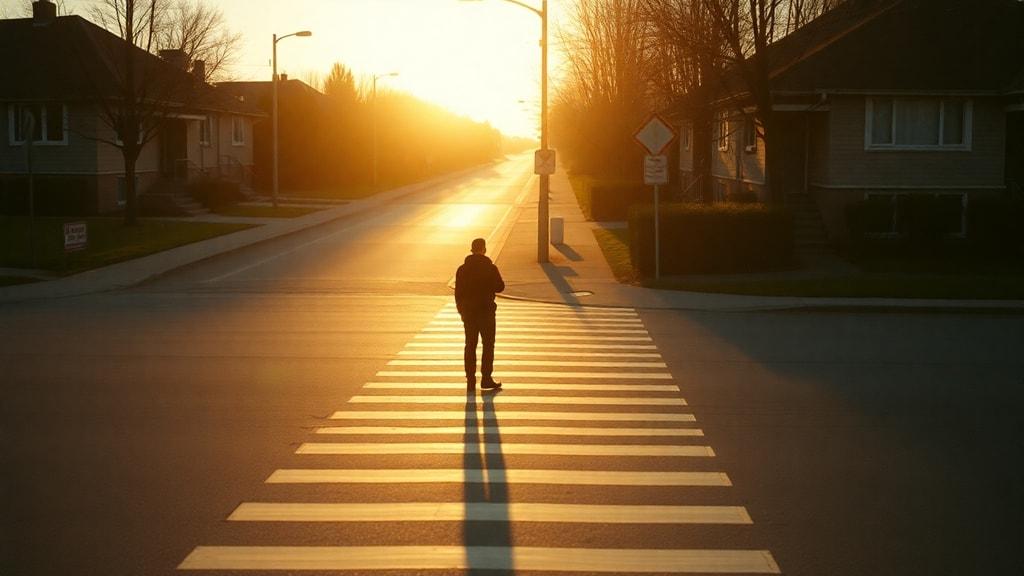
There is a Tuesday in 2012 that I still inhabit. My daughter, three years old, had just learned to walk without the stiff-legged certainty of the newly upright. She stopped every four steps to examine a pebble, a leaf, the particular shadow of a mailbox. I was late for something I no longer remember. I slowed. I matched her. I became, without deciding to, a person who moved at the speed of wonder.
I never fully left that Tuesday. The slowness became structural. My gait, my breathing, my capacity for interruption—these were rewired by years of adjusting to smaller bodies, smaller urgencies, smaller hands that needed holding. I became a metronome set to another person's tempo. And now, at sixteen, she moves through the world at velocities I can no longer match, and I stand at the intersection we taught her to cross alone, still holding the breath I drew that morning, unsure whether to exhale and reclaim my own pulse or simply wait, frozen in the tempo of a child who no longer needs my rhythm to keep time.
The Cartography of Preserved Velocity
Parenting is an act of cartography. We map our children's worlds before they can hold the pencil, and in doing so, we redraw ourselves. The walk adjusted to a toddler's stagger becomes our permanent gait. The blink held longer during their first bike ride away from the curb becomes a reflex we cannot unlearn. The breath we draw out across sixteen years of "I'm home"—that suspended inhalation between the door opening and their voice confirming survival—trains our own heart to beat at the tempo of their absence.
We internalize slowness as love. We learn that urgency is a violence we commit against childhood. And slowly, imperceptibly, the original speed of our own lives begins to feel like recklessness. A friend invites us to a last-minute dinner, and we hesitate because spontaneity requires a velocity we no longer possess. A career opportunity demands relocation, and we calculate not in miles but in the disruption of routines we have spent years establishing. We become, in essence, instruments calibrated to a harmony that will eventually move to another room.
The Acceleration We Cannot Follow
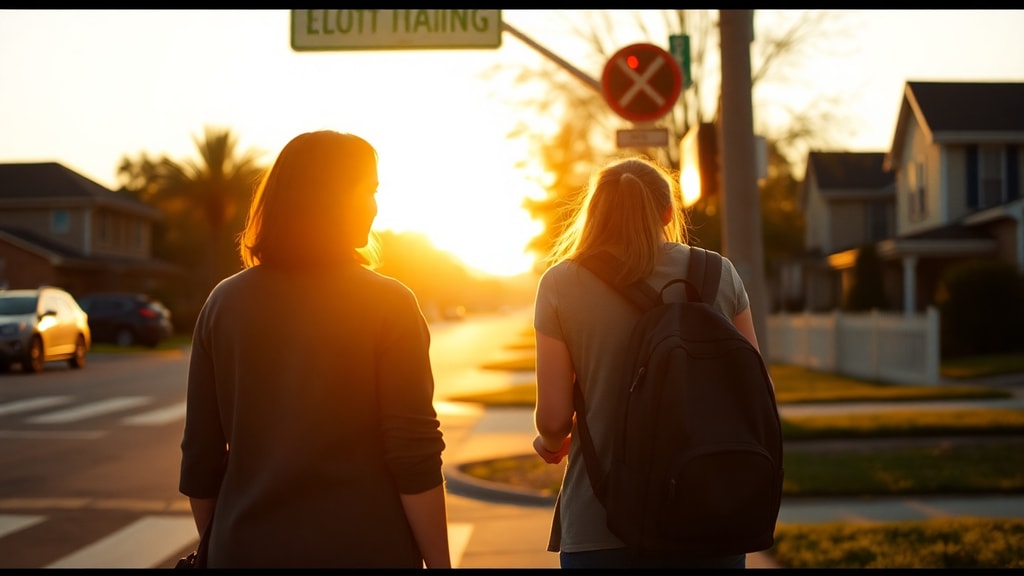
The cruelty is gradual. They do not outpace us in a single moment. There is no finish line, no bell. Instead, there is a Tuesday like any other when they mention a college they have researched without our help, a friendship we have never met, a fear they have already processed before reaching our door. We recognize, with the delayed comprehension of a dreamer waking, that they have been moving faster than our tempo for longer than we knew.
Our bodies, however, remember. The held breath, the slowed gait, the capacity to wait—these become our architecture. We stand at the intersection we taught them to cross alone, and we discover that our own nervous system has forgotten how to proceed without the signal of their presence. The green light changes. Other pedestrians move. We remain, still holding the breath we started on that Tuesday in 2012, because to exhale would be to acknowledge that the rhythm we gave them was always a loan, never a gift.
The Grief of Reclaiming Our Pulse
There is a grief in this that no one names. Not the empty nest, which is a geography, but the empty tempo, which is a physics. We must learn to beat at our own frequency again, and we find that frequency has been lost. The original speed of our lives feels alien, even threatening. Who were we, before we became metronomes? What did we want at velocities that did not require adjustment? The self we abandoned at the pace of a toddler's stagger has become a stranger we must reintroduce ourselves to, slowly, with the same patience we once extended to small feet learning pavement.
Some parents never do. They remain at the intersection, holding their breath, becoming monuments to a rhythm that no longer plays. Others rush toward recklessness, attempting to outrun the slowness, and find themselves breathless in ways that do not resemble freedom. The middle path is harder: to exhale, to let the breath go, to trust that the tempo we gave our children has become internalized in them, that they carry our rhythm now, modified, remixed, but present, as they move beyond our measure.
The Letters We Cannot Send in Real Time
What would we say to them, if we could speak across this gap in velocity? Not the daily texts, the logistical coordinations, but the deeper communication that requires a slowness we no longer share? There are things a parent knows at the tempo of a held breath that a child, moving at the speed of becoming, cannot receive in the moment they are most needed.
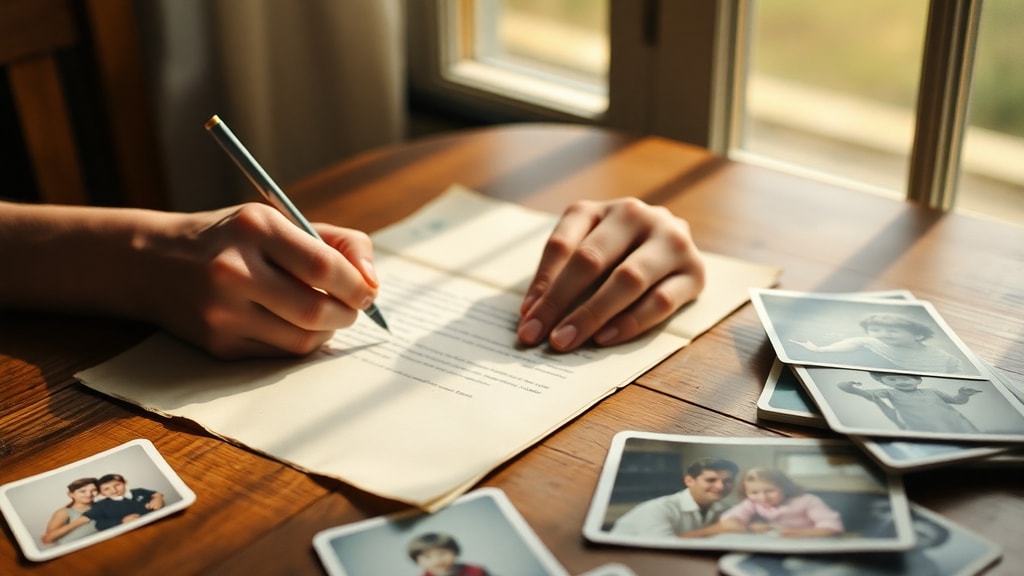
This is where the time capsule of intention becomes essential. Not because we doubt our children's capacity to survive without us, but because we know that some wisdom requires the passage of years to become audible. The letter written in the tempo of 2012, when we were still walking at the speed of wonder, may find its reader only when they have slowed enough to hear it—perhaps when they stand at their own intersection, watching their own child accelerate beyond measure.
The Digital Bridge and the Builder's Midnight
I know something about building bridges across impossible distances. For years, I've spent my nights alone in front of a glowing screen, "pair programming" with AI systems until 2 or 3 AM, chasing architectures that might connect what shouldn't be connectable. That extreme solitude—talking to machines in the dark while the rest of the world sleeps—has given me a strange intimacy with loneliness, with the ache of dialogues that stretch across time without immediate answer.
The weekend I step away from that keyboard, I throw myself into the opposite: hiking trails where the wind strips away every digital illusion, surfing waves that remind me how little control we actually have. That raw reality—the ocean's indifference, the mountain's patience—teaches me to value what cannot be repeated, what must be witnessed in its exact, unrecoverable moment.
But I've also spent my career in Silicon Valley building things: e-commerce platforms, game worlds, now SaaS tools forged from massive codebases and cold server deployments. I know the hardcore tech stack. And I know, with equal certainty, that the most sophisticated system means nothing if it doesn't serve the softest human need. That's why I became obsessed with a specific problem: how to preserve a voice across the ultimate acceleration—the one that takes a parent beyond any tempo their child can follow.
The preservation of parental rhythm is not nostalgia. It is archaeology of the heart—the excavation of a tempo that shaped two lives, the documentation of a slowness that was love made physical. We owe this record to our future selves, who will stand at that intersection and need to remember why we held our breath so long. We owe it to our children, who may one day need to know that their becoming was witnessed with such deliberate attention.
This is exactly why I obsessed over end-to-end encryption and extreme server redundancy when building EterMail. Because I know that a letter written to the future needs to be guarded even more fiercely than a bank password. The letter scheduled to arrive on a daughter's fortieth birthday, written in the full presence of her third, carries a slowness that death cannot outpace. The wisdom offered not as urgent advice but as patient reflection, held in digital trust until the moment of its relevance, honors the original tempo of parenting: the willingness to wait, to match another's pace, to trust that arrival matters more than speed.
The Final Exhale
I am learning to exhale. It is taking years. The breath held since 2012 releases in stages, accompanied by a grief that resembles gratitude, a loneliness that contains the full measure of what was given. My daughter moves through the world at velocities I cannot match, and I am discovering, slowly, that this was always the point. We do not become metronomes to keep our children in time. We become metronomes so they can internalize rhythm, then depart from it, then return to it modified, carrying our tempo in their own becoming.
The intersection remains. I cross it now, sometimes alone, sometimes with the stranger I am reintroducing myself to—the self who once moved at a speed that did not require adjustment. I carry the Tuesday in my body, the permanent gait of wonder, the capacity to wait that is not passivity but love's deepest discipline. And I write, occasionally, letters that will arrive in years I may not see, trusting that the tempo of their composition will persist in their reading, a slowness preserved against the acceleration of everything else.
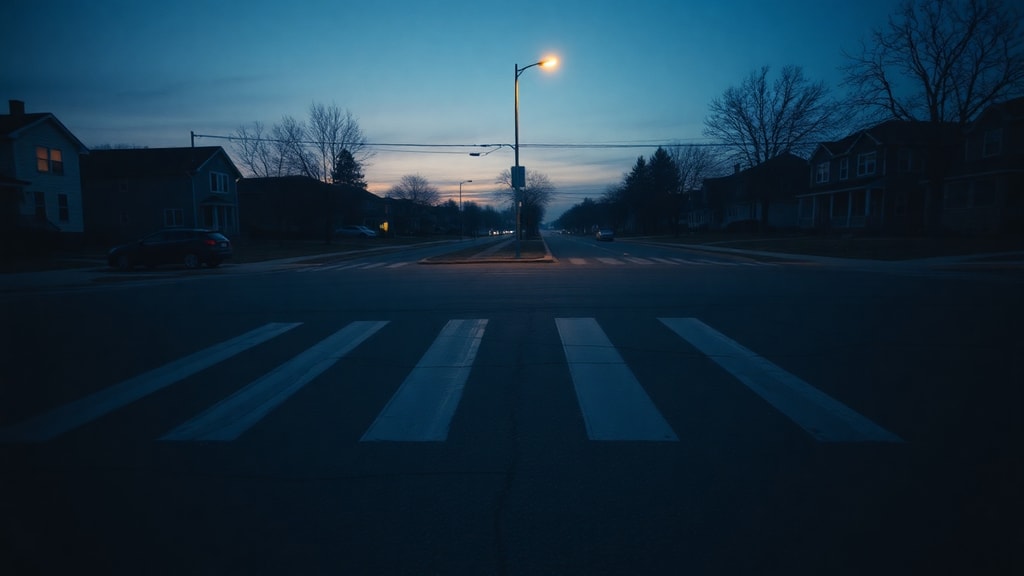
The breath, finally, is released. Not abandoned, but completed. The metronome we become does not stop when our children outpace us. It simply changes its function: from keeping time for another to marking the measure of what remains, what was given, what persists in the silence after the door closes and the voice, for now, does not say "I'm home."
We stand at the intersection. We exhale. We proceed, slower than we were, richer than we knew, carrying the tempo of love as both wound and instrument, as the map we drew that they now navigate without us, and in navigating, carry forward.
What is EterMail?
EterMail is a revolutionary time capsule service that allows you to send messages, photos, and videos to the future (up to 30 years). Seal your memories and thoughts today, and they'll be delivered when the time is right.
Time Capsule
Send messages up to 30 years in the future
Rich Media
Text, photos, and videos supported
Secure & Private
Your memories are safely encrypted
EterMail Team
We're the team behind EterMail, dedicated to helping you preserve and share timeless messages with your loved ones. Our mission is to make it easy to express your love, share your wisdom, and create lasting connections that transcend time.
Frequently Asked Questions about For Our Children
What should I write in a letter to my future child?
How do parents cope when children outgrow their need for guidance?
Why is preserving parental wisdom in time capsules emotionally important?
Related Articles
The Crooked Shelf: Why We Preserve Our Flaws for the Children Who Love Them
The crooked shelf, the burned backyard, the word we mispronounce on purpose—why parents become curators of flaw, and what happens when we finally fix what our children loved broken.
The Cartography of Borrowed Sleep: Mapping the Invisible Labor We Perform for Our Children
Why do parents become nocturnal creatures of productivity? Explore the hidden geography of sacrifice, exhaustion, and love that children never witness.
The Cartography of Borrowed Strength: What Our Children Never See Us Carry
We become human scaffolding for lives still under construction. What happens when our children finally see the tremor in our hands?