
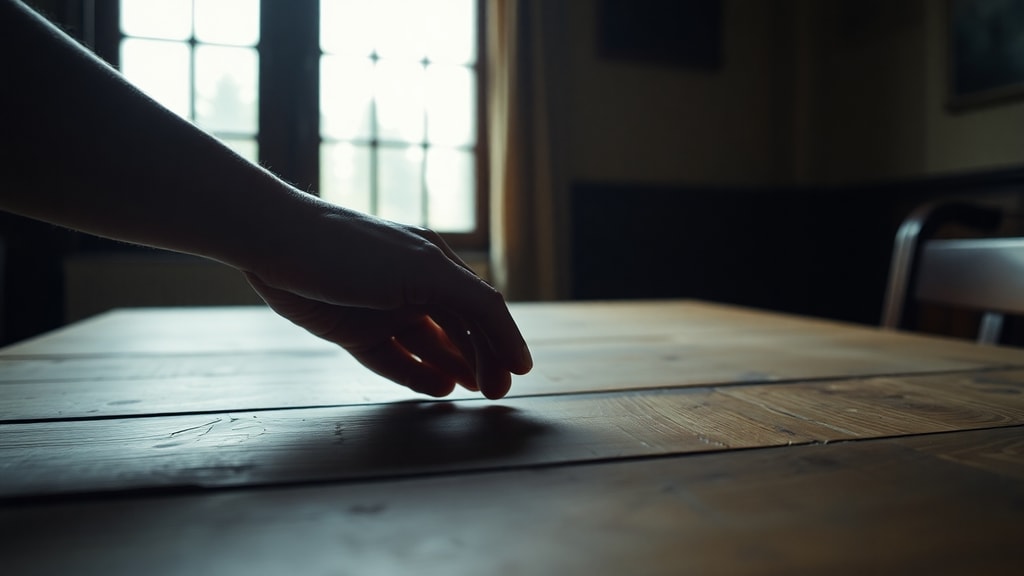
There is a moment, quiet and unscripted, when your hand reaches for the coffee maker and brushes theirs. Neither of you flinches. Neither pulls away. The kitchen hums with its ordinary sounds—the refrigerator's low thrum, the drip of the machine—and you stand there, suddenly aware that something has shifted without announcement. The body, that stubborn and faithful animal, has decided before the mind was ready. It has begun to forget the architecture of your anger.
This is not the reconciliation of movies. There are no orchestral swells, no tearful speeches in rain-soaked doorways. This is the muscular, daily work of relearning how to occupy the same space without injury—and it happens first in the skin, the shoulders, the careful placement of feet beneath the dinner table.
The Geography of Withdrawal
When love goes cold, we do not simply stop speaking. We stop occupying. The body becomes a cartographer of avoidance, mapping new routes through shared rooms. You take the long way to the bathroom to bypass the couch where they sit. You develop the habit of holding your own elbow, a self-soothing that replaces the arm once offered. The bed becomes a territory of careful edges, each body hugging its respective shore.

The space between you is not empty. It fills with the residue of everything unsaid, every argument that ended without resolution, every small betrayal that accumulated like sediment. This distance becomes its own language, fluent and articulate. You become expert at reading the angle of their shoulders, the speed at which they move through doorways, whether they set your coffee down within reaching distance or place it across the table like a small fence.
What we rarely acknowledge: this withdrawal is protective, but it is also practice. The body rehearses absence so diligently that presence begins to feel foreign, even threatening.
The First Touch That Doesn't Burn
The return is never linear. It arrives in fragments, in gestures so small they barely register as choice.
The hand on the counter. The night you reach across in sleep and your knees touch, and you do not retreat. The morning you find yourself adjusting their collar before they leave for work—your fingers moving before your caution can intervene—and you realize the body has been keeping a separate ledger all along, one that does not tally wounds but remembers warmth.
These touches carry a particular quality: they land sideways, indirectly, as if approaching a skittish animal. The kiss that finds the cheek because the mouth still holds too much charge. The shoulder pressed against shoulder on the sofa, watching something neither of you follows, the contact maintained just long enough to prove it does not destroy.
This is the re-education of intimacy—not a grand restoration but a series of provisional experiments. Each touch asks a question the mind is not yet prepared to answer: Is this safe? Is this permitted? Does this still mean what it once meant, or can it mean something new?
When Initiation Becomes Its Own Milestone
There comes a night, months or years into the cold season, when you initiate sex not because you are healed but because you are exhausted by the project of waiting to be. The conditions you set for your own readiness have become a prison of perfection—forgiveness complete, trust restored, narrative neatly resolved—and you recognize, finally, that these conditions may never arrive in the form you imagined.
This initiation is not the same as desire uncomplicated. It may carry grief, hesitation, even anger still warm at the edges. But it carries something else: the refusal to let your wound have the final word about your body. The insistence that touch can be reclaimed before the heart has finished its accounting.

The body, in these moments, becomes a site of negotiation rather than certainty. You discover what still responds, what has gone numb, what requires patient reintroduction. This is not the sex of new lovers, all discovery and absence of history. It is sex as archaeology, digging through layers of accumulated meaning to find what remains alive beneath.
The Collar Adjustment and Other Small Miracles
The truest milestones of reconciliation are rarely the ones we plan or recognize in the moment. They arrive disguised as habit, as the ordinary gestures of cohabitation that precede conscious choice.
The morning you catch yourself adjusting their collar without thinking—and the thought that follows, belated and almost surprised: I still know how this person should look. The night you sleep with your back to them and it registers not as wound but as preference, as the comfortable arrangement of two bodies that no longer need vigilance to coexist. The first time you reach for their hand in public, not for reassurance but from the simple overflow of walking beside someone you have decided, again, to touch.
These moments constitute a different kind of forgiveness—not the spoken absolution that clears the ledger, but the cumulative, embodied evidence that you are choosing, daily, to inhabit the same world. The body becomes the archive of this choice, storing it in muscle memory, in the autonomic responses that outpace deliberation.
What the Body Knows That Language Cannot
We are taught to privilege the verbal in matters of the heart. We seek the conversation that will explain, resolve, restore. But there are regions of experience that language reaches only obliquely, if at all—the somatic knowledge of safety or threat, the felt sense of being with or against.
The body remembers what the mind represses. It also forgets, or rather relearns, on its own timeline. You may still carry the sentences you need to speak, the accounting you demand or owe, and yet find that your hand has begun, independently, to seek theirs. This is not betrayal of your grievance. It is the recognition that you are more than your grievance, that your capacity for contact has survived your narrative of injury.
The Courage of Proximity
What if the truest milestone is not the forgiveness we speak but the courage to close the distance our anger made necessary? To trust that touch can mean something new even when the hands are the same?
This courage is not dramatic. It does not announce itself. It accumulates in the choice, repeated, to occupy the same room without armor, to let your body learn again what it has been taught to fear. The kiss that lands on the cheek is not a failed kiss. It is a kiss that understands its own limits and chooses presence within them. The hand that brushes yours at the coffee maker is not accidental. It is the body, that stubborn and faithful animal, voting with its skin for a future it cannot yet articulate.
Preserving the Milestones We Almost Miss
These moments—so small they escape notice, so gradual they resist narrative—are the actual architecture of reconciliation. They deserve witness. They deserve to be remembered not as the background noise of repair but as its essential substance.
I know this hunger to preserve from my own life. I spend my nights alone with glowing screens, pair-programming with LLMs until 2 or 3 AM, mapping architectures that no one else will see until months later. That extreme digital solitude has taught me something about loneliness, yes—but more about the dialogues we try to hold across time, with versions of ourselves and others who are not present to answer. When I finally step away from the keyboard, I throw myself into hiking steep trails, into ocean waves that strip away every illusion of control. The raw reality of those moments—wind, exhaustion, the unrepeatable now—has made me fierce about preserving what actually happened, before memory distorts it into something cleaner and less true.
There is value in capturing these quiet milestones, in creating records that outlast the amnesia of healed pain. A letter to your future self, written from the midst of this relearning, describing the particular quality of the first touch that did not burn. A message to be delivered years hence, when the crisis has softened into story, reminding you of the courage proximity required. The body will remember, but memory distorts, elevates, erases. The written word holds the texture of what was actually lived.
The best way to fight forgetting isn't taking another screenshot; it's setting an alarm for the future. By using EterMail to set a delivery date 5 years from now, you completely free yourself from the anxiety of the present—you write the letter while the feeling is still alive in your fingertips, then trust it to arrive when you most need to remember who you were becoming. The platform's encrypted, scheduled delivery ensures that these records survive not as vulnerable data but as intentional legacy, preserved against the erosion of time and the convenience of forgetting.
Because the body remembers first, but it does not remember forever. And the story of how you touched again—how you chose, against the weight of your own anger, to close the distance—deserves to survive you both.
The Ongoing Work of Being Near
Reconciliation is not a destination. It is a practice, renewed each morning in the kitchen, each night in the negotiation of bed space. The body that has learned to touch again must continue choosing touch, must resist the seductive safety of re-withdrawal when the next conflict arrives—as it will, because love does not resolve into permanent peace.
But something has changed, irrecoverably, in the relearning. You know now that distance can be crossed. That your hand, reaching, will not always be burned. That the body keeps its own counsel, its own patience, its own stubborn faith in warmth.
The heart may take years to catch up. The body, that faithful animal, has already begun.
What is EterMail?
EterMail is a revolutionary time capsule service that allows you to send messages, photos, and videos to the future (up to 30 years). Seal your memories and thoughts today, and they'll be delivered when the time is right.
Time Capsule
Send messages up to 30 years in the future
Rich Media
Text, photos, and videos supported
Secure & Private
Your memories are safely encrypted
EterMail Team
We're the team behind EterMail, dedicated to helping you preserve and share timeless messages with your loved ones. Our mission is to make it easy to express your love, share your wisdom, and create lasting connections that transcend time.
Frequently Asked Questions about Love & Milestones
How do couples rebuild physical intimacy after emotional distance?
Why does the body sometimes want closeness before the heart feels ready?
What small milestones indicate a relationship is healing after conflict?
Related Articles

The Architecture of Repair: Why the Bravest Milestone in Love Is Saying 'I'm Sorry' First
The truest milestone isn't declaring love in clarity—it's the courage to apologize first, absorb what you don't deserve, and rebuild from the rubble.
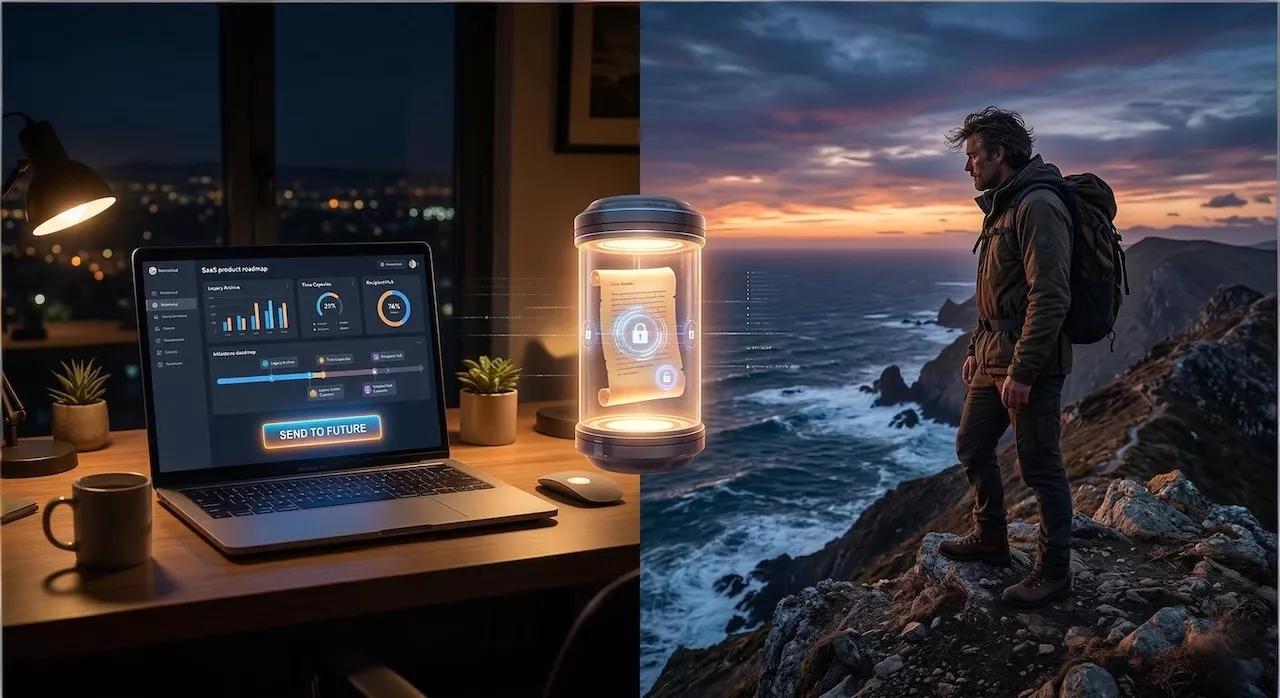
Why I Built EterMail: A Time Capsule for the People I Love Most
I’m a Product Manager who spends all week optimizing for the "immediate now." But getting lost off the grid on a mountain ridge made me realize I had zero infrastructure for the "forever." Here’s why I stopped worrying about conversion rates for a moment and built EterMail—a secure, tamper-proof digital time capsule for the people I love most.

The Most Radical Letter to Your Future Self Is a Promise to Stay Unfinished
The best letter to your future self isn't a memory—it's a mandate. Learn how writing to the version of you still working with love changes everything.