
The Morning the Coffee Pot Changed
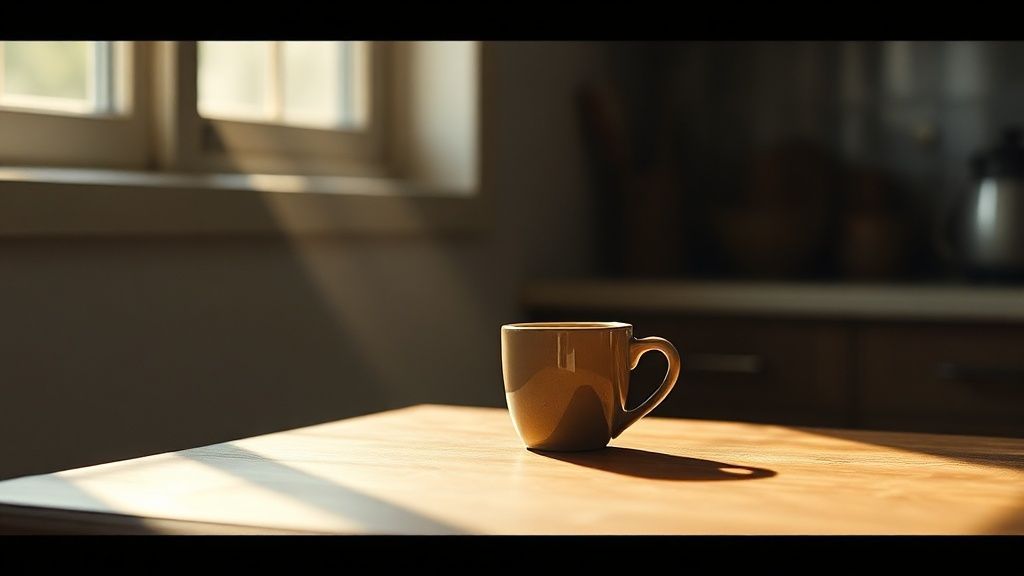
You don't notice the shift at first. It's buried too deep in muscle memory, in the automatic choreography of a shared life. But one Tuesday—nothing special about it, no anniversary or milestone—you stand at the kitchen counter and actually look at the water line on the coffee maker. You measure. Four cups, not eight. The machine gurgles differently with less water. The sound is wrong, somehow. Smaller.
You realize you've stopped filling to their line.
This is not the grief of funerals, of casseroles and sympathy cards. This is the granular mathematics of continuation: the daily renegotiation of space that no one warns you about because it lacks the dignity of big moments. The side of the bed you finally claim. The silence where their commentary used to punctuate the evening news. The way you now close doors without that half-second pause, waiting for footsteps that don't come.
Your body has been learning a new language. Without an accent, without permission, without your conscious participation.
The Geography of Absence
Grief cartographers—those who map the terrain of loss—often focus on the monumental: the first birthday, the first holiday, the empty chair. But the true work of healing happens in the unremarkable territories. The refrigerator shelf where their specific yogurt lived. The passenger seat that stays empty not because you forget, but because you've stopped reflexively reaching to adjust their vent.
Dr. Rachel Naomi Remen, physician and author, once wrote that loss doesn't end; it changes. What she didn't fully articulate is how physical that change becomes. You don't just miss someone. You miss the version of yourself that existed in relation to them. The self who slept on the left. The self who cooked for two appetites. The self whose body knew, without looking, exactly where they were in the room.
This is why healing can feel like betrayal. Your muscles release their vigilance before your heart consents. You find yourself laughing at something on your phone, alone, and the sound startles you. When did you stop saving the funny ones to show them later?
The Paradox of Embodied Forgetting
Neuroscience offers a partial explanation. Procedural memory—the domain of habits, of automatic actions—operates below conscious thought. Your body learned the patterns of partnership through repetition: the weight distribution on shared furniture, the timing of bathroom routines, the choreography of kitchen movement. These patterns don't dissolve with understanding. They require physical unlearning, neuron by neuron, morning by morning.
Meanwhile, episodic memory—your conscious recollection of shared experiences—remains vivid, even sharpened by absence. The result is a cruel temporal dissonance. You can recall their expression during a conversation three years ago with crystalline precision, even as your hand stops reaching for their mug in the cabinet.
Your body forgets. Your heart remembers. You are caught between.
Inhabiting the Single Life
There comes a point—not marked, not celebrated—when you recognize that your life now fits only you. The adjustment isn't comfortable. It's more like breaking in new shoes that are the right size but wrong shape. You can walk. You will walk. But you feel the difference with every step.
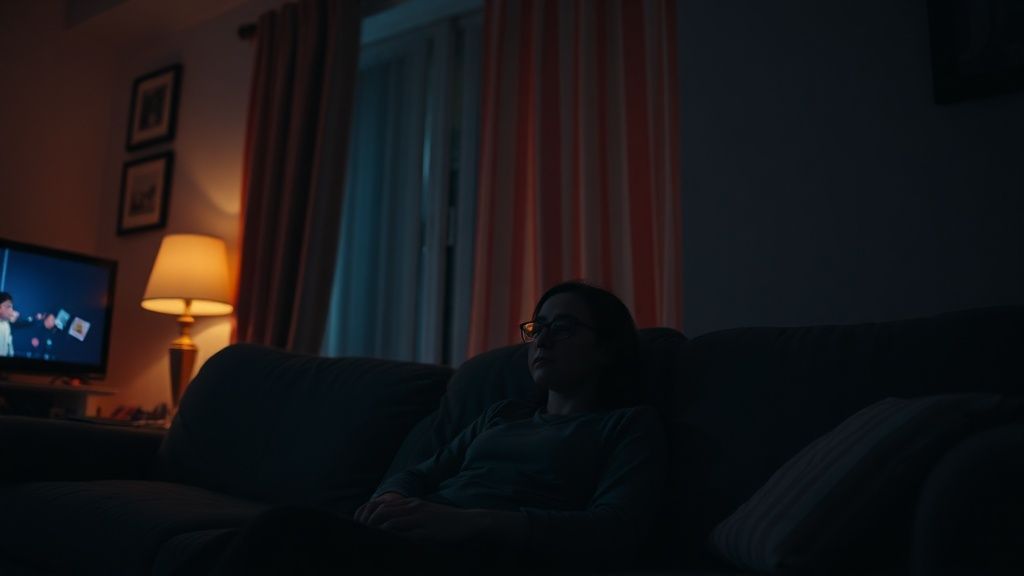
The evening news silence is perhaps the most insidious. Shared media consumption—television, podcasts, music—creates what researchers call "synchronized attention." You don't just watch together; you construct meaning together. Their laugh at a joke, their outrage at injustice, their puzzlement at a plot twist: these responses became part of your own processing. Without them, the media landscape feels flat, unresponsive. You find yourself talking back to the screen, performing both parts of a dialogue that no longer exists.
And yet. And yet.
There is something in this solitude that offers its own strange education. You begin to notice your own preferences with uncomfortable clarity. What you actually want for dinner, when the compromise of negotiation is removed. What temperature you prefer. How you arrange the pillows when no one else's neck curvature must be considered.
This is not liberation, exactly. But it is information. You are collecting data about a self that existed within partnership but was never fully visible to you.
The Letters We Don't Send
In this landscape of adjustment, many find themselves writing. Not for publication. Not even necessarily for sending. The practice of addressing words to the absent—whether through journaling, unsent letters, or more formalized rituals—serves multiple functions that neuroscience and psychology are only beginning to understand.
Writing to someone who cannot respond creates what linguists call "asymmetric discourse." You maintain the grammatical structure of dialogue without the expectation of reply. This asymmetry is initially painful. Over time, it becomes a container for ongoing relationship—not the relationship you had, but something that acknowledges continuity despite rupture.
More practically, writing externalizes the internal conversation that grief demands. The questions you would have asked. The observations you would have shared. The arguments you would have had about the news, the neighbor's landscaping, the proper way to load the dishwasher. These dialogues don't stop because one participant has exited. They find new form.
Some choose to formalize this practice through time-capsule letters—messages composed in the present for future opening. The psychology here is complex. You are writing to a future self who will have continued without the person you mourn, acknowledging that your current pain is temporary even when it feels eternal. You are creating evidence of your own survival before you have survived. You are practicing hope without requiring yourself to feel it.
I've spent too many nights alone with a screen, building systems that outlast me, to believe that digital permanence is just about data. When I started EterMail, I was chasing something stranger: the possibility that a message could travel through time the way memory does, arriving exactly when someone needs it. I wanted to build a bridge between who you are now and who you might become. The best way to fight forgetting isn't taking another screenshot; it's setting an alarm for the future. By using EterMail to set a delivery date 5 years from now, you completely free yourself from the anxiety of the present.

What Healing Actually Looks Like
We have inherited impoverished images of healing. The closure narrative. The "moving on" imperative. The expectation that grief has stages with clean boundaries, that we progress through denial to acceptance like levels in a video game.
The reality is messier, more interesting, and—paradoxically—more sustainable. Healing looks like making coffee for one while still talking to them in your head. It looks like sleeping on both sides of the bed, experimentally, and choosing the right side not because it's theirs but because the morning light hits better. It looks like closing the door firmly, without pause, and then opening it again because you heard a sound that might have been footsteps.
Healing is not forgetting. It is not "getting over it." It is the gradual, embodied recognition that your life has changed shape, and that you are capable of inhabiting this new geometry even when it still feels borrowed, temporary, wrong.
The coffee pot will sound right eventually. Or you will stop noticing that it sounds wrong. These amount to the same thing, practically speaking. The language you are learning—this life measured for one—will develop its own fluency. You will still have an accent, probably. The accent of someone who once spoke something else, fluently, with a partner who knew all your idioms.
That accent is not a defect. It is evidence of fluency achieved. Of a language you spoke well enough to miss. Of a conversation that continues in modified form, in memory, in the daily practice of making coffee and closing doors and finding yourself, against expectation, still here.
The morning you measured water for one, you were not betraying them. You were learning to measure yourself: your needs, your capacities, your surprising persistence. The pot holds what you put in it. You are learning, still, what that should be.
What is EterMail?
EterMail is a revolutionary time capsule service that allows you to send messages, photos, and videos to the future (up to 30 years). Seal your memories and thoughts today, and they'll be delivered when the time is right.
Time Capsule
Send messages up to 30 years in the future
Rich Media
Text, photos, and videos supported
Secure & Private
Your memories are safely encrypted
EterMail Team
We're the team behind EterMail, dedicated to helping you preserve and share timeless messages with your loved ones. Our mission is to make it easy to express your love, share your wisdom, and create lasting connections that transcend time.
Frequently Asked Questions about Healing & Remembrance
How do I write a letter to someone who has passed away?
Is it normal to still talk to my deceased partner in my head?
What should I include in a time capsule letter for my future self after loss?
Related Articles

The Geography of Absence: How Reclaiming Space Becomes Its Own Kind of Healing
What happens when you finally move the couch? Explore how reclaiming physical space after loss creates room for healing and new beginnings.

The Lightbulb in the Hallway: On Finishing What the Dead Left Undone
Why replacing a flickering lightbulb can break your heart—and why completing a loved one's unfinished tasks is its own strange form of healing.

The Voice They Left Behind: When Healing Sounds Exactly Like Someone You Lost
Discover what it means when a lost loved one's speech patterns, jokes, and verbal tics live on in your own voice—and whether to let them stay.