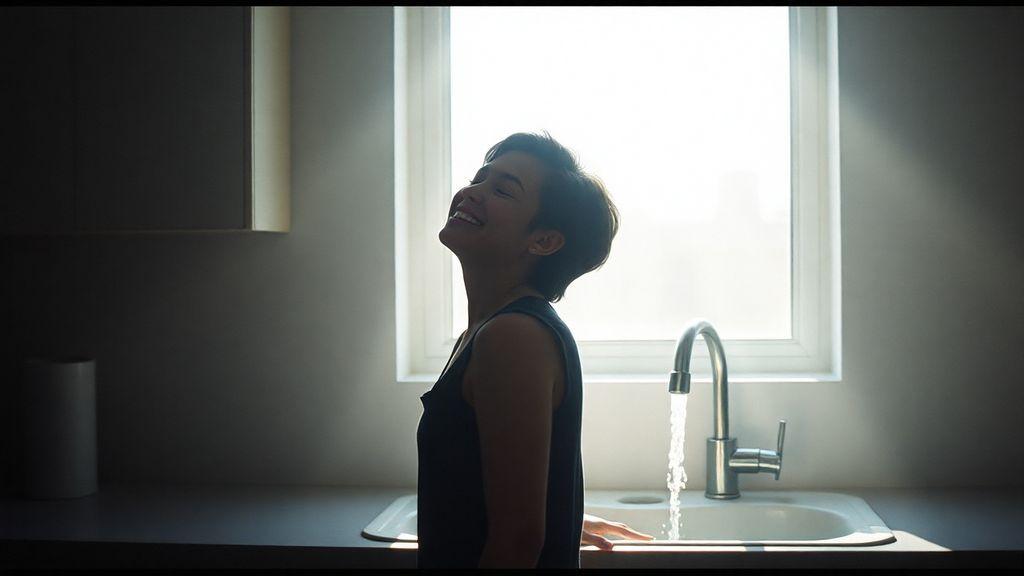
It happened while I was washing dishes. A song came on—one they despised. For years I had skipped it on reflex, a small, private loyalty. But this time I didn't reach for the button. I let it play. My shoulders loosened. My body swayed, almost without permission. And then came the guilt, thin and sharp, followed by something more confusing: relief.
We are not taught that grief has this chapter. The culture of loss gives us rituals for the first year, the first holiday, the empty chair. It does not prepare us for the afternoon we realize you have outlived your shared tastes—the restaurants you finally try, the cities you visit without their running commentary, the opinions you form in the silence where their voice used to be. What does it mean to heal when you discover you are becoming someone they never knew? And why does that growth feel, at first, so much like abandonment?
The Geography of Shared Dislike
Every relationship carves out its own map of preferences. We loved this diner. We couldn't stand that director. We always vacationed north, never south. These collective tastes become coordinates in the territory of "us," and after someone dies, maintaining them can feel like keeping a promise. You avoid the restaurant they found pretentious. You still argue their political position in your head before forming your own. You carry their dislikes like a small, weighted backpack—evidence that the relationship continues, that you have not forgotten.
But grief is not static, and neither are we. The person who died stopped changing the moment they left. The living do not have that option. Time keeps kneading us, and slowly, almost imperceptibly, the coordinates shift. You find yourself curious about sushi after a lifetime of their seafood allergy. You book the trip to the desert they always called "too hot, too empty." You vote differently. You become differently.
The Strange Freedom of Silence
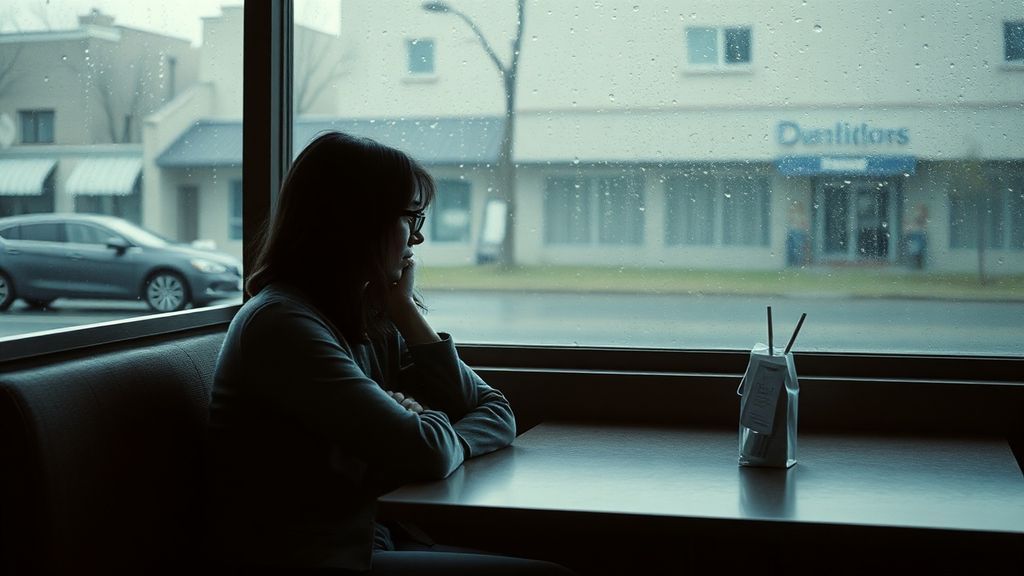
There is a particular loneliness to outliving someone's opinions. When my mother died, I noticed it first in small consumer choices: a paint color she would have called "too bold," a hairstyle she would have worried was "unprofessional." Each choice carried a faint echo of her voice, followed by a new, unfamiliar quiet. I had spent decades forming preferences in dialogue with hers—sometimes in agreement, sometimes in rebellion, but always in relation. Without that relation, I was suddenly unmoored. I could choose anything. No one was watching. No one was waiting to say, I told you so or I'm proud of you.
This silence is double-edged. It is liberating and it is devastating. You are finally the sole author of your taste, your politics, your direction. And you would give almost anything to have an editor again—especially one who loved you enough to disagree.
Researchers who study bereavement call this phenomenon "identity reconstruction." After a significant loss, we must literally rebuild who we are, because so much of our self-concept was constructed in the context of the relationship. The process is not betrayal. It is neuroplasticity applied to the soul. But knowing this intellectually does not prevent the heart from flinching.
When Growth Feels Like Disloyalty
The psychological tension here runs deep. We are wired for loyalty, and in the early stages of grief, that loyalty often expresses as preservation. We preserve their room, their traditions, their preferences. But preservation is not the same as life. A museum is beautiful and dead. A person must keep breathing, which means keep changing, which means eventually diverging from the frozen snapshot we carry.
I felt this most acutely with music. My partner had strong opinions about what constituted "real" jazz. For three years after their death, I listened only to the approved canon—Miles, Coltrane, Bill Evans. Then one winter I found myself drawn to something more experimental, electronic, boundary-pushing. The first time I played it at volume, I felt nauseous with guilt. I was enjoying something they would have dismissed. I was becoming someone they might not have liked.
But here is what I have come to understand: they loved a version of me that was also changing. The person they fell in love with at twenty-five was not identical to the person they buried. They had witnessed my evolution, sometimes celebrated it, sometimes resisted it. Death interrupted that process; it did not invalidate it. To stop growing in their honor is not loyalty. It is a kind of shared dying.

Writing to the Person You Are Becoming
One practice that has helped me hold this strange terrain is writing letters to my future self—not as a replacement for the lost relationship, but as a way of honoring the continuity of my own becoming. Where will I be in five years? What will I believe? What music will I love? These questions, once co-authored, I now explore alone.
I started doing this during some of my loneliest nights building EterMail. I'd step away from the code at 2 AM, still half-living in the architecture of a product meant to carry voices across time, and I'd feel the weight of my own isolation. There's a particular kind of loneliness that comes from building bridges between people while sitting alone in a dark room. So I'd open a blank file and write to a future version of myself—the one who would eventually hike a mountain trail without checking Slack, the one who would learn to surf and feel genuinely out of control for once, the one who would no longer be grieving in quite this way. Those letters became my way of staying in dialogue with someone who didn't exist yet.
The best way to fight forgetting isn't taking another screenshot; it's setting an alarm for the future. By using EterMail to set a delivery date 5 years from now, you completely free yourself from the anxiety of the present. You can compose a letter to your future self—one year, five years, twenty years ahead—and know it will arrive when you have become someone new, someone your lost loved one never met. The letter becomes a bridge between who you were in grief and who you are in whatever comes next. It is a way of witnessing your own evolution without requiring anyone else's permission.
This is not about "moving on" in the crude sense. It is about refusing to let death freeze your story. The person you lost would not want to be the reason you stopped living. They would want to be the reason you lived more deeply, more honestly, more fully yourself.
The Permission to Be Unknown
There is a tender paradox at the heart of deep love: to be truly known is one of life's great gifts, and yet to be unknown—to be still becoming—is equally essential. The dead know us as we were. The living must make peace with being mysteries even to themselves.
I think about this when I visit the city my partner always wanted to see but never did. I go without them. I form impressions they will never hear. I eat at restaurants where no one knows my name or my history. There is grief in this, absolutely. But there is also something else: the quiet assertion that my life still belongs to me.
Healing does not mean loving them less. It means loving them differently—from a distance that keeps widening, across a terrain that keeps changing. It means humming the song they hated and not stopping. It means letting the sound fill the kitchen, fill your chest, fill the future they will not see.
What We Owe the Dead—and Ourselves
The dead ask very little. Mostly, we project our own standards of devotion onto them. Would they want me to be happy? Would they forgive this change? These questions reveal more about our own ambivalence than about their hypothetical judgments. What we really fear is not their disapproval but our own capacity to survive without them.
Survival, it turns out, is not a single act but a thousand small permissions. Permission to change your mind. Permission to outgrow a shared taste. Permission to become someone your grief does not recognize. Each permission is a tiny betrayal of the frozen past and a tiny fidelity to the living present.

The song ended. I dried my hands. The kitchen was the same, and I was not. That is the geometry of loss: the world holds still while we revolve around it, slowly, orbit by orbit, finding new angles of light.
There is no manual for this part of grief. No ritual, no anniversary card. Just the ordinary miracle of continuing—and the courage to let yourself become someone the dead never knew. They do not need you to stay the same. They need you to stay alive.
What is EterMail?
EterMail is a revolutionary time capsule service that allows you to send messages, photos, and videos to the future (up to 30 years). Seal your memories and thoughts today, and they'll be delivered when the time is right.
Time Capsule
Send messages up to 30 years in the future
Rich Media
Text, photos, and videos supported
Secure & Private
Your memories are safely encrypted
EterMail Team
We're the team behind EterMail, dedicated to helping you preserve and share timeless messages with your loved ones. Our mission is to make it easy to express your love, share your wisdom, and create lasting connections that transcend time.
Frequently Asked Questions about Healing & Remembrance
Why does healing from grief sometimes feel like betrayal?
How can writing help with the identity reconstruction that happens after loss?
Is it normal to feel guilty for enjoying life after someone dies?
Related Articles

Why I Built EterMail: A Time Capsule for the People I Love Most
I’m a Product Manager who spends all week optimizing for the "immediate now." But getting lost off the grid on a mountain ridge made me realize I had zero infrastructure for the "forever." Here’s why I stopped worrying about conversion rates for a moment and built EterMail—a secure, tamper-proof digital time capsule for the people I love most.

The Most Radical Letter to Your Future Self Is a Promise to Stay Unfinished
The best letter to your future self isn't a memory—it's a mandate. Learn how writing to the version of you still working with love changes everything.

The Ice Tray at Midnight: On Grief, Domestic Minutiae, and the Quiet Work of Becoming Yourself Again
Why do the smallest habits hurt most after someone leaves? A reflection on grief, domestic minutiae, and the quiet moment healing finally begins.