
The first time it happened, I froze. A podcast host said something so perfectly absurd—so exactly the kind of observation my mother would have delivered with a raised eyebrow and a dry "Well, obviously"—that I laughed out loud in my car. A real laugh, unguarded and sudden. Then came the familiar reflex: the catch in my throat, the mental hand reaching out to stop the sound, the silent apology forming on my lips.
But this time, something different happened. The guilt didn't arrive. Or rather, it arrived and found no purchase, like a key sliding into a lock that had already been changed. In its place came something I can only describe as electric gratitude—a sensation that she had somehow whispered the punchline in my ear, that we were laughing together again, not across time but somehow through it.
This is the disorienting geography of healing that no one maps for us: the moment when joy stops feeling like a solo act performed in their absence and becomes, impossibly, collaboration.
The Architecture of Absence
We build elaborate structures around our dead. At first, grief is a full-time occupation—mourning as performance, as proof of love, as the only acceptable currency of loyalty. We learn to inhabit their absence so completely that their presence becomes a kind of trespass. When they appear in dreams, we wake bereft all over again. When we catch ourselves humming their favorite song, we silence ourselves. We become curators of loss, carefully maintaining the exhibit of their memory, temperature-controlled and untouched.
The unspoken contract reads: To honor them is to stay wounded. Joy becomes suspect, pleasure feels borrowed, and any laughter that escapes unaccompanied by tears must be immediately audited for appropriate remorse.

But grief, like all living things, refuses to be curated. It evolves without permission. And at some point—different for everyone, impossible to predict—we find ourselves in the strange territory where healing doesn't feel like betrayal but like continuation.
The Grammar of Shared Joy
What does it mean to carry someone forward not as a wound to protect, but as a voice you've finally learned to hear without needing to silence your own?
It means recognizing that the qualities we loved in them—their humor, their skepticism, their particular way of seeing—were never theirs alone. They were gifts, transmitted through relationship, waiting to be activated. When I laugh now at the same absurdities my mother would have noticed, I'm not performing memory. I'm speaking a language she taught me, one that finally has enough fluency to include new vocabulary, new contexts, new interlocutors.
The philosopher Kierkegaard wrote that "life can only be understood backwards; but it must be lived forwards." We might add: and it must be laughed forwards too. The dead don't need our frozen grief. What they offered us in life—perspective, wit, the particular tilt of their attention—was always meant to be used, deployed in situations they would never witness, applied to problems they never imagined.
This is not consolation. This is inheritance as active verb.
The Disorientation of Unearned Permission
There's a particular loneliness to early grief that later grief doesn't replicate. In the beginning, we have company: the funeral, the casseroles, the prescribed rituals of acknowledgment. Then the world moves on, and we are left with the private work of learning to want things again, to taste food, to be surprised by beauty.
But the later loneliness—the one that arrives when joy returns—is stranger and less legible. We have not been given permission to feel better. No ceremony marks this transition. No one sends flowers for the first time you genuinely enjoy a party. We are left to stumble through this terrain without maps, without witnesses, sometimes without even language to describe what is happening.
I remember sitting in a restaurant six months after my mother's death, having a conversation that made me laugh until tears came. The tears were real, but they were not grief-tears, and I didn't know what to do with them. I excused myself to the bathroom and stared at my reflection, searching for the appropriate emotion. What I found was confusion, and beneath it, something like fear: If I can laugh like this, what else can I do? Who am I becoming without her?
The answer, I now understand, is: someone she helped build, someone who can carry her forward without carrying only her absence.
Writing the Conversation That Continues
Not everyone experiences this transition as naturally as my podcast moment. For many, the guilt persists, the silence around joy remains enforced, and the dead stay curiously unavailable—present as pain, absent as presence.
This is where the deliberate work of remembrance matters. Not the public work of tribute, but the private work of continuing the conversation.
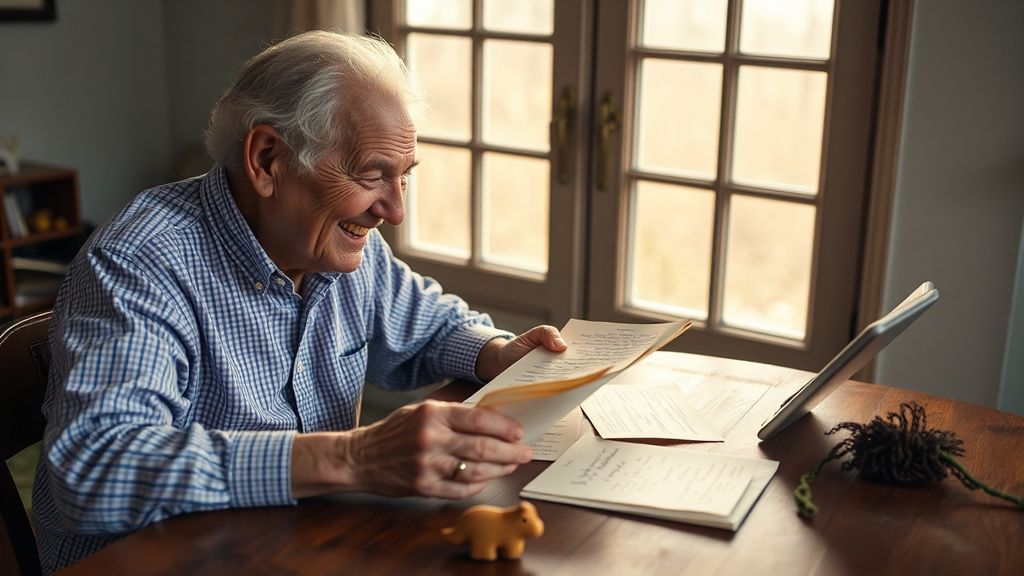
Some people do this through ritual: cooking their mother's recipes but adapting them, playing their father's music but discovering new artists in the same genre. Others do it through writing—letters that will never be sent in the traditional sense, but that reestablish the habit of address, the muscle memory of thinking with someone rather than only about them.

There is something about the act of composition—of choosing words, of anticipating response, of revising for clarity—that reactivates relationship. Even when the response must be imagined, even when the revision is endless, the posture of communication keeps the channel open. Not as haunting, but as habitation.
The Technology of Continued Presence
We are the first generations to confront the digital afterlife in earnest—the preserved emails, the text threads that never got deleted, the social media profiles that become memorials without intention. This archive is both gift and burden, offering evidence of voice and rhythm while risking fixation on the static past.
I spend most nights alone with glowing screens, building systems that bridge impossible distances. It's a strange solitude—pairing with AI at 2 AM, mapping architectures that might outlast me, chasing the fantasy of consciousness that persists beyond the physical. That same obsession with digital permanence, with building bridges between what is and what might be, is what drove me to create EterMail. Because I know what it means to want a conversation that doesn't end just because someone stepped offline.
The challenge is to use these traces not as endpoints but as prompts—not to read the same messages endlessly, but to ask: What would they say about this? How would their voice enter this new situation?
Some people find value in creating new messages to the dead, composed in the present tense of ongoing relationship. These are not goodbye letters. They are hello again letters, you won't believe what happened letters, I finally understand what you meant letters. They acknowledge that influence doesn't require presence, that conversation can be asynchronous across years as easily as across time zones.
And some—recognizing that their own future selves, or their children, or partners they haven't yet met, may need these voices too—choose to preserve not just the memory but the method of connection. The best way to fight forgetting isn't taking another screenshot; it's setting an alarm for the future. By using EterMail to schedule a letter to yourself five years from now, or to your child when they turn thirty, you completely free yourself from the anxiety of the present. You build the bridge while you still remember how.
The Ethics of Moving Forward
There is no clean resolution to grief, no final stage where we "get over it" and resume normal life. The better image is adaptation: we grow around the loss, incorporating it into structures large enough to contain both sorrow and its surprising neighbors—joy, ambition, new love, changed priorities.
The electric moment when laughter returns without guilt is not healing's endpoint. It is healing's invitation: to discover what else might be possible, what other collaborations await, what voices we might learn to hear more clearly precisely because we have finally stopped trying to silence our own.
My mother would have found this essay too serious by half. She preferred her philosophy with a punchline, her wisdom disguised as complaint. So I will end with something she might actually have said, delivered in that particular tone—half-exasperated, half-amused—when she caught me overthinking:
"You're still talking about this? Just live. I'll catch up."
And I believe, now, that she will. Not as ghost, not as wound, but as the particular frequency of attention I will always recognize, the laugh that arrives unexpectedly in my own throat, the collaboration that continues whether I notice it or not.
The healing was never betrayal. It was translation—learning to speak our shared language in new contexts, with new people, in a life that keeps opening outward. The voice I hear when I laugh now is not memory's echo. It is inheritance, finally claimed.
What is EterMail?
EterMail is a revolutionary time capsule service that allows you to send messages, photos, and videos to the future (up to 30 years). Seal your memories and thoughts today, and they'll be delivered when the time is right.
Time Capsule
Send messages up to 30 years in the future
Rich Media
Text, photos, and videos supported
Secure & Private
Your memories are safely encrypted
EterMail Team
We're the team behind EterMail, dedicated to helping you preserve and share timeless messages with your loved ones. Our mission is to make it easy to express your love, share your wisdom, and create lasting connections that transcend time.
Frequently Asked Questions about Healing & Remembrance
How do you write a letter to someone who has passed away?
Is it normal to feel guilty when you start enjoying life after a loss?
What are healthy ways to keep someone's memory alive?
Related Articles
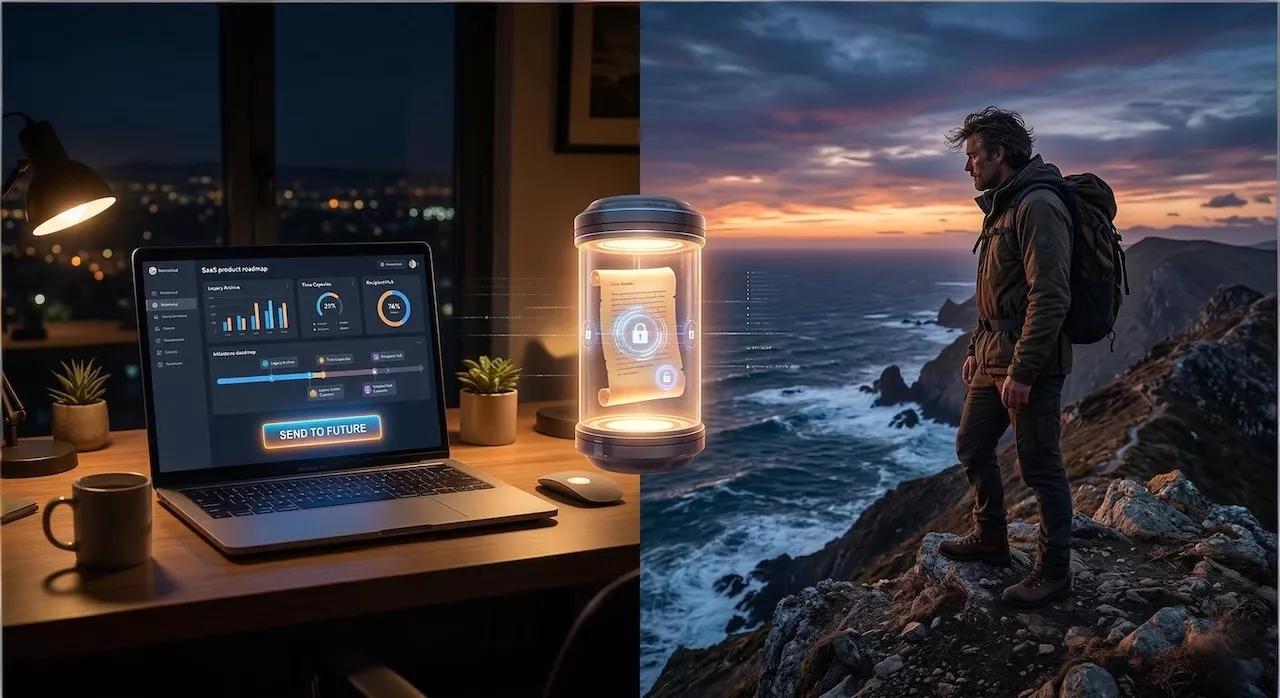
Why I Built EterMail: A Time Capsule for the People I Love Most
I’m a Product Manager who spends all week optimizing for the "immediate now." But getting lost off the grid on a mountain ridge made me realize I had zero infrastructure for the "forever." Here’s why I stopped worrying about conversion rates for a moment and built EterMail—a secure, tamper-proof digital time capsule for the people I love most.

The Most Radical Letter to Your Future Self Is a Promise to Stay Unfinished
The best letter to your future self isn't a memory—it's a mandate. Learn how writing to the version of you still working with love changes everything.
The Ice Tray at Midnight: On Grief, Domestic Minutiae, and the Quiet Work of Becoming Yourself Again
Why do the smallest habits hurt most after someone leaves? A reflection on grief, domestic minutiae, and the quiet moment healing finally begins.