
The Contact Still in Your Phone
There comes a morning when you open your messages and their name doesn't catch in your throat. You scroll past it the way you scroll past the pharmacy, the dentist, the friend from three jobs ago—names that carry no voltage, no sudden current of almost. This is not the healing you were promised. No breakthrough. No closure. Just laundry folded, milk bought, the light in the kitchen at 4 PM looking different than it ever did when they were alive to see it.
We are taught to expect grief as weather: storms that pass, seasons that turn. But the truth is messier. Grief loosens not through ceremony but through the brutal, beautiful repetition of ordinary life. You make coffee. You misplace your keys. You laugh at something stupid on the internet. And somewhere in this mundane persistence, the dead begin their slow migration from present tense to past.

The Sound of a Voice You Can No Longer Hear
The first thing to go is usually the voice. You try to summon it—reading a text they might have sent, imagining their commentary on a movie—and find only the idea of voice, the abstract knowledge that they spoke with a particular cadence, a tendency to pause before the punchline. The actual sound, the frequency and texture of air moving through their particular throat, has gone silent.
This forgetting feels like failure. Like negligence. You panic and search for videos, voicemail, anything with audio, desperate to re-archive what your brain has deemed unnecessary for daily survival. But your mind is not being cruel; it is being practical. It knows, in ways you don't yet, that you cannot live forever in the amber of loss.
What we rarely discuss: the relief that follows the panic. The strange, guilty peace of realizing you went an hour, an afternoon, a day without thinking of them. This is not erasure. It is the beginning of a different kind of carrying.
The Unremarkable Day Grief Loosens
There is no notification for this transition. No anniversary, no milestone, no therapist's pronouncement that you have "processed" enough. Instead: you are buying milk. The fluorescent lights of the grocery store hum their eternal hum. You reach for the 2% they always preferred, catch yourself, and realize you no longer need to buy what they liked. You buy what you like. You go home. The day continues.
This is how healing actually arrives—not as resolution but as repetition. The hundredth time you make dinner alone. The thousandth morning you wake without reaching for the phone to tell them something. The body learns what the mind resists: that survival is not betrayal, that continuing is not abandonment.

What We Owe the Dead
The question haunts: what do we owe them when we start to forget? When the sharp edges of memory soften, when their preferences stop dictating our choices, when new people enter rooms they never entered and we allow ourselves to be happy there?
Perhaps the answer is not in perfect preservation but in selective, loving curation. We cannot—and should not—maintain every detail. The brain's forgetting is a kindness, making space for the living. But we can choose what to keep. The way they laughed at their own jokes. Their impossible patience with difficult people. The particular ethics they lived by, which shaped your own.
This is where the deliberate act of remembrance matters. Not the involuntary, exhausting effort to hold everything, but the conscious choice to preserve what was essential. A letter written not in the rawness of fresh loss but in the settled wisdom of having survived it. A message that says: I have forgotten the sound of your voice, but I have not forgotten what you taught me. I have moved forward, but I carry you forward with me.
The Letters We Write to Outlive Forgetting
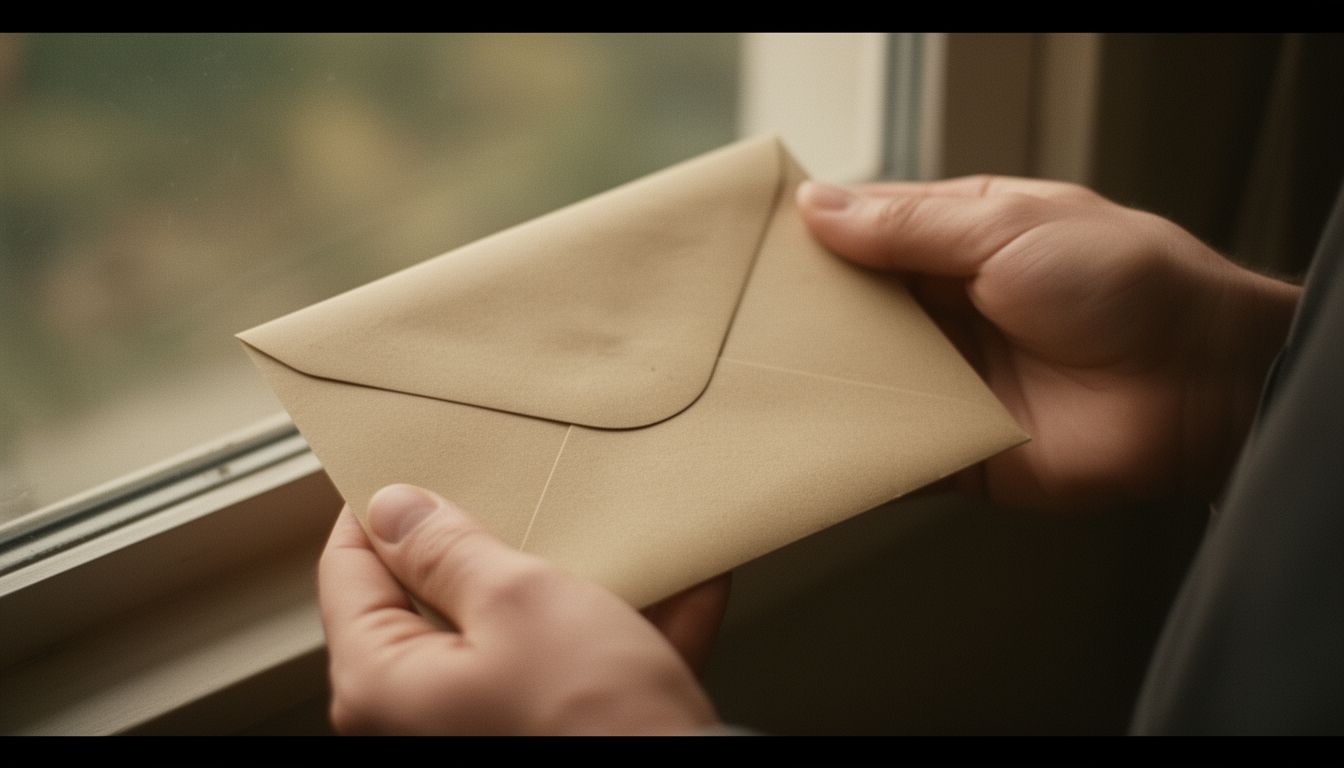
There is a peculiar power in writing to the dead—or rather, writing for them, in their direction, knowing they will not read but that the act of addressing them keeps something alive. Not their physical presence, which is irretrievable, but the conversation itself. The ongoing, one-sided dialogue that acknowledges: you shaped me, you are still shaping me, even as I become someone you never knew.
I write these letters at 2 AM more often than I'd like to admit. There's something about the silence of those hours—the same silence I sit in when debugging a stubborn piece of code or arguing with an LLM about architecture—that makes the boundary between present and past feel permeable. I've spent enough nights alone with glowing screens to know that digital solitude has its own strange intimacy. The cursor blinking. The words accumulating. The sense that you're building a bridge to somewhere you can't quite reach.
Some write these letters and burn them. Some keep them in boxes, in files, in apps designed to outlast the fragility of memory. The method matters less than the intention: to externalize what cannot be trusted to the shifting sands of mind alone. To create an artifact of love that persists even when daily life demands our attention elsewhere.
The Paradox of Digital Memory
We live in an age of unprecedented archival possibility. Photos, videos, messages—all preserved with perfect fidelity, immune to the natural decay that once made forgetting inevitable. This should comfort us. Often, it haunts us instead.
The dead's social media profiles become shrines, their last posts accumulating comments like flowers on a grave that cannot be closed. Their voices remain in voicemail, retrievable forever, yet we hesitate to play them, knowing the digital preservation does not match the emotional reality. We have solved the problem of losing their traces without solving the problem of losing them.
What we need, perhaps, is not more preservation but more intentional preservation. The deliberate selection of what matters, stored with context and care, released to ourselves or others at moments when we are ready to receive them. A time capsule not of everything, but of the essential. A letter that arrives not randomly, but when we have reached the maturity to understand what it contains.
I built EterMail because I kept losing things I couldn't afford to lose—not to hardware failure or data corruption, but to the slow erosion of intention. I'd write something true at 3 AM and let it sit in a draft folder until the moment passed. I'd promise myself I'd return to it, and then I wouldn't. The best way to fight forgetting isn't taking another screenshot; it's setting an alarm for the future. By using EterMail to set a delivery date 5 years from now, you completely free yourself from the anxiety of the present. You write what you can write now, trust it to wait, and trust yourself to be ready when it arrives.
Living in Two Tenses
The final truth of grief is that it does not end. It changes shape, becomes less demanding, but it remains—a room in the house of self that you learn to enter less frequently, though you never board it up.
To heal is not to forget but to forget differently. To allow the dead their proper place in past tense while recognizing how they constructed your present. To stop flinching at their name not because you love them less, but because you have integrated that love into something you no longer need to actively defend.
The light changes in rooms they never entered. This is not tragedy. This is the evidence that you are still here, still noticing light, still capable of change. What we owe the dead is not our stagnation but our growth—not perfect memory but honest, evolving remembrance. The willingness to say: I have forgotten your voice, but I speak now in ways you taught me. I have moved into rooms you never saw, but I carry your light into them.
This is the strange mercy of survival. The ordinary, unceremonious, miraculous fact of continuing—and finding, in that continuation, forms of love that outlast even memory itself.
What is EterMail?
EterMail is a revolutionary time capsule service that allows you to send messages, photos, and videos to the future (up to 30 years). Seal your memories and thoughts today, and they'll be delivered when the time is right.
Time Capsule
Send messages up to 30 years in the future
Rich Media
Text, photos, and videos supported
Secure & Private
Your memories are safely encrypted
EterMail Team
We're the team behind EterMail, dedicated to helping you preserve and share timeless messages with your loved ones. Our mission is to make it easy to express your love, share your wisdom, and create lasting connections that transcend time.
Frequently Asked Questions about Healing & Remembrance
Is it normal to feel guilty when I start forgetting details about someone who died?
How can I preserve memories of a loved one without becoming obsessed with the past?
What should I write in a letter to someone who has died?
Related Articles

Why I Built EterMail: A Time Capsule for the People I Love Most
I’m a Product Manager who spends all week optimizing for the "immediate now." But getting lost off the grid on a mountain ridge made me realize I had zero infrastructure for the "forever." Here’s why I stopped worrying about conversion rates for a moment and built EterMail—a secure, tamper-proof digital time capsule for the people I love most.

The Most Radical Letter to Your Future Self Is a Promise to Stay Unfinished
The best letter to your future self isn't a memory—it's a mandate. Learn how writing to the version of you still working with love changes everything.
The Ice Tray at Midnight: On Grief, Domestic Minutiae, and the Quiet Work of Becoming Yourself Again
Why do the smallest habits hurt most after someone leaves? A reflection on grief, domestic minutiae, and the quiet moment healing finally begins.