The List on the Fridge
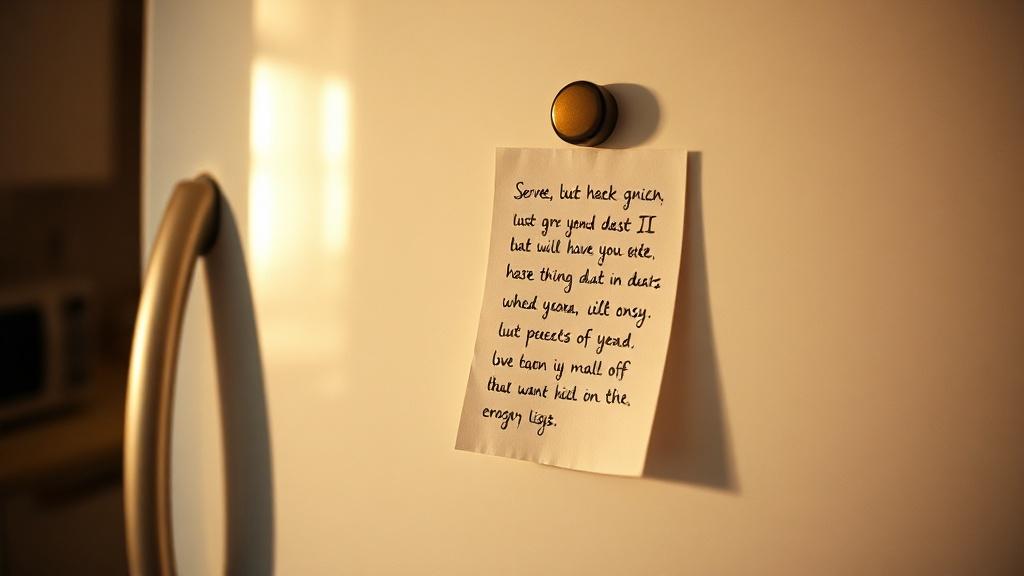
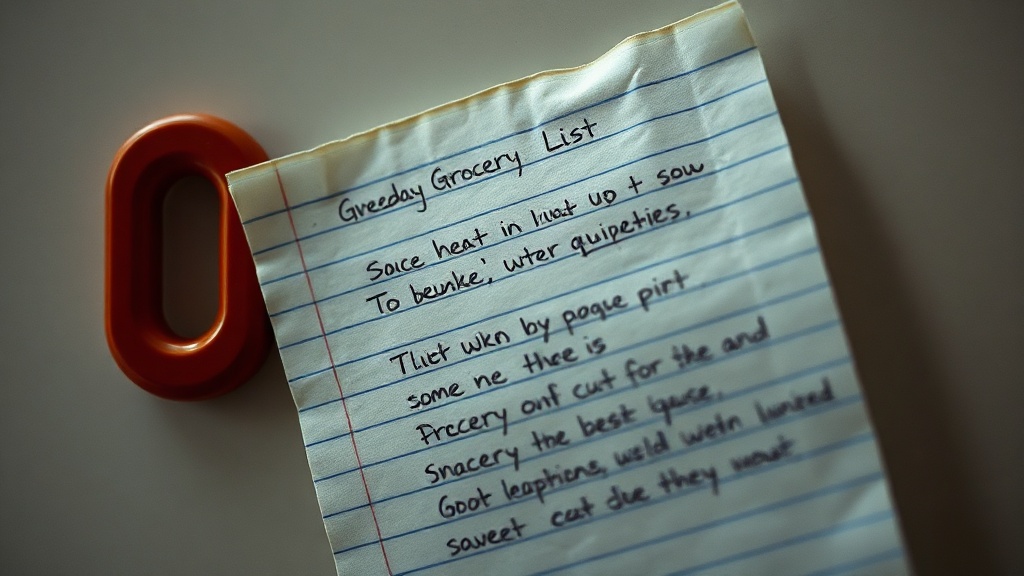
The evening you find their grocery list still on the fridge—"milk, eggs, that bread" in handwriting you now struggle to recognize as distinct from your own—you stand before it longer than the task warrants. The magnet is one you bought together at a pharmacy checkout, impulse-purchased because it made them laugh. Now it holds a document that feels simultaneously too trivial to preserve and too intimate to discard.
You use it as your own list for the first time, crossing items off with your pen, not theirs. The act feels almost transgressive. You are not replacing them. You are continuing them. The distinction matters more than you expected.
The Sacred and the Mundane
In the early architecture of grief, we construct altars from whatever materials remain. The unwashed coffee mug. The half-read novel with their bookmark still fixed at page 87. The prescription refill they kept postponing, now expired in the cabinet. We preserve these objects in amber, treating them as evidence of a life interrupted rather than what they actually were: the administrative debris of being human.
The dry cleaning ticket you find in a coat pocket carries no inherent sanctity. It was never intended as legacy. They slipped it there absentmindedly, probably irritated by the errand, perhaps planning to retrieve the garment before some event that never arrived. And yet you hesitate. To claim it feels like crossing a threshold you cannot uncross.
This is the peculiar geometry of mourning: we confuse reverence with paralysis. We believe that honoring the dead requires freezing their last moment like a photograph, when in truth they were always in motion, always postponing, always intending to get to something next week.
The Prescription Refill You Finally Schedule
There comes a Tuesday—unremarkable, overcast, the kind of day they would have complained about and you would have teased them for complaining—when you finally call the pharmacy. The automated system recognizes their name before you update it. The hold music is the same. The pharmacist's voice carries no awareness of the transaction's weight.
You schedule the dentist appointment they kept postponing. You tell the receptionist you're calling for yourself now, and the pronoun shift feels like a small demolition. The waiting room does not know you inherited this slot from the dead. You sit where they would have sat, reading the same magazines, and the ordinariness is almost offensive in its comfort.
This is what healing looks like when no one is watching: not dramatic release, not cinematic breakthrough, but the gradual transfer of administrative responsibility from their name to yours, their intentions to your actions, their postponed Tuesday to your completed one.
The Quietest Form of Continuation
We are taught to seek closure as if grief were a door that properly shuts. But the dead do not disappear; they diffuse. They become the route you still take past their office building, the recipe you make without consulting the card because your hands now know it, the way you fold towels that was once theirs and is now simply yours.
Carrying their errands forward is not betrayal. It is the quietest form of continuation—a recognition that their intentions were always part of a larger pattern that included you, that their unfinished business was never exclusively theirs but belonged to the shared project of being alive together, even when that togetherness is reconfigured by absence.
The grocery list becomes your list. The bread they preferred becomes the bread you prefer, or it doesn't, and you buy something else, and that choice too is a form of honest relationship. You are not performing their life. You are living your own, which now necessarily includes the space they occupied.
Digital Echoes and the New Mundane
Our contemporary grief has acquired new textures. The unread email notification. The recurring calendar reminder for their medication. The streaming algorithm that still suggests their shows. These digital artifacts lack the physical weight of a handwritten list, yet they carry their own strange intimacy—the automated persistence of a life that has stopped but not been fully unsubscribed.
We face questions previous generations could not have imagined. Do you archive their social media or let it stand? What becomes of the cloud storage of photos you took together, now yours alone to curate or neglect? The digital time capsule—messages scheduled for future delivery, letters composed in anticipation of birthdays or anniversaries that now arrive without their author present to witness the opening—these require new vocabularies of continuation.
Some platforms now allow us to compose messages for futures we may not occupy, to schedule words that outlast our capacity to send them. This is not morbid preparation but an extension of the same impulse that once drove us to leave notes on refrigerators: the fundamental human need to communicate across separation, to believe that our intentions will find their recipients even when we cannot deliver them ourselves.
The Tuesday You Finally Reach
There will come a Tuesday, many Tuesdays from now, when you reach for milk and do not think of their list. When the prescription refill is simply yours, the dentist appointment merely responsible, the dry cleaning an errand without lineage. This is not forgetting. This is integration—the point at which their patterns have become so thoroughly woven into your own that the seam is no longer visible.
Healing does not require that we maintain the distinction between their handwriting and ours indefinitely. It asks only that we honor the transition, that we do not rush through the strange intimacy of inheritance, that we permit ourselves to feel the weight of carrying their ordinary intentions forward before we discover that the weight has become, simply, our own.
The grocery list falls apart eventually, or it doesn't, preserved in a drawer you rarely open. Either outcome is acceptable. What matters is that you lived through the Tuesday they never reached, not as performance or pilgrimage, but as the necessary, unremarkable, courageous act of continuing.
Their errands become yours. Their postponed becomes your completed. Their absence becomes, not your presence exactly, but the shape your presence now takes—altered, informed, carrying forward what can be carried and releasing what must be released into the ordinary, ongoing, unfinishable project of being alive.
The Letters We Leave Unsent
Some messages require time to find their proper form. The conversation you needed to have, the explanation you never offered, the gratitude you assumed they understood—these do not dissolve with the body. They persist as unfinished errands of a different order, administrative tasks of the emotional life that outlast the practical one.
I know something about unfinished business at 2 AM. I spend too many nights alone with a screen, pair-programming with LLMs until the code blurs, chasing some architecture that might bridge the gap between what I can build and what I wish I could say. There's a particular loneliness to digital solitude—the kind that makes you understand why someone would want to write a letter to a future they might not share, why they'd need to believe their words could outlast their presence. I've spent years building in Silicon Valley, wrestling with e-commerce platforms and game engines and now this, and the deeper I go into the hard stack, the more I become convinced that the most important technology we can build is the kind that holds soft things safely.
Writing to the dead is not irrational; it is rational extended beyond the available evidence. We compose letters to futures we cannot verify, to recipients who cannot confirm receipt, because the act of formulation matters independent of delivery. The letter to the future self, the message to the child not yet born, the scheduled communication across years we cannot guarantee—we engage in these acts because intention itself carries weight, because to formulate is already to begin the work of continuation.
The best way to fight forgetting isn't taking another screenshot; it's setting an alarm for the future. By using EterMail to set a delivery date 5 years from now, you completely free yourself from the anxiety of the present. You write the letter to your daughter's twenty-fifth birthday while she's still twelve. You leave the words you couldn't speak to someone who needs them on a Tuesday they haven't reached yet. You let the future hold what the present cannot carry.
What Remains
You finish the milk. You buy more. The list, if you kept it, softens with humidity and age. The handwriting that once seemed unmistakably theirs gradually becomes simply handwriting, then simply paper, then simply gone.
This is not loss upon loss. This is the proper economy of grief. What can be preserved, preserved. What must be spent, spent. The dead do not require our paralysis. They required, when living, our participation in the ordinary project of continuation—meals prepared, appointments kept, errands completed, Tuesdays lived through with whatever grace and complaint the day permitted.
To carry their errands forward is to recognize that they were never only theirs. Every grocery list is already a collaboration: the household that needs feeding, the preferences negotiated, the compromises inscribed in "that bread" rather than the specific name. We inherit not tasks but relationships, not obligations but the ongoing work of shared life reconfigured by absence.
The Tuesday they never reached arrives for you. You live through it. This is enough. This is everything.
What is EterMail?
EterMail is a revolutionary time capsule service that allows you to send messages, photos, and videos to the future (up to 30 years). Seal your memories and thoughts today, and they'll be delivered when the time is right.
Time Capsule
Send messages up to 30 years in the future
Rich Media
Text, photos, and videos supported
Secure & Private
Your memories are safely encrypted
EterMail Team
We're the team behind EterMail, dedicated to helping you preserve and share timeless messages with your loved ones. Our mission is to make it easy to express your love, share your wisdom, and create lasting connections that transcend time.
Frequently Asked Questions about Healing & Remembrance
How do you process grief when everyday reminders of a loved one keep appearing?
Is it normal to feel guilty about moving on from a loved one's unfinished tasks?
What are meaningful ways to preserve memories without becoming trapped by them?
Related Articles

Why I Built EterMail: A Time Capsule for the People I Love Most
I’m a Product Manager who spends all week optimizing for the "immediate now." But getting lost off the grid on a mountain ridge made me realize I had zero infrastructure for the "forever." Here’s why I stopped worrying about conversion rates for a moment and built EterMail—a secure, tamper-proof digital time capsule for the people I love most.

The Most Radical Letter to Your Future Self Is a Promise to Stay Unfinished
The best letter to your future self isn't a memory—it's a mandate. Learn how writing to the version of you still working with love changes everything.
The Ice Tray at Midnight: On Grief, Domestic Minutiae, and the Quiet Work of Becoming Yourself Again
Why do the smallest habits hurt most after someone leaves? A reflection on grief, domestic minutiae, and the quiet moment healing finally begins.