The Creak on the Third Step
This morning, climbing the stairs to my office, the third step sighed. Not cracked, not loose—just a small, wooden exhalation that my foot has learned to expect. I paused there, one hand on the railing, and thought: my sixty-year-old knees will not know this sound. They will know other sounds. The deeper, more theatrical complaints of cartilage worn thin. The wet pop of a joint deciding its range. But not this particular creak, at this particular hour, with this particular slant of October light coming through the landing window.
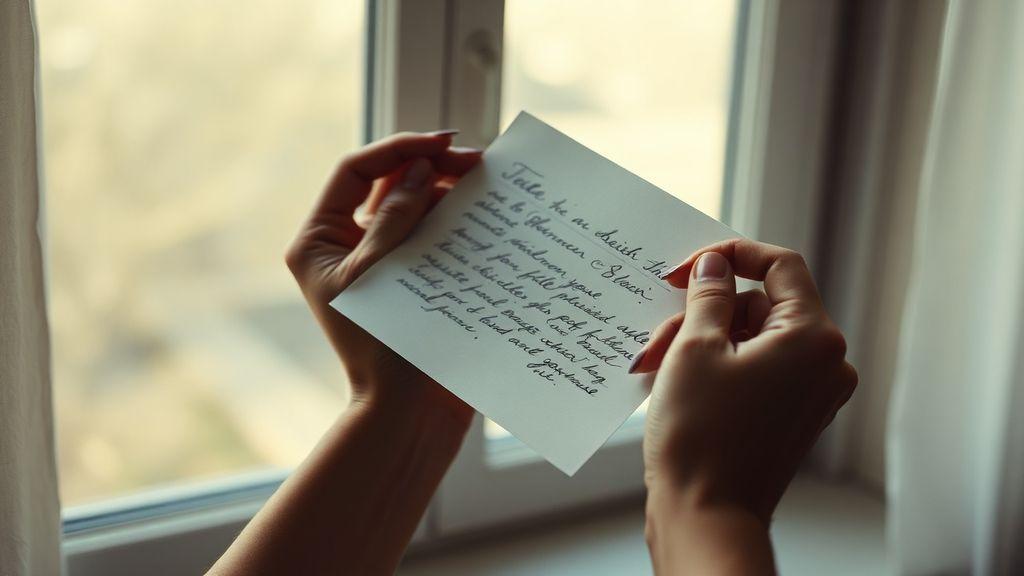
I wanted to write it down. Not for posterity. For her. For the woman I will become, who will inhabit this same body as if it were a house she inherited from a stranger who left no forwarding address.
The Tender Betrayal of Documentation
There is something almost cruel about this practice—describing to your future flesh the exact texture of a hot shower after a long walk, the particular ache in your lower back from lifting a laundry basket, the precise color of that bruise blooming on your hip you can't explain. You are warning your body about the betrayals it will commit against you while simultaneously begging it to remember. You are both traitor and supplicant, archivist and arsonist.
The anthropologist Arjun Appadurai once wrote about the "social life of things"—how objects accumulate meaning through circulation and use. But what of the physical life of bodies? The way our own flesh becomes, over decades, an object estranged from its former self? We do not circulate. We persist, and in persisting, we transform beyond recognition.
When I write to my future knees, I am attempting something impossible: to preserve the vocabulary of sensation before time steals the language. Because here is the thing they don't tell you about aging—not the fact of it, but the amnesia of it. The way your current body cannot truly remember being fifteen, cannot conjure the specific gravitylessness of that flesh, only the story of it. And stories, as we know, are edited. Revised. Made coherent in ways experience never was.
The Exact Texture of What We Stand to Lose
I want my future self to remember the exact texture of my lover's shoulder blade under my thumb. Not "shoulder blade." Not "the intimacy of touch." But the particular architecture of this specific bone, the way it rises like a small, determined hill under thin skin, the faint electric quality of the moment when pressure shifts from exploratory to possessive. I want her to know that this was once knowable. That her thumb once mapped this territory without thought, without the mediation of memory.
Because that is what we lose first, isn't it? Not the capacity for pleasure, but the unthinkingness of it. The body's ability to be so fully housed in itself that experience requires no translation. The sixty-year-old knee does not simply hurt; it interprets. It narrates. It compares this stair to other stairs, this climb to other climbs. The young knee—my knee, now—just climbs. Just creaks. Just continues.
The Laundry Basket as Sacred Text
This morning's lower back ache: I want to archive it with the precision of a crime scene investigator. The laundry basket was blue, the cheap plastic kind that groans when overloaded. I lifted it from the basement steps without bending my knees—without bending my knees—because I was in a hurry, because the dryer had buzzed, because some part of me still believes this body will absorb such casual violence indefinitely.
The ache arrived not immediately but settled, like a weather system moving in. By afternoon it had established residency, a low-grade thrum that made me shift in my chair, that made me conscious of my spine as architecture rather than infrastructure. I want my future self to know: this was the warning you ignored. This was the moment your body offered its first, polite demurral, and you, in your immortal present-tense, declined to listen.
But I also want her to know what came after. The hot shower. The way the water, at exactly the right pressure, seemed to unspool something knotted near my sacrum. The particular pleasure—not luxury, but relief so complete it bordered on grief—of standing there, palms flat against tile, letting heat do what I would not let rest do. I want her to carry forward this vocabulary: unspool, knotted, bordered on grief. I want her to remember that relief and mourning once shared a threshold.
The Bruise We Cannot Explain
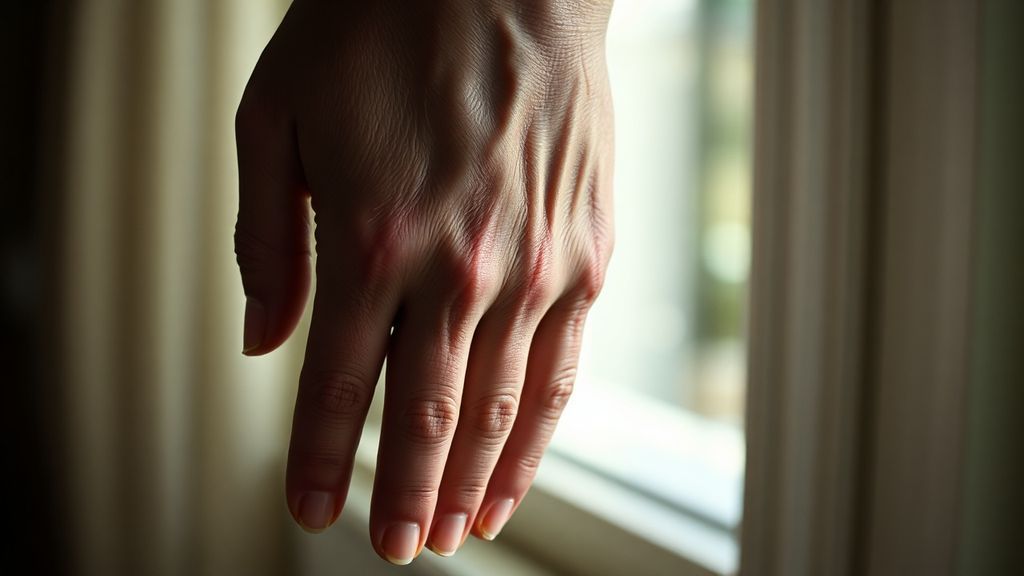
And the bruise. The bruise I cannot explain, blooming now on my left hip, violet fading to sulfur yellow at its edges. I do not remember the impact. Perhaps the corner of a desk, perhaps a doorway navigated too quickly in darkness. This is the body's secret correspondence, its letters to us written in languages we are losing fluency in.
I want to send this bruise forward in time. Not the injury—time will provide its own injuries, more legible, more narratively convenient. But the mystery of it. The way my body once sustained and healed without my executive oversight. The way I could wake to find evidence of a life lived unconsciously, a body so thoroughly itself that it experienced, bruised, repaired, all in the margins of my attention.
The future body, I suspect, will not permit such margins. Every discoloration will demand accounting. Every stiffness will require negotiation. I want her to remember when her body was background, when it was the seamless medium through which experience passed rather than experience's primary subject.
The Paradox of Preservation
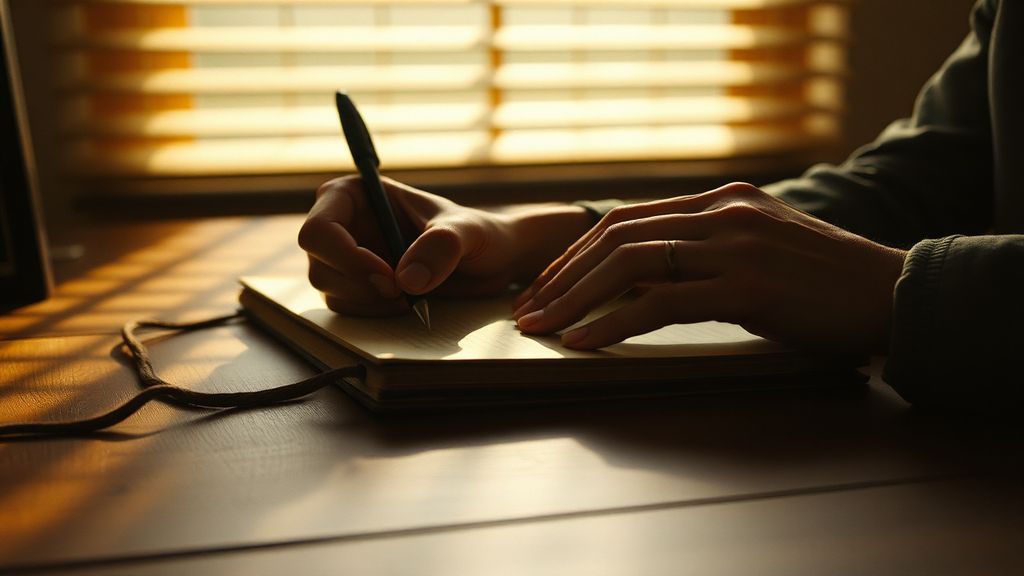
There is, of course, a paradox here. The act of documenting sensation—sitting at this desk, describing the creak of the third step, the texture of shoulder blade, the color of unexplained bruise—removes me from the very unthinkingness I am trying to preserve. To write "my thumb moved without thought across bone" is to think it. To make it thought. The letter to my future body becomes, in its composition, a betrayal of the state it attempts to memorialize.
This is the central tragedy of all time-capsule endeavors. We seal them in moments of acute consciousness, hoping to transmit that consciousness forward, forgetting that the gift we most want to give our future selves is the absence of such desperate, documenting awareness. The gift of simply being.
And yet. And yet I continue to write. Because there is something else here, something beyond preservation, beyond the futile archaeology of former embodiment. There is relationship. The letter to my future body is, finally, a refusal of the body's solitude. A way of saying: I know you are coming. I will not pretend surprise at your arrival. I am preparing a room for you, furnished with the specific sensations that made this earlier tenancy bearable, even beautiful.
What We Owe the Strangers We Become
The philosopher Elaine Scarry argued that beauty prompts us to replicate, to create, to distribute. But what of the beauty of ordinary embodiment? The beauty of a knee that climbs stairs without editorializing? It prompts, I think, a stranger impulse: the desire to witness our own eventual loss of beauty, to be present at our own diminishment, if only through the mediated presence of a letter written in a former tongue.
I am writing to a stranger. This is the truth I circle. The sixty-year-old knee, the seventy-year-old back, the eventual body that will not remember the color of this bruise or the sound of that creak—these are not me in any continuous, recognizable sense. They are inheritors. Beneficiaries of a genetic and habitual estate they did not design. And like all inheritors, they will wander rooms I furnished, wondering at my choices, my accumulations, my failures of imagination.
The letter is my attempt at hospitality. Here is what this house once held. Here is how the light fell. Here is the particular pleasure of hot water on tired skin, the exact texture of a lover's bone, the warning creak of a stair you will eventually, inevitably, stop climbing.
The Vocabulary of Former Housing
What does it mean to be fully, unthinkingly housed? It means the body is not object but medium. Not instrument but environment. It means the third step creaks and you hear it as stair, not as omen. It means the shoulder blade rises under your thumb and you register lover, not anatomy, not the eventual absence of this lover, not your own eventual inability to lift your arm to this angle.
To write these letters is to acknowledge that this state of unthinking housing is temporary, is loaned, is already in the process of being recalled. And to refuse, nonetheless, to let it pass unwitnessed. To build, from the inadequate materials of language, a vocabulary of former embodiment that might—might—allow some fragment of this consciousness to persist, to be recognized, to be grieved and celebrated in equal measure.
My sixty-year-old knees: I am climbing the stairs now. The third step creaks. The light is October-specific, gold with an edge of cold. My hand is on the railing, which is painted blue, chipped near the bottom where hands have worn through to wood. I am sending you this moment not because you can retrieve it, but because someone should have marked its passing. Someone should have said: this was real. This was once simply, fully, unremarkably alive.
The Builder at 2 AM
I know something about trying to build bridges to a future self. For years now, I've spent too many nights alone in front of a glowing screen, "pair programming" with AI models until 2 or 3 AM, mapping architectures that might outlast the consciousness that designed them. There's a particular loneliness to those hours—a digital solitude so complete it starts to feel like a rehearsal for death, or perhaps its opposite: a stubborn refusal to let the self be bounded by time.
The irony isn't lost on me. I build systems meant to persist while my own body insists on its impermanence. But that same obsession with building across time is what taught me the difference between storage and transmission. A hard drive holds data; a letter holds presence. The best way to fight forgetting isn't taking another screenshot; it's setting an alarm for the future. By using EterMail to set a delivery date 5 years from now, you completely free yourself from the anxiety of the present. You write the creak of the third step, set it to arrive when your knees have their own vocabulary of complaint, and trust that future stranger to receive you with the hospitality you're offering now.
The Final Letter, Unsent
There is a letter I cannot write. The letter to the body that will not read, that has already begun its final forgetting. The letter to the fingers that will not hold a pen, to the eyes that will not focus on these words, to the consciousness that will not recognize itself as continuous with the consciousness that chose, in some October light, to document a creaking stair.
This letter, too, exists in the negative space of all the others. Every letter to a future self is also a letter toward mortality, a practice of ending that rehearses the greater ending. And perhaps this is the final tenderness of the practice. Not the preservation, which fails. Not the transmission, which attenuates. But the orientation: the turning of attention toward a future that will not include the self that turns, and the choice, nonetheless, to turn.
To write to the body I'll betray is to betray it already, in the act of writing. But it is also, finally, to keep a promise I made without speaking: that I would witness this life from inside it, and that I would attempt, however imperfectly, to send backward the news of what witnessing meant.
What is EterMail?
EterMail is a revolutionary time capsule service that allows you to send messages, photos, and videos to the future (up to 30 years). Seal your memories and thoughts today, and they'll be delivered when the time is right.
Time Capsule
Send messages up to 30 years in the future
Rich Media
Text, photos, and videos supported
Secure & Private
Your memories are safely encrypted
EterMail Team
We're the team behind EterMail, dedicated to helping you preserve and share timeless messages with your loved ones. Our mission is to make it easy to express your love, share your wisdom, and create lasting connections that transcend time.
Frequently Asked Questions about Letters to Future
Why does writing to my future body feel emotionally difficult?
What should I include in a letter to my future physical self?
How does writing to future versions of myself change my present perspective?
Related Articles
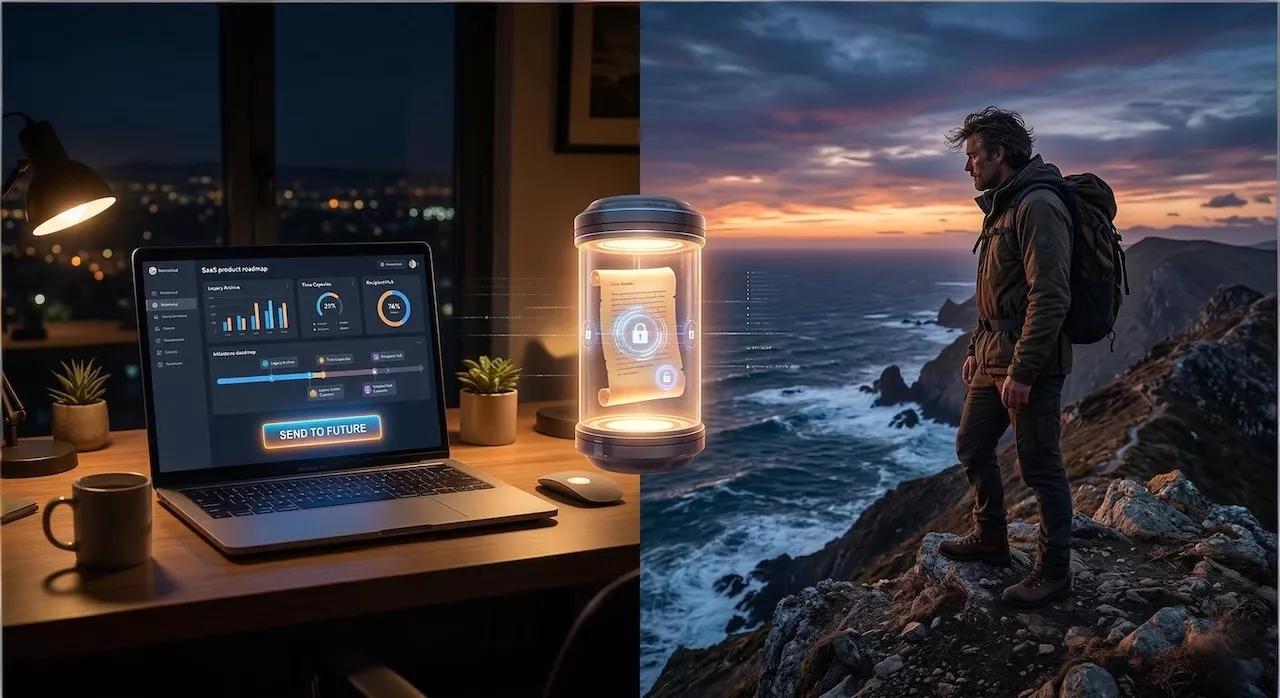
Why I Built EterMail: A Time Capsule for the People I Love Most
I’m a Product Manager who spends all week optimizing for the "immediate now." But getting lost off the grid on a mountain ridge made me realize I had zero infrastructure for the "forever." Here’s why I stopped worrying about conversion rates for a moment and built EterMail—a secure, tamper-proof digital time capsule for the people I love most.
The Most Radical Letter to Your Future Self Is a Promise to Stay Unfinished
The best letter to your future self isn't a memory—it's a mandate. Learn how writing to the version of you still working with love changes everything.
The Ice Tray at Midnight: On Grief, Domestic Minutiae, and the Quiet Work of Becoming Yourself Again
Why do the smallest habits hurt most after someone leaves? A reflection on grief, domestic minutiae, and the quiet moment healing finally begins.