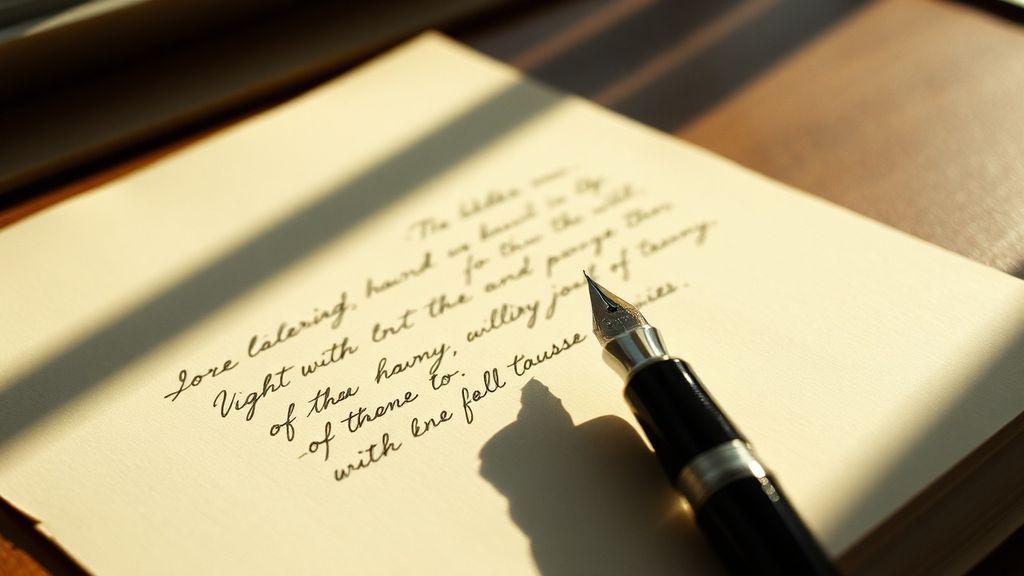
There is a particular ache in noticing the small things about someone you may not always know. The way your partner's left eyebrow rises half a millisecond before they laugh at a joke they've heard before. The scar on your brother's knuckle from a bicycle accident in 2011, still visible when he gestures with his coffee cup. The precise rhythm of your best friend's key in the lock—two quick turns, a pause, a third slower one—announcing her arrival before she ever speaks. These details feel permanent until, suddenly, they aren't. And when the relationship fractures, or simply fades, these are the first things to dissolve. No funeral. No announcement. Just the slow realization that someone you once read like a favorite book has become a language you no longer speak.
We don't have many rituals for this kind of loss. But some of us have started writing letters—not to who they are now, but to who they will become. Letters to future versions of the people we currently love, knowing full well we may never send them, or that sending them would mean crossing a distance that has already grown too wide.
The Preemptive Elegy
Most elegies are written after the fact. But there is a stranger, more tender genre: the letter composed while the love is still alive, addressed to a future where it might not be. You sit down and describe your ex-partner's laugh at a party last October, the one where they threw their head back and covered their mouth, embarrassed by their own joy. You note the exact words your sibling used when they finally admitted they were afraid of becoming your father. You record the smell of your friend's apartment—rosemary, old books, something slightly metallic from the radiator—because you sense, without being able to name why, that you will not always be welcome there.
These letters are not really for the future recipient. They are proof. Proof that you once knew someone in their present tense, before time made them unknowable. They are an attempt to arrest a moment of intimacy that feels, even as you're living it, already endangered.
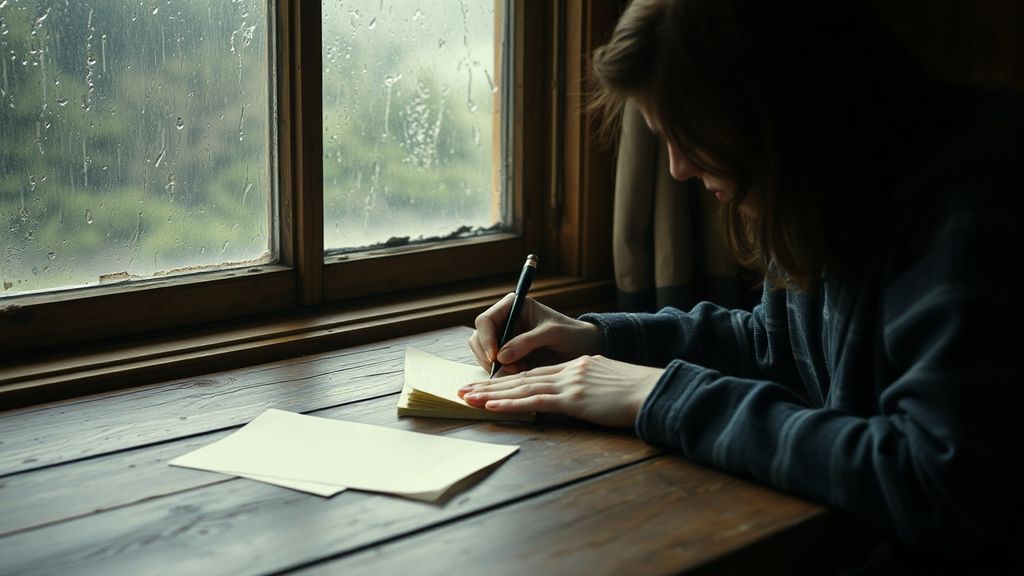
The Anatomy of a Future Stranger
Think about the people you loved five or ten years ago. Not the ones who died, but the ones who simply became other people. Or perhaps you became someone else, and the math of your connection no longer worked. Do you remember the specifics? The way they said your name when they were worried? The song they always hummed while cooking? These details degrade faster than we'd like to admit. Memory is not a vault; it is a negotiation, and we are constantly re-editing the files.
When you write a letter to the future version of someone you currently love, you are doing something almost archaeological. You are excavating the present before it gets buried. You describe the scar on their left knuckle not because it matters to them, but because it matters that you noticed. That you cared enough to commit it to language. That once, for a period of time, you were the person who knew exactly how they got it.
This is where the preemptive elegy becomes something else—not quite hope, not quite despair, but a stubborn act of witness. You are saying: I see you. I see you now, before everything changes. And I am writing this down so that at least one version of the record will survive.
The Letters We Dread Writing
There are obvious candidates for these letters: the partner you're beginning to recognize as temporary, the parent whose memory is starting to fray, the friend whose new life no longer has a seat for you. But the most devastating letters are often the ones we don't expect. The letter to the person our ex-partner will become in ten years, long after we've stopped speaking, addressed to someone who may not remember why we ever mattered. The letter to the adult our estranged sibling is slowly turning into, wondering if they still flinch at loud noises, if they ever told their children about the summers we shared. The letter to the stranger our closest friend will be after the fight we haven't had yet, preemptively apologizing for the words we will choose poorly, the silence we will let grow too long.
These letters carry a strange double knowledge. You are writing to someone you love, but you are also writing to someone you have already, in some part of your mind, lost. The tenderness is real. The grief is real. And they exist simultaneously, like two notes played at once.
Why We Preserve the Present Tense
Psychologists have long understood that anticipatory grief—the mourning we do before a loss actually occurs—is not only common but deeply human. We grieve the endings of relationships while we're still inside them. We grieve our own future deaths, our children's inevitable independence, the slow erosion of everything we currently hold dear. Writing letters to future strangers is one way of metabolizing this grief. It gives the inchoate sadness a shape, a recipient, a form.
But there is another function, too. These letters preserve the us that existed in relation to them. The self who knew how to read their moods, who had the right words at the right times, who was, for a while, indispensable to their daily life. That self is also dying, also becoming a stranger. The letter is a time capsule for two people at once: the person we address, and the person we were when we knew them well.
I think about this a lot during the hours most people are asleep. There's something about sitting alone at 2 AM, the only light coming from a screen, that makes you acutely aware of how much disappears while you're not looking. I've spent enough nights like that—mapping out systems, talking to LLMs, chasing some half-formed idea through the dark—to know that digital solitude has a strange side effect: it sharpens your sense of what lasts and what doesn't. A codebase can be version-controlled. A conversation with an AI can be logged. But the way someone laughed at a kitchen table in 2019? That slips through unless you deliberately catch it.
That tension between what technology can preserve and what memory naturally loses is what led me to build EterMail. I wanted a container for this specific kind of emotional archaeology—not because loss has a solution, but because some losses deserve better witnesses. EterMail lets you compose letters to future dates, sealing them like digital time capsules that arrive only when the years have done their work. The best way to fight forgetting isn't taking another screenshot; it's setting an alarm for the future. By using EterMail to set a delivery date 5 years from now, you completely free yourself from the anxiety of the present. You might write to your partner's future self on what would have been your twentieth anniversary, or to your sibling on the birthday you know you'll miss. The letter becomes a quiet artifact, released into a future you may not share, but still wanted to acknowledge.
The Ethics of Sending (and Not Sending)
Not all of these letters should be sent. Some are too raw, too accusatory, too saturated with a love that the recipient no longer wants. Others would arrive like ghosts, disturbing the peace that both parties have worked hard to build. The act of writing is often enough. It is the gesture of completeness, of having said what needed to be said even if no one else ever reads it.
But some letters should travel. The letter to the adult your child will become, describing the particular way they asked impossible questions at age six. The letter to your future self about the friend you are currently taking for granted. The letter to your partner, scheduled to arrive on a random Tuesday in 2034, reminding them of the night you danced in the kitchen and they stepped on your foot and neither of you cared. These are not elegies. They are love letters disguised as insurance policies.

The Last Intimacy
There is a final paradox in all of this. The more precisely you describe someone in a letter to their future self, the more you reveal about your own attention. Your own capacity for love. Your own willingness to be wounded by the passage of time. The letter to a future stranger is, in the end, a letter about what it cost you to care.
We will all become strangers to someone we currently love. This is not pessimism. It is arithmetic. People change. Circumstances change. The key in the lock will eventually belong to a different hand, or a different lock entirely. What remains is the evidence that we were here, that we noticed, that we tried to hold something still in a world that refuses to hold still.
A letter to the future is not a promise that love will last. It is a promise that love happened. That once, for a measurable stretch of time, you knew the sound of their key in the lock. You knew the scar on their knuckle. You knew them before time made them someone else. And that knowing, however temporary, was real enough to write down.
What is EterMail?
EterMail is a revolutionary time capsule service that allows you to send messages, photos, and videos to the future (up to 30 years). Seal your memories and thoughts today, and they'll be delivered when the time is right.
Time Capsule
Send messages up to 30 years in the future
Rich Media
Text, photos, and videos supported
Secure & Private
Your memories are safely encrypted
EterMail Team
We're the team behind EterMail, dedicated to helping you preserve and share timeless messages with your loved ones. Our mission is to make it easy to express your love, share your wisdom, and create lasting connections that transcend time.
Frequently Asked Questions about Letters to Future
What should I write in a letter to someone I might lose?
How does writing to a future stranger help with anticipatory grief?
Is it better to send a letter to a future loved one or keep it private?
Related Articles
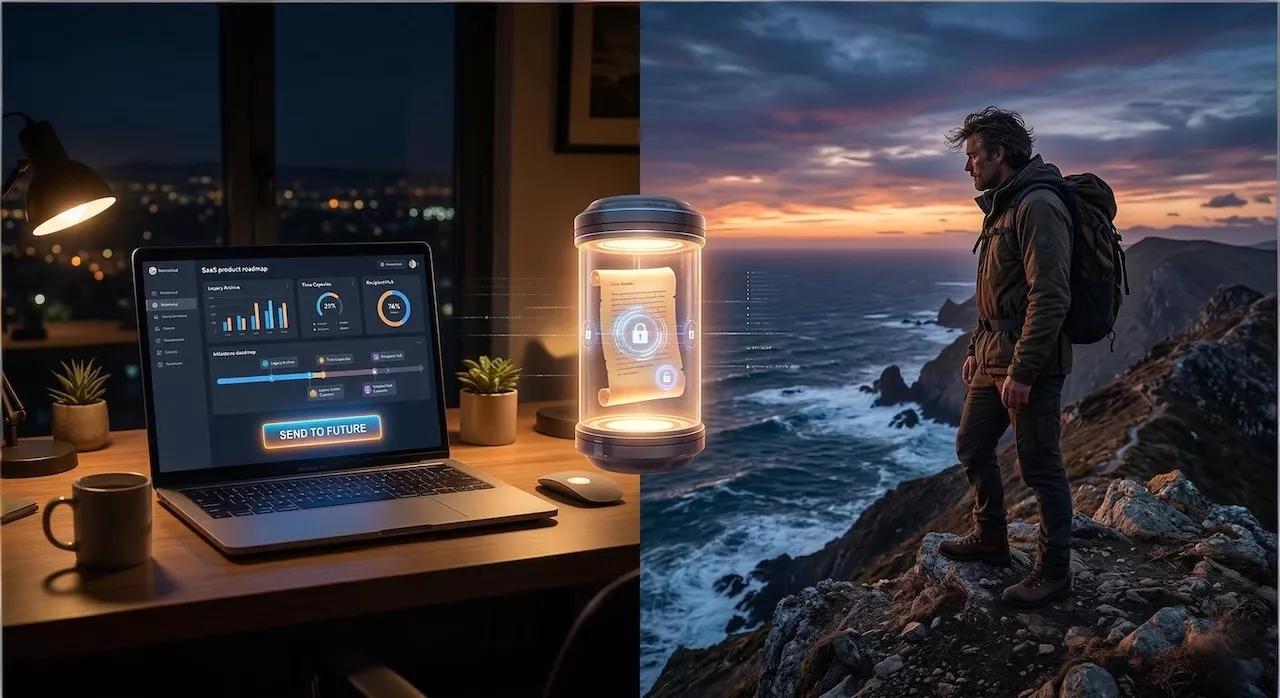
Why I Built EterMail: A Time Capsule for the People I Love Most
I’m a Product Manager who spends all week optimizing for the "immediate now." But getting lost off the grid on a mountain ridge made me realize I had zero infrastructure for the "forever." Here’s why I stopped worrying about conversion rates for a moment and built EterMail—a secure, tamper-proof digital time capsule for the people I love most.

The Most Radical Letter to Your Future Self Is a Promise to Stay Unfinished
The best letter to your future self isn't a memory—it's a mandate. Learn how writing to the version of you still working with love changes everything.
The Ice Tray at Midnight: On Grief, Domestic Minutiae, and the Quiet Work of Becoming Yourself Again
Why do the smallest habits hurt most after someone leaves? A reflection on grief, domestic minutiae, and the quiet moment healing finally begins.