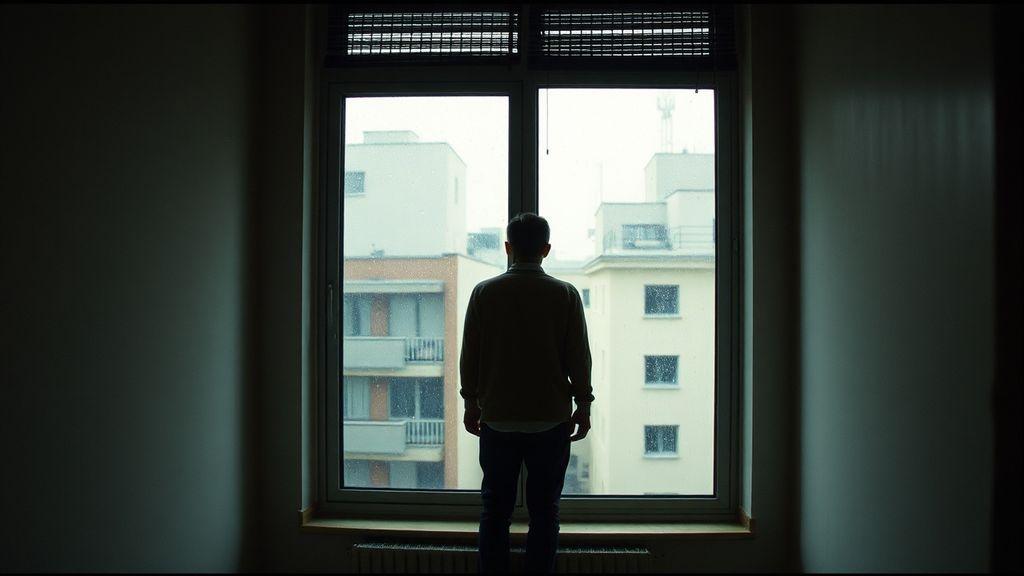
The Linoleum Knows Your Temperature
The floor in my kitchen is cold in a specific way. Not the abstract cold of winter, but the particular November cold of 2024, when the radiator clanks at 3:17 AM and I stand here in mismatched socks, waiting for water to boil. I have written this down. I have addressed it to the corner of 4th and Bergen, to the woman or man or algorithm who will stand here in 2034, 2044, whenever the lease finally turns over and someone new learns where the light switch is.
This is not a letter to a person. It is a letter to a place that cannot read, cannot care, cannot keep secrets. And yet I write it anyway—desperate acts of witness, my therapist might call them, though she would use gentler words.
We have always known how to say goodbye to people. The cards, the voicemails, the final texts typed and deleted and typed again. But places? Places absorb us without consent. They hold the heat of our bodies in their walls, the vibration of our arguments in their windowpanes, the particular frequency of our loneliness in their floorboards. Then they move on. New paint, new tenants, new lives layered like sediment. The geography remains. The evidence does not.
Unless someone writes it down.
The Bodega as Confessional
Marcus writes to the bodega on his corner. Not the corporate convenience store it will become—he has seen the permits, the demolition notices, the inevitable—but the specific bodega of right now, where the owner, whose name he has never learned, keeps his mother's rice pudding recipe behind the register. Where the fluorescent light flickers in a pattern Marcus has memorized. Where he bought ginger ale at 2 AM during the flu that kept him home for eleven days, and the owner wordlessly added a packet of saltines to his bag.
"The linoleum has a crack near the freezer," he writes. "I want you to know that I noticed. I want you to know that someone stood here, worried about rent, listening to a neighbor practice trumpet through walls too thin for secrets."
This is the strange mathematics of letters to future places: they are simultaneously selfish and generous. Marcus cannot save the bodega. The wrecking ball does not read. But he can create a document that insists—stubbornly, perhaps pathetically—that this configuration of commerce and care existed, that it mattered, that it held warmth in a city that specializes in cold transitions.
The letter becomes a ghost. Not the scary kind. The kind that lingers in doorways, that makes new occupants pause without knowing why, that haunts geography with the mundane evidence of ordinary life.
Trees in Soil You Don't Own
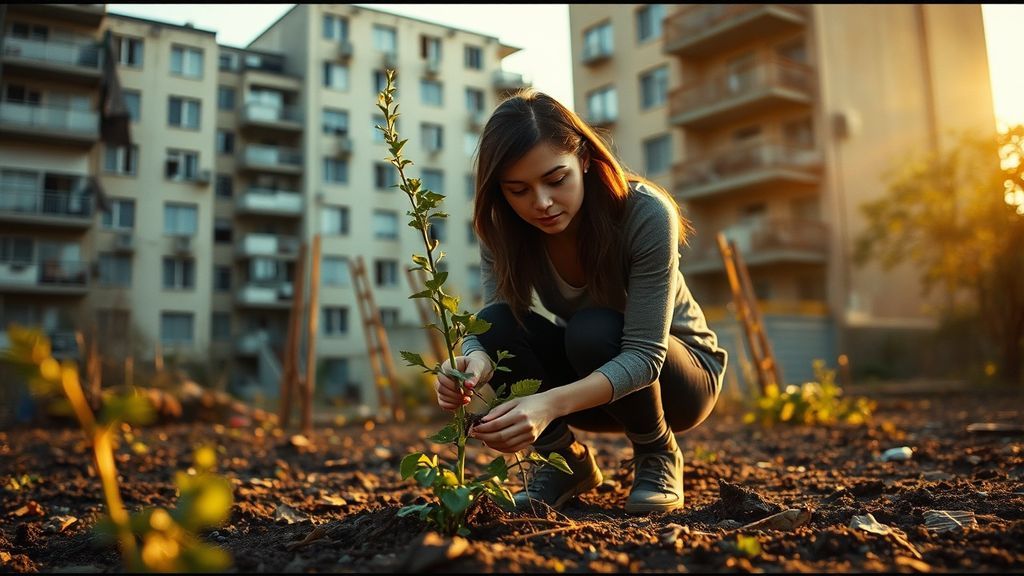
Elena planted a tree. This is the wrong verb, legally speaking. She dug a hole in the community garden three blocks from her apartment, a garden scheduled for development in eighteen months, and she placed a sapling in soil she does not own, cannot protect, has no right to mourn. The city owns it. The city will sell it. The tree, if it survives, will belong to whoever buys the condos.
She writes to it weekly. Not to the tree itself—she is not so far gone as to believe in arboreal literacy—but to the spot. The exact coordinates where she knelt in March mud, where her knees ached, where she whispered encouragement to roots that could not hear her. She documents the temperature. The angle of light at 4 PM. The way the neighboring building's shadow moves across the soil like a slow tide.
"I will not be here to see you shade anyone," she writes. "But I was here. This mattered. Someone cared enough to kneel."
The time capsule of place operates differently than the time capsule of person. When we write to our future selves, we assume continuity—a body that persists, a memory that can be jogged. When we write to future places, we acknowledge rupture. We accept that we will be erased, that our only hope is to leave traces so faint they might as well be imaginary.
And yet we write. The compulsion predates understanding.
The Radiator as Archive
My apartment building was constructed in 1927. I know this from the brass plate in the lobby, which also informs me that the architect died in 1954 and the original owner sold to a management company in 1987. What the plate does not say: how many people have stood where I stand, listening to the same radiator clank at 3 AM, wondering if the noise is normal, if they should call someone, if this is what adulthood sounds like.
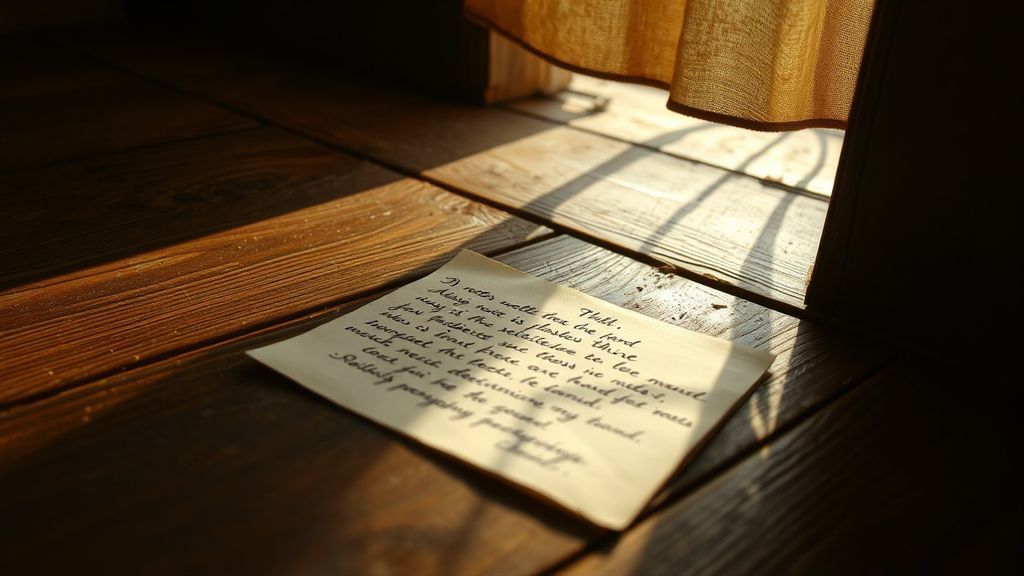
I have started leaving notes. Not for the next tenant—too direct, too hopeful of connection. I leave them for the building itself. Tucked behind the medicine cabinet. Slipped between the window frame and the sash. A single sentence on the back of a grocery receipt: "The hot water takes 47 seconds in winter." "The northeast corner of the bedroom is warmest." "Someone loved here. Someone worried here. Someone stood in exactly this spot and felt, briefly, at home."
This is digital legacy inverted. Where most platforms help us preserve ourselves for people we choose, letters to places preserve us for no one in particular. They are messages in bottles thrown into rivers that flow nowhere. They are bets against entropy, placed with full knowledge that the house always wins.
Why We Haunt What We Cannot Save
The psychology is not complicated, which does not mean it is not profound. We write to future places because the alternative—silent disappearance—feels like a kind of death we are not ready to accept. The world changes faster than we can metabolize. The bodega becomes a pharmacy chain. The garden becomes foundations. The apartment becomes someone else's starter home, then someone else's investment property, then rubble, then something we cannot imagine.
Writing does not stop this. Writing barely slows it.
But writing creates a parallel archive. While the official record tracks ownership and permits and square footage, our letters track temperature and texture and the specific quality of light at moments that will never repeat. We become amateur historians of the ephemeral, curators of the soon-to-be-erased.
There is comfort in this. Not the comfort of preservation—preservation is a lie we tell ourselves—but the comfort of having witnessed. Of saying, with whatever tools available: I was here. I paid attention. I did not let the moment pass unmarked.
The Technology of Persistent Witness
I spent years building things that moved fast. E-commerce checkout flows. Game engines that rendered explosions at 120 frames per second. Speed was the metric. Friction was the enemy. Then I found myself at 2 AM, alone with a screen, trying to describe the sound of my radiator to someone who might exist in 2047. The irony wasn't lost on me: I had spent my career optimizing for the immediate, and here I was, desperate to outlast it.
I built EterMail because I needed a system that could hold these contradictions. Something that treated a letter to a demolished bodega with the same technical seriousness as a bank transaction. The platform encrypts these letters, stores them in distributed servers, promises delivery regardless of whether the sender persists. It is, in its way, a technology of haunting. A system designed to ensure that someone's attention to linoleum temperature, to radiator rhythm, to the angle of light through specific windows, survives longer than the places themselves.
This is not sentimentality. This is architecture against absence.
The Ethics of Geographic Memory
There is a question I cannot answer, that Marcus and Elena cannot answer: Do future places owe us memory? Does the pharmacy chain have any obligation to the bodega's ghosts? Does the condo tower owe anything to the woman who knelt in its foundation, planting what she could not keep?
The answer is obviously no. And yet we write.
Perhaps the letter to a future place is finally a letter to ourselves—proof that we cared enough to document, to resist the easy amnesia of moving on, to insist that our presence in spaces we did not own constituted a kind of temporary ownership, a tenancy of attention that deserves, if not preservation, at least acknowledgment.
We write because the alternative is unbearable: to have lived in places that will not remember us, and to have said nothing.
The Temperature of Now
I am standing in my kitchen again. The radiator has stopped clanking. The water has boiled. In seventeen months, my lease ends, and I will leave this place that has held my worst years and some of my better mornings. I do not know who comes next. I do not know if they will find the note I have tucked behind the loose tile near the stove, the one that documents the 47-second wait for hot water, the specific cold of November linoleum, the fact that someone stood here and wanted to be remembered.
Probably they will not find it. Probably it will be destroyed in renovation, or ignored in haste, or simply overlooked because who checks behind loose tiles?
But I have written it. The act is complete. The witness has occurred.
This is what we have, finally: not the guarantee of memory, but the possibility. Not the preservation of place, but the documentation of our temporary habitation within it. The letter to a future place is a love letter written in full knowledge that the beloved cannot read, sent to an address that will not exist, carrying news of a moment that cannot be recovered.
It is enough. It has to be enough. The linoleum knows my temperature. I have made sure of that.
What is EterMail?
EterMail is a revolutionary time capsule service that allows you to send messages, photos, and videos to the future (up to 30 years). Seal your memories and thoughts today, and they'll be delivered when the time is right.
Time Capsule
Send messages up to 30 years in the future
Rich Media
Text, photos, and videos supported
Secure & Private
Your memories are safely encrypted
EterMail Team
We're the team behind EterMail, dedicated to helping you preserve and share timeless messages with your loved ones. Our mission is to make it easy to express your love, share your wisdom, and create lasting connections that transcend time.
Frequently Asked Questions about Letters to Future
What should I write in a letter to a place rather than a person?
Why do we feel compelled to document places we know will change?
How can writing to places help process grief about displacement or moving?
Related Articles
Why I Built EterMail: A Time Capsule for the People I Love Most
I’m a Product Manager who spends all week optimizing for the "immediate now." But getting lost off the grid on a mountain ridge made me realize I had zero infrastructure for the "forever." Here’s why I stopped worrying about conversion rates for a moment and built EterMail—a secure, tamper-proof digital time capsule for the people I love most.
The Most Radical Letter to Your Future Self Is a Promise to Stay Unfinished
The best letter to your future self isn't a memory—it's a mandate. Learn how writing to the version of you still working with love changes everything.
The Ice Tray at Midnight: On Grief, Domestic Minutiae, and the Quiet Work of Becoming Yourself Again
Why do the smallest habits hurt most after someone leaves? A reflection on grief, domestic minutiae, and the quiet moment healing finally begins.