The Kitchen Light, Five Years Ago
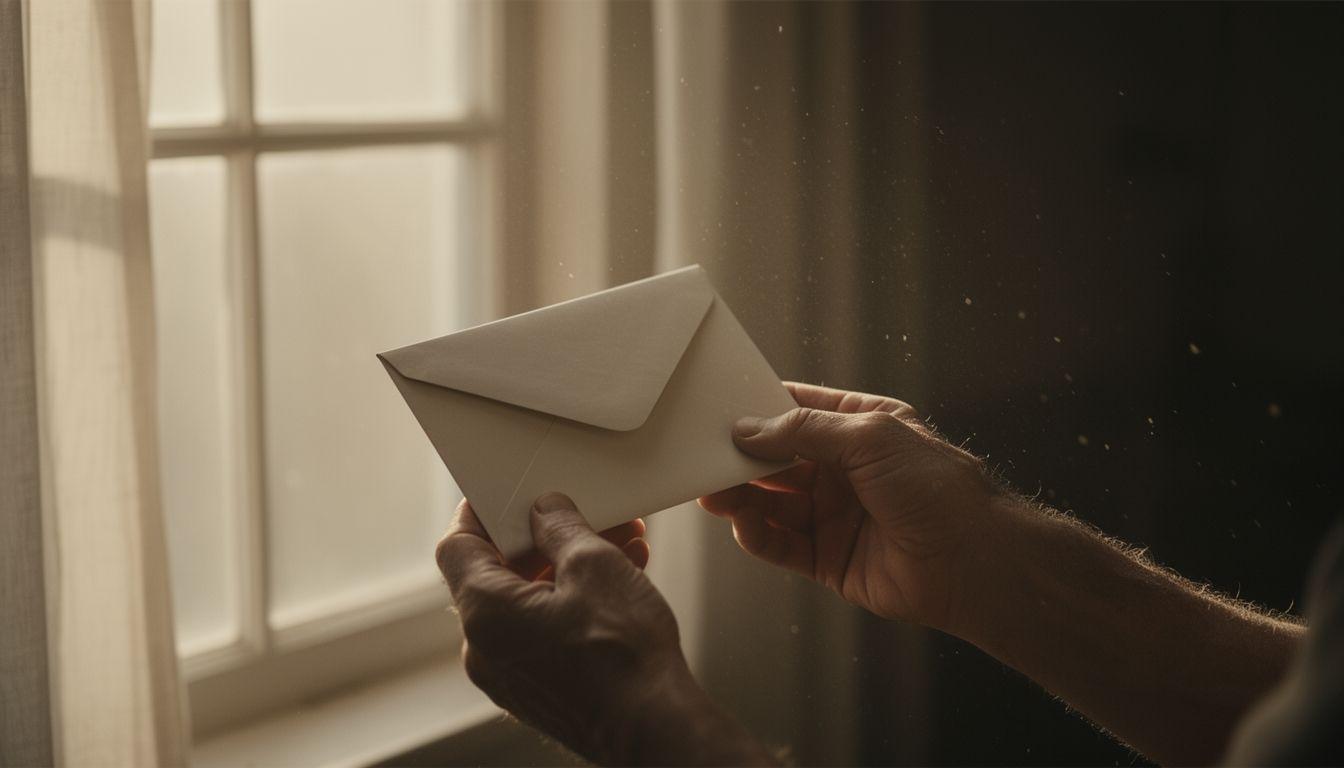
You are standing at a counter you will not own in five years. The afternoon sun falls through a window you have already forgotten the shape of, and your hands—still bearing the pale ridge of a knife slip from a Tuesday you cannot recall—are sealing an envelope.
You do not know this yet, but you are performing an act of archaeological preservation. You are burying evidence. Not of crime, but of consciousness. Of a self so present, so urgent in its particular longing, that it cannot imagine becoming obsolete.
This is the quiet ritual of writing to a future you. Not the curated self-improvement version, with its bullet-pointed goals and manifestation mantras. The real one. The one who weeps at commercials and cannot name why. The one who believes, with the absolute certainty available only to the temporary, that this heartbreak will remain sharp forever.

The Fiction of Continuity
We operate under a necessary delusion: that the person reading these words tomorrow will be essentially the same person writing them today. Psychologists call this the "end of history illusion"—our stubborn belief that while others change, we have arrived at our final form.
The letter to our future self exposes this as fiction. We write across a chasm we refuse to acknowledge exists, addressing someone we assume will recognize our references, share our grievances, remember the names we abbreviate with casual intimacy. We sign with the wrong name, always. The name of someone who no longer exists by the time the message arrives.
Research at Harvard revealed that people consistently underestimate how much they will change over time. We predict our future preferences with roughly the same accuracy as predicting a stranger's. Your future self is, statistically speaking, a stranger. The letter makes this literal.
The Particular Grief of Recognition
There is a specific sorrow in opening these time capsules. Not the dramatic kind, but the slow, atmospheric grief of encountering evidence you once lived differently.
You recognize the handwriting immediately—that part survives. But the voice? The preoccupations? The desperate, almost embarrassing specificity of what once consumed you? These read as artifacts from another civilization.
You hold paper touched by hands that did not know what you know. Hands that had not yet learned the particular dullness that replaces sharp grief, the way a name you once spoke daily becomes a word you no longer have occasion to say. The letter describes a heartbreak you have since healed into something you no longer name at all. It is not even "healed"—that implies active process. It is simply absorbed. Integrated into the substrate of who you became without noticing.
The stranger in your handwriting believed this feeling was permanent. You, reading, cannot quite reconstruct what it felt like. This is not growth. This is replacement.
What We Actually Preserve
If the content of our concern becomes obsolete, what survives? What makes these exercises anything more than narcissistic time-wasting?
The texture of attention. The letter preserves not what you thought but how you thought. The rhythm of your sentences. The objects you noticed without knowing you were noticing them—the particular slant of light, the song playing, the quality of silence in a room that no longer exists. These become invaluable precisely because you cannot reconstruct them from memory. Memory edits. The letter does not.
The architecture of longing. What you wanted, even if you no longer want it, maps the shape of your desire. Reading backward, you can trace the through-lines: the persistent themes that mutated but never disappeared, disguised in different vocabulary across decades.
Evidence of survival. Most powerfully, these letters prove you endured what you could not imagine enduring. The self who wrote in desperation reached you. You are the evidence that the desperation was temporary, even when permanent felt like the only honest assessment.
The Digital Extension of Intimacy
Paper letters carry the romance of physicality—the ink, the fold, the degradation of memory in actual cellulose. But they also carry risk. Fire. Flood. The careless move that discards a box unexamined. The future self you address may never receive your message through no fault of your own.
Digital preservation offers something different: intentional durability. The ability to schedule arrival with precision, to encrypt against unwanted eyes, to nest messages within messages for different future moments. The kitchen light can be recalled not through fragile paper but through deliberate architecture.
This is not replacing the analog ritual. It is extending it. The same impulse—to witness yourself across time, to leave breadcrumbs for the stranger you will become—finds new form. The envelope becomes a timestamp. The seal becomes encryption. The hope remains identical: that someone worth addressing will exist to receive what you send.
Writing to the Unknowable
The most honest letters to future selves do not pretend knowledge. They do not advise, exactly, because advice assumes the future self faces versions of present problems. Instead, they describe. They bear witness to the present's particular weather.
Try this: Write not what you hope for but what you fear. Not what you believe but what you doubt. The future self who reads will not need your wisdom. They will need your company. The recognition that someone once stood where they stand now, equally uncertain, equally temporary, equally convinced of their own permanence.
The letter becomes a mirror held at an angle—not to show who you were, but to confirm that being continues. That consciousness persists through changes so fundamental they constitute, in some philosophical sense, death and rebirth. You are the reincarnation of your past self, reading words from a previous life.
The Ethics of Memory
There is responsibility in this practice. The future self cannot consent to receiving your message. You impose on someone who cannot refuse, who may be in a moment when your voice—your particular frequency of worry or hope—constitutes intrusion rather than comfort.
Write with this humility. Acknowledge that you do not know when this will arrive, what it will interrupt, whether it will land as gift or burden. Build in escape routes. Permission to stop reading. Recognition that the stranger you address owes you nothing, not even recognition.
The best letters contain their own obsolescence. They celebrate the fact of being surpassed. They say: I hope you have outgrown everything I believe. I hope this reads as charmingly wrong.
The Consolation of Impermanence
We write to futures we cannot imagine because the alternative—silence across time—feels like abandonment. The letter says: I did not forget you would exist. I made room for you in my present.
This is the fundamental human gesture. Parents write to children not yet born. The dying leave messages for survivors they will not meet. We address strangers constantly—the readers of books we will not see published, the inhabitants of cities built after our deaths. The letter to future self is practice for this larger condition: living in a world that will continue without us, but not unchanged by us.
I built EterMail because I kept losing these letters. Not to fire or flood, but to my own inconsistency—the notebook abandoned in a move, the email draft deleted in a fit of digital housekeeping, the intention that dissolved under the pressure of immediate demands. I wanted a system that would outlast my own chaos. The best way to fight forgetting isn't taking another screenshot; it's setting an alarm for the future. By using EterMail to schedule a delivery five years from now, you free yourself from the anxiety of preservation. The message waits in encrypted stillness, immune to your present turbulence, ready to reach the stranger you will become.
The kitchen light shifts. The scar fades to invisibility. The envelope, sealed, begins its journey toward someone you cannot picture but will, impossibly, become.
Write to them anyway. Write knowing they will read your words with the incomprehension of an archaeologist examining ritual objects from a culture that did not survive. Write because the incomprehension is the point. Because someone should know that here, in this light that will never fall exactly this way again, someone cared enough to leave evidence.
The stranger is waiting. They always are.
What is EterMail?
EterMail is a revolutionary time capsule service that allows you to send messages, photos, and videos to the future (up to 30 years). Seal your memories and thoughts today, and they'll be delivered when the time is right.
Time Capsule
Send messages up to 30 years in the future
Rich Media
Text, photos, and videos supported
Secure & Private
Your memories are safely encrypted
EterMail Team
We're the team behind EterMail, dedicated to helping you preserve and share timeless messages with your loved ones. Our mission is to make it easy to express your love, share your wisdom, and create lasting connections that transcend time.
Frequently Asked Questions about Letters to Future
What should I write in a letter to my future self?
Why does reading old letters to myself feel so strange?
How do time capsules change our relationship with time?
Related Articles
Why I Built EterMail: A Time Capsule for the People I Love Most
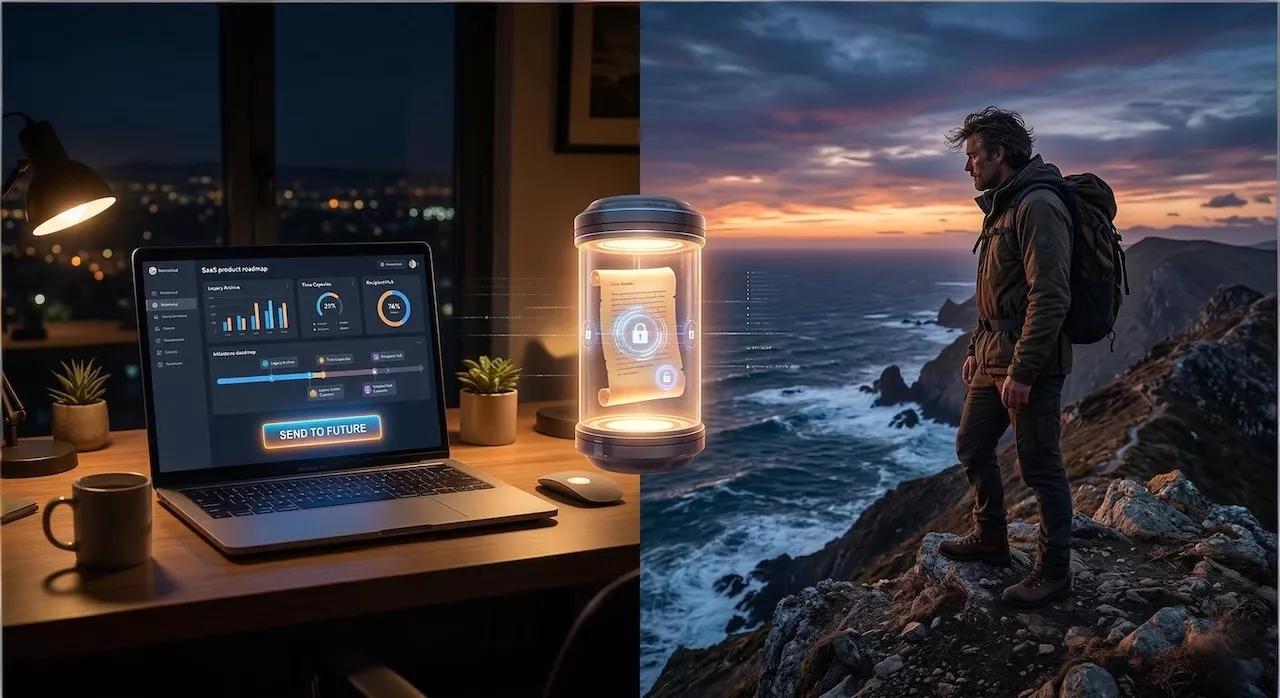
I’m a Product Manager who spends all week optimizing for the "immediate now." But getting lost off the grid on a mountain ridge made me realize I had zero infrastructure for the "forever." Here’s why I stopped worrying about conversion rates for a moment and built EterMail—a secure, tamper-proof digital time capsule for the people I love most.

The Most Radical Letter to Your Future Self Is a Promise to Stay Unfinished
The best letter to your future self isn't a memory—it's a mandate. Learn how writing to the version of you still working with love changes everything.
The Ice Tray at Midnight: On Grief, Domestic Minutiae, and the Quiet Work of Becoming Yourself Again
Why do the smallest habits hurt most after someone leaves? A reflection on grief, domestic minutiae, and the quiet moment healing finally begins.