
The Exact Texture of Holding Your Breath
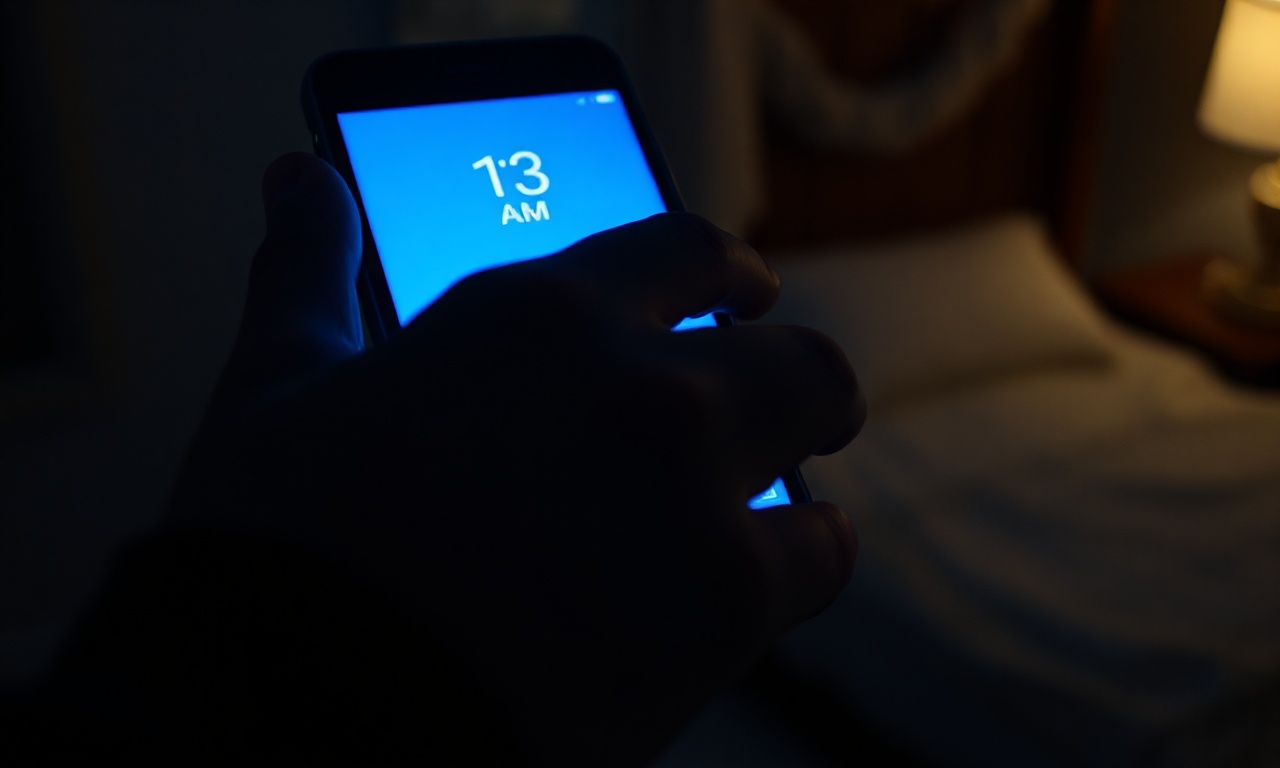
Last night, someone asked if everything was okay. You said "fine." The word left your mouth like a practiced exhale, and you watched them accept it because people usually do. They wanted to believe you. You wanted to believe yourself. But afterward, in the darkened hallway or the car ride home or the hour when the house finally went quiet, your thumb hovered over the send button at 1:13 AM. The screen glowed. The unsent message sat in your drafts like a small animal, breathing.
This is the peculiar ritual we are examining: the letter written to a future self who will have finally spoken the thing that cannot yet be spoken. Not the confession itself, but the archaeology of the silence that preceded it. The desperate, almost maternal urge to preserve the exact weight of the unsaid words at the dinner table, the particular angle of your body when you turned away, the specific sound of your own breathing when you chose concealment over exposure.
Because someday—perhaps—you will be someone else. Someone who said the thing. And that future person, that unburdened self, might forget what it cost to carry. Might romanticize their own courage. Might lose the precise texture of the person they were when they were still afraid.
Why We Document Our Own Cowardice
There is a strange nobility in this impulse, though it masquerades as self-indulgence. We are, most of us, unreliable narrators of our own transformation. The person who finally speaks the secret will inevitably reconstruct their past self as someone on the verge of breakthrough, someone brave in waiting. They will forget the genuine comfort of silence, the real relief of avoidance, the legitimate peace found in postponement.
The letter to the unburdened future self is an act of witness. It says: I was here. I was this person. Do not diminish her.
Consider what we choose to preserve. The weight of the ceramic plate as you set it down too hard, the particular cadence of your mother's laugh that made you swallow the sentence, the way your coffee went cold because you couldn't stop rehearsing the words in your head. These are not dramatic details. They are the mundane architecture of a self in suspension. And they deserve documentation precisely because they will be the first casualties of your eventual transformation.
We document our cowardice because it is not, finally, cowardice at all. It is a form of care—often misdirected, sometimes excessive, but genuine. The silence protects someone, even if that someone is only ourselves. The letter acknowledges this without excusing it.
The Time Capsule as Confession Before Confession
There is a temporal strangeness to these letters that mirrors the experience of carrying a secret itself. You are writing from a present that feels eternal to a future that feels impossible. The secret creates its own time zone. Hours elongate. Conversations become minefields you cross with exhausting precision. You become a cartographer of your own restraint, mapping exactly where the boundary lies between what can be said and what cannot.
The letter becomes a time capsule of this altered temporality. You describe the secret not in its content but in its effects: the insomnia that arrives at predictable intervals, the phantom vibration of a phone that holds no expected message, the way certain songs become unlistenable because they were playing during the moment you almost spoke.
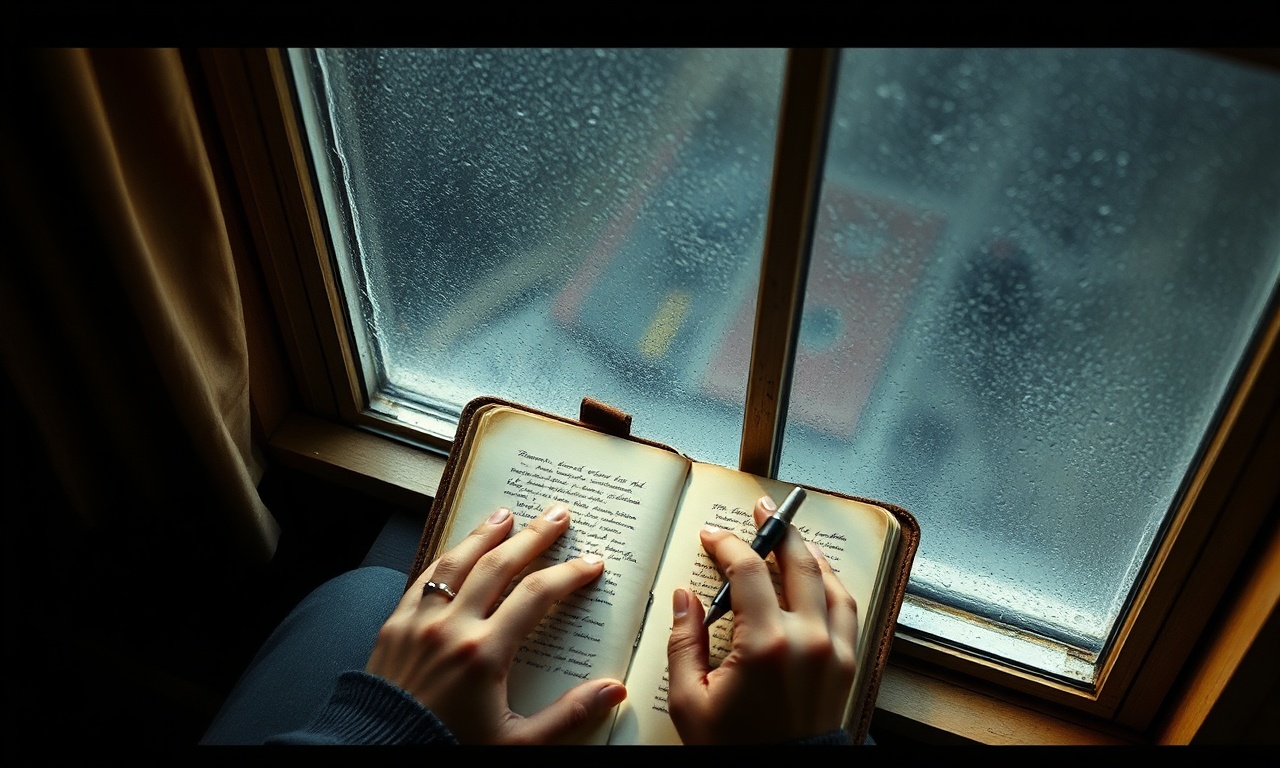
This is where platforms designed for temporal displacement become something more than organizational tools. When you compose a letter to be delivered years from now, you are not merely scheduling communication. You are creating a bridge between two selves who cannot otherwise meet—the self who still carries the secret and the self who has finally, somehow, laid it down. The encryption and scheduled delivery become a form of trust: that the future will arrive, that you will still be there to receive it, that the person you become will recognize the person you were.
The Paradox of Preserving Pain
There is a risk in this practice that must be named. The future self who has spoken the secret may not wish to revisit the silence. The unburdened person may find these letters masochistic, may resent the past self for trapping them in a feeling they worked hard to escape. This is the paradox: we preserve pain to honor it, but the healed self may not want to attend the funeral.
Yet the attempt matters. The writing itself is an action taken in a situation where action feels impossible. It is a small rebellion against the paralysis of the secret, a way of moving forward without yet moving outward. You cannot tell the truth, but you can document your relationship to it. You can create a record that says: I was not passive. I was preparing. I was, in my own delayed way, already leaving.
The letter also serves as a corrective to the narrative of sudden transformation. We love stories of dramatic confession, of the moment when everything changes. But most secrets are not released in a single exhalation. They are gradually metabolized, prepared for, rehearsed in mirrors and empty cars and the safety of documents no one else will read. The letter captures this preparatory work. It insists that the journey toward honesty has value even when the destination remains distant.
What the Future Self Needs to Remember
When you write to the person you will become, what are you actually asking them to retain? Not the secret itself—by then, it will be known or irrelevant. Not the specific suffering, which no one needs to curate. What you are preserving is the complexity of the person who could not yet speak.
You want the future self to remember that you were not simply afraid. You were also calculating, protective, exhausted, perhaps even wise in your delay. You want them to recall that the dinner table where you said "fine" was also the dinner table where you noticed your father's new tremor, where you saw your sister's anxiety about her own undisclosed trouble, where the architecture of others' needs genuinely constrained your own. The secret was not kept only from cowardice. It was kept from a crowded field of competing care.
You want them to remember the 1:13 AM thumb-hover not as pathetic indecision but as the precise moment when honesty became imaginable. The draft message was not failure. It was rehearsal. It was the self practicing the shape of a sentence it had never before allowed itself to form.
The Courage of the Documentarian
We do not often name this as courage. The person who speaks the secret receives the narrative of bravery. The person who prepares to speak, who documents the preparation, who creates artifacts of the intermediate state—this person is seen as stuck, as unable to move forward. But there is a different courage in the documentation itself. It is the courage to be present to your own liminal state without demanding resolution.
The letter to the future self who will have spoken is, finally, a letter of faith. Faith that the future will arrive. Faith that you will be different and still continuous. Faith that the person you are becoming will want to understand the person you were, will not dismiss her fear or her delay or her complicated reasons for silence.
And when that future self opens the letter—perhaps years later, perhaps on a morning when the secret has finally been released into the air like a held breath—they will find not the confession they might expect, but something more valuable. They will find a portrait of the person who carried the weight. They will remember the exact texture of the silence. They will know, finally and fully, what it cost to become someone who could speak.
The Technology of Temporal Empathy
I spend a lot of nights alone with a screen, pair-programming with LLMs until 2 or 3 AM, mapping architectures for systems that don't yet exist. That extreme digital solitude taught me something about loneliness and about dialogues across time—about how the person at the keyboard at 2 AM is someone the morning version barely recognizes, yet desperately needs to hear from. When I step away, I throw myself into harsh wind on mountain trails or the raw unpredictability of ocean waves. The contrast strips everything down. It reminds me that the unrepeatable present is all we actually own, and that our future selves are just as real and deserving of our care as the people we love right now.
In an age of instant communication, there is something radical about choosing delay. About composing a message that will not arrive for months or years, that cannot be recalled or edited once sent, that creates a fixed point of connection between temporal selves who would otherwise lose each other to transformation.
The best way to fight forgetting isn't taking another screenshot; it's setting an alarm for the future. By using EterMail to set a delivery date 5 years from now, you completely free yourself from the anxiety of the present. You write the thumb at 1:13 AM. The sound of your own breathing. The way you said "fine" and meant something else entirely. These details will not survive in memory. They will be overwritten by the narrative of what came after. But in the letter, they persist. They become available to the future self who might otherwise forget that transformation is not teleportation—that to become someone who speaks, you must first be someone who could not, and that person deserves recognition.
The secret, when it finally emerges, will change the architecture of relationships, the narrative of self, the available futures. But the letter preserves the room where the secret lived. The particular quality of light. The exact weight of the air before the window opened.
And perhaps that is enough. Perhaps that is the purpose of writing to the future—not to hasten change, but to ensure that when change arrives, it does not erase what came before. That the person who finally speaks can still recognize, in the mirror of the past, the person who once could not.
What is EterMail?
EterMail is a revolutionary time capsule service that allows you to send messages, photos, and videos to the future (up to 30 years). Seal your memories and thoughts today, and they'll be delivered when the time is right.
Time Capsule
Send messages up to 30 years in the future
Rich Media
Text, photos, and videos supported
Secure & Private
Your memories are safely encrypted
EterMail Team
We're the team behind EterMail, dedicated to helping you preserve and share timeless messages with your loved ones. Our mission is to make it easy to express your love, share your wisdom, and create lasting connections that transcend time.
Frequently Asked Questions about Letters to Future
How do I write a letter to my future self about something I haven't been able to say yet?
What are the psychological benefits of writing to a future version of myself?
Should I keep letters about secrets I've finally revealed, or destroy them once I'm free?
Related Articles
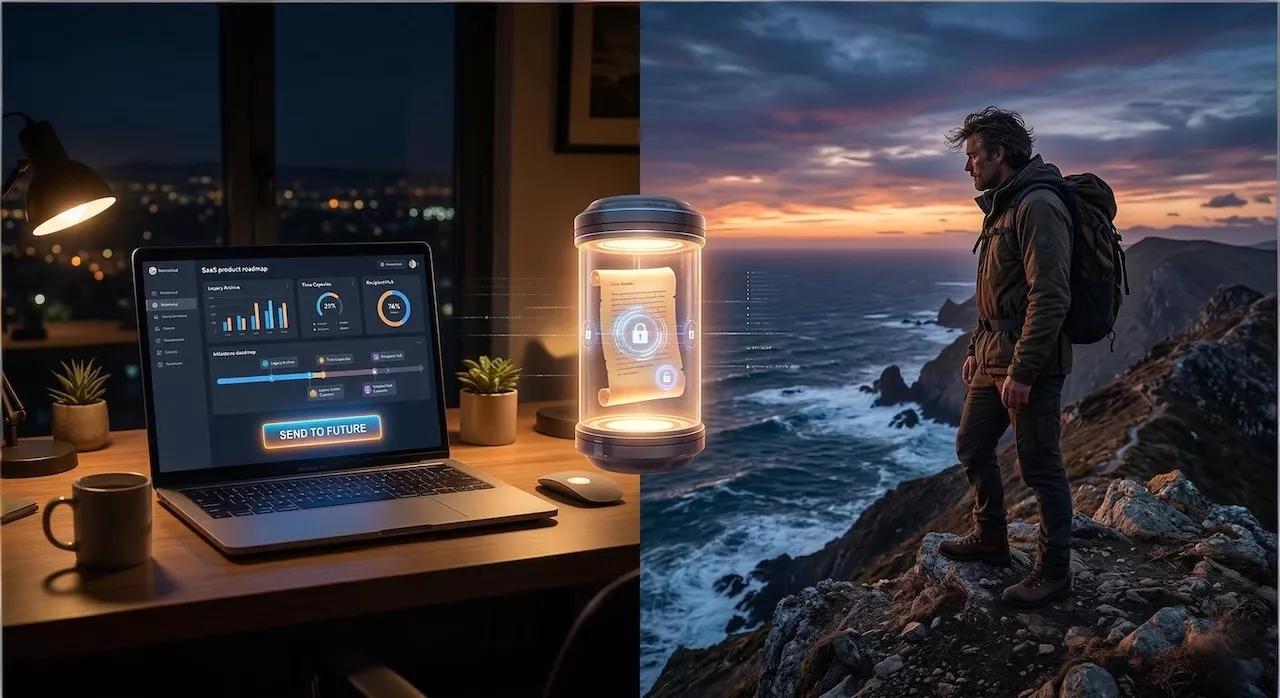
Why I Built EterMail: A Time Capsule for the People I Love Most
I’m a Product Manager who spends all week optimizing for the "immediate now." But getting lost off the grid on a mountain ridge made me realize I had zero infrastructure for the "forever." Here’s why I stopped worrying about conversion rates for a moment and built EterMail—a secure, tamper-proof digital time capsule for the people I love most.
The Most Radical Letter to Your Future Self Is a Promise to Stay Unfinished
The best letter to your future self isn't a memory—it's a mandate. Learn how writing to the version of you still working with love changes everything.
The Ice Tray at Midnight: On Grief, Domestic Minutiae, and the Quiet Work of Becoming Yourself Again
Why do the smallest habits hurt most after someone leaves? A reflection on grief, domestic minutiae, and the quiet moment healing finally begins.