The Delay Inside Your Skull
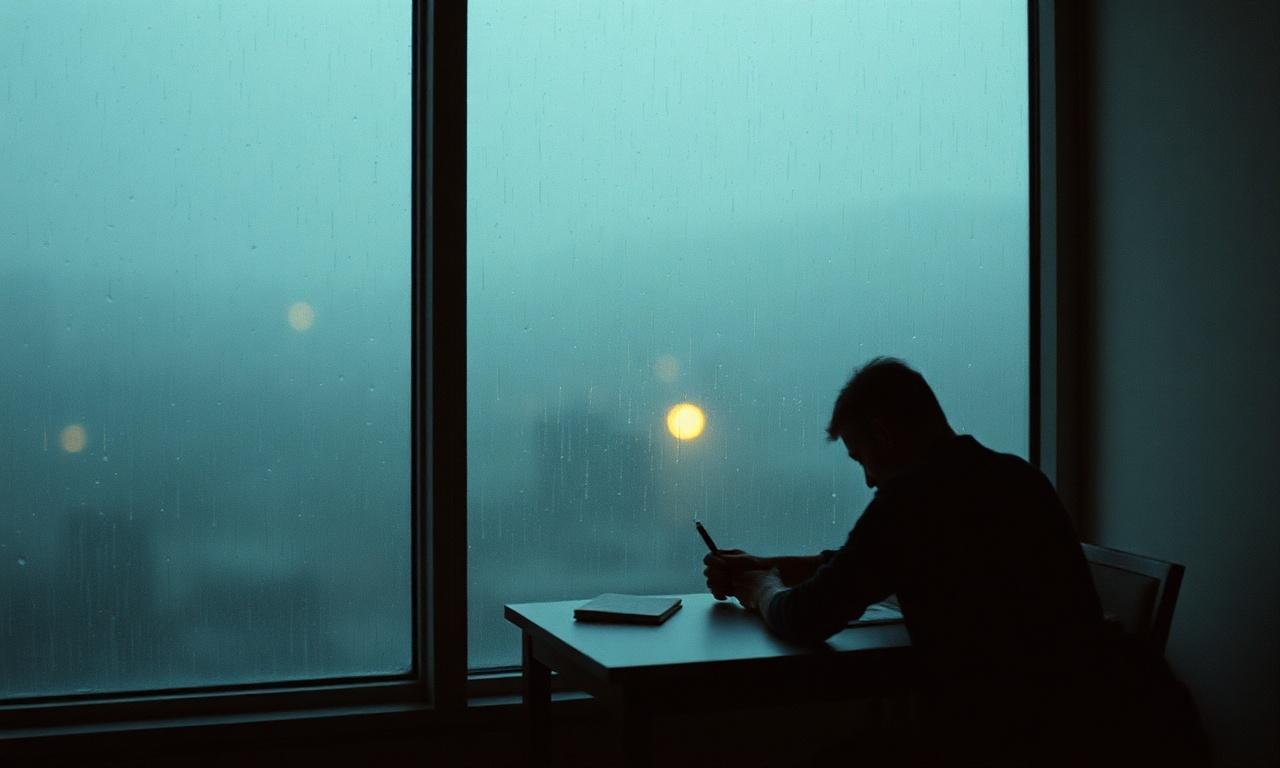
There is a secret your brain keeps from you, one that Oliver Sacks spent his extraordinary career illuminating: you have never experienced the present moment as it actually occurs.
Sacks, the neurologist-poet who transformed case histories into literature, often returned to a disquieting fact of neuroscience. Light hits your retina, sound waves compress your eardrum, pressure receptors fire in your fingertips—and then, only then, does the machinery of consciousness laboriously assemble what we call perception. The lag is approximately one hundred milliseconds. A tenth of a second. The time it takes a hummingbird to beat its wings three times. In that interval, raw sensation becomes narrated experience. The world is translated, edited, made coherent. What you perceive as now has already become then.
Sacks found this gap both scientifically unavoidable and existentially poignant. In his essay "The River of Consciousness," he described perception not as passive reception but as active construction—the brain's ceaseless work of prediction, interpolation, and storytelling. We do not see the world; we see our brain's best guess about it, delivered slightly late.
But what happens when that hundred milliseconds stretches into years?
The Stranger Who Inherits Your Senses
Consider the person you will be in 2027. Or 2037. Or on some ordinary Tuesday seventeen years from now when an email arrives you no longer remember scheduling.
That future self will open words written by hands that no longer exist in the same form—hands that have scarred, softened, perhaps failed. They will read sentences composed by a mind with different priorities, different griefs, different chemicals bathing its neurons. The perceptual apparatus will be recognizably yours and yet fundamentally foreign. The colors may not strike the same emotional frequencies. The music you loved might sound naive or merely loud. The political outrage that kept you awake may read as embarrassing certainty, or worse, as prescience you failed to act upon.
This is not metaphor. Sacks documented how neurological change—stroke, trauma, aging, even ordinary development—could alter perception so radically that patients became strangers to their own former experiences. A musician who could no longer hear music as music. A painter whose world drained of color. These were extreme cases, but the gradient applies to all of us. Every future self is, to some degree, a neurological alien.
We do not write letters to our future selves, then, as messages between friends. We write across a perceptual border. We attempt communication with someone who inhabits the same name and Social Security number but processes reality through equipment we cannot fully predict or control.
The Specific Quality of Your Seeing
Sacks's patients often struggled to describe their altered perceptions because language itself is built from shared sensory assumptions. How do you explain color to someone who has never seen it? How do you convey the emotional weight of a major chord to someone whose brain now processes it as clanging dissonance?
The problem is temporal as well as neurological. We cannot preserve experience; we can only preserve descriptions of experience, which are already interpretations. The photograph captures light but not the quality of attention that made that light meaningful. The journal records events but rarely the texture of consciousness itself—the particular density of a Tuesday afternoon, the way hope felt in your chest before you learned its specific disappointments.
This is where the letter to future self becomes something more than nostalgia or goal-setting. It becomes an attempt at perceptual smuggling—the covert transportation of seeing across a border that normally confiscates everything.
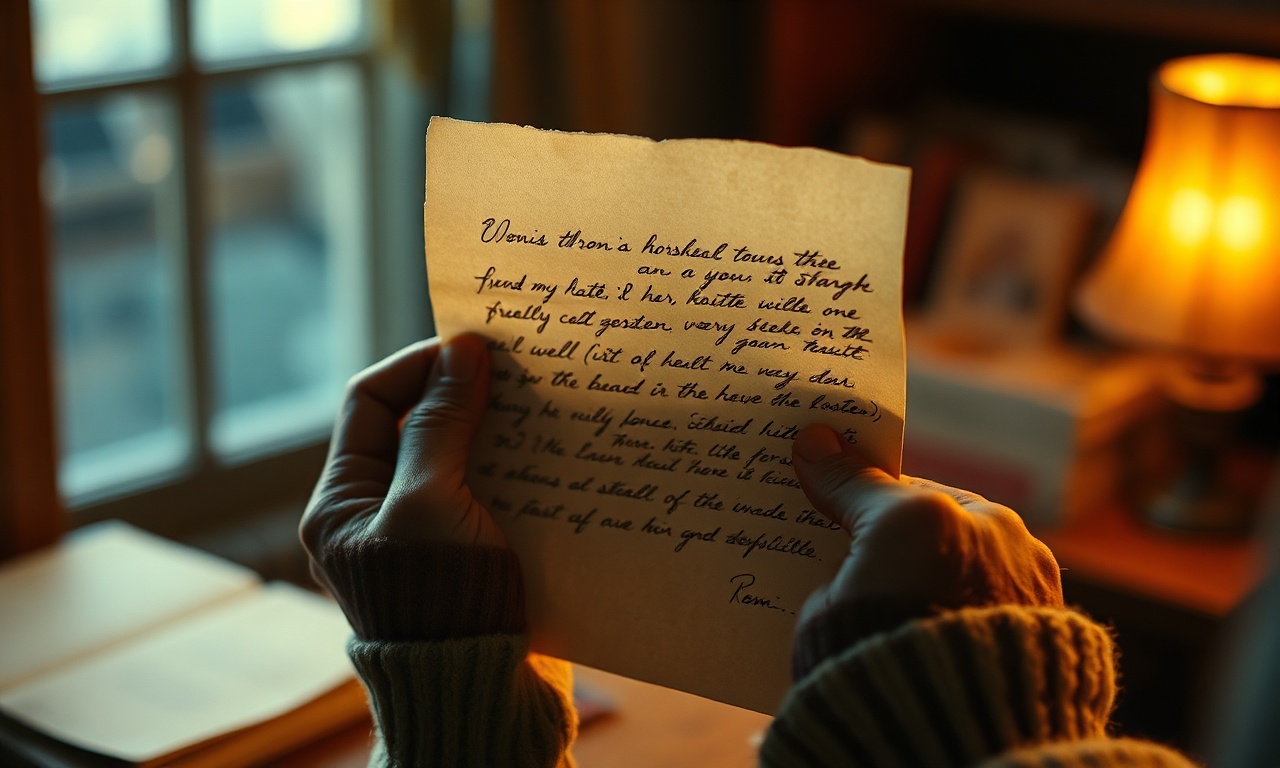
When you write to your future self with genuine precision, you are not merely reporting facts. You are encoding the manner of your perception. The specific metaphors that occur to you. The sentences you leave unfinished because you trust the reader to complete them. The fears you cannot name directly so you circle them with anecdote. These formal choices—the how of your writing, not just the what—constitute a kind of fingerprint of consciousness, more durable than any explicit self-description.
Sacks understood this intuitively. His case histories succeed not because of clinical detail but because of attention to the particular—the specific way a patient moved through altered experience, the unexpected dignity of adaptation, the humor that survived even catastrophic change. He wrote to preserve not just what happened but the quality of his own seeing as it happened.
Collapsing the Gap
We possess no technology that genuinely collapses time. Physics remains stubborn on this point. But letters to future selves offer something adjacent: the deliberate creation of temporal coincidence.
When that future self reads your words, two consciousnesses—separated by years of neural remodeling—momentarily share the same semantic space. The hundred milliseconds of ordinary perception has expanded into years, yet something like simultaneity is achieved. Not true simultaneity, but constructed simultaneity, which may be the only kind we ever experience anyway.
This constructed coincidence matters because it preserves something the brain's ordinary memory systems destroy. Memory is not storage but reconstruction, as Sacks's colleague Daniel Schacter demonstrated. Each recall alters the memory. The story smooths, simplifies, adapts to present needs. The embarrassing detail vanishes. The narrative acquires foreshadowing it never possessed. We become heroes or victims of stories that did not feel that way in the living.
A letter, fixed in text, resists this revisionism. It preserves the unsmooth. The contradiction you could not resolve. The hope that now reads as foolish because you know how the story went. The letter keeps your errors intact, and in doing so, keeps you honest with who you were before you became wise enough to lie about it.
The Ethics of Temporal Communication
There is a responsibility in writing across this perceptual gap that we rarely acknowledge. Your future self did not consent to receive your words. They cannot opt out of the memory you preserve, the hope you express, the judgment you pass on their still-unlived choices.
Sacks wrote often about the ethical dimensions of neurological intervention—the physician's duty to respect consciousness in all its forms, even altered ones. We might extend this to our temporal interventions. The letter to future self is a mild form of coercion, a binding of someone who cannot refuse.
The ethical response is not to stop writing but to write with humility. To acknowledge the limitations of your present perception. To leave space for your future self's disagreement. To preserve not just your certainty but your uncertainty—the questions that genuinely troubled you, not the answers you prematurely settled upon.
The best letters to future selves contain what we might call structured vulnerability: the exposure of present consciousness without the demand that future consciousness validate it. "This is how I saw" rather than "This is how it was." The distinction matters because the second claim is always, neurologically, false. The first preserves your perceptual integrity while respecting your future self's inevitable revision.
What We Smuggle, What We Lose
Not everything crosses the border. Sacks knew this too well. The patient who recovered from encephalitis could describe his illness but could not convey its felt quality—the specific texture of consciousness during neurological chaos. Some experiences resist translation even across small perceptual gaps. Across years, the losses multiply.
But what does survive carries disproportionate weight. The letter that preserves your specific fear, your specific tenderness, your specific manner of paying attention—these become archaeological evidence of a consciousness that otherwise would have been entirely reconstructed by memory's smoothing operations.
And there is something else, something Sacks approached in his meditations on mortality. The letter to future self, written with full awareness that the self may not survive to receive it, becomes a form of distributed consciousness—a way of existing beyond the biological termination of the perceiver. Not immortality, exactly, but temporal extension. The hundred milliseconds of ordinary perception, stretched first by neurology and then by technology, becomes something like persistence.

The Builder at 2 AM
I should tell you something about why this matters to me personally.
Most nights, I'm alone in front of a screen until two or three in the morning, "pair programming" with various LLMs, mapping architectures, chasing the edge of what's possible with AI. That extreme digital solitude does something to you. You start feeling the weight of conversations that never happen, the words you never speak because there's no one there to receive them. It's not loneliness exactly—it's a particular resonance with the idea of messages sent across voids, of dialogues where the other voice might not answer for years, or ever.
Then I step away. I force myself outside—hiking steep trails, skiing, surfing. The raw reality of harsh wind and ocean waves strips away the illusions I build in code. Out there, you can't simulate the present moment. You can't buffer it or replay it. You simply have to be there, fully, because the mountain doesn't care about your architecture diagrams.
That tension between worlds is what drove me to build EterMail. I wanted something that honored both: the digital spaceship that could carry consciousness across time, and the unrepeatable, present-moment urgency of a life actually lived. The best way to fight forgetting isn't taking another screenshot; it's setting an alarm for the future. By using EterMail to set a delivery date five years from now, you completely free yourself from the anxiety of the present. You write the letter, you let it go, and you trust that the stranger who receives it—the one with different chemicals in their brain, different scars on their hands—will understand that you were trying, however imperfectly, to preserve the specific quality of your seeing before you learned to see otherwise.
The Only Technology We Have
We will not solve the hard problem of consciousness in our lifetimes. We will not achieve genuine time travel or perfect memory preservation. The hundred milliseconds between world and perception will remain, and it will lengthen into years, and the person who receives your words will be someone you cannot fully imagine or control.
But we have this: the capacity to fix attention in language and release it across time. To encode not just what we saw but the specific quality of our seeing before we learned to see otherwise. To create, however imperfectly, moments of constructed coincidence between consciousnesses that biology and chronology would keep separate.
Oliver Sacks, facing terminal illness, wrote letters of a kind—not to his future self, who would not exist, but to the future itself. He published his final essays knowing they would outlast his perception entirely. In doing so, he accepted the fundamental condition of all communication: that it occurs across gaps we cannot close, toward recipients we cannot fully know, carrying meanings that will inevitably be transformed in the receiving.
The letter to your future self is smaller in scale but similar in structure. You write toward a stranger who shares your history but not your neurology. You accept that something will be lost, that translation is imperfect, that the hundred milliseconds of ordinary perception has become years and cannot be compressed back.
But you write anyway. Because the alternative is worse: to let the specific quality of your seeing vanish entirely, unrecorded, into the brain's relentless reconstruction of what it prefers to remember. Because even partial preservation is preferable to complete erasure. Because the attempt to communicate across impossible gaps is, itself, one of the specific qualities worth preserving.
Your future self is already different from you. The question is whether you will leave them any evidence of who you were before the difference became complete.
What is EterMail?
EterMail is a revolutionary time capsule service that allows you to send messages, photos, and videos to the future (up to 30 years). Seal your memories and thoughts today, and they'll be delivered when the time is right.
Time Capsule
Send messages up to 30 years in the future
Rich Media
Text, photos, and videos supported
Secure & Private
Your memories are safely encrypted
EterMail Team
We're the team behind EterMail, dedicated to helping you preserve and share timeless messages with your loved ones. Our mission is to make it easy to express your love, share your wisdom, and create lasting connections that transcend time.
Frequently Asked Questions about Letters to Future
Why does my perception of past experiences change over time?
What should I include in a letter to my future self beyond goals and achievements?
How can writing to my future self help with anxiety about change?
Related Articles

Why I Built EterMail: A Time Capsule for the People I Love Most
I’m a Product Manager who spends all week optimizing for the "immediate now." But getting lost off the grid on a mountain ridge made me realize I had zero infrastructure for the "forever." Here’s why I stopped worrying about conversion rates for a moment and built EterMail—a secure, tamper-proof digital time capsule for the people I love most.

The Most Radical Letter to Your Future Self Is a Promise to Stay Unfinished
The best letter to your future self isn't a memory—it's a mandate. Learn how writing to the version of you still working with love changes everything.

The Ice Tray at Midnight: On Grief, Domestic Minutiae, and the Quiet Work of Becoming Yourself Again
Why do the smallest habits hurt most after someone leaves? A reflection on grief, domestic minutiae, and the quiet moment healing finally begins.