The Night She Said Yes (Or Was It Morning?)
They were three years in when Sarah realized they didn't share an anniversary.
To Marcus, their relationship began on a Tuesday in October—the night he finally worked up the courage to say I love you outside a dimly lit ramen shop, his breath visible in the cold, his hands shaking inside his coat pockets. He had rehearsed it for weeks. He could still taste the miso, still feel the particular terror of waiting for her response.
To Sarah, their relationship began three weeks later. She remembered the morning she woke up and believed him—the morning she stopped waiting for the other shoe to drop, stopped testing his patience, stopped treating his love like a loan she might default on. They had been walking through the farmer's market. He bought her a honeycrisp apple. She took the first bite and understood, suddenly and completely, that he wasn't leaving.
For years, they celebrated both dates. Quietly, without ever quite acknowledging the discrepancy. Each marking a different threshold: his, the moment of risk; hers, the moment of surrender.
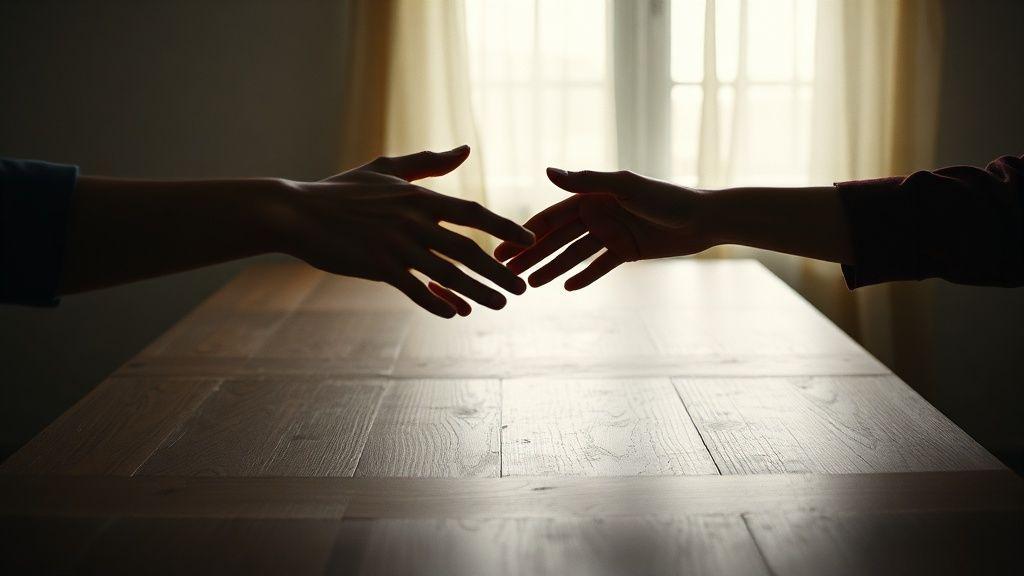
We do not fall in love simultaneously. We fall in love in sequence, in staggered time, in mismatched archives.

The Architecture of Private Memory
Neuroscientists have long understood what lovers learn slowly: memory is not retrieval. It is reconstruction. Every time we access a memory, we alter it slightly—adding the weather of our current mood, subtracting details that no longer serve our narrative, smoothing the edges until the story fits who we've become.
In relationships, this means we are each building a different edifice from the same raw materials.
Consider the vacation you both describe as "transformative." You remember the storm that trapped you in the hotel for two days—the way the rain lashed the windows, the way you fought about whether to risk the flooded streets, the way you finally gave up and ordered room service and talked until 4 AM. You carry the tension of that trip in your shoulders. You describe it as "the time we almost broke up."
They remember the morning after the storm cleared. The way the light hit the harbor. The breakfast they found, finally open, where the owner gave them free pastries because everyone was celebrating the end of the rain. They describe it as "the time we decided to stay."
Both memories are true. Neither memory is shared.
This is the quiet loneliness of intimacy: the realization that your most precious experiences exist in versions you cannot fully access. The photo they post that you barely recognize yourself in. The story they tell at dinner that replaces your own recollection, that becomes the version, the one friends reference, the one that slowly overwrites yours in the collective record.
You learn not to correct them. Or you correct them too often, and they begin to feel surveilled in their own memories. There is no clean solution.
The Generosity of Mismatched Archives
But here is what Sarah came to understand, years into her life with Marcus: the version of her that existed in his memory was not a distortion. It was a gift.
In his telling, she was braver than she felt. More generous. Less guarded. She heard him describe her to new friends—her willingness to try, her surprising warmth, the way she had "just known"—and recognized someone she aspired to be but had never quite claimed. His memory held a self she was still growing into.
This is the strange mercy of asymmetrical love: we are, for each other, archives of possibility. The person they remember loving is sometimes the person we are still becoming. Their stubborn, selective memory becomes a kind of prophecy we might fulfill.
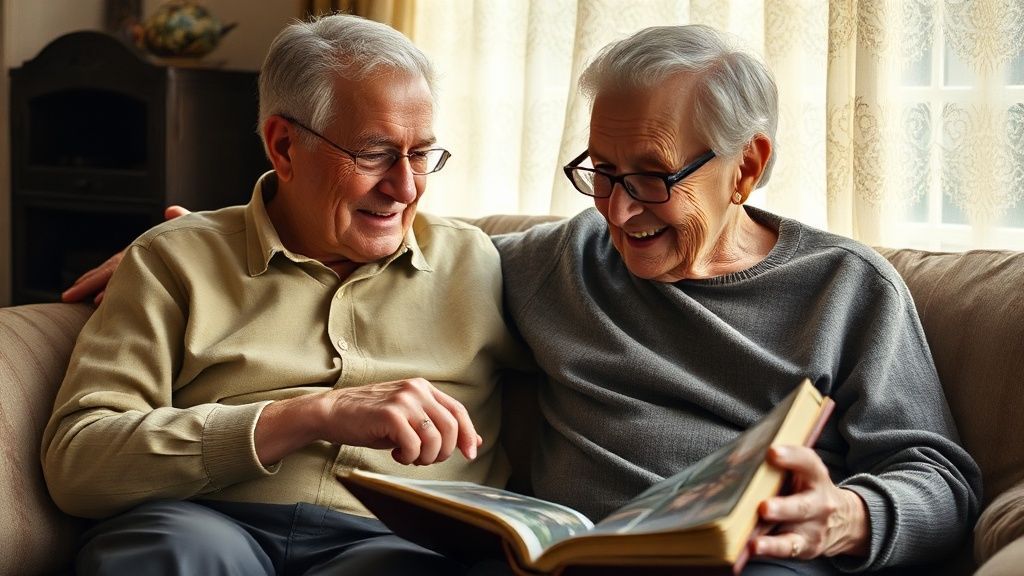
The inverse is also true. The version of them you carry—perhaps more patient than they believe themselves capable of, perhaps more seen than they have felt elsewhere—becomes a mirror they might eventually recognize. We are each other's unfinished portraits, painted in different styles, offered as evidence of who we might be.
The Work of Narrative Repair
None of this happens automatically. The asymmetry of memory can corrode as easily as it can deepen.
The argument you remember verbatim—the exact words, the specific injury, the precise moment you understood something had shifted—they have already forgotten. Or they remember it differently: your tone, not your content; your withdrawal, not your attempt to reach. You feel gaslit by their gentler recollection, or they feel attacked by your detailed accounting. The gap between your memories becomes itself a wound.
The work is not to synchronize. The work is to narrate anyway.
To keep telling your version without demanding it become the version. To receive their version without surrendering your own. To build, together, a relationship that can hold multiplicity—that does not require a single authorized history to feel real.
This is where the deliberate act of recording becomes essential. Not to fix memory in amber, but to honor its plurality. To create artifacts that acknowledge: this is how I experienced it. This is how I hope you might remember me.
Letters to the Versions We Cannot See
There is a particular intimacy in addressing the self that exists only in someone else's mind. The you they fell in love with. The you they were scared of losing. The you they imagine when you're not in the room.
These versions diverge over time. The person they married is not the person you are now. The person you were when they needed you most is not the person you have become. Love's challenge is to keep narrating across this drift—to keep offering new material for their archive, even as you cannot control how it will be filed.
I think about this constantly when I'm up at 2 AM, "pair programming" with Claude or mapping out architectures, chasing that strange feeling of building something that outlasts my own memory. The same obsession that drives me to code until the screen burns my eyes drives me to wonder: what if we could send messages not across space, but across time? What if the bridge between memory systems could be something we build deliberately, something that waits patiently while we become whoever we're becoming?
Some couples do this through ritual: annual letters, anniversary reflections, the deliberate creation of shared texts they can return to. Others do it through argument, through the messy work of negotiating whose memory will dominate this particular story. Most do it unconsciously, accumulating silences and corrections until the gap feels unbridgeable.
But there is another way. The deliberate, scheduled communication with your future together—the letter written now to be received years from now, when both of you will have become different archivists of this same period. A time capsule not of facts, but of perspective. The you who writes knowing you will read it differently. The you who writes to be witnessed by a future self who shares your life with someone whose memory has already diverged.
The best way to fight forgetting isn't taking another screenshot; it's setting an alarm for the future. By using EterMail to set a delivery date 5 years from now, you completely free yourself from the anxiety of the present. You write to the version of your partner you cannot yet know, trusting that the act of writing—of choosing to narrate across that gap—is itself the intimacy.
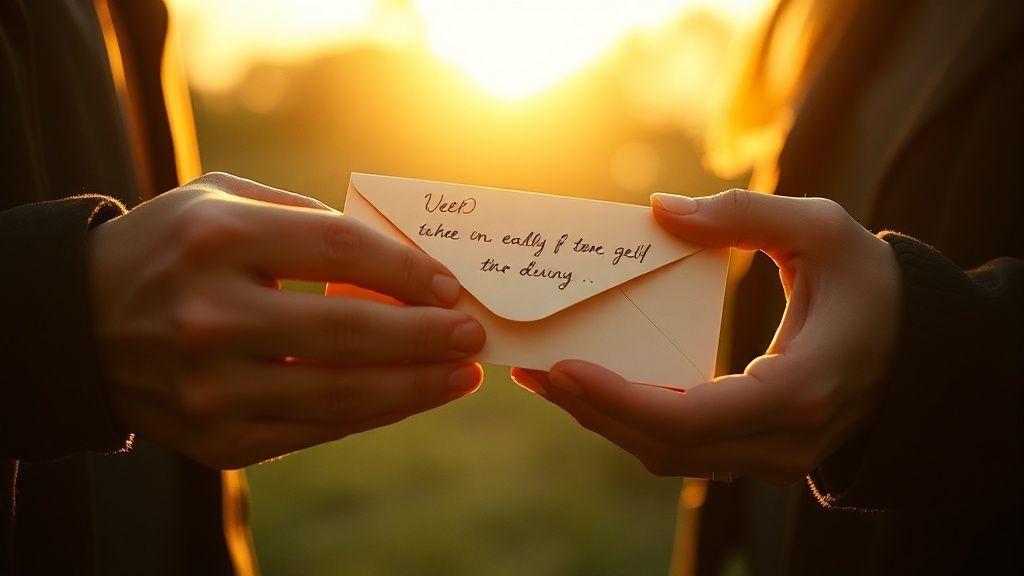
This is not nostalgia. It is the active construction of a bridge between memory systems—yours and theirs, present and future, the version you claim and the version they carry. The letter becomes a third thing: not your memory, not theirs, but a record of the attempt to be understood across time.
The Intimacy of Continued Narration
What if the truest intimacy is not shared memory at all, but the choice to keep narrating anyway?
To hold space for the version of you that exists only in their mind, even as it diverges from the one you claim. To receive their stories about you without demanding editorial control. To understand that love is not a single film we both watched, but two documentaries shot from different angles, edited with different priorities, released to different audiences—and yet, somehow, about the same events.
The asymmetry is not a flaw to be corrected. It is the condition of being separate people who have chosen, repeatedly, to try to meet.
Sarah and Marcus still celebrate both dates. They have learned to tell the story of their mismatched anniversaries as its own kind of love story: the story of two people who fell in love at different speeds, who remember different thresholds as definitive, who have built a shared history from materials that do not quite align—and who have found, in that misalignment, a deeper recognition of each other's interior lives.
The ramen shop still exists. The farmer's market too. They visit both, sometimes, and do not try to synchronize what they feel. They simply note: this matters to you. This matters to me. The mattering does not need to match.
This is the work. This is the love. The continued choice to be narrated by someone else, and to survive it.
What is EterMail?
EterMail is a revolutionary time capsule service that allows you to send messages, photos, and videos to the future (up to 30 years). Seal your memories and thoughts today, and they'll be delivered when the time is right.
Time Capsule
Send messages up to 30 years in the future
Rich Media
Text, photos, and videos supported
Secure & Private
Your memories are safely encrypted
EterMail Team
We're the team behind EterMail, dedicated to helping you preserve and share timeless messages with your loved ones. Our mission is to make it easy to express your love, share your wisdom, and create lasting connections that transcend time.
Frequently Asked Questions about Love & Milestones
Why do couples remember the same events differently?
How can I honor my partner's version of our story without losing my own?
What should I write in a letter to my future spouse about our relationship now?
Related Articles
Why I Built EterMail: A Time Capsule for the People I Love Most
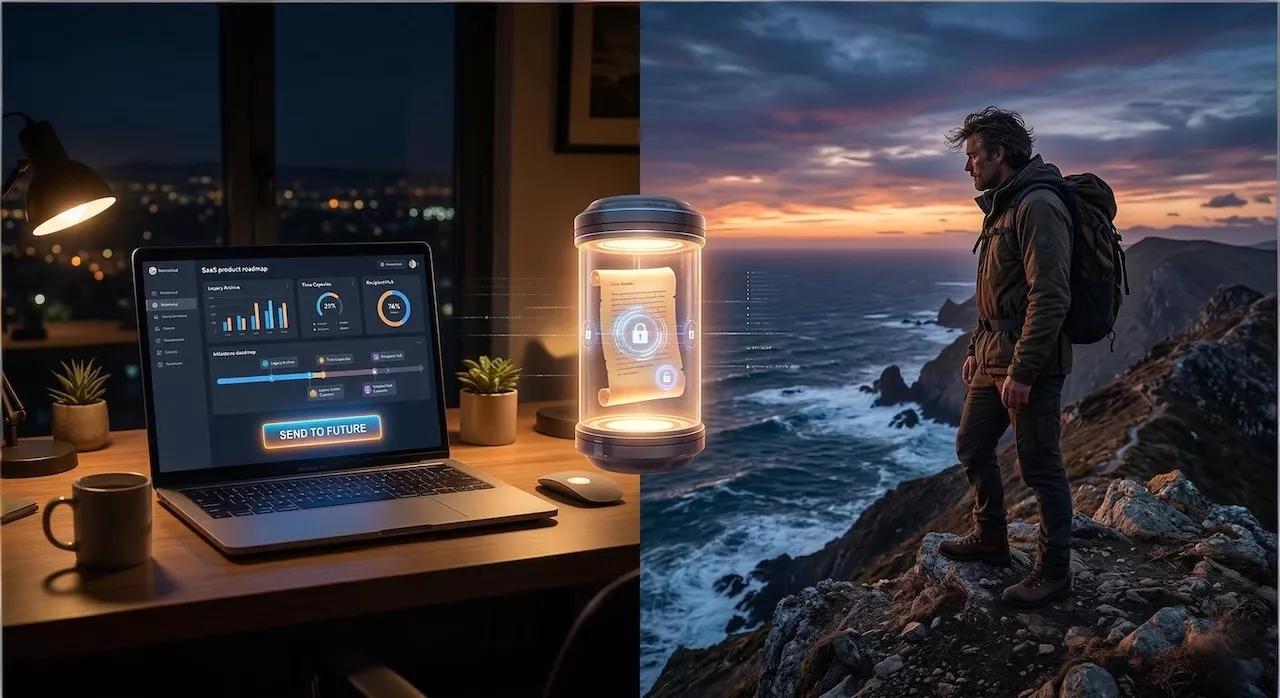
I’m a Product Manager who spends all week optimizing for the "immediate now." But getting lost off the grid on a mountain ridge made me realize I had zero infrastructure for the "forever." Here’s why I stopped worrying about conversion rates for a moment and built EterMail—a secure, tamper-proof digital time capsule for the people I love most.

The Most Radical Letter to Your Future Self Is a Promise to Stay Unfinished
The best letter to your future self isn't a memory—it's a mandate. Learn how writing to the version of you still working with love changes everything.
The Ice Tray at Midnight: On Grief, Domestic Minutiae, and the Quiet Work of Becoming Yourself Again
Why do the smallest habits hurt most after someone leaves? A reflection on grief, domestic minutiae, and the quiet moment healing finally begins.