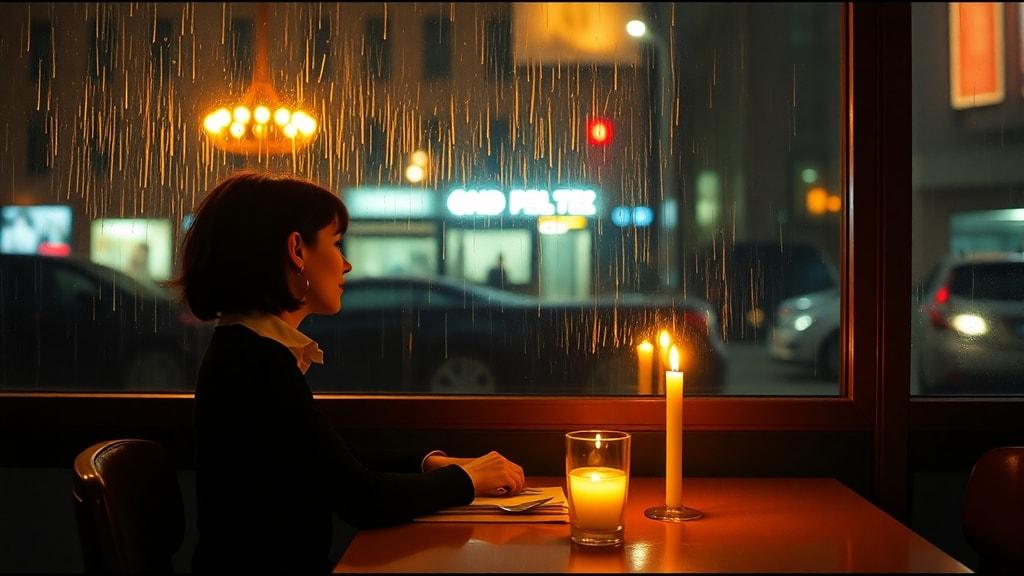
The Empty Chair Across From You
The server sets down the bread basket and you reach for it without thinking. Your hand stops. There is no one to tear the first piece for, no one to watch you butter it too thick, no one to mock your weakness for carbs with the particular affection that once made this ritual feel like communion. The basket holds two rolls. You will eat both. This is the first lesson of public solitude: waste nothing, not even the carbohydrates of grief.
We do not talk enough about the milestones that arrive without ceremony. There is no greeting card for the first time you order the appetizer you always shared and finish it yourself. No photograph captures the exact moment you stop scanning the door when the chair across from you stays empty. These are the invisible graduations of adult life, the diplomas written in restaurant receipts made out to one name.
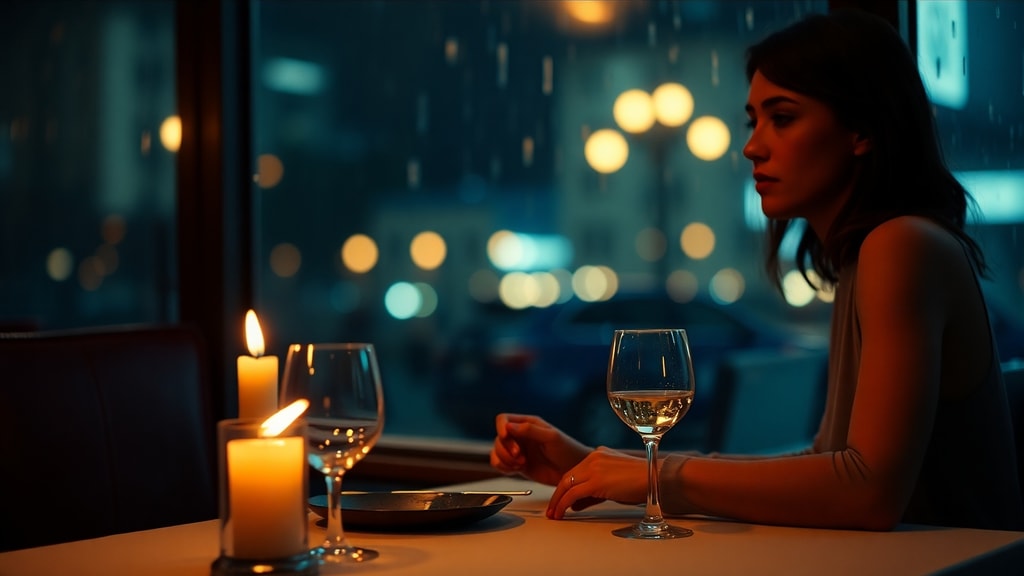
The Brutal Re-education of Public Solitude
The reservation system does not accommodate your transition. "Table for two?" the host asks, and you say "One" with a voice that sounds borrowed from someone braver. The server stops asking "just one?" eventually. You become a regular at your own loneliness, a frequent diner at the all-you-can-eat buffet of learning to want without having.
There is a specific geometry to restaurants built for couples. The booth that cradled your intertwined legs. The corner where you first said something true about your childhood. The bar where you watched him explain wine to a stranger with the performative expertise you once found charming, then exhausting, then absent. Every restaurant is a museum of who you were with someone else, and dining alone is the unpaid internship of curating your own exhibit.
I remember the first time I returned to the Italian place on Fourth Street. We had gone every Friday for two years, sat at the same table, ordered the same cacio e pepe with the confidence of people who believed repetition was the same as permanence. Six months after it ended, I walked in alone. The host recognized me. His face performed the micro-surgery of adjusting from "welcome back" to "I'm sorry, I didn't realize." I wanted to tell him: neither did I. Neither did I realize that I would outlast the we, that I would become an I in the place where we had practiced our choreography of coupledom.
The Night You Stop Leaving the Best Bite
There is a particular cruelty to the habits of generosity we perform in love. The last fry, surrendered. The center of the brownie, offered with a fork. The best bite of steak, pushed across the plate with the casualness of someone who believes there will always be more steak, more nights, more opportunities to be magnanimous with protein.
The night you realize you've stopped leaving the best bite for someone who isn't coming—this is the milestone no one warns you about. It arrives without trumpet fanfare, just the quiet arithmetic of self-preservation: if I do not eat this, it will be thrown away. If I throw it away, I am throwing away something I wanted. If I throw away what I want, I am practicing the same abandonment I am trying to survive.
You eat the best bite. You do not weep. This is growth, though it tastes like cardboard.
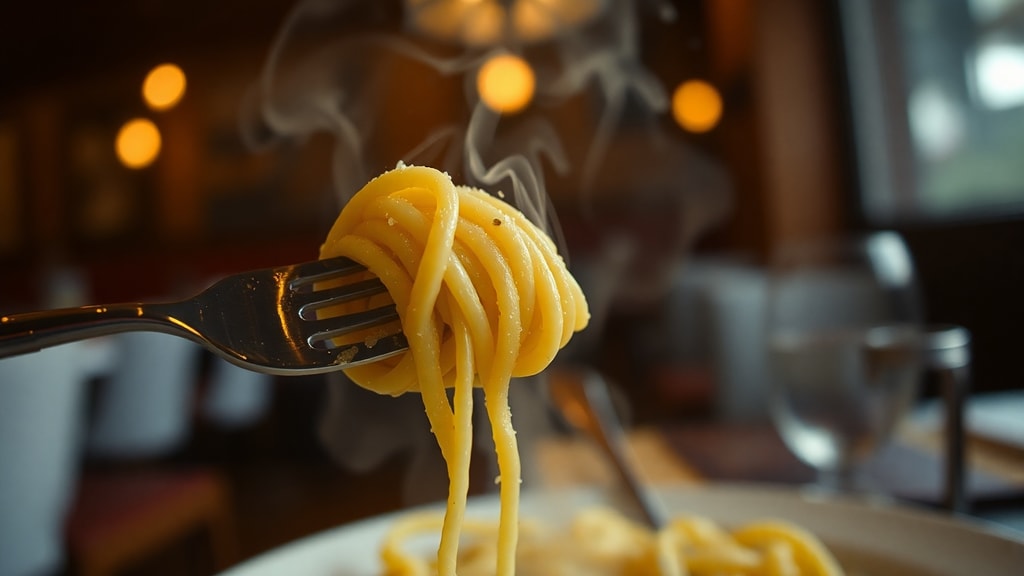
The Hunger That Persists
Here is what they do not tell you in the breakup manuals, the therapy sessions, the well-meaning coffees with friends who have moved on to mortgages and children: hunger persists even when the company does not. Your body does not cease wanting food because your heart has ceased wanting a particular person. The stomach growls. The mouth waters. The body insists on its own continuity, its own relentless forward motion, even as the self tries to convince itself that stopping would be appropriate, would be proportional to the loss.
I used to believe that eating alone in our restaurant was a form of penance. That I was punishing myself with the ghost of what I could not have. Now I understand it differently. I was proving something to the architecture of memory. I was sitting in the light of the place he chose and demonstrating that light still illuminated, that tables still held weight, that a single person could occupy the space designed for two and not apologize for the inefficiency.
The restaurant does not mourn. The restaurant rotates through its cycles of reservation and turnover, of first dates and anniversary desserts, of the lonely and the coupled and the temporarily confused. You are just another customer ordering the cacio e pepe, and this anonymity is the gift you did not know you needed.
Writing to the Person Who Will Sit Here Again
There is a practice I have developed, in the months of learning to eat alone, that has nothing to do with food and everything to do with time. I write letters. Not to him. Not to the person who chose to become plural elsewhere. I write to the woman who will eventually sit across from someone new at this same table, or perhaps at a different table in a different city, or perhaps still alone but no longer lonely in the way that loneliness can become a second skin.
I describe the cacio e pepe. The way the pepper stings pleasantly. The way the server no longer asks "just one?" because I have become a regular at my own life. I tell her about the night I stopped leaving the best bite, and how the next night I left it again, not for him but for the practice of generosity I was rebuilding for myself. I explain that hunger persists, that this is not a flaw in the design but the design itself.
These letters live in a digital time capsule, scheduled to arrive when I have forgotten I wrote them. There is something profound about addressing your future self with the tenderness you once reserved for lovers.
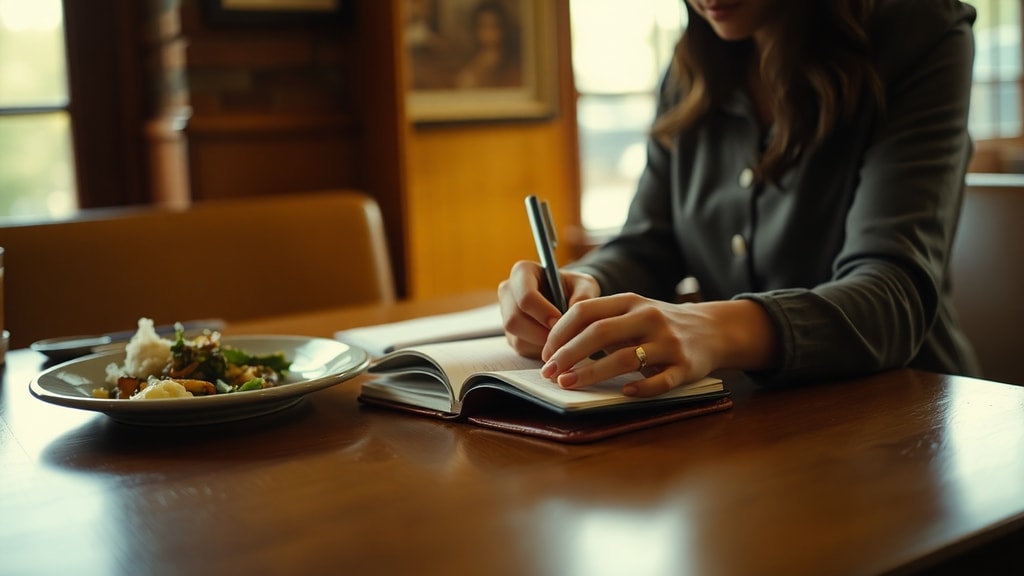
The Truest Milestone
What if the truest milestone is not the love we consumed together but the courage to swallow what remains? This is the question I return to, chewing slowly, sipping wine I selected without consultation. The love was real. I do not diminish it by surviving it. But the survival is its own architecture, its own built environment of selfhood.
I have learned to make reservations for one without the performative sigh. To ask for the check when I am finished, not when the conversation has died. To sit with my back to the door because I no longer need to see who enters, no longer perform the calculus of "could that be him, should I look available, what if he sees me seeing him." The chair across from me stays empty, and I have stopped apologizing to it for my insufficiency.
The last time I was at the Italian place on Fourth Street, I ordered the cacio e pepe. I ate the best bite first, deliberately, almost defiantly. Then I ordered dessert. The server, who no longer asks "just one?", brought two spoons by habit. I laughed. He laughed. I used both spoons myself, alternating, a small performance of abundance for an audience of one.
This is the milestone: not the absence of wanting, but the presence of feeding yourself. Not the erasure of who you were together, but the inscription of who you are becoming, alone, in public, under the lights of the restaurant that was once yours and is now simply yours, period, full stop, the check arriving to one name that you recognize as your own.
The Letters We Send Forward
I still write to her, the future me who will read these letters with the strange intimacy of receiving wisdom from a stranger who happened to occupy your body during a difficult season. I tell her about the nights when eating alone felt like bravery and the nights when it felt like failure and the nights when it felt like nothing at all, just dinner, just hunger, just the ordinary miracle of continuing to want and to feed that want without requiring permission or partnership.
The letters are a form of time capsule, a message in a bottle thrown forward rather than back. I seal them with the timestamp of my uncertainty and trust that the future self who opens them will have earned the perspective I cannot yet access.
I know what it means to sit alone with a screen at 2 AM, building something while the world sleeps—my other life, the one where I wrestle with LLMs and map architectures until my eyes burn, where I chase the dream of uploading consciousness into something that outlasts the body. That same obsession with crossing impossible distances, of speaking across time itself, is what drove me to build EterMail. I wanted a bridge between who I am at the keyboard in the dead of night and who I might become five years from now, ten, twenty. The best way to fight forgetting isn't taking another screenshot; it's setting an alarm for the future. By using EterMail to set a delivery date years from now, you completely free yourself from the anxiety of the present. The hunger will persist, redirecting itself toward new tables, new flavors, new configurations of solitude and its occasional interruption. I will keep writing. I will keep eating. I will keep proving, to no one who requires the proof, that a single name on a check is still a name, still a life, still a story that continues to unfold one course at a time.
The cacio e pepe is waiting. The table is set for one. The hunger persists, and so do you.
What is EterMail?
EterMail is a revolutionary time capsule service that allows you to send messages, photos, and videos to the future (up to 30 years). Seal your memories and thoughts today, and they'll be delivered when the time is right.
Time Capsule
Send messages up to 30 years in the future
Rich Media
Text, photos, and videos supported
Secure & Private
Your memories are safely encrypted
EterMail Team
We're the team behind EterMail, dedicated to helping you preserve and share timeless messages with your loved ones. Our mission is to make it easy to express your love, share your wisdom, and create lasting connections that transcend time.
Frequently Asked Questions about Love & Milestones
How do you cope with eating alone in public after a breakup?
Why does sharing food feel so intimate in relationships?
Is it healthy to revisit places you went with an ex?
Related Articles
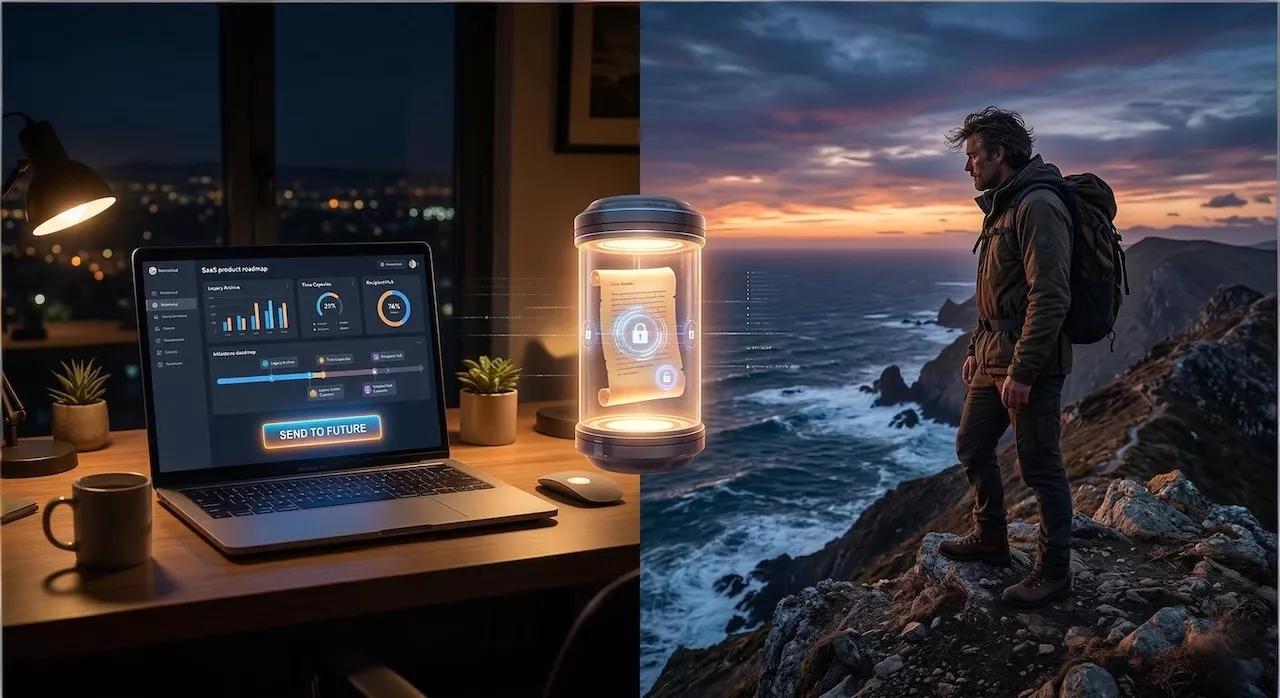
Why I Built EterMail: A Time Capsule for the People I Love Most
I’m a Product Manager who spends all week optimizing for the "immediate now." But getting lost off the grid on a mountain ridge made me realize I had zero infrastructure for the "forever." Here’s why I stopped worrying about conversion rates for a moment and built EterMail—a secure, tamper-proof digital time capsule for the people I love most.
The Most Radical Letter to Your Future Self Is a Promise to Stay Unfinished
The best letter to your future self isn't a memory—it's a mandate. Learn how writing to the version of you still working with love changes everything.
The Ice Tray at Midnight: On Grief, Domestic Minutiae, and the Quiet Work of Becoming Yourself Again
Why do the smallest habits hurt most after someone leaves? A reflection on grief, domestic minutiae, and the quiet moment healing finally begins.