
There is a particular kind of silence that follows the morning someone brings you coffee in bed. Not the silence of contentment, but the silence of panic. You lie there, the cup warming your palms, and your body—trained since childhood to justify its existence through motion—begins to twitch. The kitchen needs cleaning. The bed needs making. You should at least look busy, grateful, worthy of this small devotion.
You don't jump up. Not this time. And the absence of action feels like a cliff you are learning not to fall from.
This is the milestone no one photographs. No announcement cards, no champagne toasts. Just the excruciating, invisible work of learning to receive love without earning it.
The Ledger We Keep
Most of us were raised with an unspoken economics: affection as transaction. Good grades earned praise. Chores earned allowance. Obedience earned peace. We internalized a brutal algebra—that our value equaled our output, and love was the dividend paid to the productive.
By adulthood, this ledger has become automatic. We don't notice we're keeping score until someone loves us at zero.
The compliment lands. "You look beautiful tonight." And before we can absorb it, the rebuttal forms: This old thing. I barely tried. You should see me when I actually make an effort. We argue against our own lovability because acceptance feels like fraud, like we've tricked someone into overpaying.
Or worse: we get sick.
Not consciously, not with intent, but with the body's ancient wisdom that vulnerability is the true test. If I am helpless, will you stay? The flu becomes audition. The fever, a question we are terrified to ask directly. And when they do stay—bring soup, hold the bucket, sleep on the terrible couch—we feel both relief and deeper dread, because now we owe more than we can ever repay.

The Debt of Relaxation
Vacations destroy relationships not from boredom but from the unbearable weight of unstructured time together. Without tasks to complete, emails to answer, problems to solve, who are we? What do we offer?
You watch your partner read on the beach and feel the itch to produce an experience, to earn your place in this paradise. You plan the dinner, research the excursion, become the vacation's project manager—anything to avoid the nakedness of simply being together. And when you finally snap, when you ruin the afternoon with manufactured conflict, it takes years to recognize: you were fighting against your own unworthiness, punishing yourself for relaxing, turning leisure into debt you couldn't tolerate.
The mental ledger doesn't rest. It calculates in bed at 3 AM: I cooked Monday, they cooked Tuesday, but their meal was more elaborate, so I still owe. I was irritable last week, distant the week before. I must be extra attentive now. We become accountants of intimacy, never allowing the books to balance, because a balanced book might mean we have nothing left to contribute—and if we have nothing to contribute, what remains?
The Childhood Origin of Earned Devotion
Trace the ledger back, and you usually find a child who learned that love was conditional on performance. The parent who only noticed achievements. The household where need was weakness. The message, absorbed in bones before language: You are not inherently worth staying for. You must make yourself indispensable.
So we became indispensable. The friend who always organizes. The partner who always apologizes first. The child who became parent to their own parents, earning through caretaking what should have been given freely.
This is not blame. This is archaeology. We are digging toward understanding why receiving feels harder than giving, why being loved in emptiness triggers something like grief—the mourning of a self who never learned she could be chosen at rest.

The Courage of Crying Without Apology
There is a night, perhaps, when the tears come and you do not say I'm sorry for the inconvenience. You do not minimize, translate, or perform your pain in a palatable key. You simply leak in front of another person and let them witness your unproductive sorrow.
This is the milestone that breaks the ledger. The courage to be loved in our emptiness.
Because devotion, real devotion, does not require perpetual proof. The person who brings coffee in bed is not investing in your future productivity. They are not purchasing your gratitude or ensuring your reciprocity. They are practicing love as presence, not transaction—and your only task is to let the warmth reach you, to believe, for one impossible moment, that you are enough in stillness.
Writing Toward the Self Who Believes
Some truths are too fragile for immediate belief. We cannot simply decide to receive love without earning it; the body rebels, the ledger screams. But we can write toward the self who might one day believe it.
This is where the practice of future letters becomes something more than sentimental exercise. Writing to your future self—perhaps one year from now, perhaps ten—is an act of faith that you will still exist, still matter, still be loved. But it is also an act of revision: you are documenting not just your hopes but your current blindness, your ledger-keeping, your inability to rest in devotion.
Imagine opening a letter from your past self on a morning when someone has brought you coffee and you did jump up to clean. The letter reminds you: You were learning this once. You knew it was hard. Try again tomorrow.
Or the letter to your future self on your twentieth anniversary, written now, when you are still testing love through sickness and sabotaging vacations with productivity panic. What would you say to the person you hope to become—the one who lets compliments land, who cries without apology, who trusts that her emptiness is not a withdrawal but a different kind of presence?

The Technology of Witness
I know something about building things that outlast the moment. For years I've stayed up until 2 or 3 AM, "pair programming" with LLMs, mapping architectures for products that might not ship for months. There's a strange loneliness to it—just you and the glow, building bridges to futures you can't yet see. But that same solitude taught me that some messages matter precisely because they cannot be answered right now. They must wait. They must witness your becoming from a distance.
We live in an age of ephemeral communication—messages that disappear, conversations that scroll into oblivion, feelings expressed in the moment and then lost to the feed's relentless now. There is something about permanence that serves the slow work of transformation.
A letter scheduled to arrive years from now cannot be answered immediately. It sits in the future, a witness to your becoming. It does not demand performance or reciprocity. It simply waits, holding your voice for a self who may finally be ready to hear it.
This is not about the medium but about the intention: to mark the milestones that cameras miss. The morning you didn't jump up. The compliment you absorbed. The night you cried and were not abandoned. These are the real anniversaries of love—not the wedding, not the proposal, but the thousand invisible moments of learning to be chosen without achievement.
The Truest Milestone
We are taught to celebrate the love we give: the grand gesture, the sacrifice, the standing in the rain with boombox raised. And giving matters. But there is a quieter, more radical courage in the love we allow ourselves to receive—in believing that our unproductive, messy, resting selves are worthy of devotion.
The truest milestone is not the coffee in bed. It is the not jumping up. It is the trust, built slowly across years, that we will not be abandoned for our emptiness, that love is not a ledger to balance but a climate we can simply exist within.
You are still learning this. The ledger still opens some mornings. But perhaps today, or tomorrow, or in some future you cannot yet imagine, you will let the warmth reach you. You will believe, for one moment longer than before, that you have already earned your place here—simply by being alive, simply by being the person someone chose to bring coffee to, in bed, in the quiet, without condition.
And that will be enough.
What is EterMail?
EterMail is a revolutionary time capsule service that allows you to send messages, photos, and videos to the future (up to 30 years). Seal your memories and thoughts today, and they'll be delivered when the time is right.
Time Capsule
Send messages up to 30 years in the future
Rich Media
Text, photos, and videos supported
Secure & Private
Your memories are safely encrypted
EterMail Team
We're the team behind EterMail, dedicated to helping you preserve and share timeless messages with your loved ones. Our mission is to make it easy to express your love, share your wisdom, and create lasting connections that transcend time.
Frequently Asked Questions about Love & Milestones
Why do I feel guilty when my partner does nice things for me?
How can I stop keeping score in my relationship?
What should I write in a letter to my future self about love?
Related Articles
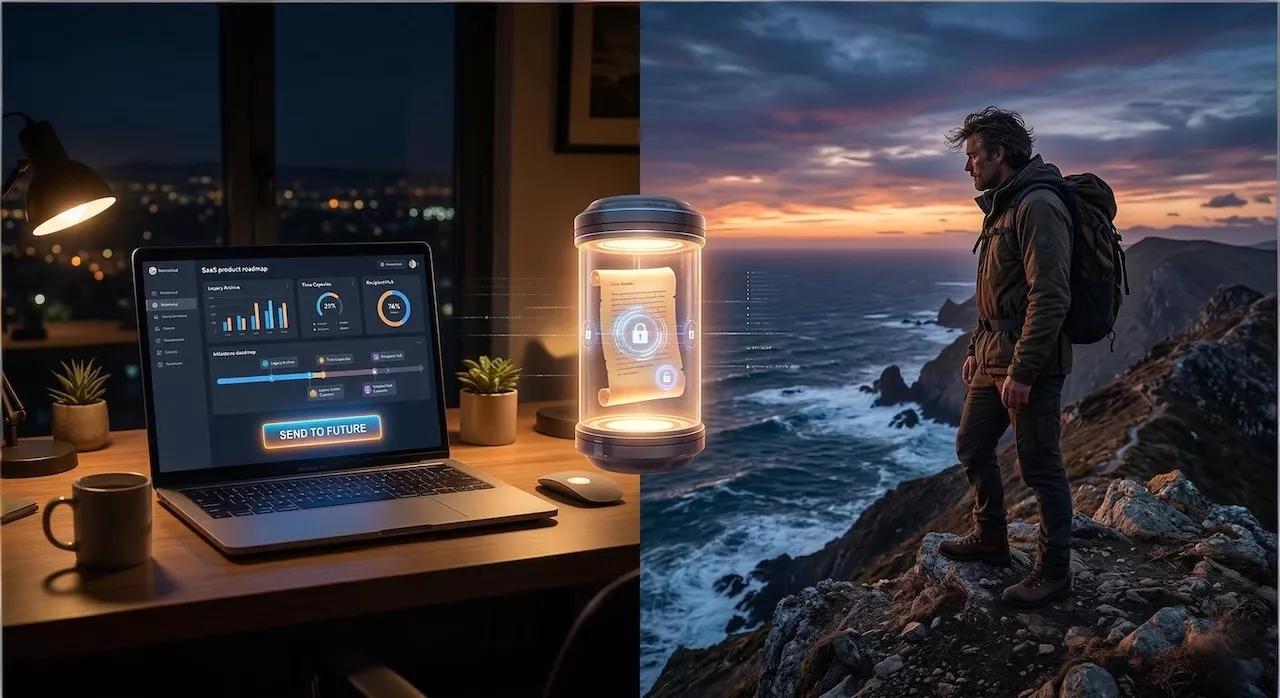
Why I Built EterMail: A Time Capsule for the People I Love Most
I’m a Product Manager who spends all week optimizing for the "immediate now." But getting lost off the grid on a mountain ridge made me realize I had zero infrastructure for the "forever." Here’s why I stopped worrying about conversion rates for a moment and built EterMail—a secure, tamper-proof digital time capsule for the people I love most.

The Most Radical Letter to Your Future Self Is a Promise to Stay Unfinished
The best letter to your future self isn't a memory—it's a mandate. Learn how writing to the version of you still working with love changes everything.

The Ice Tray at Midnight: On Grief, Domestic Minutiae, and the Quiet Work of Becoming Yourself Again
Why do the smallest habits hurt most after someone leaves? A reflection on grief, domestic minutiae, and the quiet moment healing finally begins.