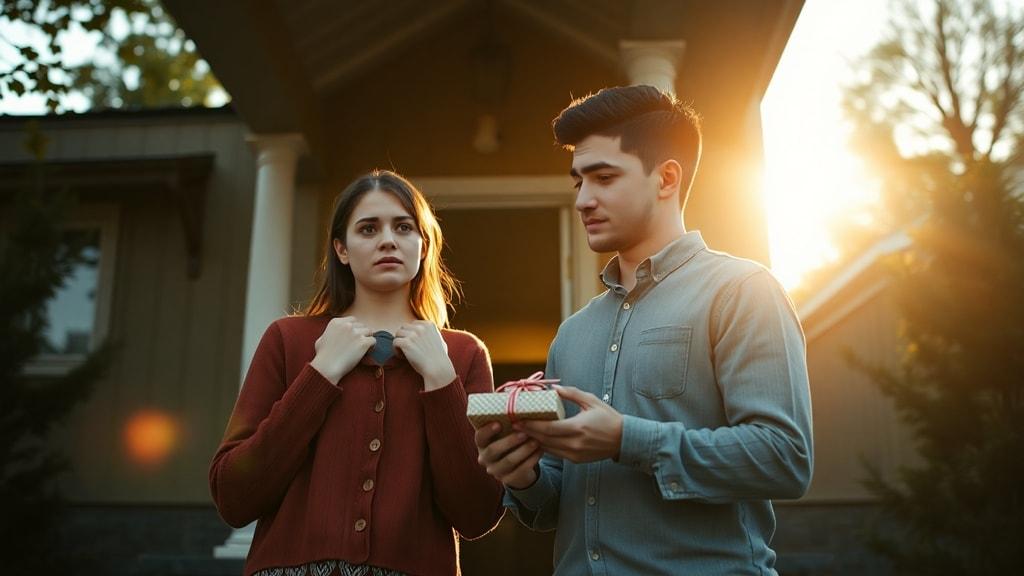
You send three texts to your mother before the car pulls into the driveway. Don't mention the thing with the therapist. Don't bring up why I left the last job. Please, for the love of God, don't tell the story about eighth grade. You have rehearsed this arrival like a military operation, yet you know with stomach-settling certainty that something will escape. Something always escapes.
This is the milestone nobody photographs: the moment you stop being a self-contained unit and become a bridge between two architectures of memory. The proposal, the first I love you, the shared lease—these earn their place in the highlight reel. But the afternoon your partner steps into the house that shaped you, the childhood bedroom they see before you've had time to hide anything, the story your uncle tells that reveals a version of you they haven't met—this is where love becomes geological. Tectonic plates shift. You are no longer curating an image. You are offering an excavation.
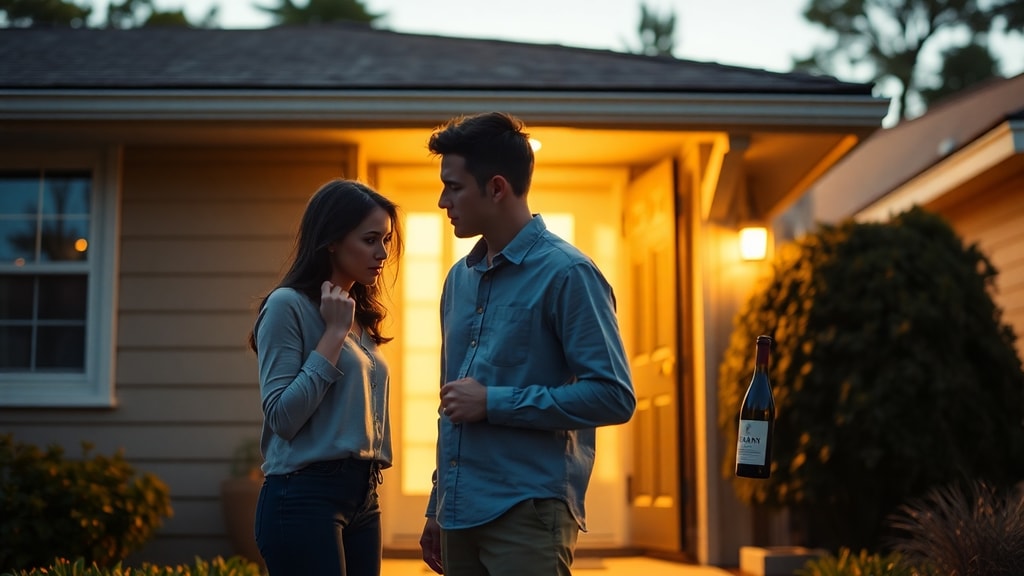
The Brutal Negotiation of Origin and Selection
We spend our twenties, sometimes longer, constructing a self we can stand behind. We curate our apartments, our playlists, our opinions about film and politics and whether pineapple belongs on pizza. We become, with painstaking effort, someone we might want to be chosen by. Then love arrives, and love demands something more complicated than our best version. It asks for our source code.
The childhood bedroom is the first betrayal. You have forgotten, or selectively remembered, the space where you became yourself. Here is the bookshelf with its embarrassing enthusiasms—the horse phase, the conspiracy theory phase, the summer you read nothing but Russian tragedies. Here is the desk where you carved something you won't explain. Your partner sees the room before you can stage it, and you understand with sudden clarity that you have never been as sovereign as you believed. You are a composite. You are a collaboration between who you wanted to become and who the walls remember.
Your father shakes their hand too long while assessing. This is not hostility, exactly. It is the ancient calculation of whether this person can survive the weather systems of your family, whether they have the stamina for holidays that turn on small comments, whether they will still choose you after witnessing the dynamics you have spent years learning to navigate. The handshake lasts a half-second too long because your father is measuring something he cannot name: Will they stay when they see what we cost her?
The Stories That Escape Containment
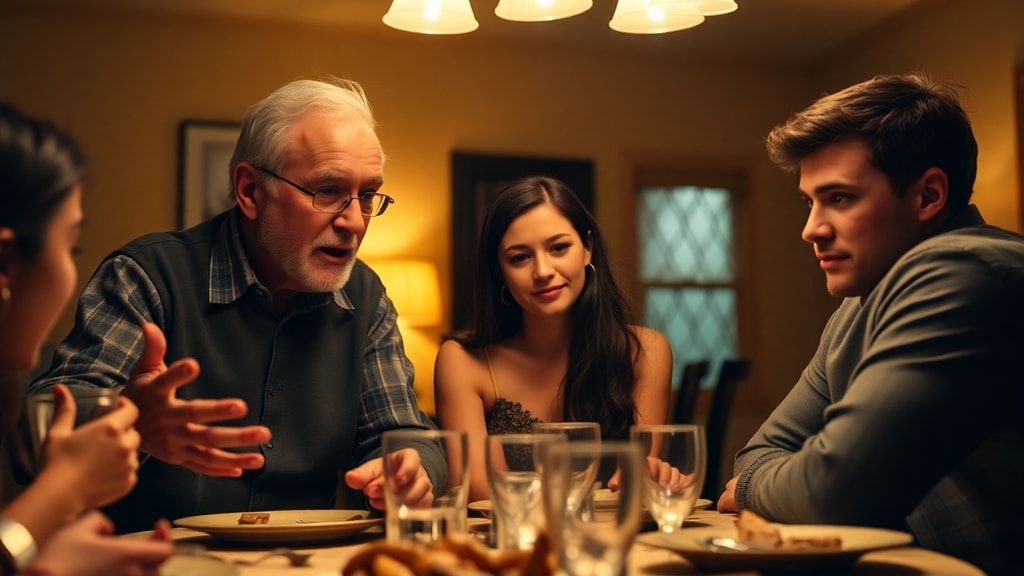
Your uncle tells the story at dinner. You have begged him not to, or you have never thought to beg because you forgot it existed. The version of you in the story is seventeen, desperate, foolish in a way that makes you want to disappear into the upholstery. You feel the heat rise to your face not because the story is cruel, but because it is accurate. It is a version of you that your partner has not been introduced to, a version you had hoped to retire.
This is the particular terror of letting histories collide: the fear that the person who chose your curated self will recalculate when they see the rougher drafts. You have been, perhaps without intending to, a kind of editor. You have selected the anecdotes that cast you in favorable light. You have omitted the years of flailing. Now the raw footage plays, and you sit in the exposure of it, waiting to see if their expression changes.
The Moment the Ground Shifts
Then comes the moment you do not anticipate. Your difficult sibling—prickly, wounded, protective in ways that manifest as aggression—says something cutting at the table. You brace for the awkward silence, the private conversation you will need later to explain that's just how they are, they didn't mean it, I'm sorry you had to see that.
But your partner responds with something you have not seen before. Not defensiveness, not performative patience, but genuine kindness. They ask your sibling a question that lands. They listen to the answer as if it matters. They do not try to win.
You feel something shift like tectonics. This is not the love of private declarations, the I love you whispered in darkness. This is love that has walked into the minefield of your actual life and chosen to keep walking. You understand, with a clarity that rearranges your interior, that you have been waiting for this test without knowing you were waiting. The test is not whether they love the version of you that you have constructed. The test is whether they can love you in context—surrounded by the people who made you, some of whom you are still learning to forgive, some of whom you are still learning to understand.
The Car Ride Home
The car ride home is its own confession. You apologize for things you did not choose: your mother's anxiety, your father's silence, your uncle's volume, your sibling's barbs. You are apologizing, really, for the fact that you emerged from this ecosystem and still carry its pollen. You want to assure your partner that you are not only this, that you have grown beyond, that you have worked to become someone else.
But your partner says something that stops the spiral. They mention the way your mother lit up when she talked about your childhood drawings. They noticed the book your father kept on the shelf, the one you told them about in your third date. They are not cataloging flaws. They are assembling a fuller picture, and they are not leaving.
This is the milestone that changes everything: the courage to let someone see the architecture of who you were before they arrived, and to discover that they do not need you to have been built differently. They do not need a cleaner origin story. They need you, with the foundation you actually have, with the cracks that let in light.

Why We Fear This Collision Most
The private milestones of love—first kiss, first sleep, first fight and repair—happen in a controlled environment. We choose the lighting. We choose the words. We can, to some extent, choose the outcome. Introducing our partner to our family is the first time we surrender control of the narrative entirely. We become, in that room, a character in stories we did not write.
This is why the milestone matters so profoundly. It is the transition from performance to presence. We stop being the director of our own image and become simply there, witnessed in our full context, with all the vulnerabilities that context reveals.
The philosopher Martin Buber wrote of the "I-Thou" relationship as one in which we meet another without the protective armor of roles and representations. Family introductions are, paradoxically, the moment we most risk the "I-It" relationship—being reduced to a collection of stories, a product of dynamics, a symptom of origin—and yet also the moment we most invite the "I-Thou" encounter, the meeting that transcends explanation.
The Letters We Might Write
Years from now, when this partner has become spouse or memory, when the family dynamics have shifted or lost some of their power, we might want to remember what this felt like. The particular terror and particular grace of that first collision. The way we sat in the car afterward, vibrating with the aftermath of being seen.
This is where the practice of future letters becomes something more than sentiment. Writing to our future selves about the milestones that shaped us—truly shaped us, not the ones that photograph well—creates a record of our becoming. We document not just the event but the interior weather: the three texts to mother, the handshake that lasted too long, the uncle's story, the kindness to the difficult sibling, the car ride home where we learned we did not need to apologize for our own architecture.
I built EterMail because I know what it means to lose these moments to the erosion of memory. I'm the kind of person who stays up until 2 AM mapping out system architectures with an LLM, then drives to the coast at dawn to surf and feel something real and uncontrolled. That oscillation between digital solitude and raw nature taught me that the moments worth preserving aren't the polished ones—they're the messy collisions, the car ride confessions, the first time you let someone see where you came from. A letter to your future self, scheduled to arrive on a milestone anniversary, might capture what you cannot yet know: whether this introduction was the beginning of something that lasted, or the moment you learned something essential about what you need. The best way to fight forgetting isn't taking another screenshot; it's setting an alarm for the future. By using EterMail to set a delivery date 5 years from now, you completely free yourself from the anxiety of the present.
<
The Truest Milestone
We are taught to measure love in declarations. The proposal, the vow, the public commitment. But the truest milestone may be quieter, more precarious, more brave. It is the moment we stop protecting our partner from our history and start trusting them with it. The moment we let the person who chose us see the full blueprint of who we were before they arrived, and discover that they can survive the architecture.
The texts to mother will continue. The uncle will always tell the story. The difficult sibling will remain difficult. But something changes when we stop trying to control the collision and start trusting its revelations. We learn that love is not the selection of our best self. It is the acceptance of our whole context, and the courage to let someone choose us anyway.
The car ride home becomes, eventually, just another drive. The childhood bedroom becomes a place you visit without the old vertigo. The handshake becomes a hug. But you do not forget the milestone. You do not forget the first time you let your histories collide, and the world did not end. The world expanded.
What is EterMail?
EterMail is a revolutionary time capsule service that allows you to send messages, photos, and videos to the future (up to 30 years). Seal your memories and thoughts today, and they'll be delivered when the time is right.
Time Capsule
Send messages up to 30 years in the future
Rich Media
Text, photos, and videos supported
Secure & Private
Your memories are safely encrypted
EterMail Team
We're the team behind EterMail, dedicated to helping you preserve and share timeless messages with your loved ones. Our mission is to make it easy to express your love, share your wisdom, and create lasting connections that transcend time.
Frequently Asked Questions about Love & Milestones
How do I prepare my partner to meet my difficult family?
What should I do if my family embarrasses me in front of my partner?
How do I know if my partner's reaction to my family is a red flag?
Related Articles
Why I Built EterMail: A Time Capsule for the People I Love Most
I’m a Product Manager who spends all week optimizing for the "immediate now." But getting lost off the grid on a mountain ridge made me realize I had zero infrastructure for the "forever." Here’s why I stopped worrying about conversion rates for a moment and built EterMail—a secure, tamper-proof digital time capsule for the people I love most.

The Most Radical Letter to Your Future Self Is a Promise to Stay Unfinished
The best letter to your future self isn't a memory—it's a mandate. Learn how writing to the version of you still working with love changes everything.
The Ice Tray at Midnight: On Grief, Domestic Minutiae, and the Quiet Work of Becoming Yourself Again
Why do the smallest habits hurt most after someone leaves? A reflection on grief, domestic minutiae, and the quiet moment healing finally begins.