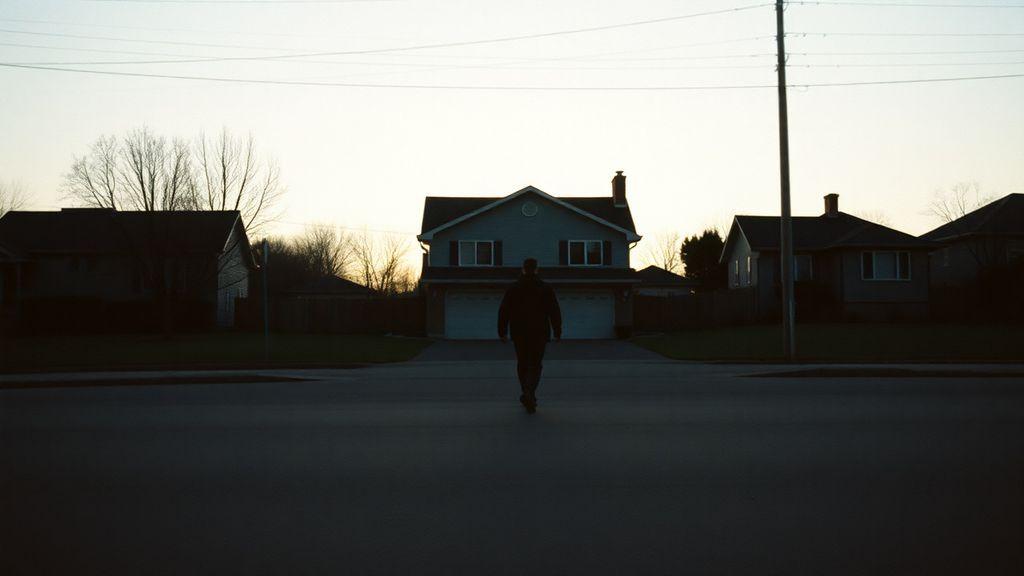
You are standing in the shower, the water too hot, and you realize you have been rehearsing your exit for months. Not the dramatic kind. No slammed doors, no discovered messages, no final fight that future dinner parties will reference with grim satisfaction. Just the slow, private choreography of self-reclamation: the Sunday morning you choose the coffee shop alone instead of waking them, the bread you finally buy because you like seeded sourdough, not the pillowy white they prefer. The stranger who makes you laugh harder than you have in years, and the guilt that follows, then the absence of guilt, then the terror of what that absence means.
This is the milestone nobody photographs. No cake, no cards, no congratulations from people who love you. Just the quiet treason of becoming someone your relationship no longer fits.
The Architecture of a Shared Life
We build relationships like houses. Room by room, compromise by compromise, until the structure feels permanent, inevitable, home. You learn their coffee order before your own. You develop opinions about their mother's Thanksgiving stuffing. You keep their childhood fears like heirlooms, handling them with care. The shared Spotify playlist grows to 400 songs. The inside jokes multiply like dust. You become, in the estimation of everyone who knows you, a unit.
But houses don't grow. People do.
And somewhere between the mortgage of mutual friends and the foundation of shared history, you begin to notice the walls pressing closer. Not because anyone moved them. Because you grew taller, wider, stranger, more yourself—and the doorways stayed the same height.

The Drawer and Other Acts of Insurrection
The reclamation begins with objects. The drawer you slowly return to your own things: your running shorts where their old t-shirts lived, your face serum crowding out their drugstore aftershave. Each item a small flag planted in disputed territory. You tell yourself it's practical. Organization. Feng shui. You do not admit, not yet, that you are preparing a country for one.
Then come the larger geographies. The vacation you book without the consultation that once felt like intimacy and now feels like committee work. The friend group you cultivate separately, the hobbies you no longer translate, the thoughts you stop voicing because the explaining has exhausted you. You are building a life in parallel, and the parallel is beginning to look like the real thing.
This is not cruelty. This is survival. The body knows before the mind permits itself to know. The laughter that comes easier with strangers. The relief when their flight is delayed. The way you start to hum when you are alone, a sound you haven't made in years because they found it annoying.
The Language You're Forgetting
There is a particular grief in recognizing that the person who once felt like home now feels like a language you're forgetting. The fluency you worked so hard to achieve—their moods, their silences, the specific way they take their tea—begins to atrophy. You misremember the name of their college roommate. You stop anticipating their reactions. The shorthand that once made you feel telepathic now feels like a dialect you no longer speak natively.
This forgetting is not accident. It is the mind's mercy, the slow anesthesia before the surgery of separation. You cannot leave what still feels like oxygen. You must first learn to breathe something else.
And you do. In the coffee shop alone, you remember that you prefer your espresso long, not the ristretto they insisted was "the only way." In the laughter with strangers, you recover a register of yourself—playful, ironic, slightly cruel—that the relationship had edited out as "not helpful." You are becoming, piece by piece, the person you were before you learned to fold yourself into someone else's shape.

The Myth of Preserved Love
We are taught that the highest form of love is preservation. The couple who makes it fifty years. The high school sweethearts. The vow renewed, the anniversary celebrated, the narrative of constancy maintained at all costs. We do not have ceremonies for the love that was true and necessary and finished. No medals for the courage to admit that what once saved you now limits you.
But what if the truest milestone is not the love we preserve but the honesty to release it? What if growth itself—the uncomfortable, disloyal, self-interested kind—is the achievement we should be marking?
The Sunday morning coffee shop is not an escape. It is an arrival. The bread you finally buy is not rebellion. It is self-recognition. The exit you rehearse in the shower is not betrayal. It is the first honest conversation you have had with yourself in years.
The Letters We Owe Our Future Selves
There is a peculiar loneliness to this milestone. You cannot post about it. Your mother will worry. Your coupled friends will see threat, not truth, in your honesty. Even you will doubt yourself, cycling through justifications, bargaining with memory, trying to remember if it was ever really as constraining as it now feels.
I know this loneliness intimately. There are nights I'm still up at 2 AM, not debugging code or arguing with an LLM about architecture, but sitting with the specific solitude of having outgrown something I once fought to keep. The screen glows, and I'm not building a bridge to the digital world—I'm just trying to build a bridge to my own future self, one who might finally believe what I can't yet trust in the dark.
This is why we need witnesses to our own becoming. Not the performative kind, not the social media announcement of "taking space to focus on me." Something slower. Something that outlasts the doubt.
Writing to your future self—across months, years, the distance you cannot yet imagine—creates that witness. The letter you send through time becomes the voice that validates what present-you cannot yet trust. I was here. I felt this. I chose the seeded bread, the solo coffee, the harder laughter. It mattered.
The best way to fight forgetting isn't taking another screenshot; it's setting an alarm for the future. By using EterMail to set a delivery date 5 years from now, you completely free yourself from the anxiety of the present. You write the truth while it burns, seal it, and let time become the distance you need.

The Courage of Incomplete Devotion
We are not trained to honor incomplete devotion. The relationship that ends before marriage, before children, before the narrative arc completes its expected trajectory—we treat these as failures, as waste. But what if they are simply shorter stories? What if the three years that taught you to recognize your own humming are as valuable as the thirty that produce anniversary photos?
The brutal honesty of outgrowing love is this: you are admitting that you have become someone you could not have become within the structure you built together. That the you they loved—accommodating, compromising, humming-less—was necessary for a time, and is now obsolete. That preservation of the relationship would require preservation of a self you have already outgrown.
This is not their failure. It is not yours. It is the geometry of human development, which does not respect the contracts we sign in our more stationary seasons.
What Remains After the Leaving
The milestone of outgrown love does not erase what preceded it. The 400-song playlist still exists. The knowledge of their mother's stuffing, their childhood fears, the specific way they take their tea—these remain, dormant languages you could still speak if required. The house you built together does not disappear when you move out. It simply stops being where you live.
What you take with you is the self you recovered. The seeded bread preference. The solo coffee ritual. The harder laughter, now practiced enough to recognize when it arrives. The certainty, earned through rehearsal and execution, that you can build a life that fits your current dimensions, even if you outgrow that one too.
And the letter, traveling through time, that will remind you: You were brave before you knew you were brave. You chose yourself before you knew you were worth choosing. The milestone mattered, even without the cake.
The shower runs cold. You step out, dry off, dress for the coffee shop. The bread you bought yesterday sits on the counter, seeded and sour and entirely yours.
What is EterMail?
EterMail is a revolutionary time capsule service that allows you to send messages, photos, and videos to the future (up to 30 years). Seal your memories and thoughts today, and they'll be delivered when the time is right.
Time Capsule
Send messages up to 30 years in the future
Rich Media
Text, photos, and videos supported
Secure & Private
Your memories are safely encrypted
EterMail Team
We're the team behind EterMail, dedicated to helping you preserve and share timeless messages with your loved ones. Our mission is to make it easy to express your love, share your wisdom, and create lasting connections that transcend time.
Frequently Asked Questions about Love & Milestones
How do you know when you've outgrown a relationship?
Is it normal to feel guilty for choosing yourself over a relationship?
How can writing help process the end of a significant relationship?
Related Articles

Why I Built EterMail: A Time Capsule for the People I Love Most
I’m a Product Manager who spends all week optimizing for the "immediate now." But getting lost off the grid on a mountain ridge made me realize I had zero infrastructure for the "forever." Here’s why I stopped worrying about conversion rates for a moment and built EterMail—a secure, tamper-proof digital time capsule for the people I love most.

The Most Radical Letter to Your Future Self Is a Promise to Stay Unfinished
The best letter to your future self isn't a memory—it's a mandate. Learn how writing to the version of you still working with love changes everything.
The Ice Tray at Midnight: On Grief, Domestic Minutiae, and the Quiet Work of Becoming Yourself Again
Why do the smallest habits hurt most after someone leaves? A reflection on grief, domestic minutiae, and the quiet moment healing finally begins.