The Coffee Mug That Refuses to Learn
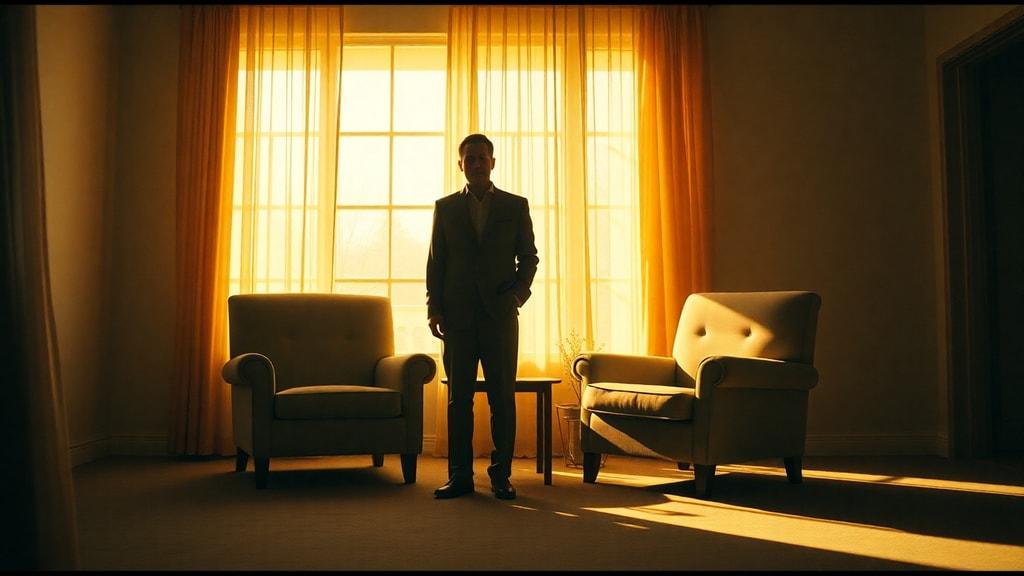
You pour the second cup before you remember.
The kettle has barely finished its exhale, steam still threading the kitchen air, and there it is: his mug, the chipped blue one with the faded university logo, filling with dark roast you both used to complain was too bitter. Your hand moves from muscle, not mind. The creamer reaches two cups before the first sits untouched on the counter, cooling, a small pool of abandonment forming on its surface.
This is not the grief they write poems about. There are no wailing violins here, no dramatic collapses onto unmade beds. This is the quiet haunting of domestic rhythm—the body continuing its duet long after the partner has left the stage. The truest milestones of love, I've come to believe, are not the anniversaries we photograph or the proposals we recount at dinner parties. They are these invisible adjustments: the three full seconds you keep talking to an empty chair before catching yourself, the afternoon you finally move their book from the armrest to the shelf and it feels like eviction.
The Architecture of Shared Space
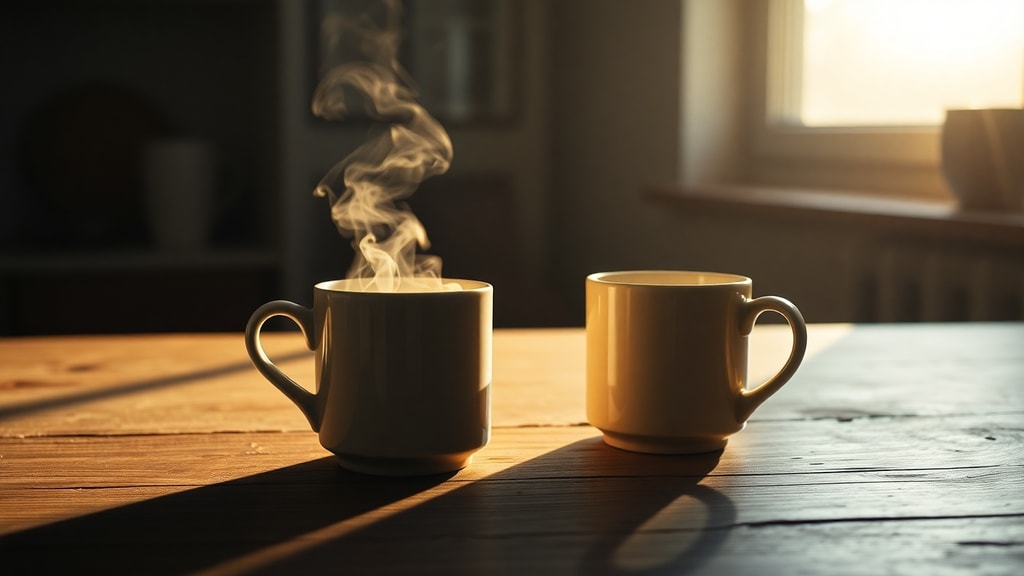
Every long partnership constructs its own physical grammar. The side of the bed you never enter. The volume you keep on the television because their hearing was worse than yours. The last olive you save on the plate, the specific angle of the bathroom mirror, the way you always paused at the third stair because it creaked and they slept lighter than you admitted.
These are not preferences. They are the accumulated residue of two people learning to occupy the same air without collision. And when one person leaves—through death, through distance, through the slow erosion that makes two people strangers in the same address—the architecture remains. The building stands. Only the inhabitants change.
I think of my friend Elena, who spent eleven months after her divorce still setting her ex-husband's place at dinner. "It wasn't hope," she told me, running her thumb along the rim of a wine glass that no longer had a pair. "It was that my arm didn't know how to stop. The table looked wrong with an empty space. The empty space looked more wrong than the wrong of setting it."
This is the paradox that consumes us: the ghost of togetherness feels more real than the fact of solitude. We maintain the choreography because to break it is to admit the dance is over. And the dance, we fear, was the only proof that what we had was real.
The Side of the Bed You Still Don't Enter
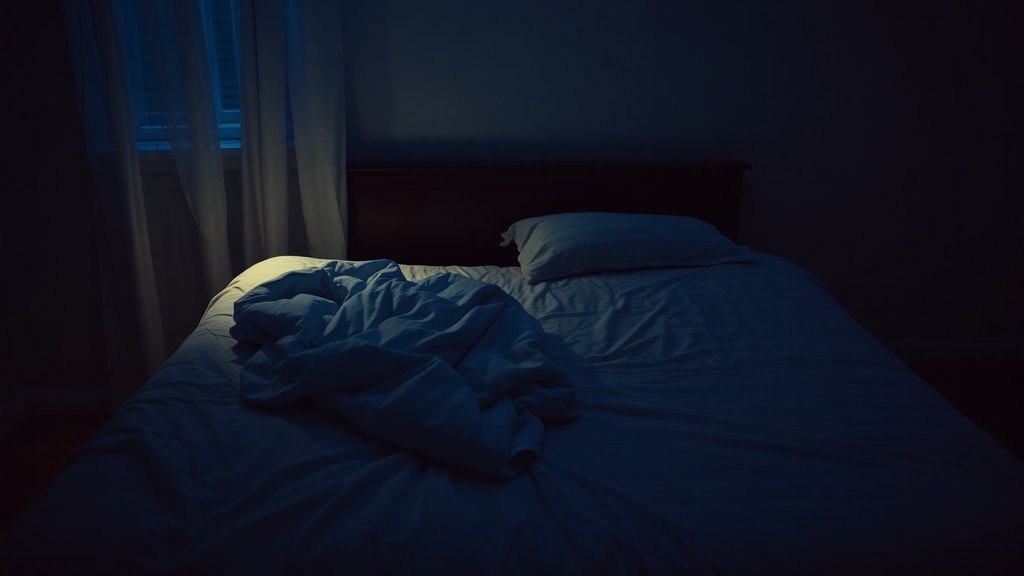
There is a particular courage required to sleep in the middle of a mattress designed for two. Not the first night, when grief or anger or simple exhaustion claims you where you fall. But the fourteenth night, the forty-seventh, the night you wake at 3 AM with enough presence of mind to notice you're still clinging to your edge like a passenger on a crowded train, preserving space for someone who will not board.
The side of the bed becomes a monument. We tell ourselves it's comfort, habit, the body's resistance to change. But I suspect it's something more tender and more terrible: we believe that keeping their space empty is a form of fidelity. That to stretch our limbs into the cold sheets where they once slept is to evict them twice. Once from our lives, and again from our last physical territory of shared meaning.
I did not sleep on my partner's side for seven months. When I finally did, rolling my body into the depression their weight had worn into the mattress, I wept without sound. Not because I missed them more in that moment, but because I missed them less. The mattress didn't protest. The room didn't darken. I slept, eventually, the sleep of a single body occupying its whole space. And that sleep felt like betrayal and liberation braided into the same breath.
Saving the Last Olive for Someone Who Won't Be Home
The television volume is the last to change. You know this if you've lived it. The bed, eventually, you claim. The coffee ritual, you modify or abandon or replace with tea. But the volume—that accommodation of another body's failing sense, that small daily act of love disguised as irritation—persists with stubborn loyalty.
My father kept my mother's volume settings for four years. "I tried to change it once," he admitted, the confession embarrassing in its smallness. "It sounded like shouting. Not because it was loud. Because it was loud for no one. The loudness had lost its purpose."
This is the hidden mathematics of loss: we discover how much of our identity was constructed in response to another person's presence. We were not just ourselves. We were ourselves-in-relation, ourselves-as-adjustment, ourselves-as-compromise. The volume, the olive, the creaking stair—these were not sacrifices but collaborations. And without the collaborator, we must learn to be a different self, one whose edges have not been worn smooth by constant friction.
The last olive on the plate. I cannot explain why this detail haunts me more than grander gestures. Perhaps because it is so small, so automatic, so devoid of romance. You don't save the last olive for love. You save it because their hand always reached for it, because it was understood without language, because the plate felt incomplete without their claiming. To eat the olive yourself is to finish the meal alone in a way no other bite requires.
The Courage to Finish the Sentence Alone
Here is what I believe now, having occupied rooms that echoed with absence: the truest milestone of love is not the love we perform together but the courage to finish the sentence alone.
When you live with someone long enough, your thoughts become braided. You begin sentences they complete. You reach conclusions through dialogue that exists only in fragments, trusting the other to supply the grammar. Their mind becomes an extension of your own, a cloud storage for intentions you haven't fully formed.
And when they leave, you discover how many of your thoughts were joint ventures. The opinion about the neighbor's renovation. The interpretation of that film you both hated. The plan for Saturday that existed in negotiation rather than decision. You must learn to think in complete sentences again, and the completeness feels like poverty.
But there is a strange education in this solitude. You develop voices you didn't know you had. You finish sentences differently than you would have together, and some of those endings surprise you with their wisdom, their strangeness, their you-ness. The room still holds you, even when only one body remains to prove it. The room, you discover, was never just the container for your togetherness. It was the witness to your becoming.
What We Leave Behind, What We Send Forward
I have begun to wonder what I will leave in the architecture of shared space when I am the one who exits. Which habits will persist in my partner's hands, which automatic gestures will become their haunting? The way I always double-check the stove, perhaps. The specific sound of my footsteps they recognize before my key turns. The last olive I never ate.

This wondering has led me to a practice I would not have predicted in my younger, more certain self: the writing of letters to futures I cannot guarantee. Not the dramatic farewell of terminal illness, though that too has its place. But the ordinary, ongoing accumulation of voice—the messages that say this is who I was when I loved you, this is what I noticed, this is how the room held us both.
I started this practice after a night last winter, alone in my office at 2 AM, debugging a stubborn API integration while the rest of the house slept. I've always been the kind of person who loses himself in code until the early hours, "pair programming" with LLMs that never tire, mapping architectures that exist only in electric light. That particular night, I caught myself describing a solution aloud to an empty chair—the same chair where my partner used to sit, half-reading while I worked. The muscle memory of dialogue, the phantom choreography of explanation. I realized then that so much of what I build, what I think, what I am in those solitary hours, simply evaporates into the dark. No witness. No record. The person I am at 2 AM, wrestling with abstractions, might be the truest version of myself, and yet it was the one most at risk of disappearing without trace.
So I began writing. Not journal entries, but addressed things. Letters to a future self, to a future us, capturing the texture of ordinary days before they become the kind of memory that reconstructs itself wrong. The sound of rain against the window during that late-night session. The particular frustration of a failed deployment. The small victory of finally understanding why the code worked.
There is a strange comfort in knowing that words can outlast the body that speaks them. That a letter scheduled for a future anniversary might arrive with the force of resurrection, the voice of the absent suddenly present in the mailbox. The best way to fight forgetting isn't taking another screenshot; it's setting an alarm for the future. By using EterMail to set a delivery date 5 years from now, you completely free yourself from the anxiety of the present. You write the letter, you seal the intention, you let time carry it forward without your constant vigilance. The platform handles the rest—encryption, redundancy, the mechanical persistence that mirrors the emotional persistence you're asking of your own words.
What we send forward is a form of faith. Faith that the person we were when we wrote will still matter to the person who receives. Faith that love can persist across the discontinuities of time and mortality. Faith that finishing the sentence alone does not mean the conversation has ended.
The Room Still Holds Us
I no longer pour two coffees. The blue mug sits in the cabinet, not discarded but not daily used. I sleep in the middle of the bed, though I still sometimes wake pressed to my old edge, the body remembering before the mind catches up. I eat the last olive. I have changed the volume, though I keep it lower than my own hearing requires, an accommodation to a ghost who no longer needs accommodation.
The phantom choreography fades, but it never fully disappears. It becomes, instead, a kind of muscle memory, the way a dancer's body recalls steps years after the performance. You do not forget. You learn to move differently. You learn that the room was never empty, that it was always full of time, of accumulated presence, of the invisible architecture that two people build and one person, eventually, must learn to maintain alone.
This is the milestone no one photographs. The day you enter the room your partner has left and find, against all expectation, that you still belong there. That your solitary presence is not absence but continuation. That the sentence, finished alone, still means something complete.
The room still holds us. Even when only one body remains to prove it. Even when the proof is simply this: that we stayed, that we kept speaking, that we learned, finally, to pour exactly the coffee we intended to drink.
What is EterMail?
EterMail is a revolutionary time capsule service that allows you to send messages, photos, and videos to the future (up to 30 years). Seal your memories and thoughts today, and they'll be delivered when the time is right.
Time Capsule
Send messages up to 30 years in the future
Rich Media
Text, photos, and videos supported
Secure & Private
Your memories are safely encrypted
EterMail Team
We're the team behind EterMail, dedicated to helping you preserve and share timeless messages with your loved ones. Our mission is to make it easy to express your love, share your wisdom, and create lasting connections that transcend time.
Frequently Asked Questions about Love & Milestones
How do you cope with the small daily reminders of a partner who has left or passed away?
What should I write in a letter to a partner I may outlive?
Is it normal to feel guilty when you finally adjust to life without your partner?
Related Articles
Why I Built EterMail: A Time Capsule for the People I Love Most
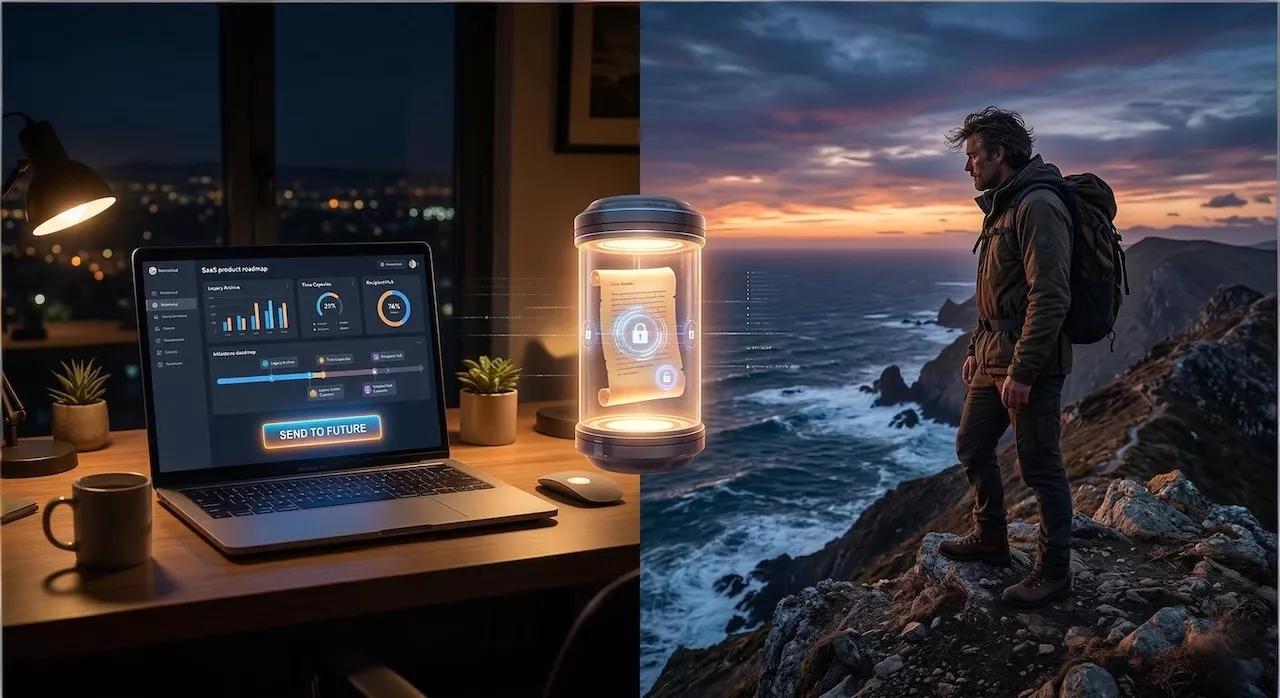
I’m a Product Manager who spends all week optimizing for the "immediate now." But getting lost off the grid on a mountain ridge made me realize I had zero infrastructure for the "forever." Here’s why I stopped worrying about conversion rates for a moment and built EterMail—a secure, tamper-proof digital time capsule for the people I love most.
The Most Radical Letter to Your Future Self Is a Promise to Stay Unfinished
The best letter to your future self isn't a memory—it's a mandate. Learn how writing to the version of you still working with love changes everything.
The Ice Tray at Midnight: On Grief, Domestic Minutiae, and the Quiet Work of Becoming Yourself Again
Why do the smallest habits hurt most after someone leaves? A reflection on grief, domestic minutiae, and the quiet moment healing finally begins.