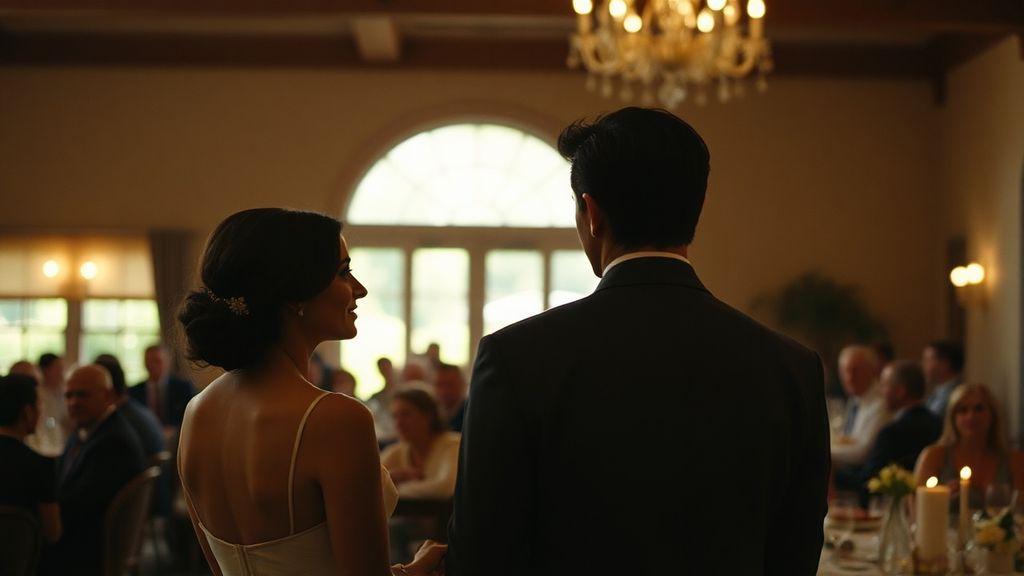
The Toast That Revealed Everything
She laughed too hard. You noticed it immediately—the way her head tilted back, the hand on her chest, the sound that was somehow new to you even after three years. Her college roommate had finished some story about a road trip to Montreal, something involving a blown tire and a border patrol officer who spoke only French, and there she was: laughing at a punchline you didn't understand, at a history you weren't part of, at a version of the person you thought you knew completely.
This is the rehearsal dinner. Not the wedding. The wedding has choreography. The wedding has a script. The wedding is the performance of commitment, polished and rehearsed, witnessed by two hundred people who will remember how the flowers matched the bridesmaids' shoes. But the night before—this is where love becomes complicated, where it becomes real.
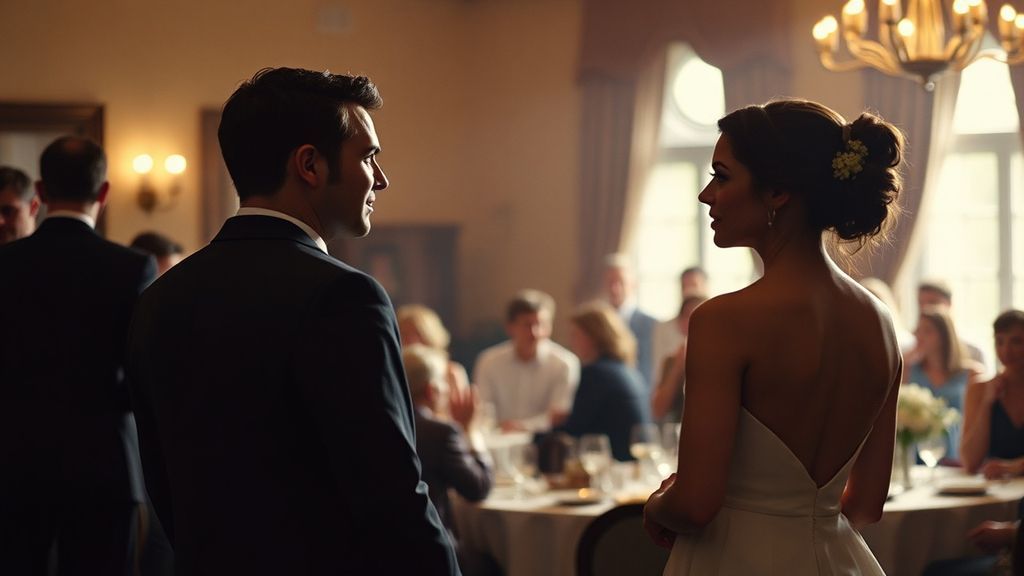
The Liminal Space of Almost-Married
You are no longer simply dating. You are not yet married. You occupy a social space that has no clear rules, no established etiquette, and therefore no protection from the truth of what you're doing. You are choosing a family you do not yet understand.
I watched my future mother-in-law study me from across the table at my own rehearsal dinner. She held her wine glass with two hands, the way her son does when he's nervous. Her expression—I still cannot name it. Not approval, not its opposite. Something more honest: assessment. She was watching her son choose, and she was wondering if he understood what he was choosing. I excused myself to the bathroom not because I needed to, but because I needed to breathe without witnesses. I needed to look at myself in the mirror and ask: Do I know what I'm doing? Do I know who they are?
The answer, of course, was no. The answer is always no. Marriage is not the culmination of knowing someone. It is the decision to continue not-knowing together, to remain curious about a person who will keep becoming someone else.
The Seating Chart Politics of Intimacy
Who sits where at a rehearsal dinner reveals what the couple cannot yet say aloud. The college friends who knew you when you were someone else. The sibling who disapproves. The parent who is still learning to share. The ex who came alone and left early—not because they weren't invited, but because presence itself had become a kind of haunting.
These arrangements are the first draft of your merged life. You are negotiating alliances you didn't know existed. Your partner's childhood friend makes a toast that goes thirteen minutes, and in minute seven you learn about the night your partner cried in a dormitory stairwell over someone else's name. The room laughs. You smile. You file this information somewhere you cannot yet access, knowing it will surface later—during a fight, during a quiet morning, during some future moment when you wonder if love is supposed to feel this much like archaeology.
This is the milestone nobody photographs. The moment you realize that loving someone means accepting their entire archaeology—the layers, the artifacts, the unexplained damage.
The Courage of Choosing Anyway
There is a particular terror to the rehearsal dinner that the wedding itself cannot replicate. The wedding offers ceremony as armor. Vows as script. The rehearsal dinner offers only the raw fact of your choice, made visible to people who have known your partner longer than you have. You are auditioning for a role you have already accepted.
I remember watching my partner's father watch us. He had been married thirty-seven years. He had buried one wife and married another. He understood something I did not yet understand: that the wedding is not the promise, but the announcement of a promise already made. The real promise happens in unguarded moments. In the kitchen, helping his wife with dishes. In the car, driving home in silence. In the decision to keep showing up when the story behind the joke is no longer funny.
What I wanted to capture from that night—what I wish I had known how to preserve—was not the toast or the seating arrangement or even the look on my mother-in-law's face. I wanted to capture the feeling of choosing without certainty. The specific courage of that threshold moment, when you stand with one foot in your old life and one foot in a life you cannot yet imagine, and you decide to step forward anyway.
The Letters We Should Write
Years later, I understand what I needed then. I needed to write to my future self—not from the wedding day, with its certainty and its champagne, but from the rehearsal dinner, with all its productive doubt. I needed to say: Remember this fear. Remember that you chose anyway. Remember that not knowing is not the same as not loving.
There are moments in a life that deserve to be preserved not because they are happy, but because they are honest. The rehearsal dinner is one of them. The night before the medical diagnosis. The afternoon you realize your child has become someone you need to meet again. The ordinary Tuesday when you understand, suddenly, that your marriage has become something you never expected—something harder and better than the version you rehearsed.
These are the letters that matter. Not the ones that predict the future with false confidence, but the ones that witness your own becoming. The ones that say: I did not know what would happen. I chose love anyway. I am still choosing it.
What We Owe Our Future Selves
The rehearsal dinner taught me that milestones are not the events we plan. They are the moments we survive. The unscripted hours where we confront the gap between who we thought we were marrying and who we actually chose. The courage required to close that gap not with denial, but with curiosity—with the willingness to keep learning the stories behind the jokes.
If I could send a letter to myself on that night, knowing what I know now, I would say this: The family you are choosing will disappoint you. You will disappoint them. This is not a flaw in the system. This is the system. The work of love is not avoiding these disappointments, but building the language to survive them. The rehearsal dinner is your first practice in that language. Pay attention to what is said. Pay more attention to what is not.
And I would say: Write this down. Not because you will forget, but because you will remember differently. Memory is not storage. It is reconstruction. Every time we recall a moment, we alter it slightly to match the story we need now. The only way to preserve the truth of your threshold moments is to record them while you are still standing in the doorway.
I know this urgency personally. As someone who spends his nights coding alongside AI systems, building architectures that outlive my own attention span, I've developed a strange intimacy with digital permanence. There's a particular loneliness to those hours—just me, the glow of the screen, and the sense that I'm constructing something that will outlast the moment I'm in. That same impulse drives what I built with EterMail: a way to send your present self forward in time, intact. Because I've learned that the best way to fight forgetting isn't taking another screenshot; it's setting an alarm for the future. By using EterMail to schedule a letter to yourself five years from now, you completely free yourself from the anxiety of the present. You stop worrying about preserving the memory and simply let it travel, sealed and waiting, until you're ready to receive it.
The Vows We Never Speak
We think of wedding vows as the definitive statement of commitment. But the vows we make in private—in the bathroom mirror at the rehearsal dinner, in the car after the fight, in the silence before sleep—are often more binding. I will try to understand you. I will forgive what I cannot yet understand. I will keep choosing this even when the choosing feels like work.
These are the promises that sustain a marriage. Not the public declarations, but the private renewals. The rehearsal dinner is the first of these renewals, though we do not recognize it at the time. It is the moment we look at the person we have chosen and acknowledge, silently, that we have chosen their mysteries too. Their unshared histories. Their families' unspoken rules. Their capacity to surprise us with laughter at jokes we do not understand.
The courage is not in knowing. The courage is in choosing to learn.
Some thresholds deserve to be witnessed—not just crossed, but remembered. The letters we write to our future selves from these liminal spaces become the maps we need when the territory changes. They remind us who we were when we chose love, and who we hoped we might become.
What is EterMail?
EterMail is a revolutionary time capsule service that allows you to send messages, photos, and videos to the future (up to 30 years). Seal your memories and thoughts today, and they'll be delivered when the time is right.
Time Capsule
Send messages up to 30 years in the future
Rich Media
Text, photos, and videos supported
Secure & Private
Your memories are safely encrypted
EterMail Team
We're the team behind EterMail, dedicated to helping you preserve and share timeless messages with your loved ones. Our mission is to make it easy to express your love, share your wisdom, and create lasting connections that transcend time.
Frequently Asked Questions about Love & Milestones
What should I write in a letter to my future spouse before our wedding?
How do you preserve emotional memories from milestone life events?
Why are unscripted moments often more meaningful than planned ceremonies?
Related Articles

Why I Built EterMail: A Time Capsule for the People I Love Most
I’m a Product Manager who spends all week optimizing for the "immediate now." But getting lost off the grid on a mountain ridge made me realize I had zero infrastructure for the "forever." Here’s why I stopped worrying about conversion rates for a moment and built EterMail—a secure, tamper-proof digital time capsule for the people I love most.

The Most Radical Letter to Your Future Self Is a Promise to Stay Unfinished
The best letter to your future self isn't a memory—it's a mandate. Learn how writing to the version of you still working with love changes everything.
The Ice Tray at Midnight: On Grief, Domestic Minutiae, and the Quiet Work of Becoming Yourself Again
Why do the smallest habits hurt most after someone leaves? A reflection on grief, domestic minutiae, and the quiet moment healing finally begins.