
The Third Offer
There is a particular humiliation in offering to drive someone to the airport for the third time and hearing, "I'll Uber," without their eyes ever reaching yours. You stand in the kitchen with your keys already in hand, the gesture rehearsed and hopeful, and watch them study their phone as if you have become part of the furniture they no longer notice needs dusting. The first time they declined, you told yourself they were being considerate of your schedule. The second, you wondered if they sensed your exhaustion. By the third, you understand: some refusals are not about convenience but about the slow withdrawal of wanting.
This is not the dramatic rupture of love stories. There is no slammed door, no discovered message, no final fight that future you will recount with theatrical precision. This is the quieter education—learning to read the negative space of affection, to recognize that absence of yes is its own complete sentence.
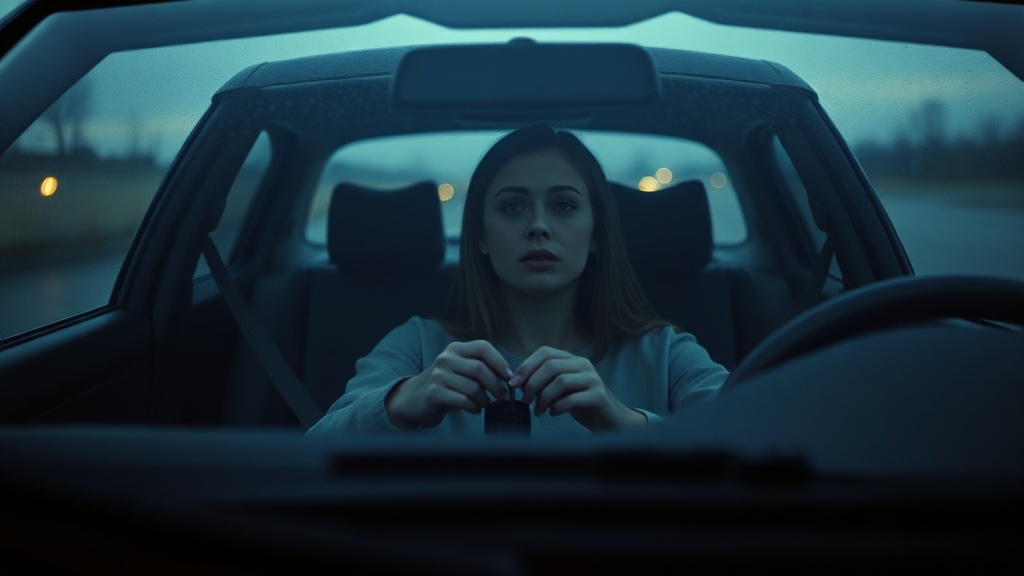
The Returned Birthday Gift
You knew before they unwrapped it. The hesitation in their thank-you, that quarter-second delay where gratitude should have lived, where instead you watched them calculate how to perform appreciation for something they no longer wanted from someone they were already leaving in increments. You smiled through their performance. You kept the receipt not because you expected returns but because some part of you needed proof that your instincts had not betrayed you—that you had not imagined the cooling, the distancing, the slow fade of being chosen.
The returned gift sits in your closet now, price tag still attached, a monument to the moment you stopped trusting your own capacity to misread. This is its own milestone: not the heartbreak itself, but the recognition that you have developed enough self-respect to stop forcing your offerings into hands that have learned to receive them with reluctance.
We do not celebrate these graduations. There are no cards for the person who finally deletes the draft text that says "are we okay." No congratulations for the night you understand that some silences are answers, that the absence of reassurance is itself a form of communication that requires no translation.
The Restaurant You Never Visit
You will pass it a hundred times before you name why you never stop. Not because it was special—this is the crucial distinction—but because it never was. You built significance from proximity, from repetition, from the desperate architecture of wanting something to matter because you needed your time to have meant something. The corner booth where they always checked their watch. The menu item they ordered without enthusiasm. The conversations you carried across the table like heavy furniture, arranging and rearranging words that never quite made a home between you.
Avoidance becomes its own honesty. You do not haunt the places where love failed to arrive. You stop memorizing their work schedule, that unconscious calendar you maintained in your body—the knowledge of when they took lunch, when they left the office, when they might be driving past your exit and not calling. The freedom of no longer calculating proximity, of releasing the arithmetic of accidental encounters, arrives so gradually you almost miss its arrival.
Holding Your Breath Through Entire Phone Calls
The body keeps score before the mind permits understanding. You realize you have been holding your breath through entire conversations, waiting for the tone—that particular flattening, that subtle shift into performative patience that means they are already gone, already elsewhere, already finished with the conversation before you have reached your point. You become an expert in vocal microclimates, in the meteorology of disengagement.
This is the excruciating education: learning to trust your own perception when it delivers unwelcome intelligence. We are taught to doubt ourselves, to interrogate our sensitivity, to seek external confirmation for what we already know in our bones. The milestone is not the knowledge itself but the decision to stop requiring proof, to stop demanding that endings announce themselves with clarity they rarely possess.
The Draft Text You Finally Delete
"Are we okay." Three words you have typed and deleted so many times the autocorrect offers them unprompted. The question itself has become a ritual of self-abandonment, a way of volunteering for rejection rather than permitting yourself to observe what is already visible. The courage to delete the draft is the courage to stop demanding that someone prove what they have already shown you—through declined rides, through hesitant thank-yous, through every small withdrawal that accumulated into an architecture of absence.
This is not cynicism. This is not the hardening of heart that passes for wisdom in cheaper philosophies. This is the precise opposite: the softening into reality, the willingness to let love be what it actually was rather than what you needed it to be. The recognition that someone can have mattered enormously and still be someone you must release—not through dramatic renunciation but through the quiet cessation of pursuit.

The Shape of an Ending Before It Speaks
What if the truest milestone is not the love we secure but this: the courage to recognize the shape of an ending before it speaks. To love someone enough to stop demanding they prove what they have already shown. To understand that your need for clarity cannot compel their honesty, that your hunger for closure cannot manufacture what they will not offer.
There is a strange liberation in this recognition. The energy you spent maintaining hope in the face of accumulating evidence—that energy becomes available for something else. Not immediately. Not cleanly. But eventually, the space where you stored their schedule, their preferences, your calculations of how to be pleasing, becomes room for your own returning attention.
What We Preserve, What We Release
We do not have good cultural scripts for this. Our stories celebrate the pursuit that succeeds, the love that persists, the refusal to accept no. We do not honor the wisdom of knowing when no has already been given, when the absence of yes is the only answer that will ever arrive. We do not teach each other to recognize the dignity in stopping, in releasing, in choosing your own wholeness over the maintenance of connection that has become primarily painful.
I know this loneliness intimately. There are nights when I'm deep in some architecture problem, pair-programming with an LLM until 2 or 3 AM, the apartment silent except for the fan whine of GPUs running hot. That digital solitude has a texture to it—you're surrounded by the most advanced intelligence ever built, yet you're profoundly alone, watching cursor blinks in the dark. I've come to understand that the same isolation that lets me build complex systems also makes me acutely sensitive to presence and absence, to the people who choose to show up versus those who've already left in increments. The mountains I hike on weekends, the raw wind at altitude, they strip away the illusions I can maintain in front of a screen. Out there, you can't perform connection. You either have traction or you don't.
This is where the practice of future writing offers something unexpected. The letter you compose to your future self—dated years ahead, delivered when you have become someone who has integrated what you are currently surviving—creates a strange temporal companionship. You write from the center of uncertainty to the person who will have emerged from it. You document not just the pain but the small recognitions: the third declined ride, the returned gift, the deleted draft. You tell your future self: I am learning. I am learning to trust what I perceive. I am learning that love includes the courage to stop asking for what is not being offered.
The time capsule becomes witness. The scheduled message, arriving when you have forgotten composing it, reminds you that you were already becoming this person—the one who recognizes endings, who releases with dignity, who does not require catastrophe to permit change. The digital letter to your future self preserves the process of becoming, the incremental education that our narratives usually erase in favor of dramatic before-and-after.
I built EterMail because I kept losing the evidence of my own becoming. The late nights, the deleted drafts, the moments of clarity that dissolved by morning—I wanted to preserve them for the person I would become, not as nostalgia but as proof of progress. The best way to fight forgetting isn't taking another screenshot; it's setting an alarm for the future. By using EterMail to set a delivery date 5 years from now, you completely free yourself from the anxiety of the present. You write the letter, seal it, and let time do the work of transformation. What arrives is not just your own words but the voice of someone who survived what you're currently surviving—someone who learned, as you are learning, to stop asking for what has already been answered.
The Courage to Not Know Yet
There is a particular loneliness in this milestone. The world around you continues in its ordinary rhythms while you are undergoing something invisible. You have no vocabulary for what you are learning, no social recognition for the graduation you have completed. You become fluent in a language no one speaks: the grammar of release, the syntax of stopping, the vocabulary of loving someone enough to let their absence become real.
But this fluency serves you. The next time, you recognize earlier. You trust sooner. You delete the draft text before it becomes habit, before the asking itself becomes a way of postponing the answer you already possess. You become someone who can love more precisely because you have learned the boundaries of what love can demand.
The airport rides you will offer to people who accept them with visible pleasure. The birthday gifts that meet genuine delight. The phone calls where breath moves easily because both parties are present, are choosing, are there. These possibilities exist on the other side of this education—not as reward but as consequence, the natural outcome of no longer pouring your attention into vessels that cannot hold it.
What Remains
You will still pass the restaurant. The returned gift will eventually find someone who wants it. The keys will drive someone else to some other airport, some journey welcomed rather than endured. The body forgets the held breath, learns new rhythms, becomes capable again of presence without vigilance.
This is the milestone we do not celebrate but should: the moment you choose your own perception over your hope, your dignity over your desperation, your future over your clinging. Not because love has failed but because you have finally understood what love actually requires—not the demand for proof, but the courage to receive what has already been shown, and to let that be enough to begin your own becoming.
The letter you write to your future self, sealed and scheduled, carries this understanding forward. Remember, you tell them, that you learned this. That you became someone who could stop asking. That you loved yourself enough to finally listen.
What is EterMail?
EterMail is a revolutionary time capsule service that allows you to send messages, photos, and videos to the future (up to 30 years). Seal your memories and thoughts today, and they'll be delivered when the time is right.
Time Capsule
Send messages up to 30 years in the future
Rich Media
Text, photos, and videos supported
Secure & Private
Your memories are safely encrypted
EterMail Team
We're the team behind EterMail, dedicated to helping you preserve and share timeless messages with your loved ones. Our mission is to make it easy to express your love, share your wisdom, and create lasting connections that transcend time.
Frequently Asked Questions about Love & Milestones
How do you know when to stop pursuing someone who shows disinterest?
What are healthy ways to process the grief of an unspoken ending?
Why do we struggle to accept endings that lack clear closure?
Related Articles
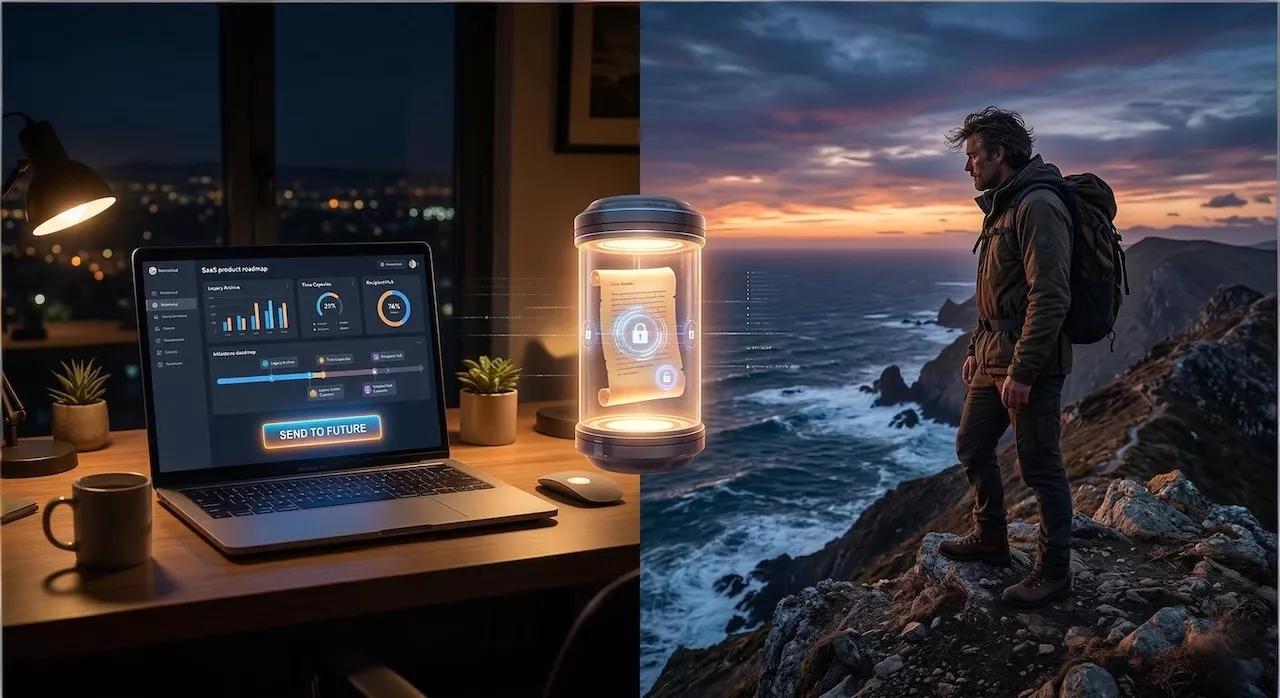
Why I Built EterMail: A Time Capsule for the People I Love Most
I’m a Product Manager who spends all week optimizing for the "immediate now." But getting lost off the grid on a mountain ridge made me realize I had zero infrastructure for the "forever." Here’s why I stopped worrying about conversion rates for a moment and built EterMail—a secure, tamper-proof digital time capsule for the people I love most.

The Most Radical Letter to Your Future Self Is a Promise to Stay Unfinished
The best letter to your future self isn't a memory—it's a mandate. Learn how writing to the version of you still working with love changes everything.

The Ice Tray at Midnight: On Grief, Domestic Minutiae, and the Quiet Work of Becoming Yourself Again
Why do the smallest habits hurt most after someone leaves? A reflection on grief, domestic minutiae, and the quiet moment healing finally begins.