
There is a moment, quiet and easy to miss, when you realize the machine knows something about you that you have not yet admitted to yourself. Maybe it is a song that surfaces on a Tuesday afternoon, the lyrics cutting too close to a grief you have not named. Maybe it is an advertisement for a city you once loved, delivered on the anniversary of the day you left. You feel seen, then uneasy, then strangely hollow—because being understood by something that does not understand anything at all is a loneliness particular to our century.
This is where philosophy and technology now collide. Not in the gleaming conference rooms where ethicists are paid to bless the next product cycle, but in the small, repeated choices about what we feed the machine. Digital privacy is no longer merely a technical problem. It is an existential one. And the question it poses is older than the internet, older than the telephone, perhaps as old as consciousness itself: Who gets to know you, and on what terms?
The Cage Built by Questions
Silicon Valley has lately developed a taste for philosophers. It hires them by the dozen, seats them beside engineers, asks them to draft principles. On the surface, this looks like maturity. The industry is grappling, we are told, with the consequences of its power. But there is a reason Socrates did not charge admission, and why he was, in the end, sentenced to death by the city that employed him. The examined life is not compatible with a salary that depends on not examining too much.
An ethicist on a tech payroll faces a conflict that no amount of goodwill can dissolve. Her job is to identify harm, but her employer's business model may require the harm to continue. She can push for transparency, but only so far as transparency does not threaten the quarterly report. She can advocate for user autonomy, but the entire architecture around her is designed to erode it—one notification, one default setting, one frictionless click at a time.
This is not to say these philosophers are cynics. Many are genuine, thoughtful people trying to bend systems from within. But the cage has a clever design. It invites reform at the edges while protecting the foundation. It permits debate about how data is collected, but rarely about whether it should be collected at all. And so the most urgent philosophical work around digital privacy does not happen in boardrooms. It happens in the choices you make when no one is watching—because, of course, someone always is.
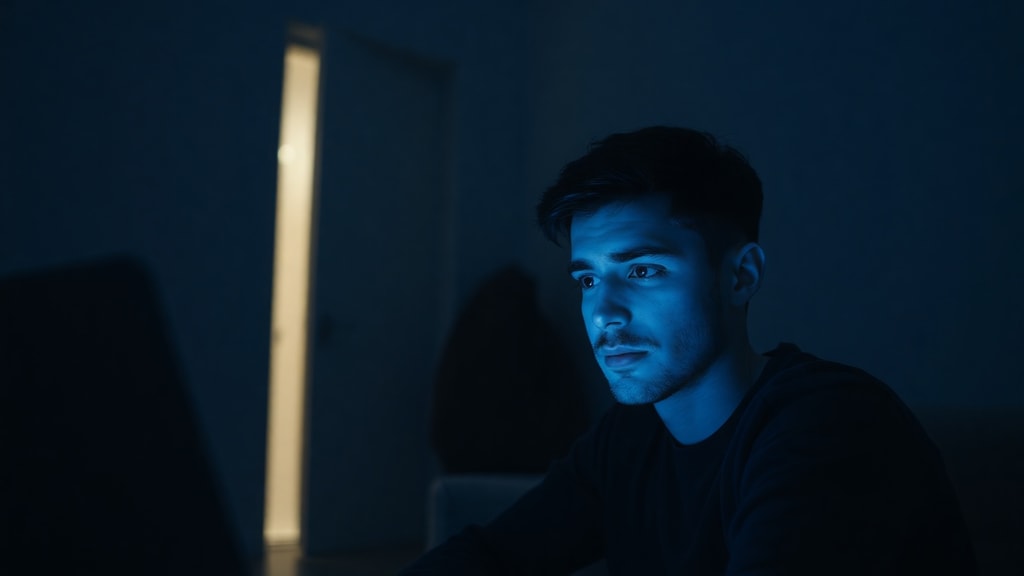
The Self Under Surveillance
The ancient Greeks believed that to live well, one must first know oneself. Gnothi seauton—know thyself—was inscribed at the temple of Apollo at Delphi. The advice was not about self-optimization. It was not about becoming more productive or more marketable. It was about developing the inner discipline to distinguish your own thoughts from the noise of the crowd, your own desires from the ones handed to you.
What happens to this project when the crowd is no longer made of people, but of algorithms trained on billions of human behaviors? When your preferences are predicted before you feel them, your fears surfaced before you name them, your memories curated by timelines you did not choose?
Privacy, in this light, is not about hiding. It is about preserving the conditions under which a self can form. The psychologist Carl Rogers wrote that a person becomes fully functioning only in an atmosphere of unconditional positive regard—of being accepted without constant evaluation. The digital environment offers the opposite: perpetual evaluation, invisible scoring, ranking, recommendation. We become, in the philosopher Byung-Chul Han's terms, achievement subjects and exhibitionists at once, performing a self that the platform already anticipates.
There is a subtle violence in being known too well by something that does not care. The algorithm does not wish you harm. It does not wish you anything. It simply extracts, predicts, refines. And in the process, it narrows the field of who you might become. When every future choice is weighted by past behavior, the possibility of transformation—the very heart of the examined life—begins to wither.
Reclaiming the Unmeasured Parts
So what does resistance look like? It is tempting to imagine privacy as a fortress: stronger passwords, better encryption, stricter settings. These matter. But they are not enough. The deeper work is philosophical. It is about cultivating spaces—internal and external—that the machine cannot map.
This means choosing opacity where the system demands transparency. It means writing thoughts that will not be mined for keywords, sharing memories that will not be monetized, preserving relationships that do not need a platform to exist. It means, at times, deliberately confusing the algorithm—searching for what you do not want, pausing before clicking, refusing the recommendation that knows you too well.
It also means building alternatives. Tools designed not to extract attention but to protect intention. Systems that treat your data as yours not because regulation requires it, but because the designers believe that a human being is not a resource to be refined.
This is where the idea of a digital time capsule becomes more than sentimental. To write a letter to your future self, to store a memory for a child not yet old enough to read it, to seal a promise to a partner until a distant anniversary—these acts are small revolutions. They say: this moment belongs to me, to us, and to time, not to the feed. They create a pocket of meaning that resists the immediate extraction of value. The message waits. It does not perform. It is not optimized. It simply endures, on human terms.

The Last Examined Life
Plato described the unexamined life as not worth living. He did not mean that everyone must become a philosopher. He meant that a life determined entirely by outside forces—custom, appetite, fear, the opinions of others—is a life in which the self never quite wakes up. The examined life is the one in which you participate in your own becoming.
Today, the outside forces have never been more sophisticated. They do not merely tell you what to want. They predict what you will want before you know it yourself. They do not merely shape public opinion. They personalize reality, so that no two people inhabit quite the same world. Under these conditions, reclaiming your data is not a consumer choice. It is an act of self-authorship.
The philosopher on a tech payroll can do useful work. She can soften edges, slow harms, improve defaults. But she cannot, by definition, question the deepest premise: that human attention and human data are raw materials for extraction. That question belongs to the rest of us. It belongs to anyone who has ever felt the hollowness of being perfectly targeted, anyone who has sensed that the version of themselves reflected back by the feed is flatter than the self they know in solitude.
There is a kind of freedom in choosing what the machine does not get to know. Not because you have something to hide, but because you have something to protect: the slow, uncertain, irreducibly human work of becoming yourself.
What We Owe the Future
If privacy is about the present self, digital legacy is about the future ones. The photographs, messages, and accounts we leave behind will shape how children remember parents, how friends remember conversations, how history remembers ordinary lives. Yet most of this inheritance is currently held by companies whose priorities will shift long before our memories lose their meaning.
To think about digital legacy is to extend the examined life beyond our own death. It asks: What do I want to survive of me? Who should control it? Under what conditions? These are not technical questions. They are questions of love, memory, and justice.
I spend most nights alone with a screen, building systems that most people will never see the inside of. I've shipped e-commerce platforms, game engines, now infrastructure for digital correspondence. The code I write at 2 AM is precise, unforgiving, utterly rational. But what keeps me there—what keeps any builder going—is the irrational belief that technology can be made to serve something tender. A letter to a child you'll never meet as an adult. A confession you need time to grow into before you read it. These are the human problems that don't scale, that resist optimization, that demand a different kind of architecture entirely.
This is exactly why I obsessed over end-to-end encryption and extreme server redundancy when building EterMail. Because I know that a letter written to the future needs to be guarded even more fiercely than a bank password. The same compulsion that drives me to map out distributed systems until dawn is the one that recoils at the thought of some future executive, some future acquisition, some future terms-of-service change deciding whether your memory gets to survive.
They require tools that treat the future with the same seriousness we bring to the present. A sealed letter, a time capsule, a memory entrusted to encryption rather than extraction—these are not retreats from technology. They are choices about what kind of technology we want to live with. They insist that some communications are too important to be optimized. Some memories too precious to be mined. Some futures too fragile to be predicted.

The Quiet Philosophy of Refusal
The great philosophical traditions have always known that freedom begins with refusal. Socrates refused to stop asking questions. The Stoics refused to be governed by externals. Thoreau refused the busyness that passed for progress. In our own time, the refusal that matters may be smaller and more daily: the choice not to click, not to share, not to let the platform finish your sentence.
These refusals are not Luddism. They are not nostalgia for a pre-digital world. They are the conditions under which a digital life can still be a human one. They create the margin—the empty space—where thought can happen, where relationships can deepen, where a self can cohere.
Digital privacy, finally, is not about walls. It is about doors. It is about having the power to choose what enters your life, what shapes your mind, what outlives you. The companies that want to know you better than you know yourself will not stop asking. But you can decide what to answer, when to answer, and whether some questions are better left for time, for silence, for the slow unfolding of a life that no algorithm has yet learned to predict.
What is EterMail?
EterMail is a revolutionary time capsule service that allows you to send messages, photos, and videos to the future (up to 30 years). Seal your memories and thoughts today, and they'll be delivered when the time is right.
Time Capsule
Send messages up to 30 years in the future
Rich Media
Text, photos, and videos supported
Secure & Private
Your memories are safely encrypted
EterMail Team
We're the team behind EterMail, dedicated to helping you preserve and share timeless messages with your loved ones. Our mission is to make it easy to express your love, share your wisdom, and create lasting connections that transcend time.
Frequently Asked Questions about Digital Privacy & Security
Why is digital privacy considered a philosophical issue, not just a technical one?
How does constant surveillance affect human psychology and self-development?
What are practical ways to reclaim personal data from algorithmic systems?
Related Articles

The Witnesses Who Will Outlive You: Reclaiming Your Story from the Surveillance You Never Chose
Every search and scroll builds a self-portrait you'll never see. Here's how to reclaim authorship of your digital legacy before it outlives you.
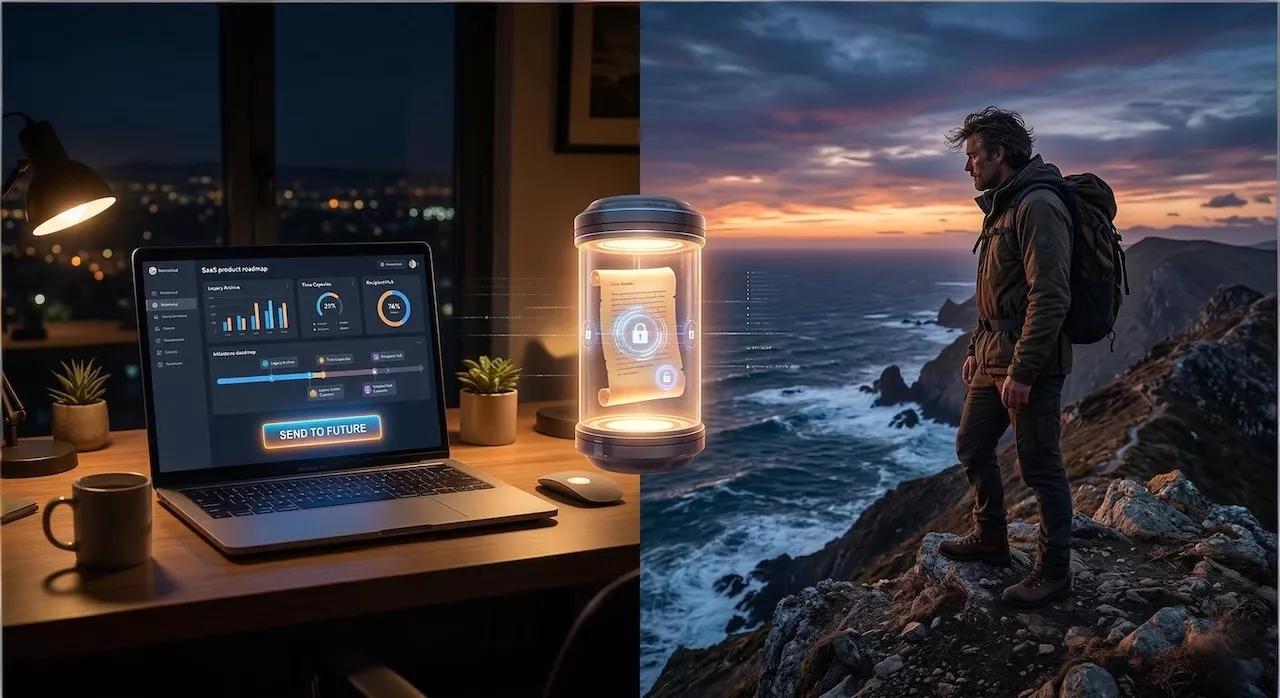
Why I Built EterMail: A Time Capsule for the People I Love Most
I’m a Product Manager who spends all week optimizing for the "immediate now." But getting lost off the grid on a mountain ridge made me realize I had zero infrastructure for the "forever." Here’s why I stopped worrying about conversion rates for a moment and built EterMail—a secure, tamper-proof digital time capsule for the people I love most.

The Most Radical Letter to Your Future Self Is a Promise to Stay Unfinished
The best letter to your future self isn't a memory—it's a mandate. Learn how writing to the version of you still working with love changes everything.