
The Moment You Realize You Don't Own Your Own Life
The notification arrived at 2:47 AM. Sarah's mother had passed suddenly, and now Sarah sat with her phone, staring at the lock screen she would never unlock. Ten thousand photos. Voice memos of her mother singing to grandchildren. The recipe for soup that tasted like childhood. All of it lived in a cloud that demanded a password Sarah's mother had taken to her grave.
This is the quiet horror of our age: we have externalized our memories so completely that we no longer possess the keys to our own archives. We have spent years—decades—building a digital self. The 3 AM searches about anxiety. The emails to friends during divorces. The photographs that captured not just faces but the particular slant of light through a kitchen window on a Sunday morning. And we have stored all of it in warehouses owned by corporations whose primary obligation is not to our posterity, but to quarterly earnings.
The platforms do not love you. They never have. They love your engagement, your data, your predictable patterns. And when you are no longer profitable—when you die, when you delete, when you simply drift away—they have no covenant to preserve what you left behind.
The Three Deaths of the Digital Self
There are three ways your digital memory dies, and most people have considered none of them.
The First Death: Platform Abandonment
Services shutter. Remember Google+? Vine? Yahoo Groups, where entire communities of grieving parents, cancer survivors, and first-generation immigrants built sanctuaries of shared experience? When a platform dies, it does not hold a funeral for your data. It sends a notification, offers a brief window for download, and then executes the digital equivalent of a landfill closure. Your words, your connections, your evidence that you were here—they become unreadable code on decommissioned servers.
The Second Death: The Breach You Never Feel
Data breaches have become so commonplace that we have developed a kind of numbness. Equifax. Marriott. Facebook. Each time, we change passwords, accept free credit monitoring, and move on. But what was actually taken? Not just financial data. Your search history reveals your fears. Your location data maps your infidelities, your illnesses, your secret devotions. This information does not simply disappear when the breach is "contained." It circulates in underground economies, stripped of context, weaponized by entities you will never identify.
The breach you never feel is the slow erosion of your narrative control. You no longer know who holds pieces of your story, or what versions of you exist in databases you cannot access.
The Third Death: The Password Problem
The average person maintains 100 passwords. The average estate executor faces a digital archaeology project of impossible complexity. Our passwords have become the gatekeepers of our legacies, and we have made them deliberately unguessable. We have trained ourselves to create strings of characters so secure that they secure our own families out of our histories.
Sarah's mother was not careless. She was prudent, privacy-conscious, responsible. She had simply followed all the advice—unique passwords, two-factor authentication, no written records. The very diligence that protected her living privacy annihilated her posthumous presence.
Privacy as an Act of Temporal Empathy
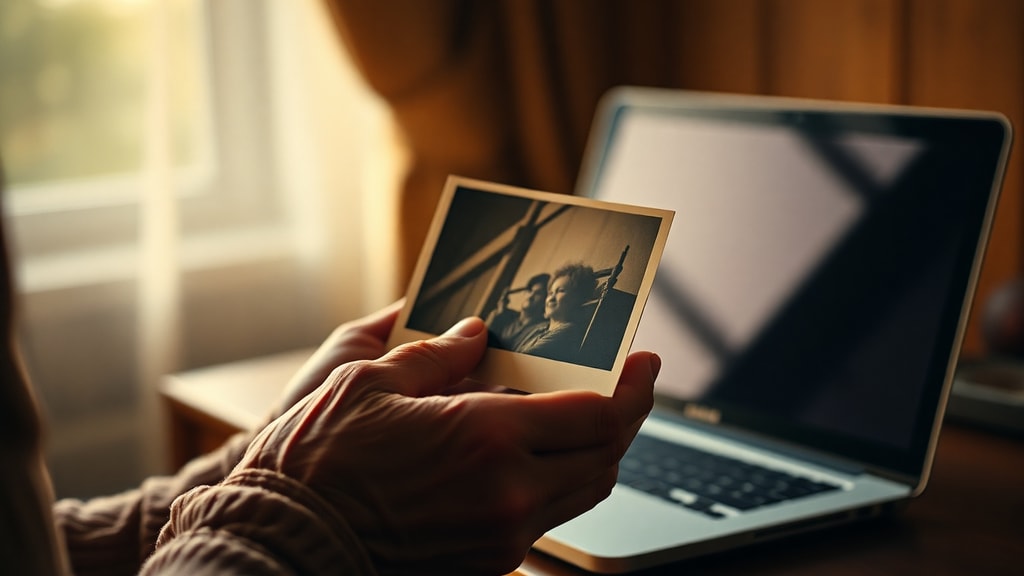
We misunderstand digital privacy when we frame it only as protection against surveillance or theft. These are real concerns, but they are incomplete. Digital privacy is ultimately an act of memory preservation—of ensuring that the story of you remains yours to curate, to gift, to withhold, or to reveal on your own terms.
Consider the letters previous generations left behind. They were imperfect, selective, sometimes deceptive. But they were chosen. A woman in 1953 decided which version of her marriage to describe to her sister. A soldier in 1944 determined what his parents could bear to read. This editorial control was not dishonesty. It was love. It was the recognition that memory is not raw data but crafted meaning, and that the crafter has both the right and the responsibility of selection.
We have surrendered this curation to algorithms that do not understand grief, or growth, or the way a person at sixty might wish to speak differently to their twenty-year-old self than to their children. Our digital exhaust—the automatic, unconsidered record of every click and scroll—has become our default legacy. And it is not worthy of us.
Reclaiming Your Narrative from the Cloud
The project of digital reclamation is not paranoid. It is not Luddite. It is, at its core, an assertion that your life is not content, and your memories are not a data stream to be monetized. Here is how to begin.
Audit Your Distributed Self
Start with inventory. Where do your photographs live? Your correspondence? The documents that matter? Most people are shocked to discover the sprawl: seven years of Instagram, a Dropbox they forgot, Google Photos auto-syncing everything, iCloud holding messages they assumed were private. You cannot preserve what you cannot locate. The first step is simply seeing the full territory of your digital existence.
Practice Intentional Archiving
Not everything deserves permanence. The screenshot of a flight confirmation from 2016 does not need to outlast you. But the letter you wrote your daughter on the night before her surgery? The photograph of your father's hands? These require intentional preservation—extraction from platforms, migration to formats you control, contextualization that algorithms cannot provide.
This is where the philosophy of the time capsule becomes essential. Not as nostalgia, but as curation. What would you want a future self, a future child, a future spouse to receive from you? What story do you want told, and when do you want it told?
Establish Digital Succession
Your passwords need heirs. This is not a contradiction. The same security that protects your living privacy must be engineered to yield, under defined conditions, to your chosen successors. Password managers with emergency access. Encrypted drives with physical keys held in trust. Legal documents that explicitly authorize digital estate management. The technology exists. Most people simply have not engaged it.
The Encryption of Love
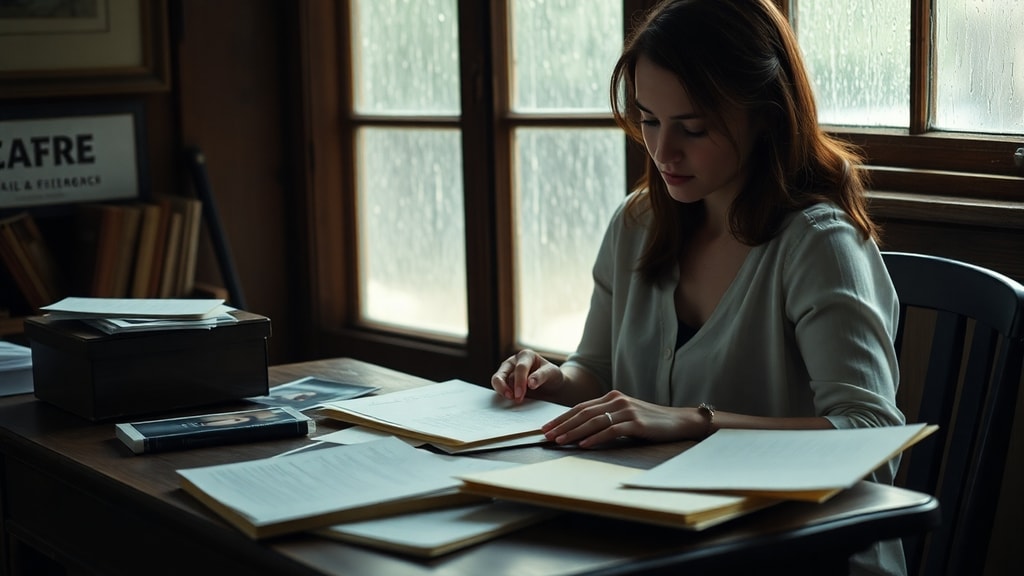
There is a deeper question beneath the practicalities. What does it mean to be remembered accurately? Our digital trails are notoriously poor witnesses. They capture our worst moments of impatience, our idle cruelties, our compulsive consumption. They miss our redemptions, our silent generosities, the conversations that happened in rooms without devices.
This is why the deliberate, encrypted communication—the message scheduled for future delivery, the letter written to be opened at a specific life milestone—holds such power. It is memory with intention. It is the self speaking across time with full knowledge of what the recipient will need to hear. It cannot be scraped by algorithms or sold to advertisers. It exists in the space between you and the person you love, protected by the same encryption that guards your privacy.
I spend a lot of nights alone with my screen, pushing code until 2 or 3 AM, "pair programming" with LLMs while the rest of the world sleeps. That extreme solitude—just me, the glow, and the architecture I'm building—gives me an almost physical understanding of what it means to speak into a void and hope someone hears you later. It's not so different from writing a letter you know won't be opened for years. That loneliness, that faith in dialogue across time, is exactly what I wanted to solve.
This is exactly why I obsessed over end-to-end encryption and extreme server redundancy when building EterMail. Because I know that a letter written to the future needs to be guarded even more fiercely than a bank password. The most precious communications are not the ones that happen now, in the feed, in the rush, but the ones that are held in trust for the moments when they will matter most. A letter to your future self, wondering if you survived the uncertainty you now feel. A message to your child, to be delivered on a birthday you may not see. A love letter timed for an anniversary decades hence, when the words you speak today might be the only version of you that remains.
These are not sentimental gestures. They are structural assertions that your story belongs to you, and to those you choose, and to no one else.
The Cloud Reclaims What We Do Not Hold
We are living through a strange inversion. Previous generations feared being forgotten. We face the opposite danger: being misremembered by systems that captured everything and understood nothing. The cloud does not forget. But it does not comprehend, either. It holds your data without holding your meaning.
The platforms will continue to evolve, to merge, to fail. The breaches will continue. Your passwords, no matter how complex, will not outlast the entropy of time unless you plan for their succession. The question is not whether you will leave a digital trace. You already have. The question is whether you will leave a legacy—a curated, intentional, meaning-rich inheritance of your own design.
Sarah eventually recovered some of her mother's photographs through a convoluted process of legal requests and technical workarounds. She never found the voice memos. The recipe, she reconstructed from memory, imperfect, haunted by the sense that something essential had evaporated.
Do not let your story depend on the mercy of platforms. Reclaim your narrative while you can. Archive with intention. Encrypt what is precious. And speak, deliberately, to the future you choose.

The Architecture of Remembering
There is a final paradox worth sitting with. Privacy and connection are not opposites. The most private communications—those held in encrypted trust, released only to chosen recipients at chosen moments—are often the most deeply connective. They carry the weight of intention that public posts, ephemeral stories, and algorithmic feeds cannot approximate.
To preserve your digital privacy is ultimately to preserve your capacity for meaningful memory. It is to say: I was here. I chose what mattered. I spoke to you across time with purpose. This is not nostalgia. This is not fear of technology. This is the ancient human project of bearing witness to our own existence, now requiring new tools because the old ones—paper, voice, presence—have been supplemented by systems that do not share our values.
The cloud will not save you. Only you can do that. Start with a letter. Start with a photograph you choose, not one that was chosen for you. Start with the recognition that your memory is your own, and the act of holding it is the last, essential freedom.
What is EterMail?
EterMail is a revolutionary time capsule service that allows you to send messages, photos, and videos to the future (up to 30 years). Seal your memories and thoughts today, and they'll be delivered when the time is right.
Time Capsule
Send messages up to 30 years in the future
Rich Media
Text, photos, and videos supported
Secure & Private
Your memories are safely encrypted
EterMail Team
We're the team behind EterMail, dedicated to helping you preserve and share timeless messages with your loved ones. Our mission is to make it easy to express your love, share your wisdom, and create lasting connections that transcend time.
Frequently Asked Questions about Digital Privacy & Security
What happens to my digital accounts when I die?
How can I preserve my online memories independently from social media platforms?
What should be included in a digital estate plan?
Related Articles

The Architecture of Forgetfulness: How Our Digital Habits Build the Traps We Don't See Coming
How mundane digital habits—study aids, reused passwords, forgotten shares—become invisible vulnerabilities. Protect your digital future with intentionality.

The Ghost You Leave Behind: Why Digital Privacy Is the Last Act of Memory Preservation
Your digital life is scattered across platforms you don't control. Learn why reclaiming your data is an act of love—and how to preserve what actually matters.
Why I Built EterMail: A Time Capsule for the People I Love Most
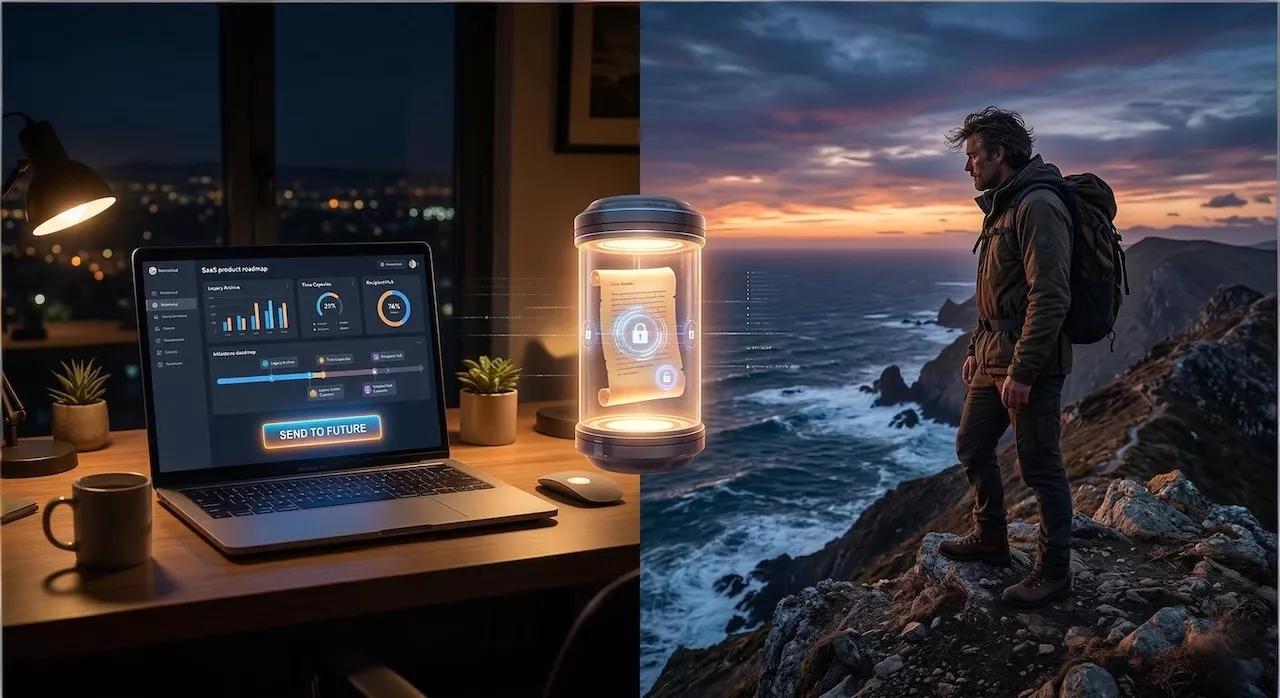
I’m a Product Manager who spends all week optimizing for the "immediate now." But getting lost off the grid on a mountain ridge made me realize I had zero infrastructure for the "forever." Here’s why I stopped worrying about conversion rates for a moment and built EterMail—a secure, tamper-proof digital time capsule for the people I love most.