
The Moment Before the Leak
She was seventeen when she made the flashcards. CBP facility codes, memorization drills, the kind of rote study aid millions of students create every semester without a second thought. Quizlet made it effortless: type, save, share with classmates. The platform's algorithm rewarded her with engagement metrics, study streaks, the small dopamine hits of digital productivity. She never imagined these cards would survive her high school government class, let alone surface years later in a data breach that exposed sensitive federal infrastructure.
This is how vulnerability accumulates now—not through dramatic hacks or sophisticated cyberattacks, but through the sediment of ordinary digital life. The flashcards we forget. The passwords we recycle. The cloud folders we leave public. Each decision, made in the frictionless moment of convenience, becomes brickwork in an architecture we never commissioned.

The Memory Tools That Betray Us
We built the internet to extend our minds. Cloud storage promised liberation from the fragility of paper and the limitations of physical space. Study platforms democratized education. Social networks archived our relationships in searchable permanence. These were gifts, and we received them gratefully.
But extension became dispossession. The same tools that helped us remember began remembering for us—and in doing so, they remembered everything we forgot we'd shared.
The CBP flashcard incident reveals a pattern we refuse to see. The student wasn't negligent in any recognizable sense. She operated within the designed incentives of a platform that encourages sharing, that gamifies contribution, that never asks: will you need this to disappear? The architecture of digital learning assumes permanence is neutral, even beneficial. It is neither.
Consider what else accumulates in these forgotten corners:
- Medical symptoms logged in health apps, searchable by future insurers
- Location histories embedded in photo metadata, reconstructing movements we never meant to document
- Draft emails auto-saved to servers, preserving thoughts we deleted from consciousness
- Password hints and security questions, their answers harvested from social media we posted years ago
Each represents a temporal mismatch: the present-tense convenience of creation, the future-tense risk of persistence. We are not built to think in these timescales. Evolution prepared us for immediate threats, not for the slow leakage of identity through infrastructure we cannot see.
The Psychology of Digital Neglect
Why do we abandon these fragments? The answer is not stupidity or laziness. It is cognitive economics.
Our brains evolved to forget strategically. Forgetting is not failure; it is the metabolic necessity of a system with finite storage. We offload memory to external tools precisely because we trust our biological forgetfulness. The problem is that digital systems do not forget. They compound.
Research in behavioral economics identifies present bias as a fundamental human tendency: we overweight immediate rewards against future costs. Creating a Quizlet set earns immediate utility (passing the test, helping a friend). The future cost—potential exposure of federal codes, personal data, professional reputation—exists in a probability distribution too abstract to feel real.
This is the architecture of forgetfulness in its purest form: systems designed to exploit our cognitive limitations, extracting value from our present-tense productivity while externalizing risk to future selves we cannot fully imagine.
Reclaiming Intentionality in Digital Memory
The alternative is not paranoia or digital asceticism. It is intentionality: the deliberate alignment of how we store memory with how we value it.
This requires two shifts in practice.
First, temporal consciousness. We must build the habit of asking: who will I be when this resurfaces? Not as anxiety, but as imagination. The seventeen-year-old making flashcards could not envision her twenty-five-year-old self, the professional with security clearances, the citizen whose forgotten study aid becomes national news. But we can practice this projection. We can build the muscle of future empathy—compassion for the selves who will inherit our digital decisions.
Second, architectural choice. Not all memory tools are equally forgetful in their design. Some platforms default to permanence; others to ephemerality. Some monetize data extraction; others operate on subscription models that align company incentives with user privacy. The choice of where to store a memory is as consequential as the memory itself.
This is where the philosophy of digital time capsules becomes relevant—not as nostalgia, but as intentional persistence. When we choose to preserve something for future access, we should do so with the same care we bring to physical heirlooms. We select the container. We specify the conditions of opening. We accept responsibility for what we have chosen to keep.
The Encryption of Care
There is a deeper pattern here about how we relate to our own continuity. The digital age has fragmented time. We live in the tyranny of the notification, the eternal present of the feed. Against this, the deliberate preservation of memory—the letter to a future self, the time capsule for a child not yet born—represents a radical act of temporal sovereignty.
But this sovereignty requires protection. The same infrastructure that enables intentional preservation can betray it. A letter to your daughter on her eighteenth birthday, stored in a cloud service that changes its terms of service, that suffers a breach, that simply ceases to exist—this is not preservation but false promise.
I spend too many nights alone with glowing screens, pair programming with LLMs until 2 AM, mapping architectures for systems that don't yet exist. That digital solitude taught me something about what we owe the future: the bridge between present intention and future reception must be built to withstand time itself. The technical response is end-to-end encryption, time-locked delivery, infrastructure designed around the user's timeline rather than the platform's. But the deeper response is philosophical: recognizing that digital memory is not merely data, but relationship across time. It deserves the same protections we extend to other forms of care.
Building the Architecture of Intention
The CBP flashcard breach will not be the last story of its kind. As more of our infrastructure becomes digitized, as more students learn through platforms that default to public sharing, as more professionals accumulate digital sediment without inventory—the attack surface grows. Not through malice, but through accumulated inattention.
The remedy is not to stop using digital tools. It is to use them with full consciousness of their temporal properties: what they remember, what they forget, what they expose, what they protect.
This is the work I built EterMail to support. I know what it means to want to reach across time—I've spent years building systems that let us do exactly that. When I was designing the infrastructure, I obsessed over end-to-end encryption and extreme server redundancy. Because I know that a letter written to the future needs to be guarded even more fiercely than a bank password. Not because digital time capsules solve all privacy concerns, but because they represent a model of intentional memory in an age of accidental exposure. When you write to your future self, to your child, to your spouse on a distant anniversary—you are practicing the discipline of curated persistence. You are choosing what deserves to survive, and under what conditions.
The seventeen-year-old with her flashcards did not have this framework. She had incentives optimized for engagement, not for her future security. The task before us is to build alternatives: tools that align short-term ease with long-term integrity, that respect the cognitive limitations we cannot overcome but can acknowledge, that treat memory as sacred trust rather than extractable resource.
Our digital lives will accumulate. The question is whether they accumulate by design or by neglect. The architecture we build today—through each platform we choose, each default we accept, each fragment we forget we shared—determines which future self will answer for our present convenience.
Choose the architecture. Write the letter. Seal it with intention.
The future is always listening. Make sure it hears what you meant to say.
What is EterMail?
EterMail is a revolutionary time capsule service that allows you to send messages, photos, and videos to the future (up to 30 years). Seal your memories and thoughts today, and they'll be delivered when the time is right.
Time Capsule
Send messages up to 30 years in the future
Rich Media
Text, photos, and videos supported
Secure & Private
Your memories are safely encrypted
EterMail Team
We're the team behind EterMail, dedicated to helping you preserve and share timeless messages with your loved ones. Our mission is to make it easy to express your love, share your wisdom, and create lasting connections that transcend time.
Frequently Asked Questions about Digital Privacy & Security
How can I audit my existing digital footprint for forgotten data exposures?
What makes end-to-end encryption essential for long-term digital preservation?
How do I balance convenience with security when choosing digital tools for personal memory-keeping?
Related Articles
The Passwords Died With You: Why Digital Privacy Is the Last Act of Memory Preservation
Your digital self lives on servers you don't own. What happens when platforms fail, breaches hit, or passwords die? Reclaim your story before it's erased.

The Ghost You Leave Behind: Why Digital Privacy Is the Last Act of Memory Preservation
Your digital life is scattered across platforms you don't control. Learn why reclaiming your data is an act of love—and how to preserve what actually matters.
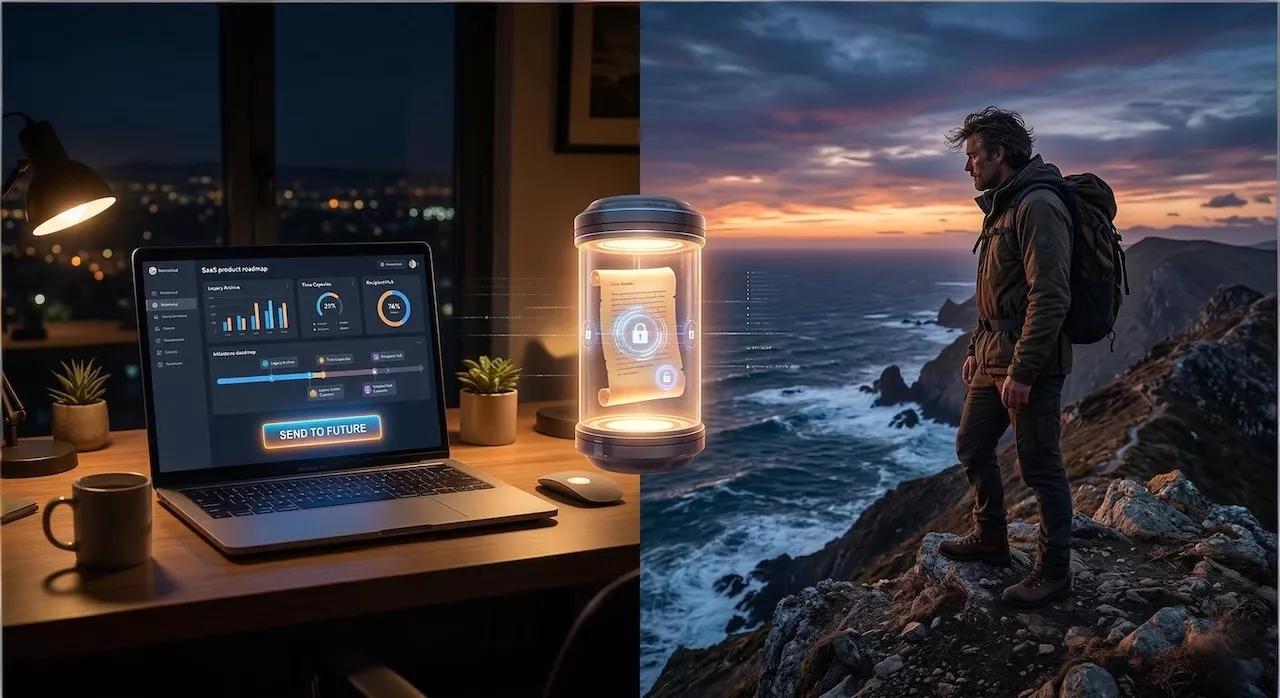
Why I Built EterMail: A Time Capsule for the People I Love Most
I’m a Product Manager who spends all week optimizing for the "immediate now." But getting lost off the grid on a mountain ridge made me realize I had zero infrastructure for the "forever." Here’s why I stopped worrying about conversion rates for a moment and built EterMail—a secure, tamper-proof digital time capsule for the people I love most.