The paper gown never fit right. You sat on the edge of the examination table, knees pressed together against the vinyl, and told your doctor something you hadn't told your partner yet. The weight you'd lost without trying. The fear that woke you at 3 a.m. The family history you'd spent years pretending didn't exist.
She nodded, typed. You assumed those words dissolved into the sacred confidentiality of the physician-patient relationship—a verbal handshake, a private covenant. What you didn't picture: an algorithm scraping that confession into a training dataset, your vulnerability becoming substrate for a large language model that would eventually draft someone else's diagnosis, someone else's disclosure, someone else's 3 a.m. fear.
Your body has become data. And data, as we've learned, never simply stays where we leave it.
The Intimate Becomes Infrastructure
Medicine was perhaps the last holdout. Banking went digital first, then social connection, then our grocery lists and our heart rates and our sleep cycles. But the examination room retained a stubborn analog dignity. The clipboard. The pen. The doctor's handwriting, illegible but unmistakably human, a physical trace of witness.
That is eroding faster than most patients realize.
Ambient clinical intelligence—systems that listen to your appointment and auto-generate notes—now operates in thousands of healthcare settings. These tools promise liberation: doctors free to look at patients instead of screens, documentation that happens without conscious effort, the end of the "pajama time" epidemic where physicians spend hours after their children sleep catching up on charts.
The trade, rarely examined with patients, is structural and profound. Your words, your symptoms, your hesitations and revelations, become training material for systems that improve by consuming more of you. The model doesn't need your name to learn from your body. It needs your patterns, your phrasing, the particular way you describe pain.
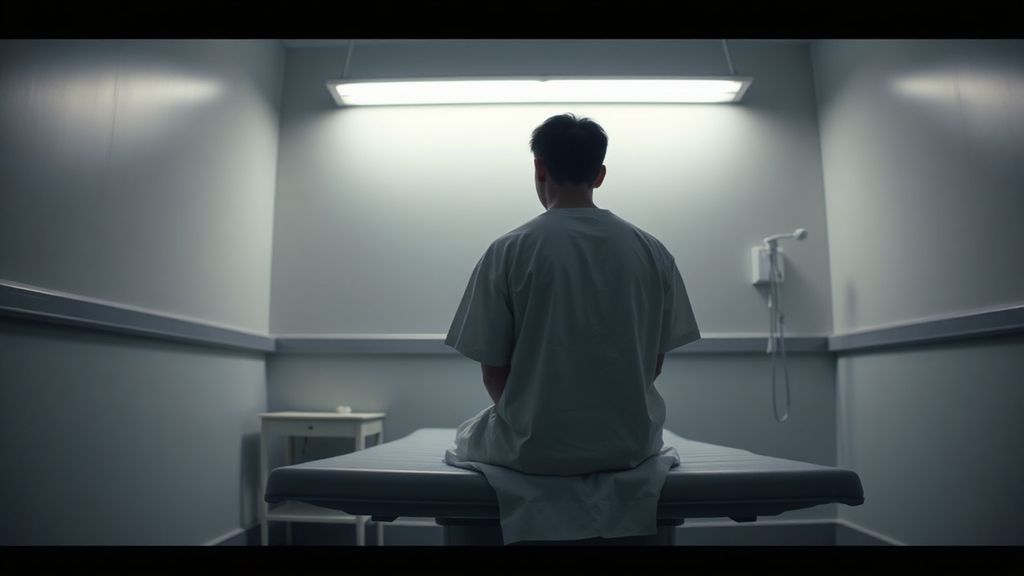
The Memory That Never Forgets
Human doctors forget. This is feature, not bug. They remember your story imperfectly, selectively, shaped by their own fatigue and their own humanity. A detail that struck them Tuesday blurs by Thursday. They bring their flawed, finite recall to each encounter, and something in that limitation creates space—for reinterpretation, for growth, for the story to shift as you do.
Algorithms do not forget. They do not fatigue. They do not exercise clinical discretion about what merits retention.
The medical record that once traveled from filing cabinet to filing cabinet, physically present, destructible by fire or flood or simple time, now replicates across cloud architectures you cannot locate or comprehend. Your 2019 biopsy result. The genetic screening you agreed to in a postpartum haze. The psychiatric medication trial that failed spectacularly. These fragments persist with a permanence no paper chart achieved, accessible to actors and purposes you did not authorize and may never know.
The Health Insurance Portability and Accountability Act, our nominal privacy shield, was drafted in 1996—before smartphones, before cloud computing, before the notion that your conversation with a physician might be processed by third-party AI vendors whose business models depend on data aggregation. HIPAA protects against certain disclosures; it does not protect against the transformation of your intimate life into infrastructure.
The Asymmetry of Exposure
Consider who bears the risk of this transformation.
Healthcare systems adopt AI documentation tools for clear institutional benefits: efficiency, standardization, reduced liability from incomplete records. Technology vendors build market value through data volume and model performance. Insurers and researchers gain access to population-level insights that were previously inaccessible.
The patient receives convenience, theoretically—shorter waits, perhaps, or more present doctors. But the patient also receives something unchosen: a permanent, detailed, searchable record of bodily vulnerability that exists beyond their control or even their awareness.
This asymmetry maps onto existing inequalities with disturbing precision. Those with rare conditions, stigmatized illnesses, or complex medical histories generate more valuable data—and face greater exposure. Those least equipped to navigate privacy settings, to question vendor relationships, to demand data deletion, are often those whose health information carries the greatest social and economic stakes.
The body that cannot afford privacy becomes the body most thoroughly known by systems that do not know it as body at all.
Reclaiming Sovereignty, One Intention at a Time
What would it mean to practice digital self-preservation in an era when your body has become data stream?
The question exceeds individual action. Structural reform—stronger consent requirements, data minimization mandates, algorithmic transparency, the right to human review of AI-generated clinical records—remains essential and largely unachieved. Advocacy matters. Policy matters. The collective demand that medicine's digital transformation serve patients, not merely optimize around them.
But there is also a personal dimension worth inhabiting: the deliberate practice of knowing what you are creating, and for whom, and toward what future.
This is where the logic of the time capsule becomes unexpectedly relevant. Not as nostalgia, but as intentionality. The act of choosing what persists, what waits, what arrives at a future moment with your explicit blessing.
Some patients now request their records in physical form, creating deliberate friction against seamless digital circulation. Some decline certain screenings whose results enter ungovernable data ecosystems. Some ask explicit questions: Will this conversation be processed by AI? Where will those notes reside? Who trains on them? These questions should not be radical. They are becoming necessary.
The Future of Forgetting
There is a deeper loss beneath the practical risks of medical data exposure—the loss of appropriate forgetting as a human good.
We have constructed digital systems that remember with inhuman fidelity, and we are only beginning to understand the psychological and social costs. The chronic condition you overcame, still flagged in every system. The adolescent crisis, preserved in clinical language you never chose. The genetic probability, calculated and stored before you had language to consent. These persistent records shape how you are seen, how you see yourself, how futures open or close.
Medicine once incorporated forgetting into its practice. Doctors chose what to record, what to emphasize, what to let fade. This was not negligence; it was clinical judgment, a recognition that the record serves the patient, not the reverse. AI documentation threatens to eliminate this discretion, producing comprehensive, permanent accounts that no human would have created or maintained.
The right to have a past that does not automatically precede you into every future encounter—this may be the privacy battle we have not yet named.

What We Owe the Future Self
You will be someone else in five years, ten, twenty. The body you inhabit will have transformed in ways you cannot now predict. Some of those transformations will be medicalized, recorded, entered into systems that do not share your sense of narrative continuity.
What would it mean to leave your future self something other than an exhaustive data trail?
Perhaps a letter, written now, describing not your symptoms but your hopes. Not your diagnoses but your definitions of well-being. Perhaps a time capsule, scheduled to arrive when you reach a milestone age or face an anticipated transition, containing your own account of who you were when you could not know who you would become.
This is not escape from medical reality. It is the cultivation of parallel records—human records—that maintain your authorship over your own story.
I know what it means to sit alone at 2 AM, face lit by a screen, wrestling with systems that feel larger than any individual can resist. As someone who has spent years building in the unforgiving terrain of Silicon Valley—shipping e-commerce platforms, game engines, now SaaS infrastructure—I've developed a particular allergy to the phrase "just trust the algorithm." I don't. But I've also learned that technology built with deliberate human intention can become something else entirely: a bridge rather than a trap.
This is exactly why I obsessed over end-to-end encryption and extreme server redundancy when building EterMail. Because I know that a letter written to the future needs to be guarded even more fiercely than a bank password. The message you schedule for your future self, encrypted, time-locked, delivered only when you designate, represents a small but meaningful reclamation. You choose the words. You choose the moment. You choose what survives and what arrives.
Against systems that capture everything and forget nothing, this deliberate, bounded, consensual preservation becomes a form of resistance. A reminder that memory can be human-scaled, human-timed, human-authorized.
The Examination Room Revisited
The paper gown still doesn't fit right. You still sit on the edge of the table, knees pressed together, and say things that matter.
But now, perhaps, you also ask: Who else is listening? Where do these words go? What persists when I leave?
These questions honor the vulnerability of the moment. They recognize that intimacy deserves infrastructure that respects its fragility. They assert that your body, even as data, remains yours—not merely in legal ownership but in the deeper sense of self-possession, of determining what you reveal and what you retain.
The algorithm will not ask these questions. The system will not slow itself for your hesitation. The market will not voluntarily forgo the value your vulnerability generates.
Only you can ask. Only you can choose, in small ways and large, what kind of digital life your body will lead.
This is the work of digital self-preservation—not paranoia, not withdrawal, but conscious, continuous, courageous stewardship of the self that exists in systems never designed to love you.
What is EterMail?
EterMail is a revolutionary time capsule service that allows you to send messages, photos, and videos to the future (up to 30 years). Seal your memories and thoughts today, and they'll be delivered when the time is right.
Time Capsule
Send messages up to 30 years in the future
Rich Media
Text, photos, and videos supported
Secure & Private
Your memories are safely encrypted
EterMail Team
We're the team behind EterMail, dedicated to helping you preserve and share timeless messages with your loved ones. Our mission is to make it easy to express your love, share your wisdom, and create lasting connections that transcend time.
Frequently Asked Questions about Digital Privacy & Security
How can I find out if my doctor uses AI to document my visits?
What rights do I have to delete or correct AI-generated medical records?
Why is health data considered more sensitive than other personal information?
Related Articles
The Gravity of Old Selves: Why Digital Privacy Is the Right to Become Someone New
Your digital past traps you in who you were. Explore why true digital privacy means preserving the freedom to change, grow, and outgrow your former selves.
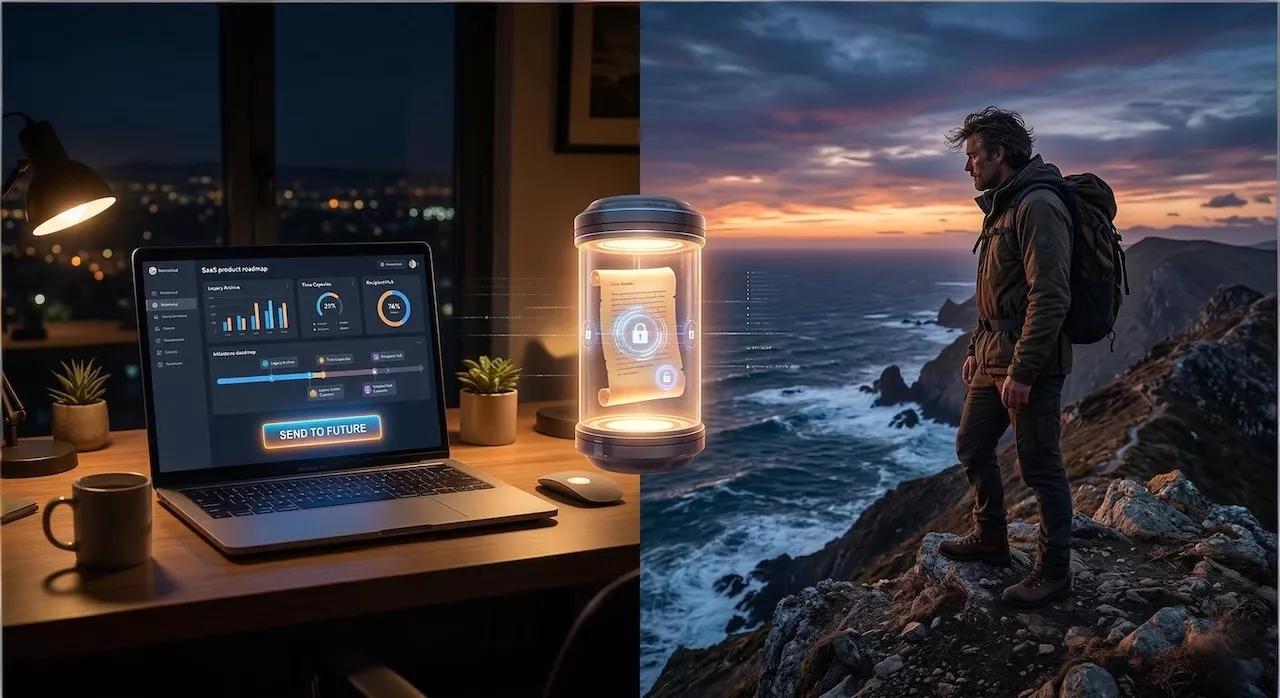
Why I Built EterMail: A Time Capsule for the People I Love Most
I’m a Product Manager who spends all week optimizing for the "immediate now." But getting lost off the grid on a mountain ridge made me realize I had zero infrastructure for the "forever." Here’s why I stopped worrying about conversion rates for a moment and built EterMail—a secure, tamper-proof digital time capsule for the people I love most.

The Most Radical Letter to Your Future Self Is a Promise to Stay Unfinished
The best letter to your future self isn't a memory—it's a mandate. Learn how writing to the version of you still working with love changes everything.