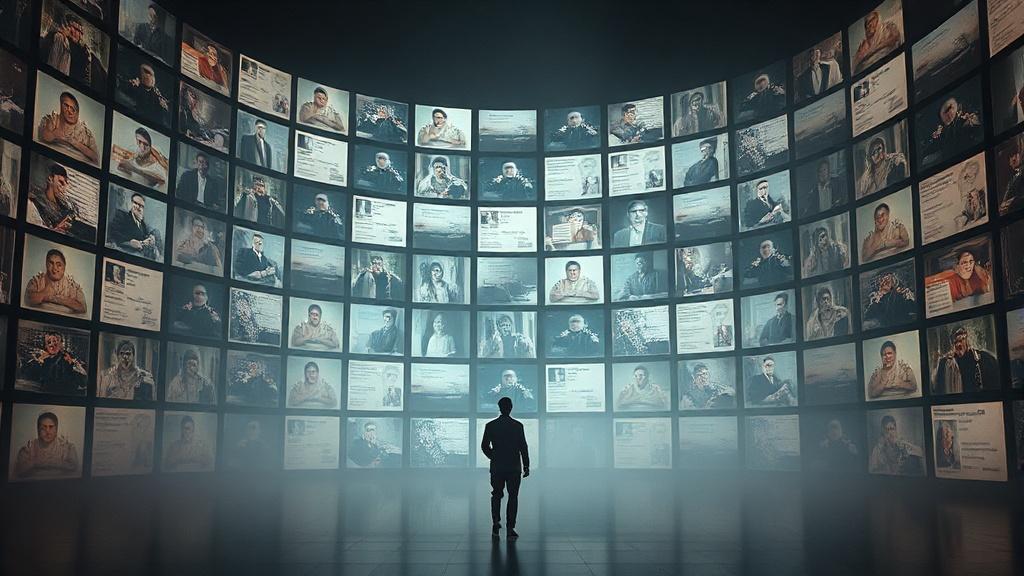
There is a peculiar horror in stumbling upon your own ghost. Not the supernatural kind, but the digital residue of a self you have since shed—a Facebook argument from 2012, a Tumblr post from your first heartbreak, a tweet fired off in the raw hours of insomnia. You read these artifacts with the disorienting recognition that yes, this was you, and yet it no longer is. The platforms remember what you have mercifully forgotten, and they remember it with the permanence of stone.
Ursula K. Le Guin wrote that change is the only constant, yet we resist it, clinging to selves we have already outgrown. What she could not have fully anticipated is how thoroughly our digital architectures would violate this truth. The internet does not merely document our becoming; it fossilizes it, creating gravity wells that pull us backward into versions of ourselves we no longer recognize or want to be.
The Tyranny of the Permanent Record
For most of human history, memory was a collaborative negotiation. Stories shifted in the retelling. Diaries burned in house fires. Photographs faded. The past had the decency to become hazy, to allow us the dignity of revision. We constructed our identities not from immutable archives but from selective recollection, from the gentle erosion of shame and the deliberate curation of meaning.
The digital age inverted this contract. Every search, every post, every half-formed opinion has become a data point in a profile that grows more rigid as it grows more complete. The platforms that host our lives have no interest in our becoming. Their business models depend on predictability, on the reduction of human complexity into targetable patterns. A person who changes is a person who becomes harder to advertise to, harder to profile, harder to monetize.
We have been sold the myth that digital permanence is a gift—that our grandchildren will treasure our exhaustive archives, that our lives gain meaning through exhaustive documentation. But permanence without curation is not memory; it is surveillance. The right to be forgotten is not the right to hide; it is the right to evolve without a thousand witnesses holding you to who you were.
The Psychology of Being Trapped by Your Data
The weight of our digital past operates on us in ways we are only beginning to understand. Psychologists have documented how social media's archival nature creates what researchers call "context collapse"—the collision of disparate life stages into a single, flattened presentation of self. Your professional network sees your teenage humor; your new partner encounters your old grief; your political evolution is rendered suspicious by posts from a former ideological life.
More insidiously, we begin to police our own potential futures against the standards of our documented pasts. The aspiring writer hesitates to publish because their early attempts live in searchable obscurity. The recovering addict fears community because their struggle is preserved in forum posts. The person who has left a faith, a relationship, a career, a country—any fundamental identity—finds their transformation treated as inconsistency rather than growth.
This is the unspoken anxiety of the digital native generation: not that they will be hacked, not that their data will be stolen, but that it will be remembered too well. The fear is not of exposure but of foreclosure—the sense that every digital utterance becomes a brick in a prison of self-definition, mortaring you into a version of yourself that you have since transcended.
Reimagining Privacy as the Architecture of Becoming
We must fundamentally reconceptualize what digital privacy means. It is not about secrecy, about darkened rooms and whispered conversations. Privacy is the spatial and temporal room to become someone you are not yet. It is the buffer between impulse and permanence, between experimentation and consequence, between who you are trying to be and who you have been proven to be.
This reconceptualization has practical dimensions. It means demanding expiration dates on data, not as a concession to criminality but as a recognition of human flux. It means platform designs that default to ephemerality rather than permanence, that treat forgetting as a feature rather than a bug. It means legal frameworks that recognize the right to digital deletion as contiguous with the right to personal transformation.

But it also means individual practices of intentional memory-making. The paradox of our era is that we document everything and preserve almost nothing worth having. Thousands of photographs, yet few curated albums. Exhaustive chat histories, yet no letters composed with the deliberation that makes them worth rereading. The answer to digital permanence is not more deletion but more intention—creating artifacts that we actively choose to sustain, rather than accumulating passive residues of our digital existence.
Building an Online Life That Forgets You Gracefully
What would it mean to construct a digital presence aligned with the reality of human change? First, it requires interrogating the default settings of our tools. The platform that archives everything is not a neutral choice; it is an ideological commitment to a particular theory of identity, one that treats the self as stable, coherent, and fully knowable. We might instead seek technologies that mirror our actual psychology: layered, revisable, capable of holding contradiction and transformation.
This is where the concept of the time capsule becomes newly relevant—not as a naive fantasy of speaking to the future, but as a deliberate practice of temporal boundary-setting. A true time capsule is not an accidental accumulation but a conscious gift to a specific future moment, composed with the understanding that both sender and receiver will be different people. It respects the integrity of change by making it explicit, by building the fact of transformation into the architecture of the message.

I came to this problem personally, the way most founders do: by living it. I spend my nights pair-programming with LLMs until 2 or 3 AM, mapping architectures in the blue glow of a screen, and there's a particular loneliness to that digital solitude that taught me something about voices across time. Then I step away—hiking steep trails, skiing, surfing—and the raw reality of wind and water strips away every illusion. You cannot fake a wave. You cannot archive a mountain. Those moments are unrepeatable, and they taught me to distrust anything that pretends permanence is the same as meaning. I wanted to build something that honored that fragility, not fought against it.
The best way to fight forgetting isn't taking another screenshot; it's setting an alarm for the future. By using EterMail to set a delivery date 5 years from now, you completely free yourself from the anxiety of the present. You write to the person you will become, not the person you are performing for today. The encryption and scheduled delivery are not primarily security features; they are temporal technologies, creating the necessary distance for genuine transformation to occur. Don't wait for the perfect moment to start writing. Open EterMail, skip the complex formatting, type the very first sentence that comes to mind, set the date, and leave the rest to us.
Similarly, letters to loved ones that unlock at specified future moments—anniversaries, graduations, moments of anticipated difficulty—acknowledge that relationships are not static entities but evolving negotiations. They create spaces of communication that respect the future's difference from the present, rather than collapsing all temporal stages into an eternal, surveillant now.
The Courage to Be Inconsistent
There is a deeper philosophical stake in all of this. The Western tradition has long privileged coherence as a virtue, treating inconsistency as hypocrisy or weakness. Our digital architectures enforce this prejudice with unprecedented rigor. But human flourishing may depend on a different valuation: the courage to be inconsistent, to contradict your former self, to treat your past opinions as provisional experiments rather than binding contracts.
The novelist Zadie Smith has written about the "mockery of belonging to oneself"—the strange assumption that we possess stable identities rather than continuously constructing them. Our digital systems mock this mockery, insisting on a proprietary relationship to self that does not correspond to lived experience. Privacy, reconceived, is the resistance to this proprietorship. It is the claim that you do not belong to your data, that your past expressions do not own your future possibilities.
This is not an argument for irresponsibility. Harm caused remains harm; accountability for action remains necessary. But accountability is not the same as permanent, comprehensive exposure. We have confused the legitimate demand that people answer for their actions with the illegitimate demand that people be fully knowable, permanently documented, stripped of the obscurity that makes change imaginable.
Toward Technologies of Humane Forgetting
The future of digital privacy lies not in better encryption alone, though encryption matters, but in better philosophy. We need technologies designed around the reality of human development rather than the fantasy of human predictability. This means systems that forget by design, that treat data as compost rather than monument, that allow the organic decay of the irrelevant alongside the preservation of the genuinely meaningful.
It also means cultivating personal practices of digital hygiene that serve our becoming rather than our documentation. The regular deletion of accounts no longer active. The conscious choice of ephemeral communication for exploratory conversations. The creation of intentional archives—time capsules, deliberate letters, curated collections—rather than passive accumulation of digital exhaust.
The measure of a humane technology might be this: does it help you become someone new, or does it trap you in who you already are? By this standard, much of our current digital infrastructure fails profoundly. But alternatives exist, and their adoption is not merely a technical choice but an existential one—a commitment to the Le Guinian truth that change is not aberration but essence, and that our tools should serve our transformation rather than forestall it.
The right to become someone new is not a luxury. It is the fundamental condition of a life lived in time, rather than suspended in the eternal present of the database. Privacy, at its deepest, is simply the space this becoming requires—the room to outgrow yourself without a thousand witnesses holding you to who you were, the grace of an online life that forgets you gently, so that you might keep changing without the weight of every former self pressing down upon your chest.
What is EterMail?
EterMail is a revolutionary time capsule service that allows you to send messages, photos, and videos to the future (up to 30 years). Seal your memories and thoughts today, and they'll be delivered when the time is right.
Time Capsule
Send messages up to 30 years in the future
Rich Media
Text, photos, and videos supported
Secure & Private
Your memories are safely encrypted
EterMail Team
We're the team behind EterMail, dedicated to helping you preserve and share timeless messages with your loved ones. Our mission is to make it easy to express your love, share your wisdom, and create lasting connections that transcend time.
Frequently Asked Questions about Digital Privacy & Security
How can I reduce my digital footprint without deleting my entire online presence?
What psychological effects does permanent digital archiving have on personal growth?
Is the right to be forgotten legally protected in any countries?
Related Articles

The Body as Data: When Your Most Intimate Vulnerabilities Live on Someone Else's Server
Your doctor's notes may be written by AI. Discover why protecting your health data is the most intimate act of digital self-preservation.
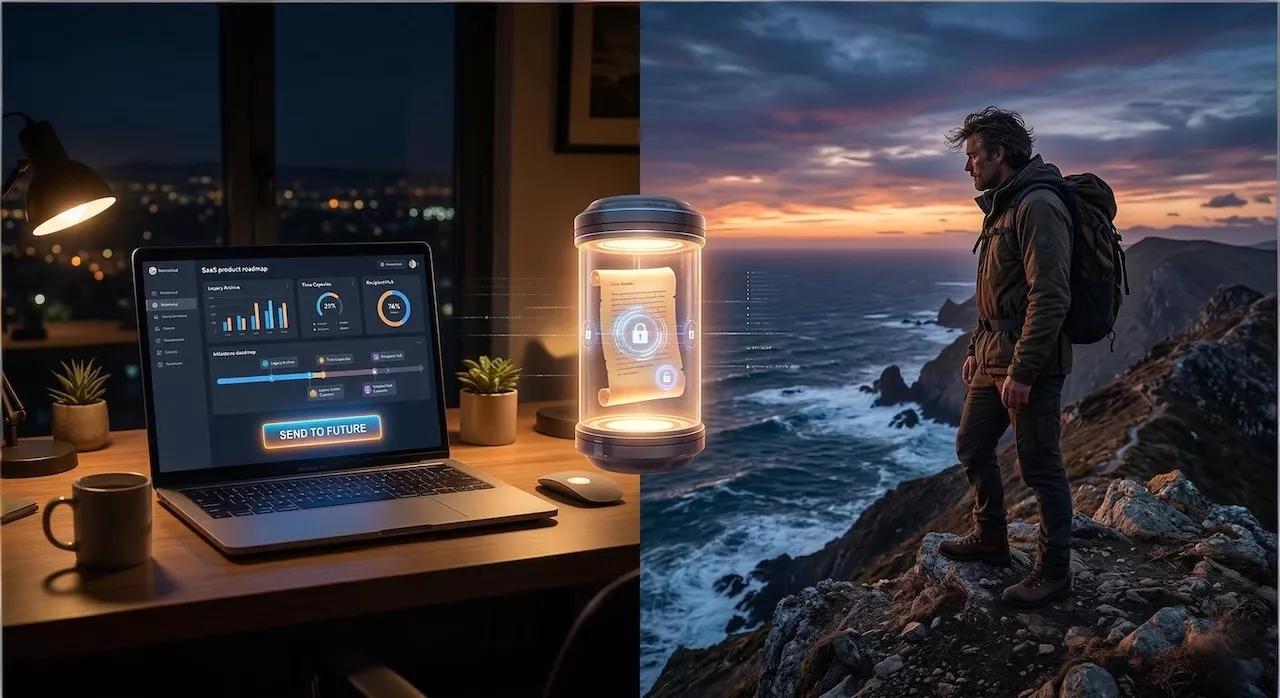
Why I Built EterMail: A Time Capsule for the People I Love Most
I’m a Product Manager who spends all week optimizing for the "immediate now." But getting lost off the grid on a mountain ridge made me realize I had zero infrastructure for the "forever." Here’s why I stopped worrying about conversion rates for a moment and built EterMail—a secure, tamper-proof digital time capsule for the people I love most.

The Body Remembers First: Relearning Touch When Love Has Gone Cold
How do we touch again after anger builds walls? Explore the quiet courage of physical reconciliation—and why the body heals before the heart.