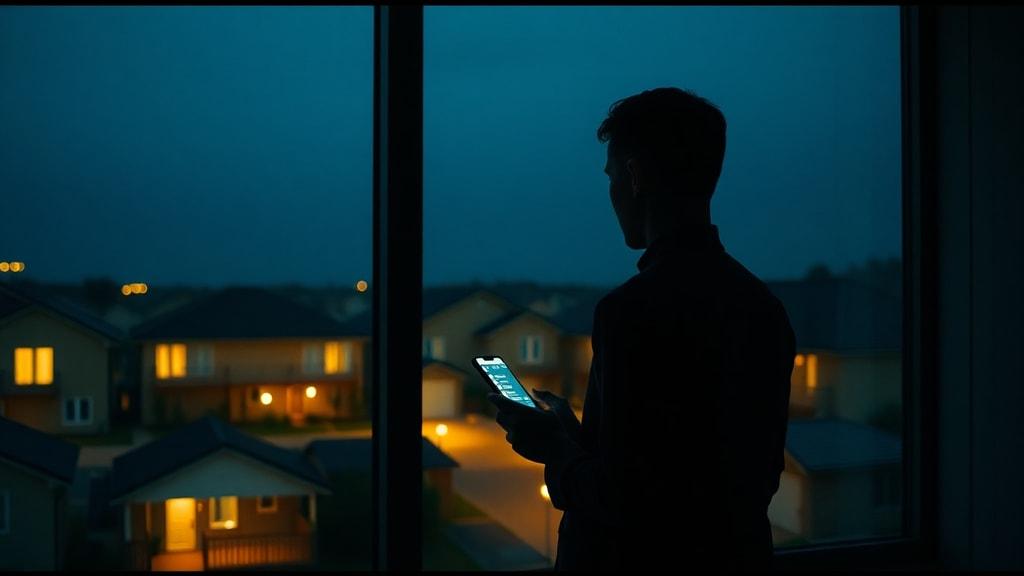
The Night the Notification Wouldn't Stop
Marcus had already brushed his teeth. His daughter's bedtime story was half-read, her small body curled against his shoulder, when the Slack icon pulsed red on his nightstand. It was 9:47 PM. He ignored it. It pulsed again. Then Teams chimed. Then his phone buzzed with a text from his manager: "Quick check on the Q3 deck?"
He set his daughter down, unfinished, and walked to the kitchen to type a response. By the time he returned, she was asleep, book still open, the moment gone. What Marcus didn't know—what most of us never consider—is that this ordinary violation was also a data extraction event. His location, his response time, his availability pattern, all logged permanently. The gentle violence of always-on work doesn't merely steal your evening. It colonizes your behavioral signature and stores it in systems that never sleep, never forget, and outlast your employment, your sanity, and perhaps your right to be left alone.
We have spent years debating work-life balance as if it were a scheduling problem. It is not. It is a privacy frontier—one of the last battlegrounds where individuals still possess, however fleetingly, the power to define the boundaries of their own existence.
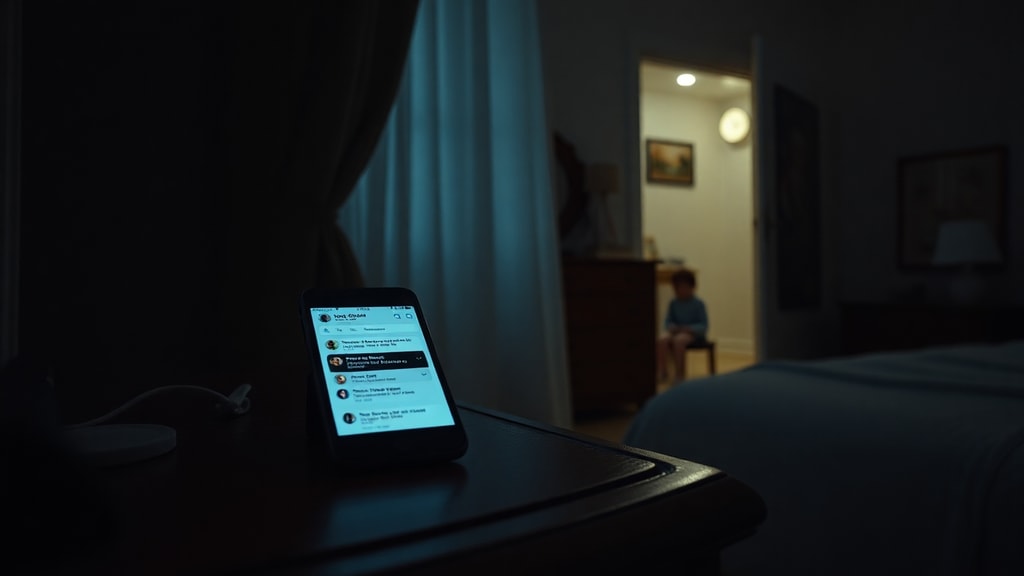
The Architecture of Availability: How "Always On" Became the Default
The shift happened gradually, then completely. First email followed us home. Then smartphones made the office portable. Then collaboration tools—Slack, Teams, Discord for work—transformed asynchronous communication into performance theater, where response speed became proxy for dedication, and visibility became indistinguishable from value.
What few employees understand is the infrastructure beneath this theater. Every message sent, every channel joined, every late-night emoji reaction generates metadata—not the content of your words, but the patterns of your presence. When you respond. Where you respond from. How quickly you capitulate to the red dot. These behavioral signatures aggregate into profiles more predictive than any annual review, more permanent than any employment contract.
Research from the University of California, Irvine found that workers check email an average of 15 times per day, but the true figure for platform workers often exceeds 100 discrete interactions. Each interaction is a data point. Each data point feeds algorithms that determine your promotability, your reliability, your "engagement score"—metrics that may follow you across jobs, industries, and decades, stored in vendor databases you never consented to and cannot access.
The boundary between work and rest was never merely about hours. It was about jurisdiction—who controls the space of your attention, and what they extract from its surrender.
The Permanent Record You Didn't Know You Were Building
Consider what happens to the data of your availability. Your employer's Slack instance lives on AWS or Google Cloud, subject to retention policies you didn't negotiate. Your Teams metadata is governed by Microsoft's enterprise agreements, not your preferences. When you leave a company, your account may be deactivated, but aggregated analytics persist—response time distributions, after-hours participation rates, geographic mobility patterns. These become inputs for "workforce optimization" models that evaluate future candidates, benchmark teams, and increasingly, predict turnover before you know you're considering it.
The regulatory landscape offers thin protection. The European Union's Right to Disconnect laws remain patchwork and poorly enforced. In the United States, no federal statute recognizes digital availability as a privacy interest. The California Consumer Privacy Act grants individuals the right to know what data is collected, but exempts employment contexts broadly. You are, in most jurisdictions, data livestock—productive, measurable, and ultimately expendable.
More insidious is the psychological adaptation. We internalize availability as virtue. We apologize for delayed responses as if delay were moral failure. We check notifications during family dinners, not because we must, but because the absence of checking produces anxiety—a conditioned response that serves employer interests while eroding our capacity for uninterrupted presence. The notification becomes not merely a demand but a dopamine loop, and we become willing participants in our own surveillance.

The Radical Act of Being Unreachable
What would it mean to reclaim the right to be unreachable? Not as privilege, but as fundamental digital self-preservation?
The answer requires reimagining privacy not as secrecy but as boundary integrity—the capacity to define where your data ends and another's surveillance begins. This is where the philosophy of slow communication meets the architecture of intentional memory. The tools we use to connect should serve our temporal sovereignty, not erode it.
Some workers are experimenting with radical tactics: notification bankruptcy—declaring all channels unread and starting fresh on their own schedule. Others deploy physical interventions, phones left in drawers, apps deleted entirely. But individual resistance against systemic extraction is exhausting and often professionally punished. The solution requires structural imagination.
Consider the inverse of always-on: scheduled presence. Not the performative availability of platform work, but the deliberate choice to communicate at defined moments, with defined boundaries, creating records that reflect intention rather than coercion. This is not Luddite retreat. It is temporal autonomy—the assertion that your attention has rhythms that belong to you, not to optimization algorithms.
The deeper question is what we are preserving this attention for. If work notifications colonize our evenings, what spaces remain for the unhurried conversations that sustain relationships? For the reflection that produces genuine insight? For the letters we might write to futures we cannot yet imagine—including our own?

Reclaiming Time as a Privacy Practice
The most profound privacy violations may not be the data breaches that make headlines, but the slow erosion of our capacity to be absent—from platforms, from metrics, from the perpetual now of notification culture. Privacy, in this frame, is not about hiding but about duration: the ability to extend across time without being continuously extracted, continuously measured, continuously optimized.
This is why the practice of future-directed communication—letters to one's future self, time capsules for loved ones, messages scheduled to arrive years hence—carries political weight. It asserts that your present self has authority over your future self's attention, that time is not merely a resource to be harvested but a medium of care to be cultivated. When you write to a future you, or a future child, or a partner decades hence, you are practicing temporal sovereignty in its most intimate form.
I know this tension intimately. There are nights when I'm still at my desk at 2 AM, "pair programming" with an LLM, mapping architectures in the blue glow of a screen that feels like the only thing awake in the world. That extreme digital solitude—hours of dialogue with something that isn't human, building bridges between physical and digital existence—has taught me something about loneliness, and about why the moments we choose to be present for matter more than the ones we accidentally survive. When I step away, when I force myself onto a mountain trail or into ocean surf, the raw reality of wind and water strips away the illusion that productivity equals purpose. Those unrepeatable moments—my daughter's actual laugh, not the memory of it—are what I started building technology to protect, not to replace.
The platforms that enable this practice matter. End-to-end encryption ensures that your words remain yours, not training data for language models. User-controlled scheduling ensures that delivery happens on your timeline, not dictated by engagement algorithms. The absence of advertising infrastructure ensures that your emotional content is not monetized, your vulnerability not exploited for click-through rates.
This is exactly why I obsessed over end-to-end encryption and extreme server redundancy when building EterMail. Because I know that a letter written to the future—whether to yourself in five years, or to a child who will need your words more than your availability—needs to be guarded even more fiercely than a bank password. The best way to fight forgetting isn't taking another screenshot; it's setting an alarm for the future. By using EterMail to set a delivery date years from now, you completely free yourself from the anxiety of the present, and you build something that outlasts the platforms trying to extract your attention right now.
These are not luxury features. They are architectural commitments to a different relationship between technology and time—one that honors the boundary between the communicable and the sacred, between the productive and the merely present.
The Question We Avoid Asking
Marcus's daughter will not remember the Q3 deck. She will remember, if she is lucky, some evenings when her father was fully there. But the data of his absence—the timestamped proof of his availability, his capitulation, his colonized attention—will persist in vendor databases, training models, optimization engines. It will outlast his employment, his sanity, and perhaps his right to have ever been unreachable.
The question we avoid asking is whether this is the world we intended to build. Whether the convenience of instant connection was worth the permanent record of our fragmentation. Whether there remains any space—physical, temporal, psychological—where the metrics cannot follow.
There is. But reaching it requires more than individual willpower. It requires tools designed for slowness, for boundary, for the radical proposition that your attention is not merely a resource to be extracted but a trust to be stewarded across time. The right to be unreachable is not antisocial. It is the foundation of any sociality worth preserving—any relationship, any reflection, any future self that might still recognize you as someone who chose presence over performance, and meaning over metrics.
The notification can wait. Your data, however, never forgets. Choose what you feed it, and when, and why.
The quietest act of resistance is sometimes a message sent not now, but years from now—to someone you have not yet become, or to someone you love who will need your words more than your availability.
What is EterMail?
EterMail is a revolutionary time capsule service that allows you to send messages, photos, and videos to the future (up to 30 years). Seal your memories and thoughts today, and they'll be delivered when the time is right.
Time Capsule
Send messages up to 30 years in the future
Rich Media
Text, photos, and videos supported
Secure & Private
Your memories are safely encrypted
EterMail Team
We're the team behind EterMail, dedicated to helping you preserve and share timeless messages with your loved ones. Our mission is to make it easy to express your love, share your wisdom, and create lasting connections that transcend time.
Frequently Asked Questions about Digital Privacy & Security
How does workplace surveillance technology track employee behavior beyond work hours?
What legal protections exist for employees' right to disconnect from digital work communications?
Why is being unreachable considered an act of digital self-preservation?
Related Articles
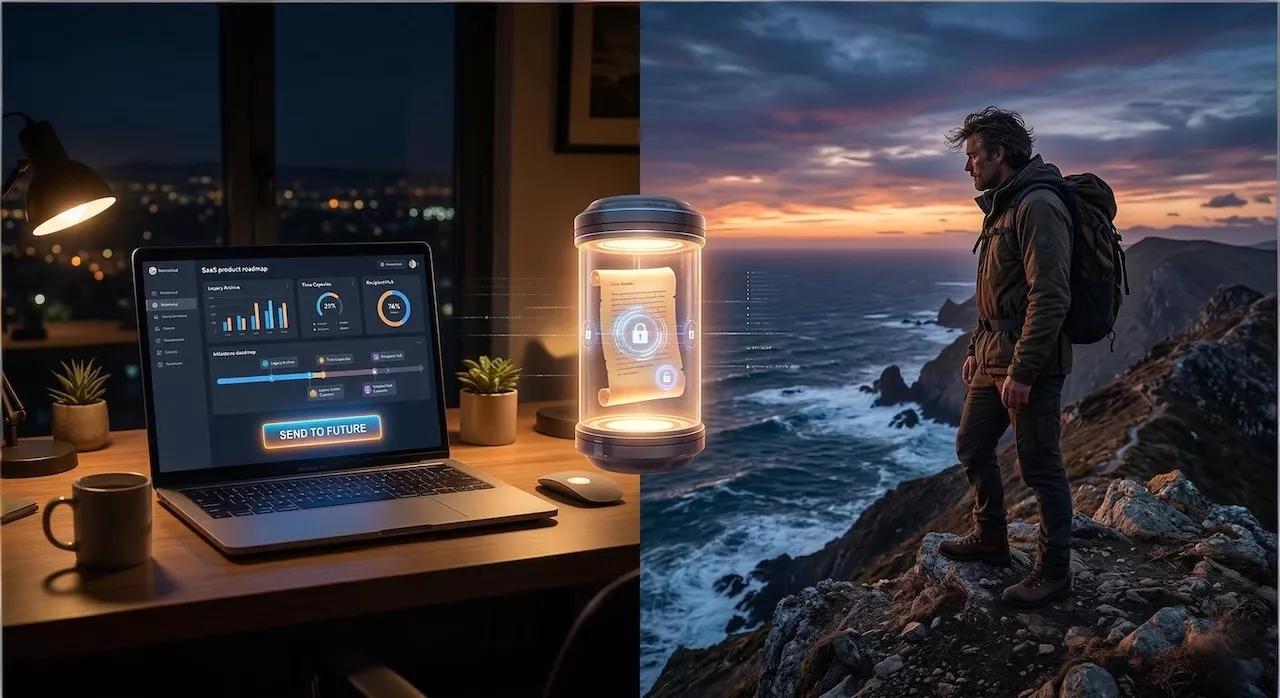
Why I Built EterMail: A Time Capsule for the People I Love Most
I’m a Product Manager who spends all week optimizing for the "immediate now." But getting lost off the grid on a mountain ridge made me realize I had zero infrastructure for the "forever." Here’s why I stopped worrying about conversion rates for a moment and built EterMail—a secure, tamper-proof digital time capsule for the people I love most.

The Architecture of Coupled Privacy: Why the Deepest Love Lives in the Vault
What if the truest milestone is not the love we display, but the courage to carry what we know alone? Explore the vault of coupled privacy.

The Unfinished Cloud: What Our Digital Fragments Reveal About the Lives We Almost Understood
What happens to our digital fragments when we die? Explore how unfinished messages become our most honest inheritance—and why wondering beats wisdom.