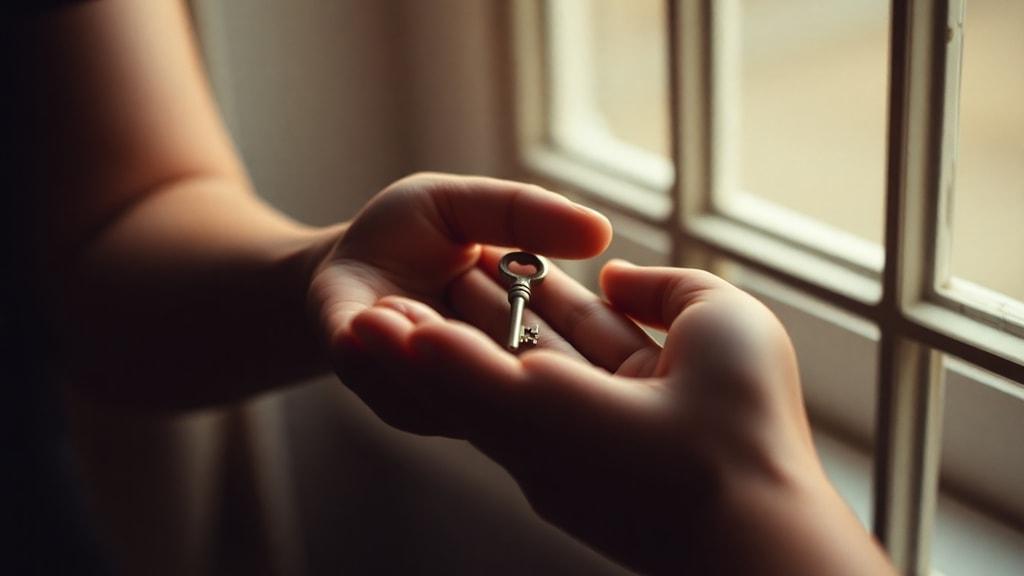
You are standing in your mother's kitchen, the coffee still warm in your hands, and the words are already forming—they got the promotion, they're terrified, they cried in the car last Tuesday—when something arrests you mid-breath. A small catch in the throat, a nearly invisible hand on your wrist. You remember, suddenly and with strange clarity, that this story does not belong to you. Not in the way that stories usually belong to the people who tell them. You are not its author. You are its vault.
This is the milestone no one photographs. No champagne, no announcement post, no ring to mark the occasion. Just the quiet, almost painful recognition that you have become someone who knows something the world cannot know, and that your love will now be measured by the ferocity of your silence.

The Confessional and the Vault: Two Architectures of Intimacy
We are taught to understand intimacy as a kind of unveiling. The confessional model runs deep in our culture: you tell me everything, I tell you everything, and in this mutual exposure we find closeness. The relationship becomes a shared diary, each page turned together, each secret jointly held against the world.
But there exists a second architecture, older and more demanding. The vault. The safe. The locked drawer whose key has been melted down. Here, intimacy is not the act of revealing but the discipline of containment. You know their childhood shame, their professional terror, the particular texture of their depression—and you carry it without narrative, without the relief of confession, without the softening that comes from speaking a thing aloud to someone who will hold it gently.
The afternoon you catch yourself almost mentioning their promotion to your mother before remembering it isn't yours to share. The way you stop telling your best friend about their depressions because loyalty now lives in your silence. The therapy session where you describe their wound without ever naming it, where you say someone close to me and feel the strangeness of having become a character in your own story, stripped of proper nouns.
These are not failures of intimacy. They are its most advanced form.
The Password You Memorize Without Ever Typing
Every coupled privacy has its technologies. The phone left face-down not from suspicion but from practice. The email account you know exists but have never opened, the password memorized like a prayer in a language you don't speak, held in muscle memory alone. You could access it. The knowledge lives in your fingers. But you never will, and this never is the whole point.
There is a peculiar loneliness to this knowledge. You carry what you cannot share, cannot process through the usual channels of friendship and family counsel. The burden is not heavy, exactly. It is precise. It demands a kind of attention that has no outlet, no mirror, no witness but the one who gave it to you.
I know this loneliness well. I've spent enough nights alone with a glowing screen, "pair programming" with LLMs until 2 AM, to recognize its texture—the way digital solitude teaches you that some dialogues happen across time, not across a table. When I finally step away from the keyboard, hiking steep trails or surfing until my arms burn, the raw reality of wind and wave strips away every illusion. Those moments teach you to cherish what cannot be repeated, what cannot be screenshotted, what must simply be held in the body until it becomes part of you.
And here is the paradox: this loneliness is also the proof. The fact that you feel it, that you do not simply forget or dismiss or leak the information in casual conversation, means something has shifted in your architecture. You have built a second self, one who knows things your first self cannot say. This second self walks beside you in grocery stores, sits with you in meetings, rides the train home in the dark. They are the keeper of the vault. They do not sleep.
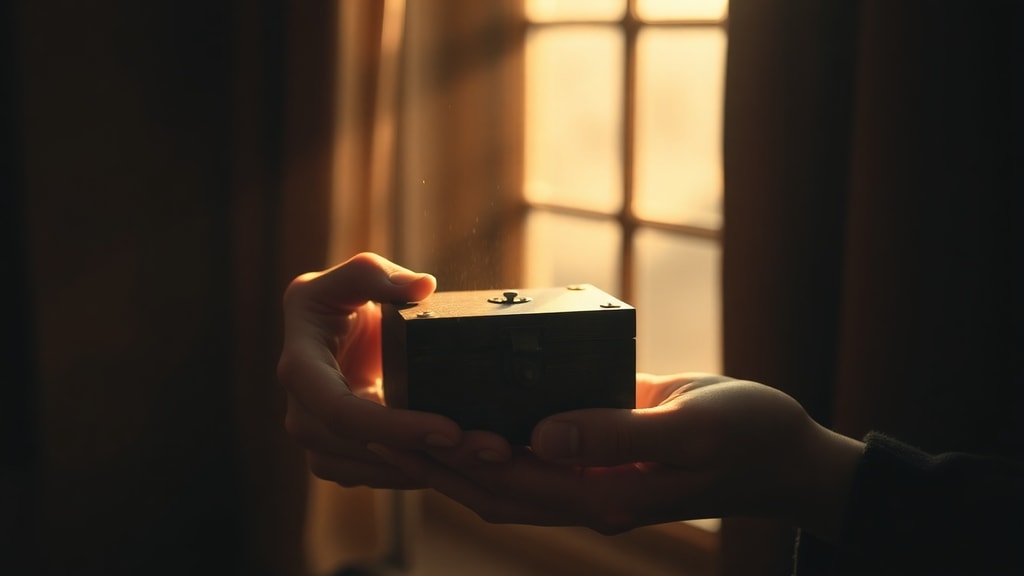
The Witness Who Cannot Testify
Consider the therapy session, that strange room where you pay to be heard. You describe their wound, their history, their particular spiral—and you do so without naming them, without the relief of specificity, without the therapist's ability to truly understand the shape of what you carry. You have become a witness who cannot testify, a reporter with no byline, a historian of events that will never enter any archive.
This is the excruciating architecture of coupled privacy. It is not the keeping of secrets from each other, which is its lesser, more common cousin. It is the keeping of secrets for each other, with each other, in a collaboration that has no audience and no applause.
The night you realize you've built this second self—this is the milestone. Not the moving in together, not the shared bank account, not the public declarations. The moment you understand that intimacy is not the confessional but the vault, that devotion sometimes means becoming the only witness to a story that cannot be told.
The Courage to Carry What We Know Alone
What does it cost, this carrying? And what does it build?
The cost is a certain thinning of the self. Your friendships become slightly less porous. Your family knows you slightly less well. The person you were before this vault—more open, more narratively complete—recedes like a shoreline you can no longer quite reach. You are not less yourself. You are differently distributed, some of your density now held in another person's story, in the space between what you know and what you can never say.
But the building is real and it is rare. In a culture that monetizes disclosure, that rewards the constant production of personal narrative, the vault is an act of resistance. You are saying: this matters enough to remain unsaid. This person matters enough to become invisible in my telling of my own life. The story I cannot share is the story that has most fundamentally shaped me, and I will honor its unshareability.
This is the courage the milestone demands. Not the courage of grand gesture, but the courage of daily, invisible restraint. The text you draft and delete. The conversation you redirect. The detail you swallow mid-sentence, feeling it burn like something that should have been spoken, knowing that its burning is the whole point.
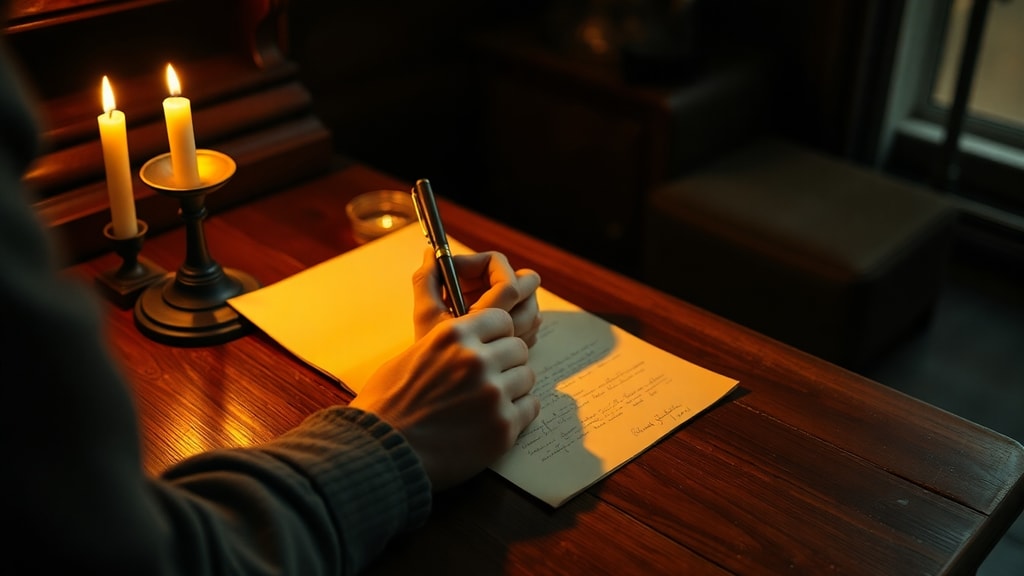
The Letter to the Future Vault-Keeper
There is a future self who will need to remember this. The self who has forgotten, perhaps, that such architecture was ever built, that such courage was ever practiced. The self who has become accustomed to the vault and no longer feels its strangeness, who needs to be reminded that this was a choice, a construction, a kind of love that had to be invented.
Some things deserve to be sealed against time. Not because they are shameful, but because they are sacred in their specificity. The particular way they laughed at 3 AM. The particular fear they whispered after the doctor's call. The particular dream they confessed in the gray space between sleeping and waking, when the vault was still under construction and they were testing whether you could hold what they needed to pour.
You could write to this future self. Not to confess what the vault contains—that would violate the very architecture it celebrates—but to honor the vault itself. To say: you built this. You chose this. You became someone who could carry what cannot be carried alone, and in doing so, you became something new.
This is exactly why I obsessed over end-to-end encryption and extreme server redundancy when building EterMail. Because I know that a letter written to the future—whether to your own future self or to someone you love, timed to arrive when the moment is right—needs to be guarded even more fiercely than a bank password. The vault isn't just a metaphor. It's infrastructure. And the words we seal against time deserve a vessel worthy of their weight.
The Truest Milestone
We live in an age of performed intimacy, where love is measured in visibility, where the relationship that does not appear on social media is suspected of not existing at all. Against this, the vault asserts a counter-ethic. The truest milestone is not the love we display but the courage to carry what we know alone.
The promotion you almost mentioned. The depression you stopped describing. The wound you named only as someone close to me. These are the invisible scaffolding of a love that has moved beyond display into something more demanding and more durable.
To become the vault is to accept a certain exile from the confessional culture, to trade the warmth of shared narrative for the colder, more permanent structure of kept promise. It is not comfortable. It is not photogenic. It will never trend.
But it lasts. The vault outlives the confessional. The password memorized without typing, the second self who knows what the first cannot say—these become the architecture of a love that has learned to hold its own weight, that has become, in the deepest sense, a structure capable of time.
And when the time comes, as it always does, to remember what we built and why, we may find that the most important letters were never sent. They were sealed. They were kept. They became, in their unsending, the truest words we ever held.
Some silences are not absences. They are the shape of devotion, pressed into the medium of time itself.
What is EterMail?
EterMail is a revolutionary time capsule service that allows you to send messages, photos, and videos to the future (up to 30 years). Seal your memories and thoughts today, and they'll be delivered when the time is right.
Time Capsule
Send messages up to 30 years in the future
Rich Media
Text, photos, and videos supported
Secure & Private
Your memories are safely encrypted
EterMail Team
We're the team behind EterMail, dedicated to helping you preserve and share timeless messages with your loved ones. Our mission is to make it easy to express your love, share your wisdom, and create lasting connections that transcend time.
Frequently Asked Questions about Love & Milestones
How do you build trust in a relationship through keeping secrets together?
What should I write in a letter to my future spouse about our private milestones?
How do you maintain your own identity while keeping your partner's confidences?
Related Articles

The Unconscious Milestone: Learning to Sleep Beside Someone Again
The truest intimacy isn't declared in daylight—it's the courage to be unconscious together. Discover why sleeping beside someone is love's quietest milestone.

The Night We Stayed: How Love's Unspoken Milestones Rewrite Who We Become
What if love's truest milestone isn't the celebration—it's the night you choose to stay on the bathroom floor when everything falls apart.
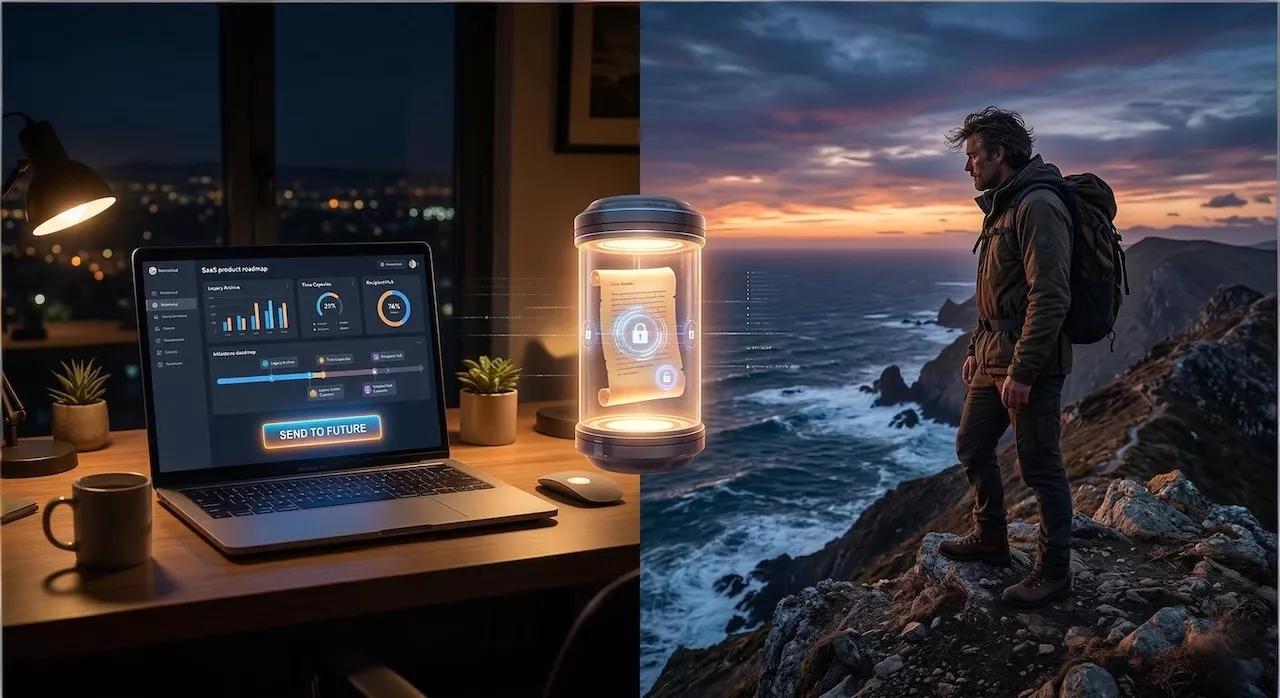
Why I Built EterMail: A Time Capsule for the People I Love Most
I’m a Product Manager who spends all week optimizing for the "immediate now." But getting lost off the grid on a mountain ridge made me realize I had zero infrastructure for the "forever." Here’s why I stopped worrying about conversion rates for a moment and built EterMail—a secure, tamper-proof digital time capsule for the people I love most.