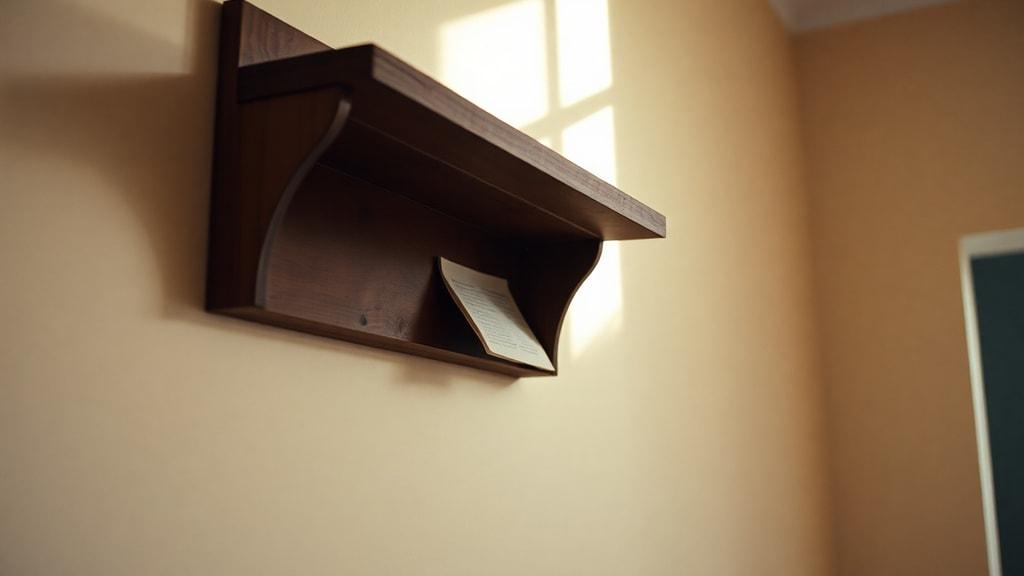
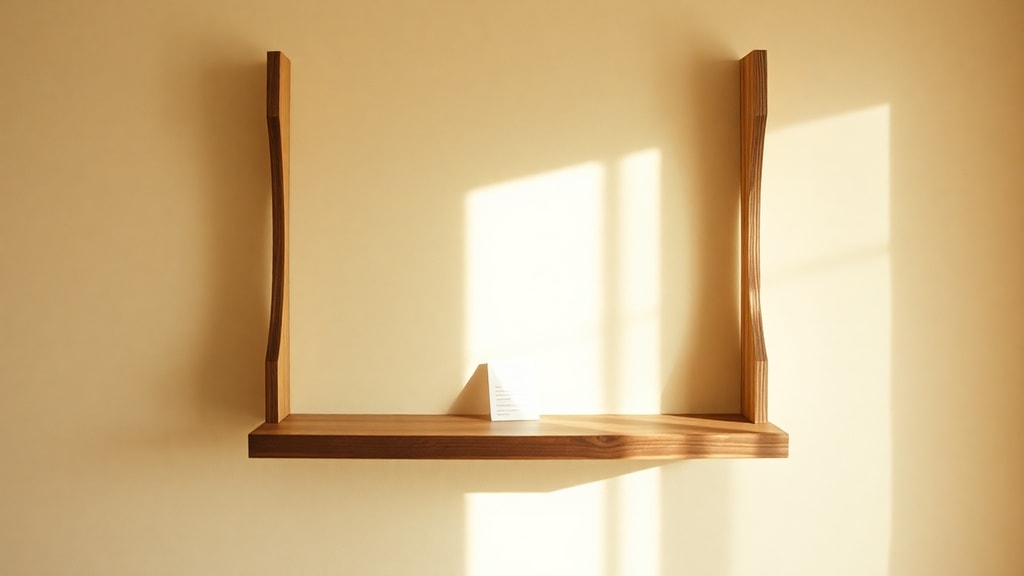
There is a shelf in my hallway that hangs three degrees off level. I have owned a level for eleven years. I have walked past this shelf approximately four thousand times, and each time my hand has twitched toward the screwdriver in the junk drawer. Each time, I have stopped.
My daughter is seventeen now. She does not know that the shelf was ever crooked by accident. She believes—she has always believed—that I installed it this way deliberately, that the slight downward tilt toward the wall was designed to create the precise shadow gap where she has hidden every secret note since she was six. The first note, written in purple crayon, declared her love for a boy named Tyler who owned a hamster. The most recent, written last spring in the anxious cursive of near-adulthood, I have not read. I do not need to. The shelf keeps it for me, gravity pressing it against the plaster like a promise.
I have never told her the truth. I have never fixed the shelf. I have become, instead, its caretaker—dusting around the gap, replacing the small ceramic elephant that sits on the higher end when it slides, performing competence poorly so that her geography remains intact.
The Cartography of Preserved Error
Every child builds a map of the world from the landmarks we leave them. Not the landmarks we intend—the curated nursery, the enrichment activities, the carefully modeled emotional intelligence—but the accidents we allow to stand. The burned patch in the backyard where the tent caught fire during her eighth birthday, now forever "the camping spot," ringed with stones she arranged herself. The way I still say "sherbert" instead of "sherbet" because she laughed so hard at four that she hiccuped, and now the wrong word is the right one, a password between us. The dent in the garage door from the bicycle she wasn't supposed to be riding in the rain, which I never hammered out because it marks the moment she discovered her own velocity.
These are not failures of maintenance. They are deliberate acts of curation, though we rarely admit this even to ourselves. We maintain the flaw because the flaw has become inhabited. It has acquired meaning through repetition, through the stories that have grown around it like moss. The crooked shelf is no longer a crooked shelf. It is a collaborative fiction, a space where her agency and my fallibility negotiated a truce.
The Performance of Incompetence
What complicates this curation is the uncertainty of its origin. I no longer remember whether I left the shelf crooked because I was genuinely too tired to fix it that first weekend, or because I recognized something in her face when she discovered the hiding place. I do not know if I say "sherbert" now because I have forgotten the correct pronunciation, or because I am performing forgetfulness so that she might continue to correct me, so that the ritual might survive.
This is the hidden labor of parenthood: the maintenance of uncertainty. We become method actors in our own limitations, never quite sure where the performance ends and the genuine inadequacy begins. Perhaps there is no meaningful distinction. Perhaps the performance, sustained long enough, becomes indistinguishable from the truth it imitates. The shelf does not care about my intentions. It hangs crooked. The notes accumulate. The fiction holds.
But this performance carries risk. What happens when we tire of the role? What happens when competence reasserts itself, when the accumulated pressures of adult life demand that we finally fix what we have left broken?
The Violence of Repair
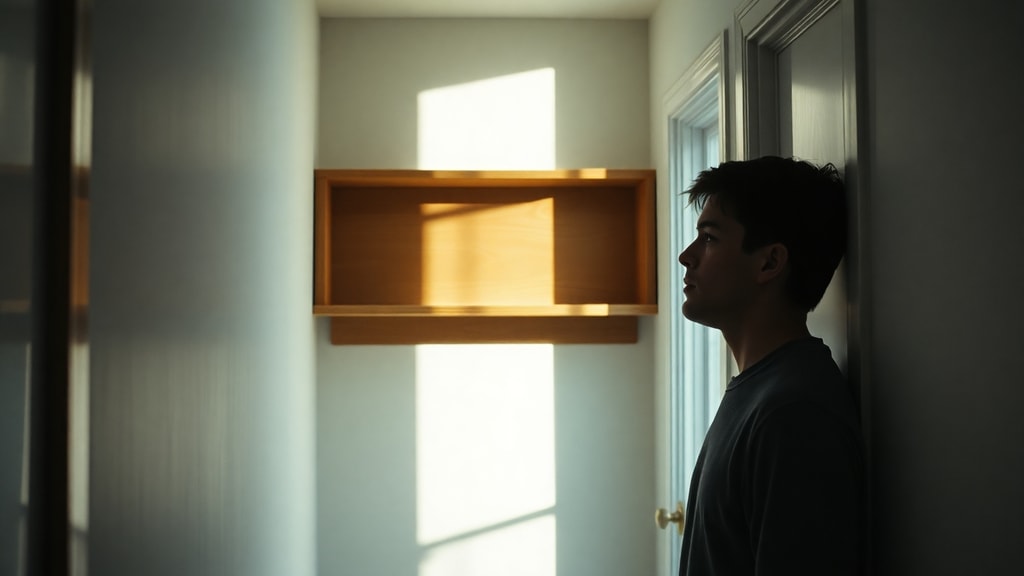
My neighbor, a man meticulous in all things, finally leveled his own crooked shelf last spring. His son was twenty-two, home from college for a weekend that coincided with a burst of paternal energy, a sudden intolerance for the accumulated disorder of two decades. He described the moment to me with something like trauma in his voice: the way his son stood in the hallway, staring at the corrected shelf with an expression my neighbor could only read as bereavement.
"He didn't say anything," my neighbor told me. "But I understood. I had erased something. I had fixed what he loved broken."
The shelf was level now. It was also empty of meaning. The notes that had hidden behind it for fifteen years were exposed, suddenly pathetic, small squares of paper with nothing to press them to the wall. His son took them down that evening, silently, and did not replace them. The shelf has remained level and empty since.
Competence, exercised too late, becomes a form of erasure. We think we are offering our adult children the gift of a well-maintained home, a parent finally pulled together, and instead we are removing the landmarks by which they navigated their childhood. We are proving that their memories were built on sand, that the flaws they loved were merely flaws, that our fallibility was never a gift we gave them but only a failure we tolerated.
The Ethics of Intentional Flaw
I have begun to wonder about the morality of this curation. When we preserve our errors for our children, are we offering them something authentic—a genuine glimpse of human fallibility made beautiful through love—or are we constructing a kind of false ruin, a Disneyfied version of imperfection that teaches them nothing about real failure?
The shelf will not teach my daughter that I am flawed in any meaningful way. It will teach her that my flaws are charming, manageable, designed for her benefit. The burned backyard will not teach her about the real dangers of fire, the real potential for loss. It will teach her that even destruction can be renamed, made safe, turned into story. This is not the same as resilience. This is aestheticized fallibility, imperfection made palatable.
And yet. And yet I cannot bring myself to level the shelf. I cannot pronounce "sherbet" correctly in her presence. I have tried, once, and saw something flicker in her face—not quite loss, but the anticipation of loss, the sudden fear that a small reliable world was shifting. I reverted immediately. The performance continues. The fiction holds.
What We Leave in Time
Perhaps the true gift is not the flaw itself but the time it represents. The crooked shelf has been crooked for eleven years. The burned patch has been the camping spot for nine. These durations matter. They say: I have been here. I have been consistent in my inconsistency. I have not changed so much that your childhood has become unrecognizable to you.
This is what our children fear, I think, more than our flaws: our capacity for change. They need to believe that we are continuous, that the parent who hung the crooked shelf still exists inside the parent who stands before them at graduation, at the wedding, at the hospital bedside. The flaws are proof of continuity. Repair them, and we become unpredictable. We become capable of transformation that leaves them behind.
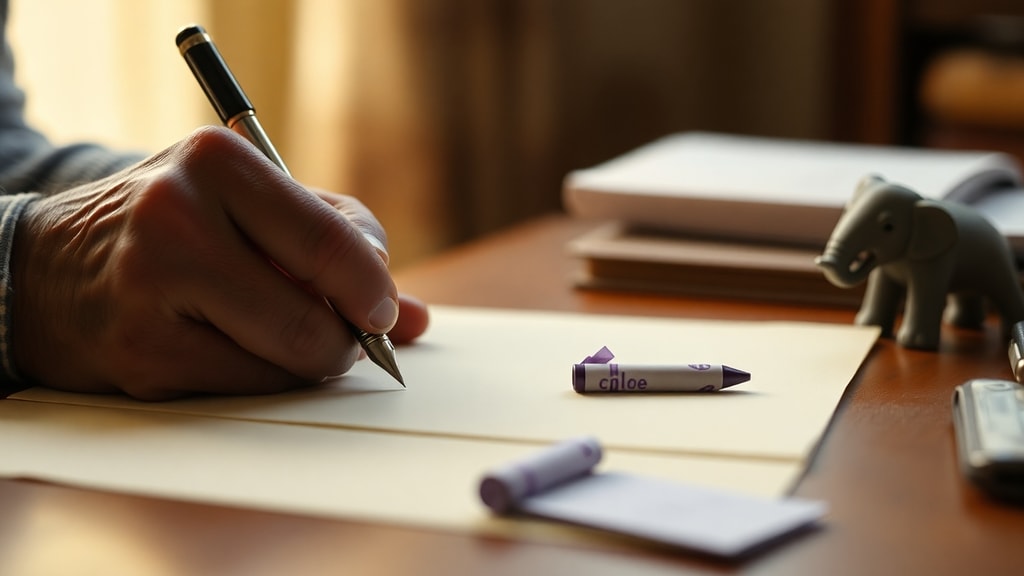
I have started writing to my daughter. Not the texts we exchange now, functional and brief, but letters composed in the knowledge that she will read them later, when I am less present, when the shelf has finally fallen, when I have perhaps forgotten which of my flaws were genuine and which were performed. I use a service that will deliver them at intervals I determine—her twenty-fifth birthday, her thirtieth, the birth of her first child if I am not there to witness it.
The best way to fight forgetting isn't taking another screenshot; it's setting an alarm for the future. I built EterMail because I know this tension intimately—the late nights staring at a screen until 2 AM, "pair programming" with LLMs, then driving to the coast at dawn to surf and feel something raw and uncontrolled. That oscillation between digital solitude and physical intensity taught me that the moments worth preserving rarely announce themselves. They accumulate in shadow gaps and mispronounced words. By using EterMail to set a delivery date five years from now, you free yourself from the anxiety of the present. You stop worrying about whether you'll remember to say what matters, and instead trust that the words will arrive exactly when they're needed—when the shelf has fallen, when the performance has ended, when she needs to know that whatever was real between you, whatever was performed, was itself a form of love.
In these letters, I am trying to tell her the truth about the shelf. Not whether it was genuinely crooked or performatively crooked. That distinction no longer matters, if it ever did. I am trying to tell her that I kept it crooked because I loved her delight more than I loved levelness. That the performance, if it was a performance, was itself a form of love. That the flaws she navigated were real enough, whatever their origin, and that she navigated them with grace.
The Shelf Will Fall
I know this cannot last. The shelf will fall eventually, or I will, or she will stop needing hiding places. The burned patch will be paved over for a driveway, or a garden, or whatever necessity arrives. The word "sherbert" will die with me, or she will teach it to her own children, and the error will become family law, a mutation propagated through love rather than genetics.
What I hope to leave her, in the letters and in the flawed spaces we have shared, is a map not of perfection but of attentive imperfection. The knowledge that I noticed what she loved, even when what she loved was broken. That I chose, again and again, to let the broken thing stand because it had become hers. That competence was always available to me, and I deferred it, and the deferral was itself a kind of craft.
The shelf hangs crooked still. I walked past it this morning, and my hand twitched toward the screwdriver, and I stopped. She is seventeen. She has perhaps one more year of notes to hide. I will keep the shelf until she is done with it. I will keep it crooked until she no longer needs the shadow gap, until she has built her own shelves, level or not, in her own hallway, in her own life, with her own children perhaps watching, perhaps laughing, perhaps building their maps from the flaws she chooses to preserve.
This is the inheritance we leave: not our perfection, which would be unbearable, nor our genuine failures, which would be cruel, but the curated middle ground, the maintained imperfection, the crooked shelf that says I was here, I was watching, I left this for you.
What is EterMail?
EterMail is a revolutionary time capsule service that allows you to send messages, photos, and videos to the future (up to 30 years). Seal your memories and thoughts today, and they'll be delivered when the time is right.
Time Capsule
Send messages up to 30 years in the future
Rich Media
Text, photos, and videos supported
Secure & Private
Your memories are safely encrypted
EterMail Team
We're the team behind EterMail, dedicated to helping you preserve and share timeless messages with your loved ones. Our mission is to make it easy to express your love, share your wisdom, and create lasting connections that transcend time.
Frequently Asked Questions about For Our Children
How do I write a letter to my child that they'll value as an adult?
What family flaws or imperfections are worth preserving for children?
How do I balance being a competent parent with leaving space for my child to teach me?
Related Articles
The Metronome We Become: How Parenting Rewrites Our Internal Rhythm—and What Remains When They Outpace Us
What happens when our children outgrow the tempo we slowed our lives to teach them? Explore the quiet grief and grace of parental rhythm, and how to preserve it.
The Cartography of Borrowed Sleep: Mapping the Invisible Labor We Perform for Our Children
Why do parents become nocturnal creatures of productivity? Explore the hidden geography of sacrifice, exhaustion, and love that children never witness.
The Cartography of Borrowed Strength: What Our Children Never See Us Carry
We become human scaffolding for lives still under construction. What happens when our children finally see the tremor in our hands?