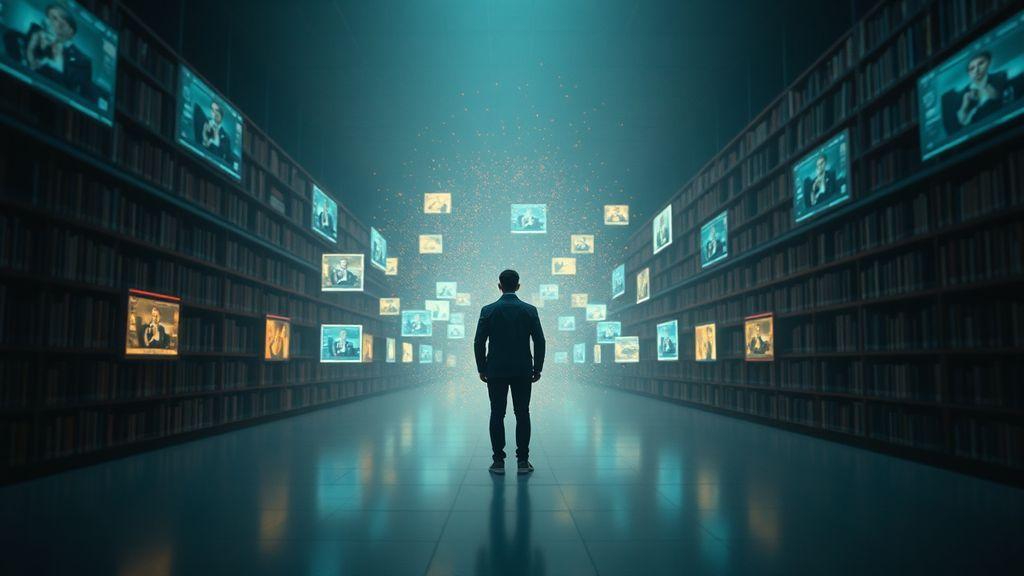
The Moment You Realize You Don't Own Yourself
It hits you at strange hours. Three in the morning, scrolling through a photo app that no longer recognizes your face. Or during the hollow click of a "permanently deleted" confirmation you never meant to trigger. Perhaps it arrives with the email announcing yet another service shutdown, your data—your years—compressed into a download link that expires in thirty days.
You have spent a decade, maybe two, building a digital self. The 3 AM thoughts tapped into notes you'll never find again. The voice messages from someone who died, trapped in a chat app you stopped opening. The search history that mapped your grief, your ambition, your secret curiosities. And yet you have never once held a backup of your own soul.
This is the quiet crisis of our era: we are the most documented generation in human history, and the least certain our documentation will survive us.
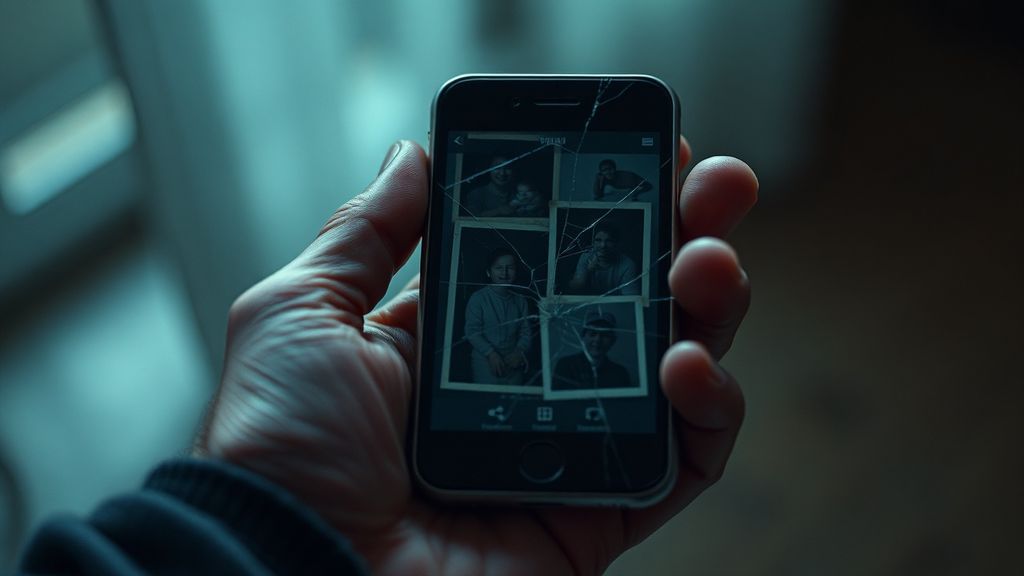
The Platform Problem: Borrowed Memory
Consider the architecture of modern memory. Your photographs live in Google's algorithms. Your letters—once sealed with wax, now sealed with encryption you don't control—reside in Meta's servers. Your voice, your location history, the pattern of your sleep, the rhythm of your heart: all rented space.
The platforms offer a devil's bargain. Infinite storage. Instant retrieval. The illusion of permanence in exchange for the one thing you cannot replicate: sovereignty over your own narrative.
We rarely examine the terms until catastrophe forces our hand. The account hacked. The ex-partner who won't return access to shared memories. The parent who dies without unlocking their phone, their final years locked behind a six-digit code that died with them. Or simply the slow erosion of corporate interest—services shuttered, data formats abandoned, the digital equivalent of a library burning because no one maintained the roof.
Research from the University of California suggests that personal digital archives have a half-life of approximately ten years without active migration and maintenance. Your meticulously curated Instagram from 2014? Already degrading. The proprietary formats of your first digital camera? Increasingly unreadable. We have built a civilization of memory on sand, and the tide is patient.
Privacy as an Act of Future Compassion
Here is the reframe that matters: digital privacy is not primarily about hiding. It is about choosing.
Choosing who holds your story. Choosing which versions of you persist. Choosing to preserve the vulnerability of a 2 AM confession for the person you will become, rather than the advertising algorithm that wants to monetize your insecurity.
When we speak of privacy in purely technical terms—end-to-end encryption, zero-knowledge architecture, decentralized storage—we miss the human architecture beneath. These are not features. They are forms of care extended across time. The care of your future self, who deserves to meet your present self without corporate mediation. The care of your children, who deserve to inherit your voice without also inheriting your data profile. The care of your grief, which deserves sanctuary from the analytics that would turn mourning into engagement metrics.
The Three Breaches We Don't Talk About
We fixate on the dramatic hacks—the headlines, the class-action lawsuits, the credit monitoring services offered as penance. But three quieter breaches shape more lives:
The Breach of Continuity. Your digital identity fragments across dozens of platforms, each with different policies, different vulnerabilities, different appetites for your attention. You are not one self online. You are shards. And when platforms die or change terms, those shards do not automatically reassemble.
The Breach of Intention. The platform remembers what you have forgotten. It surfaces the photograph you took during your divorce, the message sent in anger, the search made in illness. Your digital memory lacks the mercy of human forgetting—the editorial intelligence that knows some chapters deserve to fade.
The Breach of Succession. We have no cultural protocol for digital death. Passwords die with bodies. Accounts linger in suspended animation, accumulating notifications no one will read. The digital estate planning industry barely exists, yet the average person leaves behind more than 100 digital accounts—a scattered archive that becomes, for survivors, a second grief.
Reclaiming the Narrative: Practical Sovereignty
What does it mean to actually own your memory in an age of cloud dependency?
It begins with architectural humility. Recognizing that no single platform deserves your complete trust. The photographs that matter most should live in three places: your encrypted personal archive, a physical medium you control, and—if you choose—a platform you use for access, not for preservation.
It continues with format consciousness. Open standards endure. Proprietary formats expire. The letter written in plain text will outlast the letter written in a discontinued app's custom format. Your future self will thank you for simplicity.
And it requires temporal intentionality—the deliberate practice of sending messages across time to the people who will need them. Your child at eighteen. Your spouse at your fiftieth anniversary. Yourself at retirement, when the accumulated weight of unexamined memory threatens to bury you. These are not sentimental gestures. They are acts of narrative engineering, ensuring that the story of you reaches its intended audience with your voice intact.

The Encryption of Love
There is a particular intimacy to messages meant for the future. The letter to your daughter when she becomes a mother herself. The voice memo for your brother, scheduled to arrive on the anniversary of your shared grief. The confession of who you really were, released only when you are no longer here to soften it.
These communications require something the platforms cannot provide: guaranteed latency. The certainty that the message will wait, untouched by algorithmic surfacing, unmonetized, unanalyzed, until the moment you designated. This is not merely technical. It is ethical. It is the recognition that some human exchanges deserve protection from the present's constant demand for immediate consumption.
When we encrypt our future correspondence, we are not hiding from surveillance. We are insisting on the dignity of delayed understanding. The future deserves to receive our words as we intended them, not as the platform's recommendation engine would prioritize them.
What You Can Do This Week
I know something about building for the future while the present demands everything. For years, I've spent my nights coding—sometimes until 2 or 3 AM, alone with the glow of the screen, wrestling with architectures that might outlast me. There's a strange loneliness to it, but also a clarity: you're building something that will speak when you no longer can. That sensation—of sending a signal across time to someone you may never meet—drove me to create EterMail. I wanted to give that power to everyone, not just engineers who can script their own cron jobs.
The shift from borrowed memory to owned memory does not require technical expertise. It requires decision:
- Inventory your scattered self. List the platforms holding memories you would mourn. Consider what it would cost—in money, in time, in emotional labor—to extract them.
- Choose your anchors. Select three to five artifacts that represent who you are: a letter, a photograph, a recording. Ensure these exist in formats and locations you control.
- Write across time. Compose one message to a future version of yourself or a loved one. Schedule it for a meaningful date. Experience the strange power of speaking to someone who does not yet exist in the moment they will receive your words. The best way to fight forgetting isn't taking another screenshot; it's setting an alarm for the future. By using EterMail to set a delivery date 5 years from now, you completely free yourself from the anxiety of the present.
- Begin the conversation. Ask your parents about their digital wishes. Share your own. The inheritance of memory begins with the acknowledgment that it must be passed, deliberately, from hand to hand.
The Archive of the Self
We are, each of us, curators of an impossible museum. The collection grows faster than we can catalog it. The building shifts beneath our feet. The admission price—our attention, our data, our sovereignty—keeps rising.
Yet the fundamental human need persists: to be known, across time, by those we love. To leave evidence that we were here, that we felt deeply, that we struggled toward something worth remembering.
Digital privacy, properly understood, is the infrastructure of this persistence. It is the vault that outlasts the bank. The time capsule that survives the company. The letter that reaches its destination because no intermediary found reason to intercept it.
Your story deserves more than borrowed space. It deserves the architecture of care—built to endure, encrypted against erosion, timed for the moments when it will matter most.
The platforms will not build this for you. They have different incentives, different timelines, different definitions of what memory is worth. But you can build it yourself. One letter. One encrypted archive. One deliberate act of preservation at a time.
Your future self is waiting. So are the people you have not yet become for them.
What is EterMail?
EterMail is a revolutionary time capsule service that allows you to send messages, photos, and videos to the future (up to 30 years). Seal your memories and thoughts today, and they'll be delivered when the time is right.
Time Capsule
Send messages up to 30 years in the future
Rich Media
Text, photos, and videos supported
Secure & Private
Your memories are safely encrypted
EterMail Team
We're the team behind EterMail, dedicated to helping you preserve and share timeless messages with your loved ones. Our mission is to make it easy to express your love, share your wisdom, and create lasting connections that transcend time.
Frequently Asked Questions about Digital Privacy & Security
What happens to my digital accounts when I die?
How can I preserve my digital photos for future generations?
Is cloud storage safe for personal memories and sensitive documents?
Related Articles
The Unprovable Self: Why Digital Privacy Means Keeping Parts of Yourself Off the Ledger
When every system demands proof of who you are, the most radical act of digital privacy may be choosing what remains unfiled, unprovable, and finally yours.
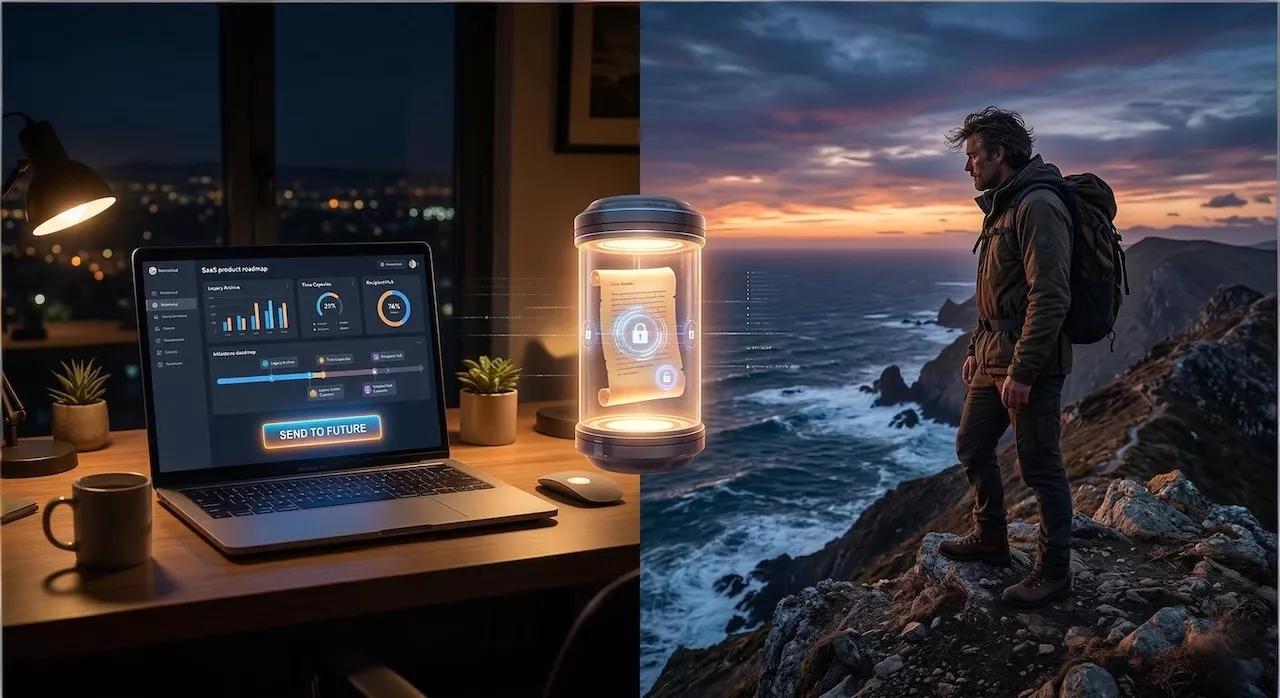
Why I Built EterMail: A Time Capsule for the People I Love Most
I’m a Product Manager who spends all week optimizing for the "immediate now." But getting lost off the grid on a mountain ridge made me realize I had zero infrastructure for the "forever." Here’s why I stopped worrying about conversion rates for a moment and built EterMail—a secure, tamper-proof digital time capsule for the people I love most.

The Body Remembers First: Relearning Touch When Love Has Gone Cold
How do we touch again after anger builds walls? Explore the quiet courage of physical reconciliation—and why the body heals before the heart.