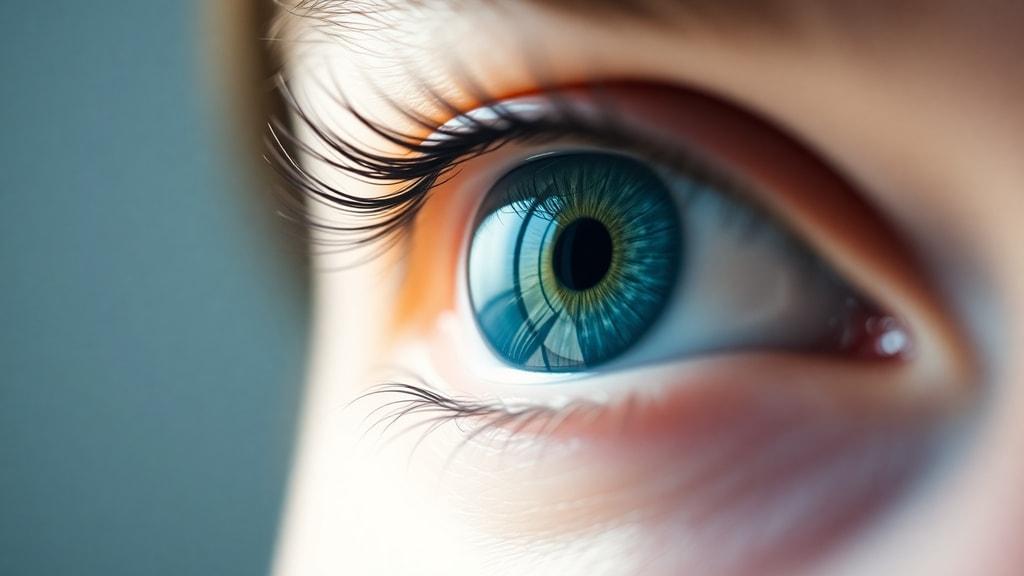
There is a peculiar loneliness that arrives the first time you catch your own reflection in someone else's smart glasses. You are mid-conversation, perhaps confessing something small—a fear about work, a memory of your father—and you notice the faint amber light pulsing at the temple. You realize your face, your micro-expressions, the particular way your eyes soften when you speak of grief, are being parsed into vectors. Indexed. Compared against a database you will never be permitted to see.
This is not science fiction. This is the quiet surrender of the final unrecorded vantage point from which you experience the world.
The Intimate Geography of Surveillance
We have grown accustomed to the idea that our phones listen, our browsers remember, our locations form permanent constellations in server farms. But these intrusions operate at a distance. They require our hands, our pockets, our conscious engagement. The phone must be retrieved. The app must be opened. There remains, however thin, a membrane of intention between us and the recording.
Smart glasses dissolve that membrane. They sit at the bridge of your nose, millimeters from the organ that processes 80% of your sensory information. They do not merely capture what you choose to photograph. They capture what you look at. What you linger on. What you flinch from. The stranger whose distress you observe for three seconds longer than social convention permits. The ex-lover across the restaurant whose presence your eyes betray before your voice can compose itself.
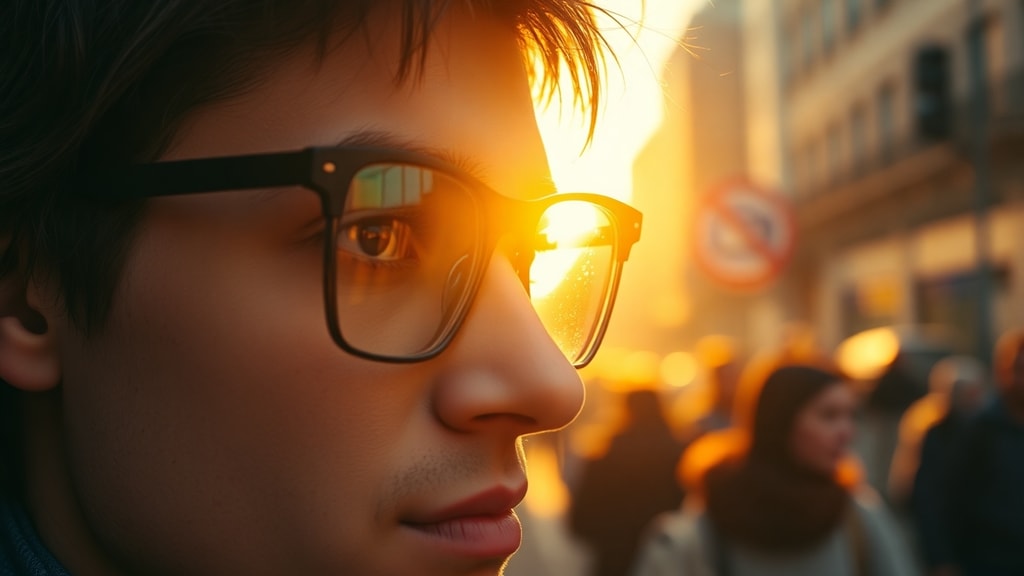
The eyes, neuroscientists remind us, are not merely cameras. They are prediction engines, constantly forecasting where meaning will emerge next. Our saccades—those rapid, involuntary eye movements—reveal desire before we consciously know it ourselves. When surveillance systems learn to read these patterns, they do not merely see us. They anticipate us. They know where our attention will travel before we arrive there.
The Pentagon Partnership and the Architecture of Consent
Meta's collaboration with a Pentagon-linked supplier to prototype face recognition for its glasses represents something more consequential than another corporate overreach. It signals the militarization of civilian sight. The same biometric architectures developed for identifying targets in conflict zones are being refined for deployment at dinner parties, in classrooms, on first dates.
The consent mechanisms here are farcical by design. You do not sign a release form when entering a room where someone wears these devices. You are not notified that your face has been extracted, templated, stored. The person recording you may not even know—the prototype may be operating in ambient mode, the user as unwitting as you are. Consent becomes a fiction we tell ourselves while the infrastructure proliferates beneath the threshold of conscious choice.
This matters because the face is not neutral data. It is the primary interface through which we recognize kinship, establish trust, negotiate belonging. Anthropologists have documented how facial recognition constitutes the foundation of human sociality from infancy. We are, quite literally, wired for face-to-face encounter. To weaponize this channel—to transform every encounter into a potential identification event—is to restructure the evolutionary grammar of human connection.
The Gaze as Commodity
What does it mean to surrender your gaze to systems trained without your participation? Consider the asymmetry: the corporations and agencies building these tools operate behind walls of classification and trade secrecy. Your face, meanwhile, is exposed. You cannot rotate your credentials. You cannot change your irises after a breach. Biometric data is the ultimate non-fungible self—and we are giving it away for the convenience of hands-free photography.
The commercial applications will prove irresistible. Imagine glasses that identify every person you meet, whispering their names, their social scores, their purchasing history into your ear. The awkwardness of forgotten acquaintances, eliminated. The uncertainty of strangers, resolved into full profiles. We will call this augmentation. We will call it frictionless social navigation. We will not call it what it is: the transformation of every human encounter into a transaction of extracted data.
And yet. There persists something in us that resists this total accounting. The glance held too long. The deliberate looking-away. The eyes that fill with tears and refuse explanation. These are the residual territories of interior life, the spaces where we remain mysteries even to ourselves. The question posed by this technology is whether we will permit these spaces to survive, or whether we will accept their colonization as the inevitable price of digital modernity.
Reclaiming the Unrecorded
The response to surveillance infrastructure cannot be purely defensive—privacy settings, regulatory frameworks, opt-out mechanisms. These are necessary but insufficient. They accept the framing that the default condition of digital life is extraction, with privacy as a limited exception to be negotiated.
What if we inverted this? What if we began from the premise that certain experiences merit protection not because they are shameful but because they are sacred? The unrecorded conversation between parent and child. The letter composed in solitude, not for immediate transmission but for deliberate delay. The memory preserved for a future self who may need evidence that she was once different, once hopeful, once here.
This is where the logic of the time capsule becomes politically meaningful. Not as nostalgia, but as temporal resistance. To write a letter to your future self, to seal it with encryption and intention, to specify that it arrive only when years have elapsed—this is to practice a form of digital autonomy. You are asserting that your memories belong to a timeline you control, not to the perpetual present of surveillance capitalism.
I spend a lot of nights alone with a screen, pair-programming with LLMs until 2 AM, mapping architectures that most people will never see. That extreme digital solitude taught me something about what it means to exist across time—how the person typing at midnight is already a ghost to the person who will wake at eight, how every conversation with a machine is a dialogue with something that outlives the moment. The loneliness of that isn't tragic. It's clarifying. It makes you hunger for communications that resist the ephemeral, that carry weight precisely because they refuse to be consumed in the instant they're produced.
The encryption matters not because you have something to hide, but because you have something to protect. End-to-end encryption ensures that your words remain yours through the years of their dormancy. They are not scanned for advertising potential. They are not training data for sentiment analysis. They are letters in the classical sense: communications that travel through time sealed, arriving only when the intended moment permits their opening.
The Self You Will Not Recognize
The deeper question, beyond any single technology, is whether we will still recognize ourselves in a world where every gaze is potentially harvested. The self is partly constituted by what it forgets, by what it fails to record, by the encounters that dissolve into impression rather than documentation. There is a version of you that exists only in the unphotographed afternoon, the unshared meal, the face seen once and never identified.
These unrecorded experiences are not losses. They are the negative space that gives form to a life. Remove them, and you do not achieve more complete documentation. You achieve a different kind of being entirely—one whose memories are always already externalized, whose gaze is always potentially someone else's data to exploit.
This is exactly why I obsessed over end-to-end encryption and extreme server redundancy when building EterMail. Because I know that a letter written to the future needs to be guarded even more fiercely than a bank password. The best way to fight forgetting isn't taking another screenshot; it's setting an alarm for the future. By using EterMail to set a delivery date 5 years from now, you completely free yourself from the anxiety of the present. A message to your daughter when she turns eighteen, composed while she is still learning to read. A letter to your spouse for your tenth anniversary, written in the difficult first year when you were not certain you would arrive there together. These communications require time to mature. They require that the sender not know precisely who the recipient will become. They preserve a space of temporal uncertainty that face-recognition systems, operating in the eternal now, cannot penetrate.
To resist this is not to reject technology. It is to insist on technological design that honors temporal depth, that permits the deliberate delay, the chosen opacity, the encrypted future. The tools we build for memory should serve the complexity of human time—not flatten it into the perpetual present of surveillance and extraction.
Your eyes remain, for now, the final frontier. What you choose to look at, how long you choose to look, whether you permit that looking to be captured and converted—these are decisions that shape not only your privacy but your capacity for unguarded encounter. The question is not whether you are being watched. It is whether you will still know how to look, how to be seen, how to remain partially unknown even to yourself, in a world that demands total transparency as the price of participation.
Some windows should stay open only to the weather. Some letters should arrive only when the recipient is ready to be changed by them. Some gazes should remain, stubbornly, unrecorded—the last territory of a self that belongs, finally, to time and not to data.
<
What is EterMail?
EterMail is a revolutionary time capsule service that allows you to send messages, photos, and videos to the future (up to 30 years). Seal your memories and thoughts today, and they'll be delivered when the time is right.
Time Capsule
Send messages up to 30 years in the future
Rich Media
Text, photos, and videos supported
Secure & Private
Your memories are safely encrypted
EterMail Team
We're the team behind EterMail, dedicated to helping you preserve and share timeless messages with your loved ones. Our mission is to make it easy to express your love, share your wisdom, and create lasting connections that transcend time.
Frequently Asked Questions about Digital Privacy & Security
How can I protect my biometric data from unauthorized facial recognition?
What makes eyes particularly vulnerable to privacy invasion compared to other biometric data?
Why is temporal delay important for preserving digital privacy?
Related Articles
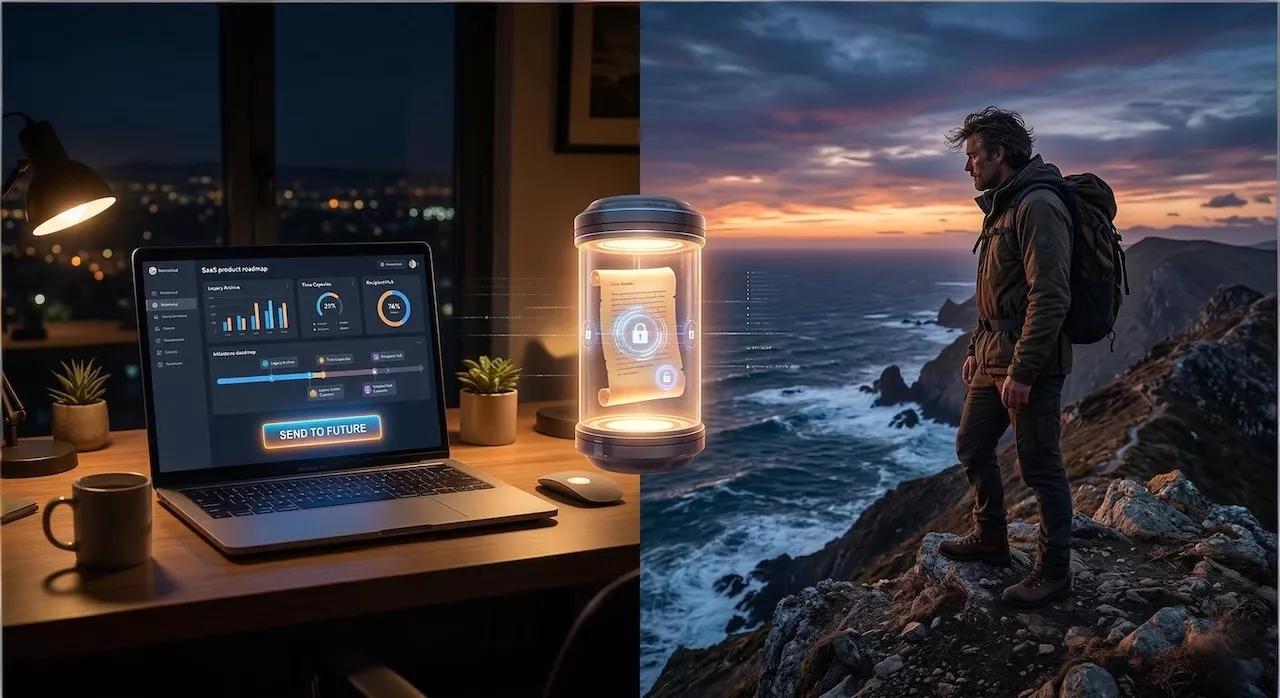
Why I Built EterMail: A Time Capsule for the People I Love Most
I’m a Product Manager who spends all week optimizing for the "immediate now." But getting lost off the grid on a mountain ridge made me realize I had zero infrastructure for the "forever." Here’s why I stopped worrying about conversion rates for a moment and built EterMail—a secure, tamper-proof digital time capsule for the people I love most.

The Cartography of Inherited Scent: How We Become Perfumers of Love for Our Children, and What We Lose in the Translation
We curate our very chemistry for our children—until they outgrow the fragrance of our love. What remains when they no longer recognize us as home?
The Last Time You Listen to Their Voicemail: On the Acoustic Archaeology of Love's Residue
Why deleting a loved one's voicemail marks a profound milestone. The courage to let voice become memory, not digital proof, and how we carry love forward.