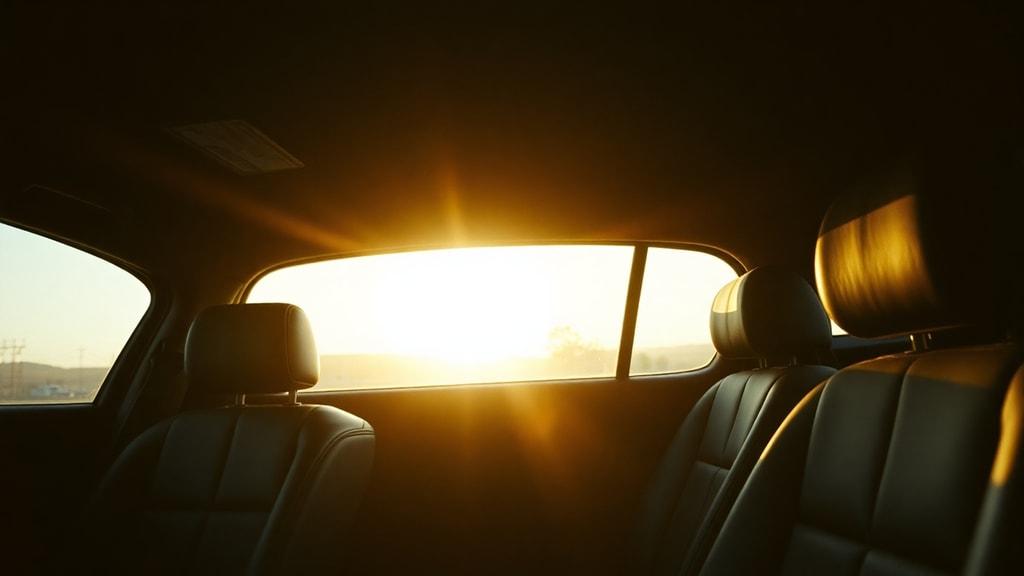
The Afternoon You Hit Scan
The afternoon you finally change the radio preset in the car—the one they programmed to the classical station you never listened to, the one you drove past in silence for two years rather than endure the solo cello—and you hit the scan button without ceremony, landing on something with a beat, a voice singing about summer. You don't pull over. You don't cry. You just drive faster than the speed limit for the first time since the funeral, and the wind through the cracked window feels like something you chose.
This is not the grief they write books about. There are no casseroles, no sympathy cards for the moment you realize the passenger seat has been pushed back to their leg length for twenty-six months. No one sends flowers when you finally angle the rearview mirror to your own eyes, when you discover that your own height changes the geometry of the road entirely, that intersections you thought you knew have blind spots you never noticed because someone taller was always watching.
The car becomes a museum of motion. A vehicle that outlasted two lives, now learning to carry only one.

The Geography of Vehicular Grief
We underestimate how much intimacy lives in a shared vehicle. The glovebox where their expired registration still lives because you can't bear to be the one to remove it. The accumulated coffee cups in the door well, their brand, not yours. The way they always turned the air vents upward, you always downward, a silent negotiation of climate that now you settle alone, choosing your own temperature without the small war of compromise.
For two years, you drove like a custodian of their habits. You kept the classical preset because removing it felt like a violence. You pushed the seat back before exiting, a ritual of maintenance, as if the car still belonged to both of you and you were merely its temporary steward. You drove past their office building on the route home not because it was efficient but because deviation felt like betrayal, as if the asphalt itself held memory and you were responsible for its preservation.
But grief, like a vehicle, requires maintenance or it rusts. And there comes a point where preservation becomes performance, where remembering becomes a kind of forgetting yourself.
The Small Ceremonies of Letting Go
Healing does not arrive with the grand gesture. It arrives in the mundane, the almost embarrassing: the first time you eat at the restaurant without ordering their favorite appetizer to keep the memory present. The first time you sleep on their side of the bed because your shoulder hurts and that was always the better angle. The first time you throw away the shampoo they left in your shower, not because you've forgotten them, but because you've finally remembered yourself.
The car is where these small ceremonies accumulate. You begin with the practical: an oil change overdue by months because you were driving so little, conserving miles as if mileage were memory. The mechanic finds their sunglasses under the seat, and you take them home not to keep but to hold, just for an evening, before placing them in the donation box with the other artifacts that no longer fit your architecture.
You do not discard. You graduate. The expired registration stays another month, then another, until one morning you remove it not with ceremony but with necessity, the glovebox finally holding only your own insurance cards, your own emergency contacts, your own proof that you are still here, still insurable, still driving toward something.

Learning to Carry Only One
What does it mean to heal when the vehicle that held both of you now learns to carry only one? It means discovering that the car has a personality you never knew, preferences you never tested. Without their weight in the passenger seat, the suspension rides differently. Without their conversation, the silence is not empty but spacious, room for your own thoughts to stretch and find their own rhythm.
You begin to take roads they never liked. The highway with the construction they always avoided becomes your shortcut. The scenic route they found inefficient becomes your Sunday ritual. You develop your own relationship with the vehicle, one that does not erase the past but makes room for a future, however unmapped.
The car becomes a document of your own becoming. The miles accumulate in your own patterns now. The coffee cups are your brand. The presets are your stations, your weather reports, your podcasts about subjects they never cared for. And sometimes, late on a highway when the right song comes on, you speak to them not with longing but with update, telling them about the road they never saw, the bridge that finally opened, the way the sunset looks from this angle you discovered alone.
The Strange Mercy of Motion
There is something about driving that mirrors grief's own logic. Both are forward movements that feel backward. Both require you to keep your eyes ahead while the rearview holds what you cannot change. Both teach you that control is an illusion—you steer, you brake, you signal, but the road delivers what it delivers: weather, obstacles, the sudden beauty of a landscape you never planned to witness.
The car becomes your practice of living in two times simultaneously. The present moment of navigation, the past alive in muscle memory. Your hand still reaches for the gear shift the way they taught you, though you've long since developed your own technique. Your eyes still check the passenger mirror they preferred, though you've learned to trust your own angles. These habits are not failures of moving on. They are evidence of how thoroughly you were changed by another person's presence, how their way of being in the world became woven into your own motor functions, your own ways of seeing.

The Letter You Write at the Rest Stop
At a rest stop two hundred miles from anywhere you used to go together, you find yourself writing. Not a journal, not a poem, but something addressed: to them, to yourself, to whoever finds this particular solitude recognizable. You describe the road, the weather, the song that finally replaced the cello. You describe the strange freedom of choosing your own temperature, your own route, your own grief's pace.
I know this particular solitude. I've spent too many nights alone with a screen, pair-programming with AI until 2 AM, chasing some architecture that felt more alive than the quiet room around me. That digital solitude taught me something about voices across time—how we reach toward presence that isn't there, how we build bridges to the future because the present feels too thin to hold us. The weekends I escape into mountains or ocean, the harsh wind stripping away illusion, remind me that the unrepeatable moment is all we truly own. Yet I keep returning to the keyboard, building, because some part of me believes we can construct vessels that outlast our forgetting.
The letter you write at this rest stop—neither fully who you were with them nor fully who you are becoming alone—deserves to survive. Not as a screenshot that buries itself in a camera roll, not as a note app entry that dissolves into the cloud. The best way to fight forgetting isn't taking another screenshot; it's setting an alarm for the future. By using EterMail to set a delivery date 5 years from now, you completely free yourself from the anxiety of the present. You might schedule it for the anniversary you always dreaded, or for a random Tuesday when you suspect you'll need reminder that healing is not linear but cumulative. Write to your future self the way you once spoke to them in the passenger seat: updating, narrating, making the journey visible. The digital time capsule becomes not an escape from grief but a container for its evolution, proof that you were here, in this vehicle, in this weather, choosing to keep moving.
What the Road Teaches Eventually
The final lesson the car teaches is that outlasting is not the same as replacing. The vehicle that held both of you can hold you now without erasure. The mirror adjusted to your eyes does not deny their height. The radio playing summer songs does not silence the cello forever; it simply makes room for other seasons, other sounds, other ways of being accompanied in solitude.
You drive now for your own errands, your own weather, your own road. And sometimes, in the particular quality of light through the passenger window, you feel them present not as absence but as architecture, the way a building holds the memory of its architect without requiring his daily presence. You have become, finally, the sole driver of your own vehicle, your own life, your own grief's strange and ongoing journey.
The solo cello plays still, somewhere in the frequencies, but you have learned to change the station when you need to, and to change it back when you need that too. The car, faithful machine, learns each new frequency. The road, indifferent and generous, continues to deliver you to destinations you could not have mapped while driving for two.
And on the afternoon when you finally hit scan, when the voice singing about summer replaces the solo cello, you do not pull over. You do not cry. You simply drive, faster than the speed limit, into your own weather, your own road, your own becoming—carrying everything that fits, and releasing, gradually, what must be released to keep moving.
Frequently Asked Questions
What are healthy ways to process grief while maintaining daily routines?
Healthy grief processing often involves small, intentional modifications rather than dramatic upheavals. Allow yourself to maintain certain rituals that bring comfort while gradually introducing new patterns that reflect your current reality. The key is recognizing when preservation becomes performance—when keeping a routine serves memory more than it serves your present wellbeing. Many find that writing about their experience, even briefly, helps bridge the gap between who they were and who they are becoming.
How do physical spaces hold memory after losing someone?
Physical spaces become palimpsests of shared experience, layered with habitual gestures and sensory associations. The car, the bedroom, the kitchen chair—all accumulate meaning through repetition and co-presence. After loss, these spaces require a delicate recalibration: honoring the memory without becoming trapped in it. Often, the most healing approach is to change one small element at a time, allowing yourself to feel the impact of each adjustment before making the next, so that the space gradually reflects your own living presence again.
Why do small gestures of letting go sometimes feel harder than major milestones?
Small gestures lack the social recognition and narrative structure that surround major milestones, leaving us to navigate them without external support or validation. Changing a radio preset, adjusting a mirror, or removing an expired registration carries no ceremonial weight, yet these acts represent the daily, ongoing reality of absence more accurately than anniversaries or memorials. They force us to confront the mundane persistence of grief, the way it lives in muscle memory and automatic gestures, making their alteration feel like a more intimate and unwitnessed form of loss.
What is EterMail?
EterMail is a revolutionary time capsule service that allows you to send messages, photos, and videos to the future (up to 30 years). Seal your memories and thoughts today, and they'll be delivered when the time is right.
Time Capsule
Send messages up to 30 years in the future
Rich Media
Text, photos, and videos supported
Secure & Private
Your memories are safely encrypted
EterMail Team
We're the team behind EterMail, dedicated to helping you preserve and share timeless messages with your loved ones. Our mission is to make it easy to express your love, share your wisdom, and create lasting connections that transcend time.
Frequently Asked Questions about Healing & Remembrance
What are healthy ways to process grief while maintaining daily routines?
How do physical spaces hold memory after losing someone?
Why do small gestures of letting go sometimes feel harder than major milestones?
Related Articles
The Unpotted Plant: On Healing When You Finally Stop Keeping Something Alive
What happens when you stop performing care for a life that was never yours to keep? A meditation on grief, the objects we inherit, and the strange relief of letting something die.
The Quiet Inheritance: When Their Clothes Become Your Continuation
What happens when you stop dressing around their absence and start wearing their clothes forward? An intimate exploration of grief, fabric, and continuation.

The Morning You Forget Which Side Was Theirs: On the Geography of Grief and the Slow Work of Remembering
What happens when you forget which side of the bed was theirs? A meditation on the strange, intimate geography of grief and how we learn to remember without pain.