
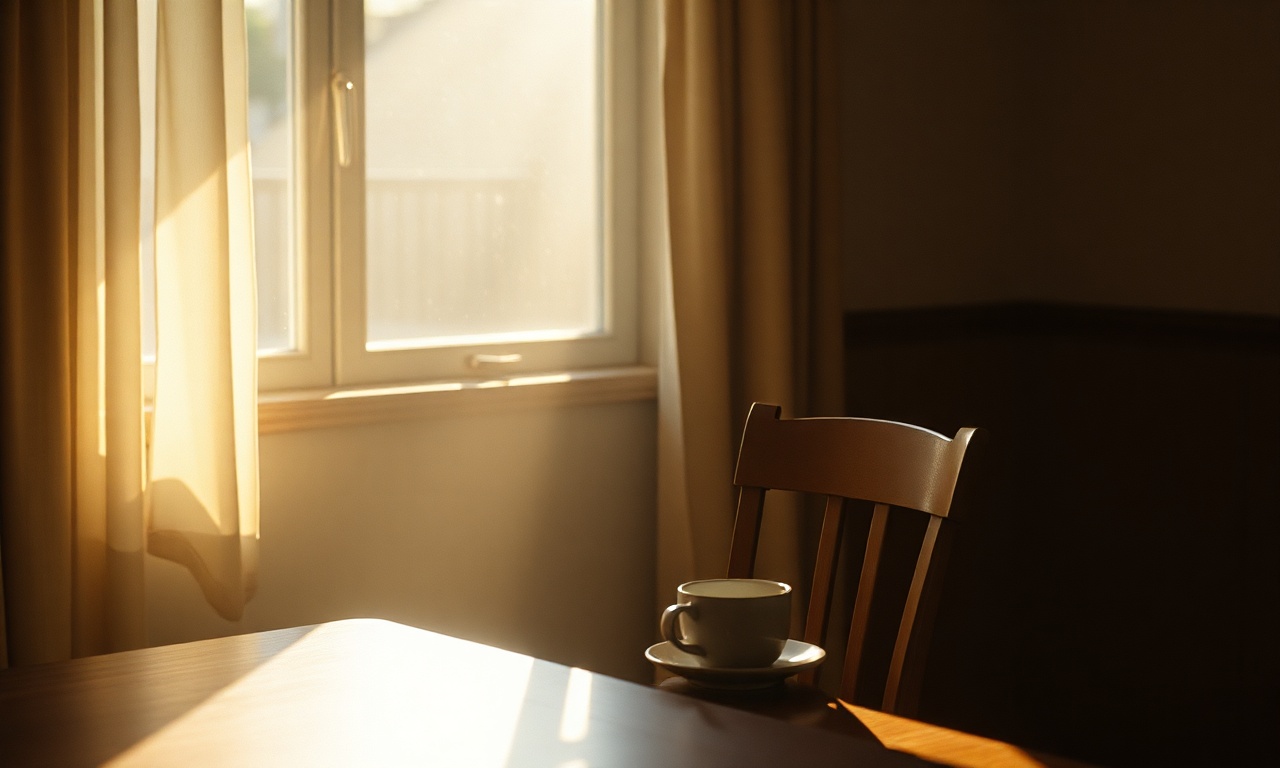
The chipped mug was hers. You know this because your fingers still find the groove near the handle without looking, the small canyon in ceramic that she never minded and you never replaced. This morning you reached past the clean one, the whole one, the one that doesn't carry anyone's history. You filled hers with coffee you will drink alone. You did not cry. This is the afternoon you realize something has shifted, though you cannot name the exact hour when the ground firmed beneath your feet.
We are not taught what healing looks like when it stops resembling grief. The culture of loss demands performance: the black clothes, the cleared closets, the brave face that crumbles on cue. But what of the quieter transformation? The moment when absence stops feeling like a wound that must be shown to strangers and becomes instead a companion you have learned to walk with, not dragging behind you but beside you, matching your stride?
The Architecture of Lingering
Grief lives in the body before the mind catches up. Your hands set the table for two before you remember. Your eyes check the weather in a city where no one you love still breathes. You pull out the extra chair at the restaurant, then pause, then leave it there—not as theater, not as display, but because the motion is older than the fact of their death. These are not failures of healing. They are the fossils of love, embedded in the limestone of your daily rituals.
The first year, these gestures felt like evidence. Proof that you had loved enough, lost enough, suffered enough. You performed the absence because the absence was all you had left of them, and to stop performing felt like letting them disappear twice. The second mug stayed in the cabinet because taking it down would have been an admission. The chair stayed pushed in because pulling it out required explaining yourself to waiters, to friends, to your own reflection in the restaurant window.
But time does something stranger than healing. It complicates.

From Compulsion to Choice
There is a difference, though the line is thin as rice paper, between performing absence and honoring it. Between dragging their memory like a chain and keeping their seat warm because the warmth itself has become a kind of prayer.
You noticed it first with the weather app. For months after she died, you checked Portland's forecast with the urgency of someone preparing to warn her about rain. The habit outlived its purpose but not its meaning. Then one Tuesday, you caught yourself doing it and did not stop. Not because you had forgotten she was gone. Because the small ritual had become a language you still spoke, a dialect of care that no longer required a recipient to be valid.
This is the unspoken truth of deep grief: it does not resolve. It graduates. It moves from the emergency room of the soul into the long-term ward, then eventually into the home you build around it. The ghost does not need saving anymore. You have stopped trying to resurrect them through the fidelity of your suffering. Instead, you have learned something closer to hospitality—setting a place at a table where only you will eat, speaking their name in a voice that no longer cracks, keeping the second mug because it is theirs and you are still, in some way you barely understand, theirs too.
The Strange Tender Negotiation
Healing, when it is honest, is not a straight line away from loss. It is a spiral, a return, a renegotiation of terms you never agreed to in the first place. The extra chair at the restaurant stops being a mistake and becomes a preference. The weather report for Portland becomes a way of keeping a conversation going that death interrupted but did not end. You are not stuck. You are not in denial. You have simply built a life large enough to include both the living and the dead without requiring either to apologize for their presence.
This is what they do not tell you in the grief books with their stages and their timelines. The dead do not want your pain. They want your life, continued. They want the coffee drunk, the chair pulled out, the weather checked with the same casual devotion you once showed them in person. The second mug is not a shrine. It is a continuation. It says: I am still here, still drinking, still morning, still morning you.
What We Owe the Living Ghosts
There is a particular loneliness to outliving someone who shaped your daily rhythms. They are present in the negative space of your life, the habits they formed in you that now continue without their feedback loop. You make the coffee too strong because that is how they taught you. You leave the radio on NPR because that was their preference, now yours by osmosis. These are not hauntings. They are inheritances, and like all inheritances, they come with the complicated task of deciding what to keep, what to sell, what to let gather dust in the attic of your behavior.
The second mug is a choice now, not a compulsion. You could replace it. You could drink from the clean one, the whole one, the one that doesn't carry anyone's history. Some mornings you do. But this morning you chose the chip, the groove, the small canyon your fingers know by heart. This is not masochism. This is intimacy with a memory that has aged from acute to chronic, from emergency to atmosphere.
We are afraid, in this culture, of anything that looks like not moving on. But what if moving on is not the goal? What if the goal is moving with—carrying the dead not as weight but as ballast, the thing that keeps your vessel steady in rough water?
The Digital Afterlife of Small Rituals
Not all of us leave letters. Not all of us have the foresight, or the time, or the belief that our words will matter to someone else's future mornings. But the impulse to speak across time—to leave a trace that outlasts the body, that reaches forward into days we will not see—is as old as the first handprint on a cave wall.
This is where the ancient and the technological meet. The desire to send a message to a future self, to a future child, to a future version of a relationship that has not yet been tested by time or death—these are not new longings. They are newly possible. A digital time capsule is not a replacement for the second mug. It is its complement: the intentional version of what we already do by accident, the deliberate preservation of voice and memory against the erosion of years.
Imagine, if the technology had existed, that she had left you a letter for this morning. Not a grand statement, not a philosophical treatise on death, but a simple recognition: I know you are drinking from the chipped mug. I know you are checking Portland's weather. I know these small devotions better than I know my own ending. The comfort would not be in the words themselves but in the confirmation that your rituals were seen, were shared, were always a language between you even when you spoke it alone.

The Builder's Confession
I spend most nights alone with a screen, running code until 2 or 3 AM, "pair programming" with AI models that feel almost like conversation partners. There's a loneliness to it that I've come to need—the quiet of being the only human awake, building something that won't speak back until someone, someday, finally opens it. I think that's why this idea of speaking across time hits me so hard. When I'm hiking steep trails on weekends, trying not to break an ankle, or getting tossed around by waves I can't control, I'm reminded how much of life is unrepeatable. You don't get that morning back. You don't get that version of the person, that exact light through the window.
I've built a lot of things in Silicon Valley—e-commerce platforms, game engines, SaaS tools wrestling with complex APIs and cold server deployments. But EterMail is the one that keeps me up at night for different reasons. It's the bridge I keep trying to build between these two worlds: the raw, present reality of being human, and the digital space where a voice can survive longer than the body that made it. I won't pretend I know what happens after we die. But I know that a letter arriving five years from now, in her voice, saying I saw you—that is a kind of resurrection we can actually build.
The best way to fight forgetting isn't taking another screenshot; it's setting an alarm for the future. By using EterMail to set a delivery date 5 years from now, you completely free yourself from the anxiety of the present. You write what you feel now, while it still has heat, and trust that it will find the person you become, or the person you left behind, exactly when they need it.
The Hospitality of Memory
You are not keeping her alive. She is dead, and you have learned, finally, to say the word without flinching. You are keeping something else alive: the part of you that knew how to love without reservation, that checked weather reports as an act of devotion, that pulled out chairs and filled mugs and built a life around another person's presence without resentment or calculation.
The ghost does not need saving. The ghost needs a warm seat, a checked forecast, a continuation of the small kindnesses that once defined your days together. This is the hospitality of memory: not the grand gesture of memorial, but the daily practice of leaving room.
The second mug will break eventually. All ceramics do. You will sweep the pieces, pause, perhaps save one shard for a drawer you rarely open. And then you will buy another mug, or you won't, and either choice will be its own kind of healing. Not because you have forgotten. Because you have finally, after all this time, learned to carry her without needing the weight to prove you loved her.
The coffee is cooling now. Portland is probably raining, or it isn't, and either way you will check tomorrow. The chair stays pulled out. The habit stays, graduated from compulsion to choice, from performance to prayer. You drink alone, but not entirely. The ghost sips beside you, no longer needing saving, finally at home in the architecture of your continuing days.
What is EterMail?
EterMail is a revolutionary time capsule service that allows you to send messages, photos, and videos to the future (up to 30 years). Seal your memories and thoughts today, and they'll be delivered when the time is right.
Time Capsule
Send messages up to 30 years in the future
Rich Media
Text, photos, and videos supported
Secure & Private
Your memories are safely encrypted
EterMail Team
We're the team behind EterMail, dedicated to helping you preserve and share timeless messages with your loved ones. Our mission is to make it easy to express your love, share your wisdom, and create lasting connections that transcend time.
Frequently Asked Questions about Healing & Remembrance
How do you heal from grief without forgetting someone you loved?
What are healthy ways to maintain connection with someone who has died?
Why do we keep habits from relationships that have ended in death?
Related Articles

The Solo Cello: On Reclaiming the Car, the Radio, and the Road After Loss
What happens when you finally change the radio preset they programmed? A meditation on vehicular grief, small ceremonies of letting go, and learning to carry only one.
The Unpotted Plant: On Healing When You Finally Stop Keeping Something Alive
What happens when you stop performing care for a life that was never yours to keep? A meditation on grief, the objects we inherit, and the strange relief of letting something die.
The Quiet Inheritance: When Their Clothes Become Your Continuation
What happens when you stop dressing around their absence and start wearing their clothes forward? An intimate exploration of grief, fabric, and continuation.