
There is a moment that arrives without announcement, without the fanfare of milestone anniversaries or the gravity of ceremonial dates. You are standing in someone's kitchen, perhaps, or leaning against a conference room table, and you hear yourself say it: "My father used to make this terrible chili." The words leave your mouth. The person across from you laughs, asks about the recipe, the conversation moves forward. And only later—walking to your car, reaching for your keys—do you realize what failed to happen. The throat did not tighten. The eyes did not burn. The air in the room did not suddenly become too thin to breathe.
You told a story about him in the past tense, and the world did not end. The listener did not freeze, did not reach for your hand, did not perform the careful choreography of witnessed grief. They simply heard you. This is the invisible architecture of healing: not the dramatic breakthrough, but the ordinary sentence that no longer carries the voltage of electrocution.
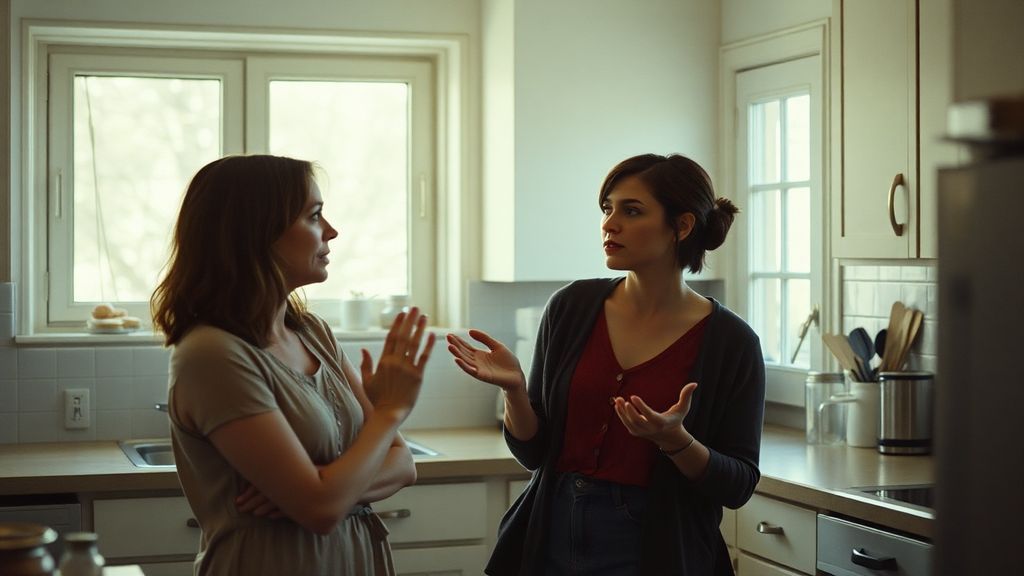
The Linguistics of Loss: How Grammar Holds Grief
For a long time—longer than we care to admit—the language of the dead remains present tense in our private syntax. "My mother is..." we begin, catching ourselves, correcting to "was," the correction itself a small hemorrhage. The past tense feels like betrayal, like a door we are not yet willing to close. We speak of them in the conditional, the subjunctive, the tense of wishing: "She would have loved this." "He should be here." Every grammatical construction becomes a negotiation with absence.
Psychologists who study bereavement have noted this phenomenon. The persistence of present-tense reference often correlates with what researchers call "complicated grief"—the stuck place where the mind has not yet integrated the reality of loss into its operating system. But there is something else happening too, something more tender. We keep them in present tense because present tense is where love lives. To shift to past tense feels, irrationally but profoundly, like demotion. Like archiving them. Like letting them become history instead of heartbeat.
The shift to comfortable past tense is not forgetting. It is, paradoxically, a deeper form of keeping. When "my mother used to" flows naturally from your mouth, what you are expressing is not distance but density—the accumulated weight of so many stories told, so many memories integrated, that they no longer require the scaffolding of crisis to hold them up. The memory has become reference rather than wound.
The Anatomy of an Anecdote: What Changes When Stories Stop Hurting
Consider the difference between these two utterances:
"I can't talk about this without crying."
And:
"Oh, this reminds me of something my brother used to do."
The first is a confession of fragility, a warning to the listener that they have entered territory requiring caution tape. The second is an offering—a piece of shared humanity, a door opened rather than a boundary drawn. When grief-softened stories become tellable without preamble, they transform from private trauma into public inheritance.
This is the work that time performs invisibly. Not the erasure of pain, but its metabolization. The story of your father's terrible chili, once told through tears at his funeral, becomes—years later—a piece of comic texture you contribute to a dinner party conversation. The detail that made you weep (the way he insisted on kidney beans no one wanted, the way he served it with an absurd abundance of saltine crackers) now makes you smile. The facts have not changed. Your relationship to the facts has undergone alchemy.
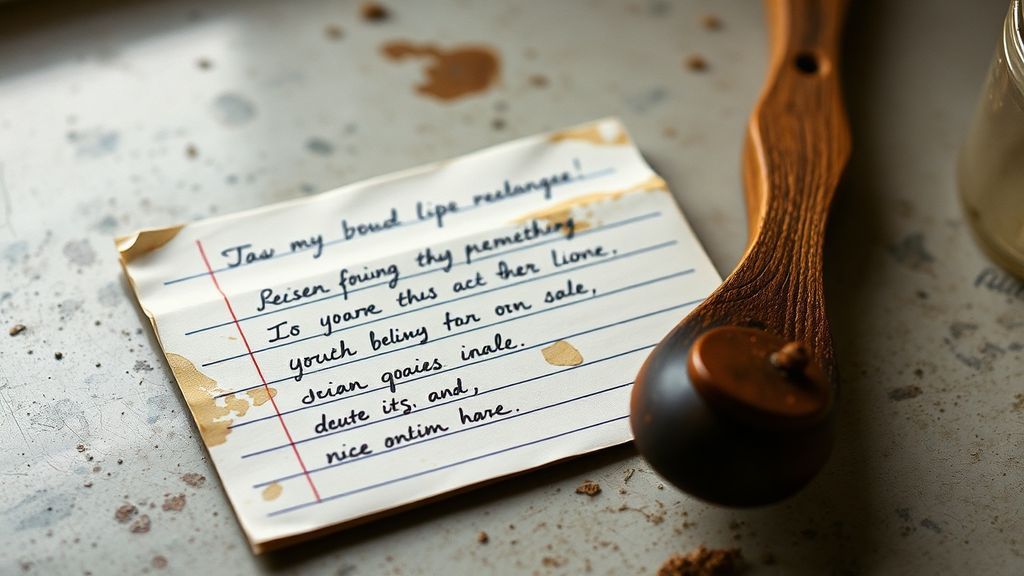
The Ethics of Remembrance: Who Owns the Story Now?
There is a peculiar loneliness to outliving the stories only you remember. When you become the sole keeper of someone's anecdotes—their preferences, their quirks, their particular way of moving through rooms—you bear a responsibility that no one asked you to sign for. The dead do not get to correct your version of them. This is both liberation and burden.
The healed relationship with memory involves accepting this asymmetry. You are not preserving them in amber; you are translating them, imperfectly, into the languages of new contexts and new listeners. The story of your mother's anxiety becomes, in your telling, a story about inherited vigilance. Your father's stubbornness becomes material about the costs and gifts of conviction. They become, in short, usable—without being reduced to mere utility.
This is where digital legacy tools begin to matter in ways that transcend the technological. The letter you write to your future self, or to a child not yet born, or to a partner who will read it when you cannot speak these words yourself—this is not simply documentation. It is an invitation to future storytelling. It says: here is material for the anecdotes you will someday tell about me. Here is permission to use me in the past tense when the time comes.
The Time Capsule as Conversation: Writing to Those Who Will Remember
I built EterMail during one of those 2 AM stretches, sitting alone with a glowing screen, pair-programming with an LLM while the rest of the world slept. The idea had been gnawing at me for months: what if we could write letters that outlast our own memory of writing them? What if the future could participate in how our stories evolve, not just store them? When you compose a letter to be delivered years from now—to yourself, to a child reaching adulthood, to a spouse on a distant anniversary—you are engaging in a peculiar act of temporal collaboration. You are writing from a present that will soon be past, to a future self who will read these words with the accumulated perspective of intervening years.
The letter to your future self is especially potent in the context of grief and healing. You write, perhaps, in the rawness of early loss, knowing that a future version of you will read these words from the other side of a transformation you cannot yet imagine. You are, in essence, creating evidence for your own eventual healing. You are saying: I was here, in this grammar of present-tense pain, and I trusted that you would arrive somewhere else.
When that future self opens the letter—months later, years later, decades—they encounter not just memory but measurement. The distance between who wrote and who reads becomes visible, quantifiable, meaningful. The healing that felt imperceptible in daily life reveals itself as real, as earned, as sufficient.

What We Mean When We Say "Used To"
The phrase "used to" carries remarkable semantic weight. It denotes habit, repetition, characteristic behavior. It suggests someone so fully formed in their patterns that those patterns became definitional. "My mother used to" is not diminishment. It is biography. It is the claim that this person's way of being was so consistent, so reliably them, that it entered the permanent record of how the world worked.
To say "used to" without flinching is to have completed the work of internalization. The person no longer needs to be physically present to be psychologically present. They have become, in the most profound sense, yours—incorporated into your cognitive and emotional architecture to the point where invoking them requires no more emergency protocol than invoking any other formative influence.
This is the goal that grief theorists sometimes hesitate to name, because it sounds too much like "moving on" or "letting go." But it is neither. It is moving in—deeper into relationship with what remains when the physical relationship has ended. The stories become yours to tell, to adapt, to deploy in new contexts for new purposes. The dead become, in the most literal sense, material for the living.
The Practice of Future Remembrance
There is a practice worth cultivating, even—or especially—when grief is fresh. Write to the future you who will tell these stories easily. Describe what hurts now in the specific, granular detail that only present pain can access. The particular quality of your father's silence in the morning. The exact pitch of your mother's laugh when she was genuinely surprised. These are the textures that time will soften, and that you will want to recover when the softening is complete.
The best way to fight forgetting isn't taking another screenshot; it's setting an alarm for the future. By using EterMail to schedule a letter for delivery 5 years from now, you completely free yourself from the anxiety of the present. You preserve the raw file—your words, your voice, your unedited grief—until the moment you designated, unaffected by the erosion of memory, the revisionism of nostalgia, the well-meaning interference of others' versions. The future you, healed in ways you cannot yet imagine, receives it as gift and evidence both.
This is something I think about whenever I'm out on a mountain trail or in the ocean, stripped of the illusions that screens create. The unrepeatable moment demands your full presence. But some moments are too precious to stay trapped in the present. They need to travel. The letter you schedule for your child's eighteenth birthday, or your own retirement, or the tenth anniversary of a loss—you are not simply depositing memory. You are curating a future act of remembrance. You are saying: on this date, in this context, this story will matter again. This name will be spoken. This grammar of grief will be rehearsed, and perhaps, by then, transformed.
The Quiet Victory of Ordinary Speech
Healing does not announce itself. There is no certificate, no graduation ceremony, no moment when someone official declares you restored. There is only this: the afternoon you catch yourself speaking of them in the past tense, and the sentence completes itself without your voice breaking, and the person you are speaking to responds not with sympathy but with interest, with laughter, with the ordinary human pleasure of a good story well told.
You realize, later, that something has shifted. The language has loosened its grip. The grammar of grief has given way to the grammar of biography, of anecdote, of the shared human project of remembering out loud. They are still yours. They are still here, in the stories. But the stories no longer require crisis to justify their telling.
This is the legacy that outlives loss: not the frozen memorial, but the living reference. The name that fits naturally into conversation. The "used to" that no longer sounds like a door slamming shut, but like a door left open—into a room you can enter and leave at will, carrying something precious each time you pass through.
What is EterMail?
EterMail is a revolutionary time capsule service that allows you to send messages, photos, and videos to the future (up to 30 years). Seal your memories and thoughts today, and they'll be delivered when the time is right.
Time Capsule
Send messages up to 30 years in the future
Rich Media
Text, photos, and videos supported
Secure & Private
Your memories are safely encrypted
EterMail Team
We're the team behind EterMail, dedicated to helping you preserve and share timeless messages with your loved ones. Our mission is to make it easy to express your love, share your wisdom, and create lasting connections that transcend time.
Frequently Asked Questions about Healing & Remembrance
How do you know you're healing from grief rather than just avoiding it?
What should I write in a letter to process grief that I won't send?
Why do we sometimes feel guilty when grief starts to feel lighter?
Related Articles

The Solo Cello: On Reclaiming the Car, the Radio, and the Road After Loss
What happens when you finally change the radio preset they programmed? A meditation on vehicular grief, small ceremonies of letting go, and learning to carry only one.

The Unpotted Plant: On Healing When You Finally Stop Keeping Something Alive
What happens when you stop performing care for a life that was never yours to keep? A meditation on grief, the objects we inherit, and the strange relief of letting something die.
The Quiet Inheritance: When Their Clothes Become Your Continuation
What happens when you stop dressing around their absence and start wearing their clothes forward? An intimate exploration of grief, fabric, and continuation.