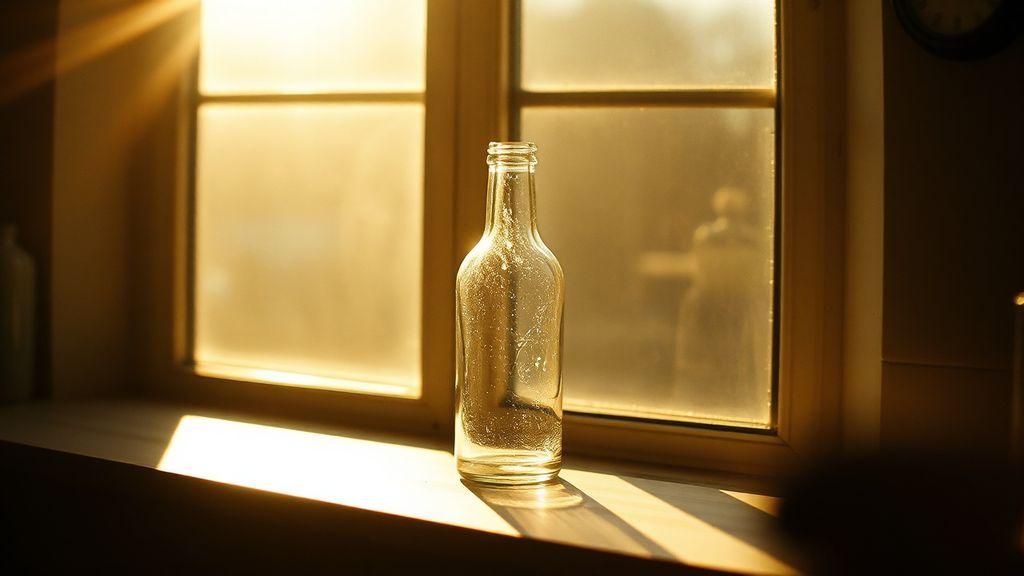
There is a particular Tuesday evening, unremarkable to anyone else, when you reach for the bottle of olive oil at the back of the cabinet—the one they brought home from Sonoma, the one with the handwritten label from the farm stand, the one you've been rationing for three years like it was holy water—and you realize there is exactly enough left for this one pan of roasted vegetables. You drizzle it. You cook. You eat. And then, without ceremony, without the photograph you thought you'd take, without the pause you promised yourself, you drop the empty bottle straight into the recycling bin. The clink of glass against plastic is the sound of a chapter closing you didn't know you were reading.
The Geography of Objects
We who grieve become cartographers of the mundane. We map our dead onto the physical world with a precision that would astonish us if we stopped to notice. The blue sweater with the frayed cuff. The half-empty bottle of sandalwood soap. The vintage wine we keep saving for an occasion worthy of its opening, as if any Tuesday without them isn't occasion enough.
These objects are not merely sentimental. They are tangible evidence that the person existed outside our memories—that they walked through farmers markets, that they had preferences about olive oil, that their hands touched this exact thing we are now touching. The philosopher Walter Benjamin wrote about the "aura" of original artworks, that unique presence in time and space. We might say that the bereaved become collectors of auras, hoarders of provenance, desperate to maintain the physical thread that connects then to now.
The Mathematics of Consumption
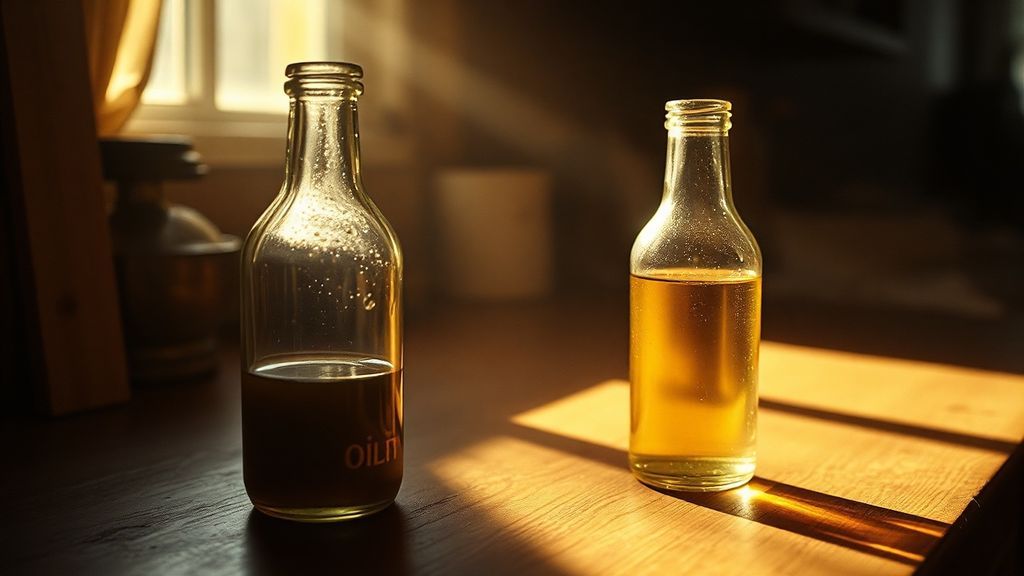
Grief has its own strange arithmetic. We calculate: if I use this soap only on Sundays, it will last another four months. If I wear this sweater only when I need to feel held, the elbows won't give out before spring. We transform ourselves into conservationists of decay, as if slowing the disappearance of their things could slow the disappearance of them from our daily lives.
But objects, unlike memories, follow the laws of thermodynamics. They run out. They wear thin. They spoil. The jam scraped to the final spoonful. The soap worn to a sliver that slips down the drain. The wine you finally open alone because the sommelier was wrong—it won't improve with age, and neither will your ability to share it.
There is a peculiar shame in this consumption, as if using the last of something is a betrayal rather than the inevitable conclusion of having loved someone who lived. We hoard, we ration, we create rituals around ordinary use—and then, one unremarkable evening, the mathematics fails us. The balance reaches zero. The ledger closes.
The Wine You Open Alone
Perhaps the most piercing moment comes with the wine. You have carried this bottle through two apartments, through a pandemic, through the first anniversary of their death when you almost opened it but couldn't bear the symbolism. Now it sits in the rack with the confidence of something that believes it will be celebrated, toasted, shared between two glasses.
But you have learned something about time. Wine turns. People don't arrive on schedule. The occasion you imagined keeps receding like a horizon. And so one Thursday, cooking the same simple pasta you always cook, you uncork it yourself. You pour one glass. You do not raise it to the empty chair. You drink it while reading, while the pasta water boils over slightly, while life continues its insistence on being lived.
The taste is not what you expected. It is too young, or too old, or simply not the taste of celebration you had scripted. This, too, is part of the lesson: the preservation of objects cannot preserve the contexts we imagined for them. The wine does not contain them. The olive oil was never holy. They were always just things, and things must be used or they become their own kind of prison.
What Remains When the Cabinet Is Empty
Here is the question that arrives like a letter you didn't expect, postmarked from your own future: what does it mean to heal when you've exhausted every object they touched? When the sweater has been donated, the soap replaced, the bottle recycled without ceremony—what then?
The answer, if there is one, arrives slowly. It comes in the way you now choose olive oil, standing before the shelf with a confidence they helped you develop, a discernment that has become yours. It comes in the Tuesday evening routine of roasted vegetables that you continue not because it was theirs but because it became yours through repetition and preference. The living they did inside you—this phrase that sounds like metaphor but is actually the most precise description available.
We misunderstand inheritance. We think it is the watch, the letter, the furniture. But these are merely prompts. The actual inheritance is the way of being in the world that we absorbed through proximity, through love, through the thousand unconscious negotiations of daily life together. The preference for early mornings. The particular silence before speaking. The way of holding a knife, of reading the newspaper, of being disappointed and recovering.
The Living Archive
This is where the conversation turns toward what we might build, what we might preserve that does not depend on the fragile materiality of objects. Not as replacement—never as replacement—but as extension. As acknowledgment that the most important things we carry forward are not things at all.
I came to this problem personally, the way I come to most problems: staring at a screen at 2 AM, running my hands through code while the rest of the house slept. I've spent my career building things—e-commerce platforms, game worlds, now tools for human connection—and I've always been drawn to the edge where technology meets something softer, something harder to name. There's a particular loneliness to those hours, pair-programming with an LLM while the world is dark, that makes you acutely aware of how much we leave unsaid across time. I hike steep trails on weekends to remember what raw, unmediated reality feels like, but I return to the keyboard knowing that some bridges between moments can only be built deliberately, with intention.
Consider the possibility of intentional preservation of the intangible: the voice memos you wish you'd recorded, the stories you never asked them to tell, the particular way they described that Sonoma afternoon when the olive oil was purchased. We cannot go back and capture what we didn't think to save. But we can begin, now, to create records of the living that will outlast any physical remnant.
This is the logic behind digital legacy—not as cold technology but as warm container for what matters most. A letter to your future self about who you were when you loved them. A message to a child not yet old enough to understand, capturing what their grandmother's laugh sounded like, what she believed about hard work, what she never managed to say aloud. These are not replacements for the olive oil bottle. They are different categories of preservation entirely, addressing a different kind of loss.
The Permission to Finish Things
There is a liberation in the final spoonful, if we can reach it. The empty jar need not be failure. It can be completion, which is a form of fidelity. They bought the jam to be eaten. They gave the sweater to be worn. The recycling bin, approached with consciousness rather than numbness, becomes a ritual of release rather than abandonment.
This requires a different relationship with time than grief initially permits. Early grief insists on stasis, on the preservation of every detail exactly as it was. But healing, if it is anything, is a gradual acceptance of motion—not forward in the cheery sense of progress, but forward in the literal sense that time continues and we continue within it, changed but continuing.
The olive oil is gone. The bottle is glass, sand, time. What remains is the cooking you do, the meals you share with others, the discernment about quality that you now apply to new bottles, new kitchens, new relationships with people who never knew them and don't need to in order to know you.
What We Owe the Living
Perhaps the deepest question is not about what we preserve of the dead but about what we preserve of ourselves for the living—including our future selves. The person who will exist twenty years from now, holding memories that have been edited by time and necessity, deserves more than our current negligence about what matters.
The practice of writing to futures we cannot yet imagine—to children who will be adults, to spouses who will be strangers or closer than ever, to ourselves when we have forgotten what we currently know about love and loss—this is not morbid preparation. It is an act of faith in continuity. It says: I believe someone will want to understand. I believe my present self has something to offer my future self. I believe that what I am learning about surviving this loss might matter to someone, even if that someone is only me, older and differently wounded.
The best way to fight forgetting isn't taking another screenshot; it's setting an alarm for the future. When I built EterMail, I kept returning to that 2 AM feeling—the sense that I was speaking into a void that time would swallow. I wanted to make something that let you reach across that void deliberately, without friction, without the performance of a social media post. By using EterMail to set a delivery date 5 years from now, you completely free yourself from the anxiety of the present. You write what you actually mean, seal it against time, and trust that your future self—or someone you love—will be there to receive it. The encryption and redundancy I obsessed over aren't technical bragging rights. They're the architecture of a promise: this message will survive, even when you can't guarantee you'll remember to send it.
The olive oil bottle in the recycling bin is not the end of the story. It is the moment the story changes medium, from physical to internal, from object to practice, from preservation to living. We do not honor the dead by preventing our own consumption of the world they left us. We honor them by continuing to consume it with the discernment they helped us develop, by continuing to choose quality over quantity, presence over distraction, the particular over the generic.
The last spoonful of jam is not absence. It is the full expression of presence, finally released from the obligation to remain. What remains when every object is gone is not nothing. It is everything that objects were always only pointing toward: the living they did, the living we continue, the living we have not yet done but might, if we can accept that the bottle is empty and the meal is still to be prepared.
What is EterMail?
EterMail is a revolutionary time capsule service that allows you to send messages, photos, and videos to the future (up to 30 years). Seal your memories and thoughts today, and they'll be delivered when the time is right.
Time Capsule
Send messages up to 30 years in the future
Rich Media
Text, photos, and videos supported
Secure & Private
Your memories are safely encrypted
EterMail Team
We're the team behind EterMail, dedicated to helping you preserve and share timeless messages with your loved ones. Our mission is to make it easy to express your love, share your wisdom, and create lasting connections that transcend time.
Frequently Asked Questions about Healing & Remembrance
How do you cope when you've used or lost the last physical item from someone who died?
Is it normal to feel guilty about using up a deceased loved one's belongings?
What are meaningful ways to preserve someone's memory without keeping their physical possessions?
Related Articles
The Solo Cello: On Reclaiming the Car, the Radio, and the Road After Loss
What happens when you finally change the radio preset they programmed? A meditation on vehicular grief, small ceremonies of letting go, and learning to carry only one.
The Unpotted Plant: On Healing When You Finally Stop Keeping Something Alive
What happens when you stop performing care for a life that was never yours to keep? A meditation on grief, the objects we inherit, and the strange relief of letting something die.
The Quiet Inheritance: When Their Clothes Become Your Continuation
What happens when you stop dressing around their absence and start wearing their clothes forward? An intimate exploration of grief, fabric, and continuation.