
The Silent Tuesday
You woke up on a morning in late October, made coffee, answered emails, walked the dog through leaves that had turned without your permission. Someone mentioned over dinner that tomorrow was the fourteenth, and you felt it land somewhere behind your sternum—a soft thud, not a detonation. You had forgotten. For the first time in four years, you had forgotten her birthday.
Not forgotten-forgotten. The knowledge was there, archived. But it had not arrived with the preemptive dread, the red-circle-on-the-calendar vigilance, the bracing of your whole body against a date you had come to treat as a second, annual death. You had not bought the carrot cake she loved from the bakery on Hawthorne. You had not planned to be sad.
The realization brought something complicated. Relief, threaded with guilt. Relief that you had been spared, however briefly, the performance of grief you had perfected. Guilt that relief felt like betrayal.
This is the unspoken geography of healing: the moment the dates we sanctified lose their voltage, and we discover that remembrance can survive without the annual performance of pain.

The Rituals We Mistake for Love
In the first year, we do what we are supposed to do. We visit graves or scatter ashes or hold gatherings where no one knows how much wine is too much wine. We light candles. We post photographs with captions that feel both necessary and inadequate. We make their favorite foods and let them go stale on the counter because eating them would mean finishing something.
These rituals are not false. They are the scaffolding that holds us upright when the structure of our lives has been demolished. But scaffolding is not the building. And there comes a point when we must ask: am I still doing this for them, or for the version of myself who needed to prove I could not forget?
The second year, some people check in. The third, fewer. By the fourth, the silence around the date becomes its own presence, and you find yourself performing grief more loudly to compensate for the world's quiet moving on. You buy the cake. You write the post. You schedule the sadness like a recurring calendar appointment, because to let the day pass unmarked feels like releasing your claim.
But grief was never meant to be a subscription service.
The Strange Mathematics of Outliving
There is a particular calculus to loss that no one teaches us. We measure time in before and after, then in anniversaries, then in the ratio of days we cried to days we functioned. We wait for the one-year mark, the five-year mark, as if grief has a graduation ceremony. What we do not anticipate is the moment when the math stops working—when the date arrives and your body, that faithful chronicler of trauma, simply does not respond.
You have outlived the anniversary. This is both victory and accusation.
The first time it happened to me, I spent the evening waiting for the delayed reaction, the grief that must surely be stuck in traffic. I sat with the absence of feeling as if it were a feeling itself, prodding it for authenticity. Was this healing, or was this denial? Had I finally metabolized the loss, or had I simply become someone who could live with it?
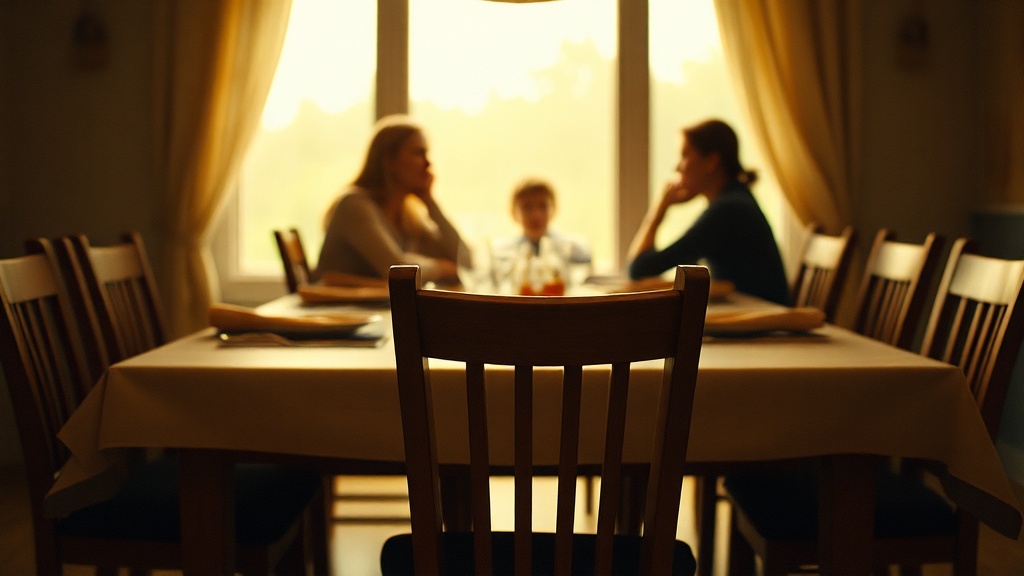
I think now that these are false binaries. Healing does not mean the absence of pain. It means the pain has found its proper seat—not the head of the table, not banished from the room, but present without presiding.
The Guilt of Unremarkable Days
We are not supposed to say this, but I will: there is a secret relief in the ordinary Tuesday. In not having to be the person who lost someone. In the freedom of a conversation that does not detour through explanation, through the accounting of absence.
The guilt arrives because we have been taught that love is measured by suffering. That to hurt less is to have loved less. That the appropriate response to death is a lifetime of visible, performable sorrow.
But remembrance is not a competition of pain. The dead do not keep score. The question is not whether you suffered enough on their behalf, but whether you have found a way to carry them forward that does not require your own continuous diminishment.
I still think of her when I smell bergamot, when I hear that particular laugh in a coffee shop, when I make a decision she would have argued against and feel the ghost of our debate like warmth against my shoulder. These moments are not scheduled. They are not performed. They are simply the texture of a life that has absorbed a loss without being defined by it.
What Remembrance Looks Like When It Stops Performing
The afternoon I finally threw away her recipe for carrot cake—the card in her handwriting, stained with oil and nostalgia—I did not cry. I photographed it first, not for social media, but for a private archive I may never open. Then I let it go, because the cake was never the point. The point was the person who made it, who taught me that sweetness could be deliberate, that effort could be a language of care.
I do not need to bake badly to honor her memory. I can bake well, or not at all. I can remember her in the way I answer the phone when a friend calls with hard news, in the patience I practice with students who remind me of her impatience, in the letters I write to my future self about who I was when she knew me and who I have become since.
This is the form remembrance takes when it matures: not the annual commemoration, but the daily integration. The way her skepticism lives in my own. The way her humor surfaces in my jokes, surprising me. The way I have become, in small ways I cannot always identify, a continuation of her presence in the world.

The Letters We Write to Become Whole
There is a practice I have developed in the years since, one that emerged from my own restlessness and from too many nights spent alone at my desk until 2 AM, "pair programming" with an AI, mapping architectures while the world slept. That extreme solitude taught me something about loneliness and about the strange intimacy of speaking into a void that might answer back. I started writing letters to the future—not to her, but to the person I will be when the next unremarkable Tuesday arrives.
I write to confirm that I was here, that I felt this, that the process of becoming someone who could forget and remember, who could release and retain, was real and earned.
These letters are not grief documents. They are evidence of living. I describe the ordinary Tuesdays with precision—the coffee, the emails, the dog, the unexpected peace of a date that no longer detonates. I write so that future-me will know this stage was not denial but arrival. That the scaffolding came down, and the building stood.
The best way to fight forgetting isn't taking another screenshot; it's setting an alarm for the future. By using EterMail to schedule a letter five years from now, you completely free yourself from the anxiety of the present. You stop wondering whether you'll remember who you were, and you start trusting that your past self will find you—that a version of you who understood something important will reach across time and say, I was here. This mattered. Keep going.
The Season After the Calendar Ends
Grief has its own calendar, but it is not Gregorian. It does not respect anniversaries or linear progress. It circles, it spirals, it occasionally arrives unannounced on a Tuesday in March because of a song or a scent or nothing you can identify.
What changes is your relationship to its arrivals. The first years, you brace. You prepare. You perform the appropriate responses because you are still learning the shape of your loss, still mapping its territory. Later, you recognize that grief is not a country you live in but a weather system that moves through. You do not need to build monuments to every storm.
The year their birthday becomes just another Tuesday is not the year you stopped loving them. It is the year you started living again, with their memory integrated rather than displayed.
You may still buy the cake, some future year, on a whim rather than an obligation. You may gather with others who remember, or you may not. The freedom is in the choice, in the release from the calendar's dictatorship.
What remains is not the performance but the person: the way they altered your trajectory, the values they transmitted, the love that outlasts its own expression. This is the legacy that does not require annual renewal. It simply persists, quiet and sufficient, in the life you continue to build.
And on the morning you wake up and realize the date has passed unnoticed, let the relief come. Let it be complicated. Let it be human. Then make your coffee, walk your dog, answer your emails. Live the ordinary Tuesday they would have wanted for you—not as martyrdom, not as performance, but as the simple, sufficient fact of continuing.
The grief has not disappeared. It has simply found its proper place: present, but not presiding. A guest at the table, no longer the host.
A Quiet Coda
I wrote this on a Thursday, not her birthday, not the anniversary of her death. Just a day when she surfaced in my thoughts because of bergamot in my tea, because of a student's laugh, because of the accumulated weight of ordinary moments that still, somehow, carry her forward.
I did not schedule this remembrance. I did not perform it. I simply lived it, and found that living was enough.
That is the discovery that waits on the other side of grief's calendar: not that we forget, but that we remember differently. Not that the love diminishes, but that it finally becomes ours to carry without instruction, without audience, without the annual proof of pain.
The Tuesday will come. Let it be ordinary. Let it be yours.
What is EterMail?
EterMail is a revolutionary time capsule service that allows you to send messages, photos, and videos to the future (up to 30 years). Seal your memories and thoughts today, and they'll be delivered when the time is right.
Time Capsule
Send messages up to 30 years in the future
Rich Media
Text, photos, and videos supported
Secure & Private
Your memories are safely encrypted
EterMail Team
We're the team behind EterMail, dedicated to helping you preserve and share timeless messages with your loved ones. Our mission is to make it easy to express your love, share your wisdom, and create lasting connections that transcend time.
Frequently Asked Questions about Healing & Remembrance
How do you cope with guilt when you start to heal from grief?
What are meaningful alternatives to traditional grief anniversary rituals?
How can writing help process complicated emotions about losing someone?
Related Articles

The Solo Cello: On Reclaiming the Car, the Radio, and the Road After Loss
What happens when you finally change the radio preset they programmed? A meditation on vehicular grief, small ceremonies of letting go, and learning to carry only one.

The Unpotted Plant: On Healing When You Finally Stop Keeping Something Alive
What happens when you stop performing care for a life that was never yours to keep? A meditation on grief, the objects we inherit, and the strange relief of letting something die.
The Quiet Inheritance: When Their Clothes Become Your Continuation
What happens when you stop dressing around their absence and start wearing their clothes forward? An intimate exploration of grief, fabric, and continuation.