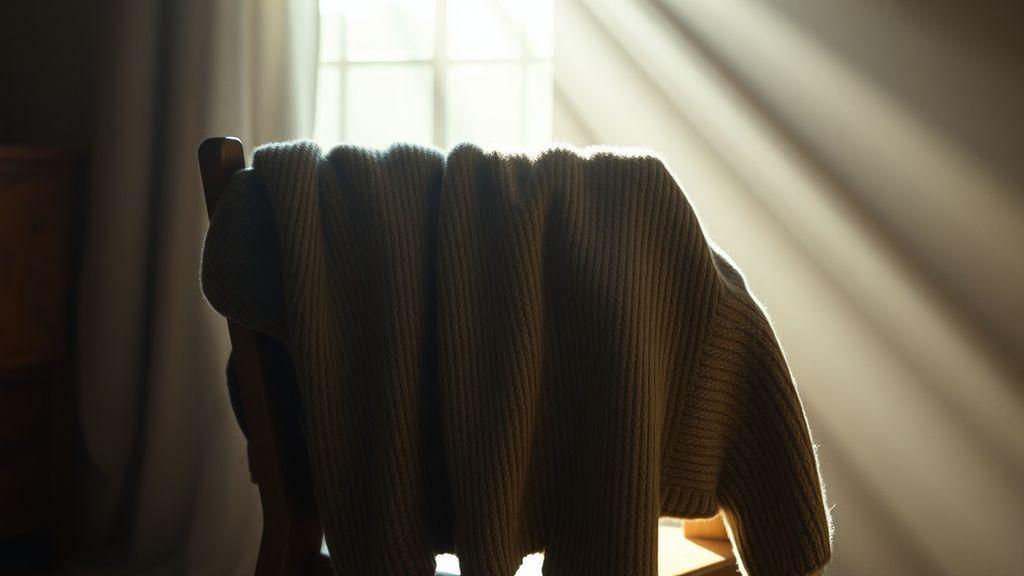
Six months after the funeral, you still wear his sweater to bed. Not for warmth. Not for comfort, exactly. You wear it because you are terrified—because each night might be the last night the collar still smells like him, and you cannot bear to let that go without witnesses.
You have become a scientist of denial. You know, rationally, that cotton and wool are porous. That skin cells slough and oils oxidize. That the human body sheds approximately 30,000 to 40,000 skin cells every hour, and that his have been falling off this garment since the last time he took it off, probably without thinking, probably expecting to wear it again. You know all of this. It does not help.
What you are doing is not rational. It is ritual. And rituals exist precisely where rationality fails.
The Olfactory Betrayal

Smell is the only sense that bypasses the thalamus and projects directly to the amygdala and hippocampus. This is why scent memory feels less like remembering and more like time travel. The neuroscience is clean, clinical, satisfying. It explains why the first notes of a stranger's cologne on a subway platform can collapse your lungs. Why you once followed a man for three blocks because his cigarette smoke carried the ghost of your father's brand.
But neuroscience cannot explain what happens when the source material itself begins to disappear. When you bury your face in that sweater and inhale deliberately, knowing—you know—that your own breath, your own skin, your own detergent are actively replacing what you are trying to preserve. Each attempt to remember accelerates the forgetting.
There is a particular shame in this grief. You do not tell people about the sweater. You certainly do not tell them that you have stopped washing your own hair with scented products because you worry they will contaminate the fabric. That you sleep with your face pressed against the sleeve. That you have, on two occasions, wept not from sadness but from panic when you could not find the smell, only to locate it hours later in a fold you had not disturbed, and felt such relief it resembled euphoria.
This is not the grief of memorial services and casseroles. This is private, almost feral. You are trying to hold smoke in your hands.
The Morning of Nothing
It happens on a Tuesday. You wake with your cheek against the shoulder, and something is wrong before consciousness fully arrives. The wrongness is absence. You sit up. You press your nose to the fabric where his neck would have rested, and there is—there is nothing.
Not nothing, precisely. There is your own skin. There is the faint chemical neutrality of laundry detergent from six months ago, preserved in wool's reluctant fibers. There is, if you search for it, the particular mustiness of a garment stored in darkness, breathing its own limited atmosphere. There is you. Only you.
You inhale again, harder, as if force could summon what gentleness preserved. You check other spots. The cuffs. The hem. The interior label where his neck always itched. You hold the sweater at arm's length and stare at it, this object that has become a body without a body, now stripped even of its ghost.
What you are mourning in this moment is not him. You have been mourning him for six months, in all the expected ways and many unexpected ones. What you are mourning is your own capacity to summon him. The sweater has become a failed technology. You invested it with power it could not sustain, and now you are left holding the evidence of your own magical thinking.
The Physics of Disappearance
We do not talk enough about how the dead disappear in stages. First the person, then the presence, then the possessions, then—if we are careless or simply alive—the memories themselves, softening and shifting like river stones. The scent is an intermediate stage, neither person nor memory but some unstable compound of both.
Molecules are not sentimental. They do not recognize the significance of their arrangement. The esters and aldehydes that composed his particular chemistry have been evaporating, oxidizing, breaking down into simpler compounds since the moment he last wore this garment. Your own molecules have been colonizing the empty spaces. This is not betrayal. This is entropy, democratic and impersonal.
And yet. The morning you wake to find the sweater smells only like yourself, you experience something beyond grief. You experience a kind of orphaning. You have been abandoned not by a person but by matter itself. The physical world has withdrawn its last endorsement of his reality. You are left with stories, photographs, the testimonies of others—none of which carry the immediate, involuntary recognition of scent.
What We Try to Preserve
There are technologies for this, of course. People preserve voicemails, download text threads, archive social media profiles. Some forward-thinking individuals record video messages, write letters to be opened later, create time capsules of voice and image and word. We are learning, as a culture, to be more deliberate about what we leave behind.
But scent resists preservation. You cannot record it. You cannot upload it. The few attempts—perfumers creating "bespoke" fragrances from deceased loved ones' belongings, laboratories extracting and synthesizing—feel ghoulish, or at least insufficient. The smell of a person is not a fixed composition. It changes with diet, with mood, with the weather, with age. You are not trying to preserve a formula. You are trying to preserve a relationship in its most involuntary form.
I have spent years building digital systems, sitting alone at 2 AM pair-programming with AI, mapping architectures that will outlast me. There is a particular loneliness to that work—the glow of the screen, the silence, the sense of building bridges to a future you may not see. I have come to believe that the most profound human need is not immortality but connection across time: the knowledge that someone, someday, will know you were here, and that you thought of them.
This is why I built EterMail. Not to replace the sweater, which nothing can do. But because I know the panic of wanting to preserve something that entropy is already claiming. The best way to fight forgetting isn't taking another screenshot; it's setting an alarm for the future. By using EterMail to schedule a letter to your daughter for her thirtieth birthday, to your future self on the anniversary of his death, to grandchildren not yet conceived—you free yourself from the vigil. You transform private grief into deliberate, durable connection. The platform holds what you cannot: the intention, the voice, the timestamped proof that you were here, and you loved, and you tried.
The Permission to Forget

Here is what no one tells you: the morning the smell disappears, you will feel relief beneath the grief. A small, shameful relief. The vigil is over. You have been discharged from your self-imposed duty of preservation. The sweater is just a sweater now. You can wash it. You can wear it in public. You can stop sleeping in it, if you choose.
This relief does not mean you loved him less. It means you are still alive, and alive things change, and changing things let go. The scent was never really him. It was your own brain's construction, a collaboration between his chemistry and your need. What you have lost is not access to him but a particular method of self-soothing.
There are others. There will be others. The photograph that catches his gesture exactly. The story that makes someone who never knew him laugh in recognition. The letter you write to your daughter, to be opened when she is older than you are now, explaining who he was and what he meant and how his absence shaped you.
These are also molecules, in their way—ink on paper, pixels on screen, sound waves preserved in digital form. They will also degrade. They will also require translation, context, faith. But they carry intention, which scent cannot. They say: I knew I would not last, and I wanted you to know I thought of you.
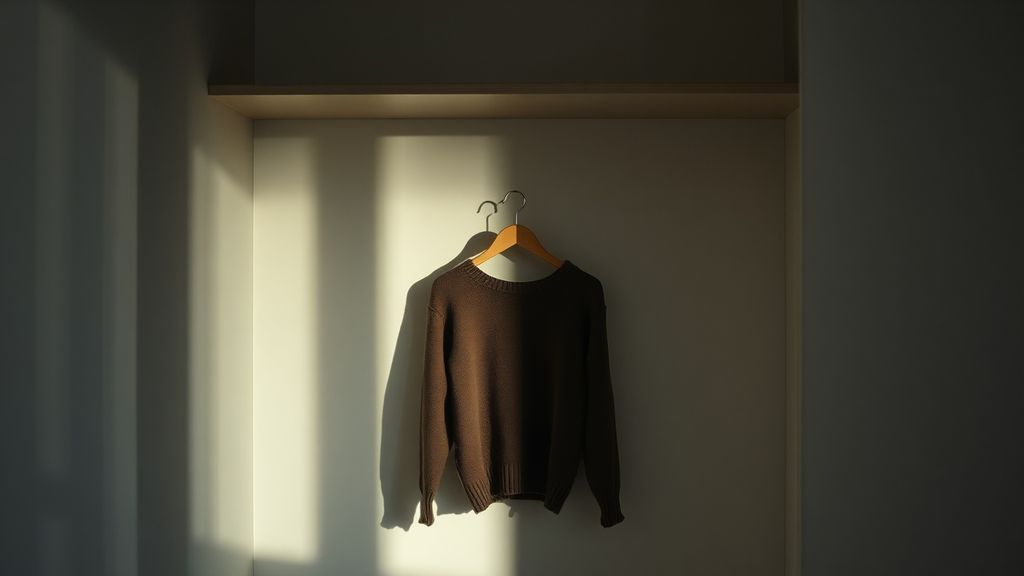
The sweater hangs in your closet now, clean, folded, ordinary. You do not throw it away. You do not need to. It has become what it always was: an object, significant only because you made it so. The significance remains, even when the smell does not. This is the strange arithmetic of grief. Nothing is lost. Everything is transformed. You are still here, breathing, carrying forward what you can, releasing what you must.
He would have washed the sweater eventually. He was practical that way. You are practical too, when you let yourself be. The morning you woke to find it smelled only of you, you finally began to sleep through the night again. Not because you had forgotten. Because you had finally, fully, begun to remember in a way that belongs to the living.
What is EterMail?
EterMail is a revolutionary time capsule service that allows you to send messages, photos, and videos to the future (up to 30 years). Seal your memories and thoughts today, and they'll be delivered when the time is right.
Time Capsule
Send messages up to 30 years in the future
Rich Media
Text, photos, and videos supported
Secure & Private
Your memories are safely encrypted
EterMail Team
We're the team behind EterMail, dedicated to helping you preserve and share timeless messages with your loved ones. Our mission is to make it easy to express your love, share your wisdom, and create lasting connections that transcend time.
Frequently Asked Questions about Healing & Remembrance
Why does scent trigger such powerful memories of lost loved ones?
How can I preserve memories of someone who has died beyond physical objects?
Is it normal to feel relief when the pain of grief finally lessens?
Related Articles

The Solo Cello: On Reclaiming the Car, the Radio, and the Road After Loss
What happens when you finally change the radio preset they programmed? A meditation on vehicular grief, small ceremonies of letting go, and learning to carry only one.

The Unpotted Plant: On Healing When You Finally Stop Keeping Something Alive
What happens when you stop performing care for a life that was never yours to keep? A meditation on grief, the objects we inherit, and the strange relief of letting something die.
The Quiet Inheritance: When Their Clothes Become Your Continuation
What happens when you stop dressing around their absence and start wearing their clothes forward? An intimate exploration of grief, fabric, and continuation.