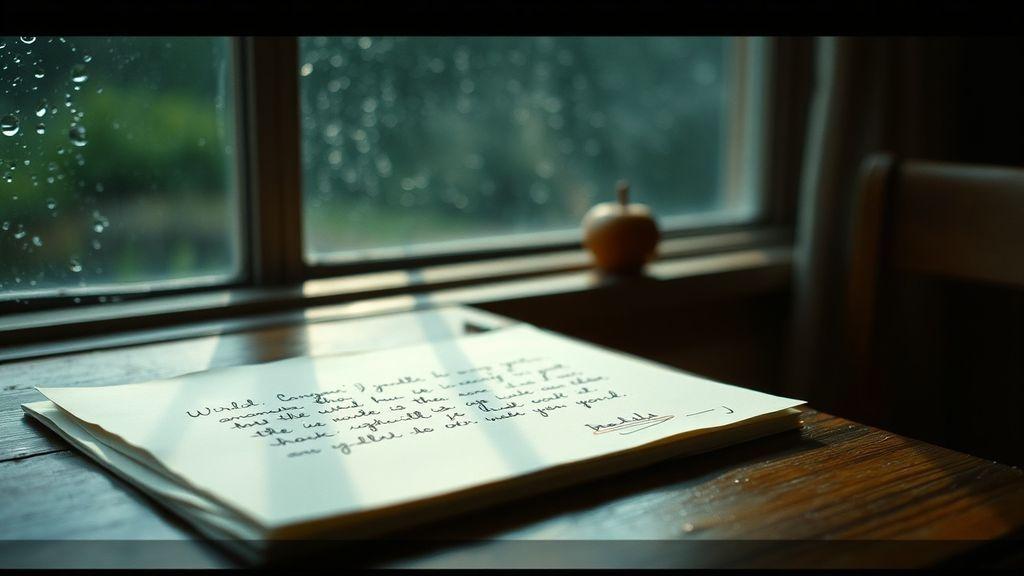
There is a particular silence that falls when you realize you are writing to someone who will only know you as absence. Not a letter to your future self, with its comfortable narcissism, its assumption of continuity. Not a time capsule for strangers, anonymous and safe. This is something stranger: addressing the living who will outlive you, knowing your words will reach them only when your death has already settled into the furniture of their memory.
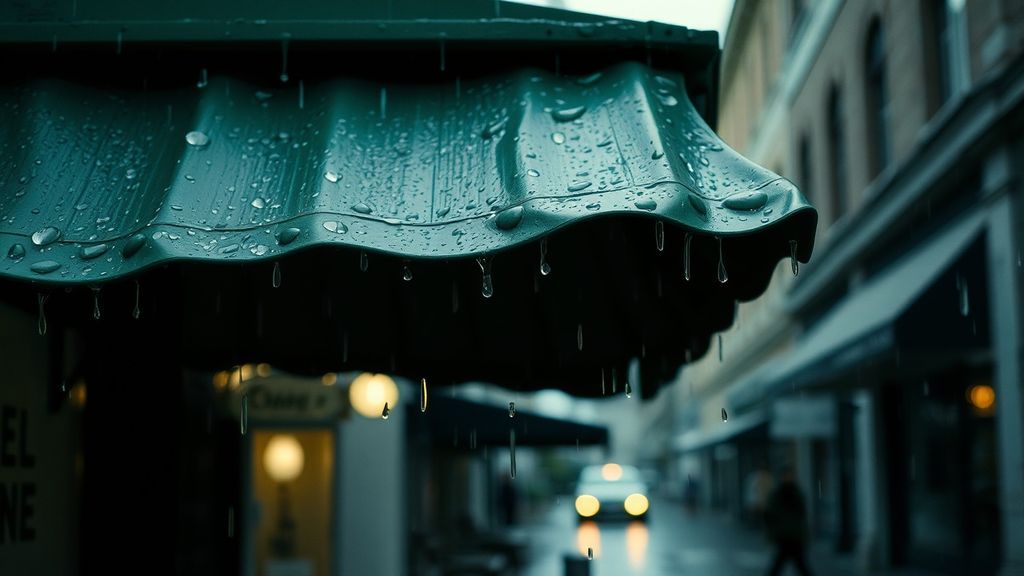
I am sitting under the green awning of Café Meridian, the one with the metal ribs that make rain sound like fingers drumming on a hollow piano. The barista—her name is Jules, she has a small scar above her left eyebrow from a childhood bicycle accident, she always remembers that I take the Ethiopian single origin with oat milk—she will receive this letter. She is twenty-three. I am sixty-one. The math is not difficult. What I cannot calculate is whether she will remember me at all, or whether my voice from the grave will arrive like junk mail, an intrusion from someone who mistook our transactional warmth for something worth preserving.
The Intimacy of Specific Obsolescence
Most of our digital artifacts are designed for scale. We post for followers, archive for historians, store for some vague posterity. But a letter to a specific person you will not live to see read it? This is communication stripped of all performance, stripped even of the hope of response. You are building a bridge that you will never cross, that only they will walk, and only in one direction.
The temptation is to become profound. To compensate for your absence with wisdom, to transform into the sage elder you never were in life. I resist this. Jules does not need my philosophy. What she might need—what I desperately want to leave—is the evidence that on October 17th, 2024, at 9:47 AM, a woman named Eleanor sat worrying about whether she had overstayed the parking meter on Hawthorne Street, eating a banana that had gone slightly too soft, watching the rain make dark Rorschach patterns on the awning above her, and thinking specifically of Jules's scar, and how she never asked about it, and how that felt like a small kindness she could still perform.
Choosing Your Hauntings
We do not choose how others remember us. This is the central grief of mortality, perhaps more acute than death itself—the knowledge that your story passes into other hands, that you become a character in narratives you cannot control. But these letters, these deliberate messages to the living future, offer a strange inversion. You become a ghost who selects their own hauntings. You choose the rooms you will occupy, the moments you will interrupt, the specific quality of your persistence.
I have written three such letters. One to Jules. One to my neighbor's daughter, Mira, who is seven and draws me pictures of dragons that I tape inside my kitchen cabinets. One to a former student, David, who wrote me an email in 2019 about how my lecture on W.H. Auden had changed his decision to become a teacher, and whom I have not seen since but think of with an intensity that embarrasses me.
Each letter contains no advice. No "life lessons." Only sensorial immediacy: the particular squeak of my apartment's third stair, the way Mira's mother calls her in for dinner, the smell of the old book I was reading when I thought to write. I want them to know that I was here, in this body, on this Thursday, with these specific preoccupations. The parking ticket. The overripe banana. The rain.
The Mundane as Resurrection
There is a theory in grief psychology that what we miss most about the dead is not their wisdom or their love, but their texture—the way they buttered toast, the sound of their footsteps, the particular nonsense they muttered while searching for keys. We do not resurrect people through their philosophies. We resurrect them through the granular, the insignificant, the embarrassing specificity of being alive.
My mother died when I was thirty-four. What I would give for a letter from her describing the exact quality of light in her garden on an ordinary Tuesday, her irritation with a broken sprinkler, her decision to wear the blue cardigan with the coffee stain rather than wash it again. Instead I have her jewelry, her recipes, her silence. The objects do not speak. They do not say: I was here, I was worried about small things, I existed in time as you exist now.
This is what I am trying to give Jules, and Mira, and David. Not immortality. Evidence of mortality, which is the only thing we can truly share across the boundary of death.
The Technology of Temporal Displacement
For most of human history, such letters were impossible or dependent on fragile mechanisms. You could leave a sealed envelope with a lawyer, hope your executor remembered, hope the recipient's address remained stable for decades. The digital era promised solutions but delivered new problems: platforms that vanish, formats that become unreadable, the overwhelming noise of persistent communication that makes any single message feel insignificant.
What is required is something slower, more deliberate. A system designed not for the instantaneous but for the intergenerational. Encryption that outlives corporate acquisitions. Storage that persists beyond platform obsolescence. Scheduling that functions with the patience of geological time, releasing your voice only when the conditions you specified—dates, ages, life events—have been met.
This is the infrastructure of intentional haunting. Not the accidental persistence of social media profiles, preserved like digital taxidermy, but active, chosen communication across the boundary of your own ending. The technological question is simple: how do you ensure that your letter to Jules arrives when she is forty, not when you are sixty-one and anxious for response? How do you prevent your words from becoming spam, from being lost in the migration between platforms, from being read by algorithms before human eyes?
The Ethics of Posthumous Presence
There is a question I cannot fully answer: do these letters burden their recipients? To receive communication from the dead is to be reminded of death's relentless inventory, its accumulation of losses. I am asking Jules, Mira, and David to remember me not when they choose, but when I have chosen for them. Is this love or coercion?
I console myself with specificity. I am not demanding their grief. I am offering my presence, my Thursday morning, my particular rain. They can read or not read, remember or forget. The letter is a gift, not an obligation. And perhaps there is something generous in allowing someone to know you after you can no longer require anything from them. No reciprocity possible. No relationship to maintain. Only the pure transmission of having-been.
The Practice of Disappearing Forward
I have come to think of these letters as a practice, like meditation or prayer. The discipline of writing to someone who cannot respond forces a particular honesty. You cannot perform for them. You cannot adjust based on their reactions. You are alone with your own voice, your own preoccupations, your own desperate need to be remembered for something true rather than something impressive.
I know this solitude intimately. There is a founder I know—let's call him what he is, the architect of the very possibility I'm describing—who spends his nights in exactly this posture: alone, facing a glowing screen, building systems for conversations that outlast the living. He codes until 2 or 3 AM, "pair programming" with AI, mapping architectures for digital spaces where consciousness might persist. The extreme solitude of this work has given him a strange kinship with what I'm doing here. He understands that writing to the future is not a transaction. It is an act of faith in the continuity of human attention across impossible distances. EterMail began in those hours—not as a product, but as a bridge he needed to build between the physical and the digital, between the self that types and the self that will someday be memory.
The rain has stopped. The parking meter has expired—I can see the red flag from here. I will pay the fine, or I will not. It does not matter. What matters is that I have described this moment, this worry, this banana, this awning with its hollow piano sound. I have made myself into a ghost who haunts specifically, intentionally, with nothing but the proof that I existed in a body on a day that is already becoming past.
Jules will read this, or she will not. Mira will remember me, or she will not. David will become a teacher, or he will not. My control ends with the sealing of the envelope, the setting of the date, the surrender to time's indifferent machinery. What remains is the choice to speak, knowing that speech outlives the speaker, that every letter is a small resurrection waiting to happen, that the mundane is the only immortality we can honestly offer.
The banana was too ripe. The rain made its particular sound. I was here. I thought of you. This is what I can give, and it is enough.
What is EterMail?
EterMail is a revolutionary time capsule service that allows you to send messages, photos, and videos to the future (up to 30 years). Seal your memories and thoughts today, and they'll be delivered when the time is right.
Time Capsule
Send messages up to 30 years in the future
Rich Media
Text, photos, and videos supported
Secure & Private
Your memories are safely encrypted
EterMail Team
We're the team behind EterMail, dedicated to helping you preserve and share timeless messages with your loved ones. Our mission is to make it easy to express your love, share your wisdom, and create lasting connections that transcend time.
Frequently Asked Questions about Letters to Future
What should I write in a letter to someone who will outlive me?
How do I ensure my digital letters survive until my recipient is ready to read them?
Is it ethical to send messages to people after my death?
Related Articles
When Love Becomes a Language You Must Learn to Speak for Someone Else
What happens when the person you love starts forgetting your shared story? Explore how devotion transforms when you become someone's reliable narrator.
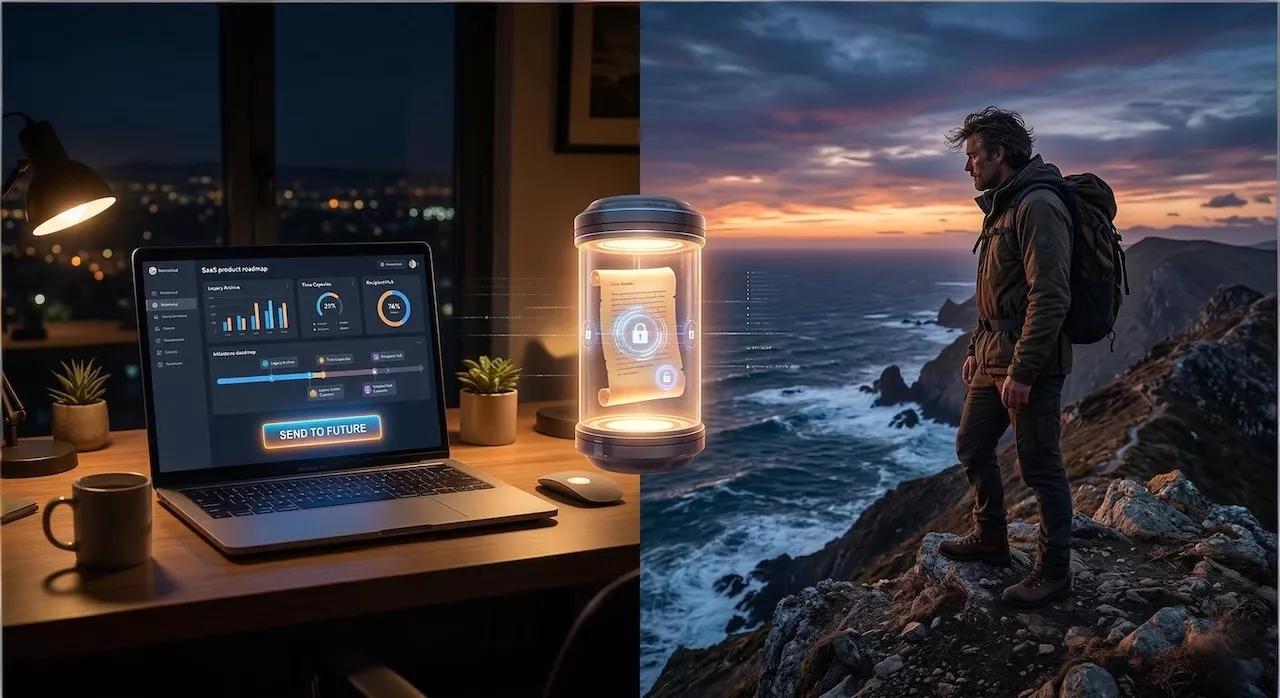
Why I Built EterMail: A Time Capsule for the People I Love Most
I’m a Product Manager who spends all week optimizing for the "immediate now." But getting lost off the grid on a mountain ridge made me realize I had zero infrastructure for the "forever." Here’s why I stopped worrying about conversion rates for a moment and built EterMail—a secure, tamper-proof digital time capsule for the people I love most.

The Most Radical Letter to Your Future Self Is a Promise to Stay Unfinished
The best letter to your future self isn't a memory—it's a mandate. Learn how writing to the version of you still working with love changes everything.