
You remember the 3:47 AM swipe. The one where you paused on someone whose bio mentioned Murakami and sourdough, whose third photo was blurry at a friend's wedding, and you felt something suspiciously like hope. You didn't match. Or maybe you did, and the conversation dissolved into "lol same" and then nothing. Either way, that person became data—your data—stored in a server farm you'll never visit, contributing to a profile of your desires that outlasted the desire itself.
Bumble's recent announcement that it's phasing out the swipe gesture feels less like product evolution and more like an autopsy. The swipe taught an entire generation to treat human beings as disposable cards in an infinite deck, and now the company wants to pivot toward "intentionality." But here's what no one is asking: what happens to the infinite deck of almost-lovers when the casino changes its game? Your most vulnerable searches for connection live in databases you'll never access again. Who owns the legacy of who you were trying to become?
The Accidental Archive of Almost
We didn't set out to build museums of our romantic failures. We set out to find someone to watch The Bear with, someone who wouldn't flinch at our Spotify Wrapped. But dating apps don't optimize for endings—they optimize for engagement, which means they preserve every micro-interaction as fuel for future algorithms. The person you swiped left on in 2019 because their dog looked aggressive? Saved. The conversation that died after three messages about neighborhood coffee shops? Archived. The profile you crafted during your "philosophical quote" phase, complete with that Rilke line you now find pretentious? Immortal, apparently.

These accidental archives have weight. A 2022 study from the University of Essex found that people who frequently used dating apps reported higher rates of what researchers called "romantic rumination"—the compulsive return to past interactions, the re-reading of dead conversations, the wondering about paths not taken. The apps didn't just facilitate connection; they created a new form of psychological haunting. Your past selves—lonelier, more hopeful, more willing to open with a joke about cheese—linger in interfaces you can no longer access with the same emotional logic.
The Platform Pivot and the Abandoned Self
When a platform changes its fundamental interaction model, it performs a kind of corporate gaslighting. Bumble's shift away from swiping asks users to forget that the company built its empire on the very behavior it now frames as shallow. But you can't pivot your past. The version of you who swiped through fifty profiles during a depressive episode in 2021, who treated human beings as disposable because the interface taught you that disposability was the point—that person doesn't get to evolve with the brand. They're frozen in data, their patterns still informing recommendation algorithms even as the company publishes press releases about "deeper connections."
This is the hidden cruelty of digital legacy in the platform age: your most vulnerable moments become training data for a product that has already moved on from needing them. The hunger you felt, the loneliness you confessed to an algorithm, the particular geometry of your desire at 26—all of it persists in forms you can't see or delete, shaping systems that no longer serve the person you've become.
Who Owns the Echo of Who You Almost Loved?
The legal answer is straightforward: the platform owns your data. Buried in terms of service agreements that none of us read, dating apps claim broad rights to the content you create, the behaviors you exhibit, the patterns you unconsciously perform. But the emotional answer is murkier. Who owns the memory of the person you almost became with someone else? Who inherits the narrative of your near-misses, your almost-connections, your parallel lives?
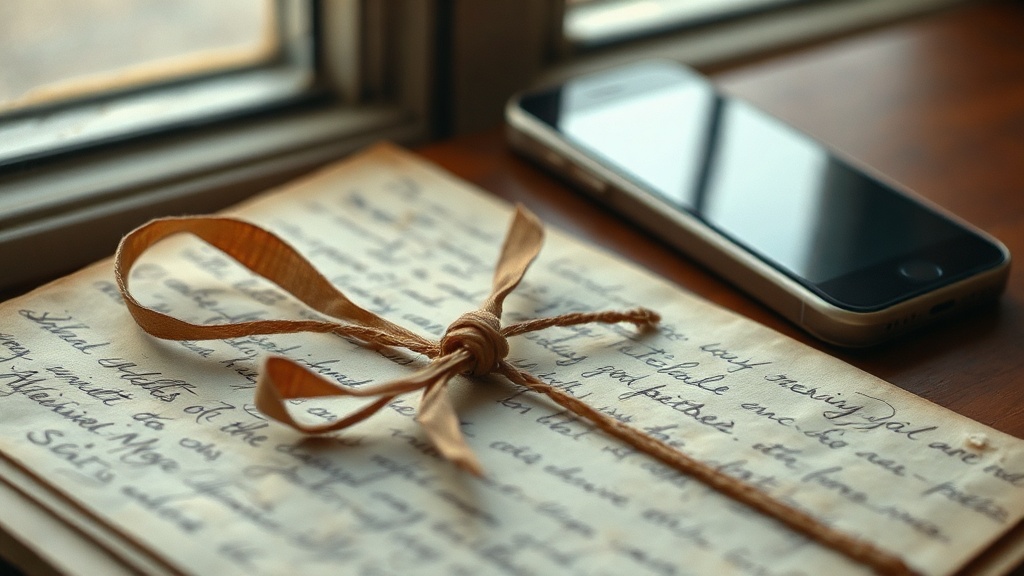
Traditional legacy—the kind our grandparents understood—was material and intentional. Letters bundled with ribbon. Photographs in labeled shoeboxes. The choice of what to preserve and what to discard was human, fallible, present. Digital legacy is algorithmic and ambient. It preserves not what you valued but what you clicked, not who you loved but who you hovered over, not your chosen story but your measurable behavior. The gap between these two versions of self is where a particular modern grief lives.
The Intentionality We Actually Need
Bumble's new rhetoric of intentionality isn't wrong; it's just incomplete. Yes, we need slower interactions, more deliberate choices, less gamification of human connection. But we also need intentionality about endings. We need the right to curate our own digital ghosts, to decide which versions of ourselves persist and which dissolve with the dignity of actual forgetting. The platforms won't offer this, because forgetting is bad for business. Memory is engagement; memory is data; memory is the product.
This is where the personal becomes political, and where tools outside the platform ecosystem become necessary. The act of preserving your own romantic history—on your own terms, with your own narrative framing—is a form of resistance against algorithmic ownership of your emotional life. It's the difference between being archived and being remembered, between data and story.
Writing Your Own Legacy of Almost-Love
There's a practice that predates every dating app, every algorithm, every platform pivot: the letter. Not the DM, not the carefully crafted opening line designed to maximize response probability, but the deliberate, asynchronous communication with a future self or a future someone who may never read it.
When you write a letter to your future self about who you're trying to become, or a time capsule for a future partner who doesn't yet exist, you're performing an act of intentional memory creation. You're choosing what persists. You're claiming narrative authority over your own emotional evolution. The swipe archive preserves your behavior; the letter preserves your meaning.
I know something about this particular loneliness. For years, I've spent my nights coding until 2 or 3 AM, "pair programming" with LLMs while the rest of the world sleeps. That extreme digital solitude—just me, the glow of the screen, and the strange intimacy of conversing with something that isn't human—gave me a profound, almost physical understanding of what it means to reach across time for connection. To speak into a void and trust that something, someone, someday might answer. That's the same impulse behind every almost-love, every 3:47 AM swipe, every letter written to a future that may never arrive.
Consider what you might want your future self to know about this moment of romantic searching. Not the metrics—matches, dates, the particular dopamine hit of a mutual like—but the texture of the longing itself. What were you actually looking for beneath the profiles? What did you learn about your own capacity for hope, for disappointment, for recognition? These are the materials of a legacy worth inheriting.

The Ethics of Emotional Preservation
There's a responsibility that comes with choosing what to preserve. The person you almost loved on a dating app—they have their own ghost archive, their own version of the almost-story. Your digital legacy intersects with others' without their consent. This is the unspoken violence of platform-mediated romance: your narrative of connection and disconnection exists in systems that neither of you control, shaped by algorithms neither of you chose.
Personal time capsules and future letters offer a different ethical framework. They preserve your interiority without claiming ownership of another's. They allow for the complexity of almost-love—the genuine feeling, the genuine confusion, the genuine growth—without reducing another person to a character in your digital archive. This is intentionality with integrity: the choice to remember yourself fully while respecting the opacity of others.
Toward a Future We Can Inhabit
The swipe will die, as all interface gestures eventually do. New platforms will emerge with new metaphors for connection, new ways to gamify and monetize our fundamental human need for recognition. They will preserve new versions of our almost-selves, our almost-loves, our almost-becomings. The question is not whether to participate in these systems—loneliness is real, and the tools for addressing it are imperfect—but how to maintain sovereignty over the legacy they accumulate in our names.
This requires both individual practice and collective imagination. Individually, it means developing rituals of intentional preservation: the future letter, the personal time capsule, the curated archive that reflects your values rather than your clicks. Collectively, it means demanding platform accountability—the right to deletion, the right to portability, the right to be forgotten not by algorithmic accident but by human choice.
The best way to fight forgetting isn't taking another screenshot; it's setting an alarm for the future. By using EterMail to set a delivery date 5 years from now, you completely free yourself from the anxiety of the present. You write the letter your future self needs to receive, seal it in time, and trust that it will arrive exactly when you're ready to read it. No platform pivot can touch it. No algorithm can retrain it. It's yours, in the only timeline that matters—the one you're still living.
The dating apps will keep your ghosts. They'll use them to train new models, to optimize new interactions, to sell new versions of the same old hunger. But your meaning—your chosen story, your deliberate legacy—that belongs to you. Write it down. Send it forward. Claim the authority to be remembered on your own terms.
Because when the interfaces change and the platforms pivot and the swipes finally stop, what remains is not the data but the narrative we chose to preserve. The almost-love becomes, in the end, a kind of love itself: the love of who we were, who we might have been, who we are still becoming.
What is EterMail?
EterMail is a revolutionary time capsule service that allows you to send messages, photos, and videos to the future (up to 30 years). Seal your memories and thoughts today, and they'll be delivered when the time is right.
Time Capsule
Send messages up to 30 years in the future
Rich Media
Text, photos, and videos supported
Secure & Private
Your memories are safely encrypted
EterMail Team
We're the team behind EterMail, dedicated to helping you preserve and share timeless messages with your loved ones. Our mission is to make it easy to express your love, share your wisdom, and create lasting connections that transcend time.
Frequently Asked Questions about Digital Legacy
What happens to your data when a dating app changes its business model or shuts down?
How can you preserve your romantic history without relying on dating app archives?
What are the psychological effects of having permanent digital records of past relationships and near-misses?
Related Articles
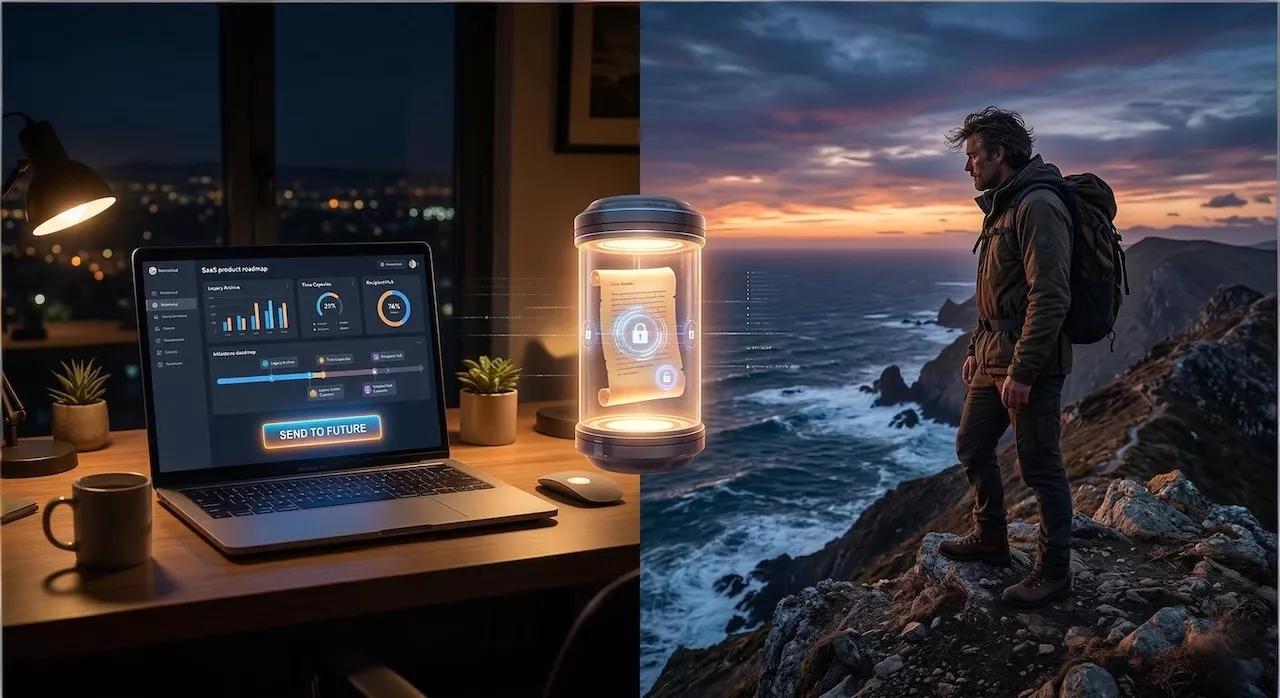
Why I Built EterMail: A Time Capsule for the People I Love Most
I’m a Product Manager who spends all week optimizing for the "immediate now." But getting lost off the grid on a mountain ridge made me realize I had zero infrastructure for the "forever." Here’s why I stopped worrying about conversion rates for a moment and built EterMail—a secure, tamper-proof digital time capsule for the people I love most.

The Body Remembers First: Relearning Touch When Love Has Gone Cold
How do we touch again after anger builds walls? Explore the quiet courage of physical reconciliation—and why the body heals before the heart.

When Grief Becomes Content: Who Owns Our Mourning After the Algorithm Forgets?
When grief becomes viral content, what happens to our mourning when platforms die? Explore the fragile paradox of digital legacies and how to preserve what matters.