
The Video That Outlived the Views
She was twenty-three, sitting in her childhood bedroom, the light from her ring light casting a soft halo against wallpaper she'd long outgrown. Her mother had died forty-eight hours earlier. She pressed record—not for therapy, not for family, but for strangers. Three million views. Comments like "sending love" and "this helped me" flooded in. Then the algorithm shifted. Then the platform redesigned its feed. Then, eventually, someone else died, someone else's grief performed better, and her video sank beneath an infinite scroll of newer sorrows.
This is the quiet tragedy of grief made digital: the performance outlives the community that witnessed it. The content remains; the context evaporates. We have built accidental archives of our most unguarded moments, yet we possess no real architecture for what these archives mean, who controls them, or whether they serve as legacies or simply digital ghosts—haunting presences without haunters, memories without rememberers.
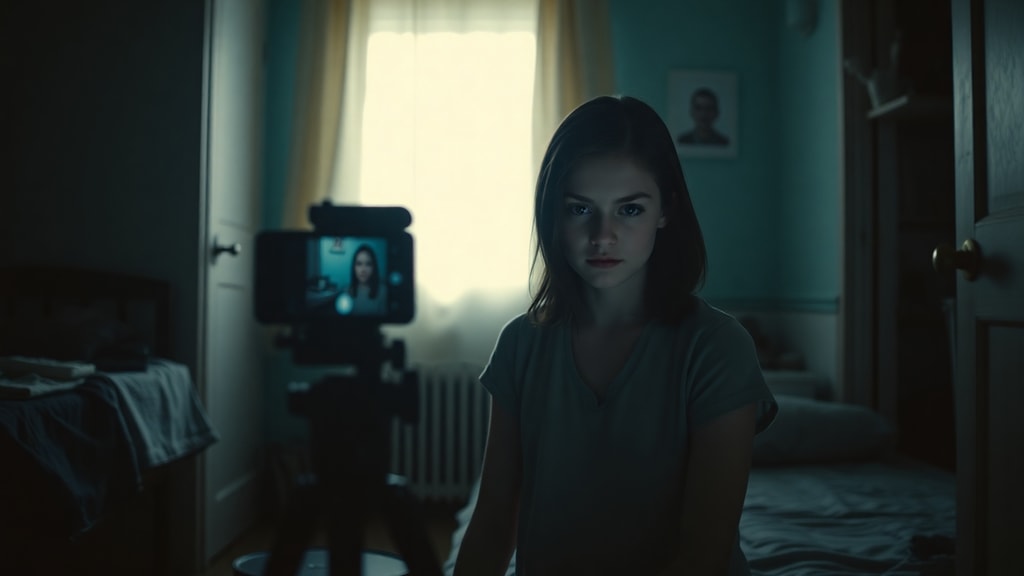
The Accidental Archive of Unimaginable Loss
TikTok was never designed as a memorial. It was built for dance trends, for the dopamine hit of virality, for the fleeting pleasure of being seen. Yet somewhere between the choreography and the comedy, grieftok emerged—a raw, unscripted genre where users broadcast their most crushing losses to millions of scrolling eyes. Terminal diagnoses. Sudden accidents. The slow unraveling of parents to dementia. The first Christmas without someone. The anniversary that arrives like a physical blow.
There is something undeniably powerful in this democratization of mourning. For generations, grief was privatized, sanitized, hidden behind closed doors and whispered phone calls. The Victorian era had elaborate mourning costumes; we have three-minute videos with trending audio. Both are performances, but ours are searchable, shareable, permanently indexed by servers we will never visit.
The paradox is this: these fleeting performances of sorrow may be the most honest legacies some people will ever leave. A teenager documenting her father's final months. A widower explaining how he still sets two plates. A sibling describing the particular silence of a room where someone used to be. They are not polished obituaries. They are messy, immediate, unfiltered—and that is precisely their power.
Yet honesty and permanence make strange bedfellows. The platform that hosts these confessions does not love them. It cannot. An algorithm has no capacity for grief, only for engagement. The video that helped three million strangers process their own losses is, to the system that amplified it, simply content that performed well in Q3.
When the Platform Dies Before the Memory Does
Consider the platforms that already rest in digital graveyards. Vine. Google+. MySpace, where millions of early internet users once poured their teenage hearts into bulletins and top friends lists. The content remains, sometimes, in degraded form. The context—who saw it, what it meant, why it mattered—has largely dissolved.
TikTok itself faces existential uncertainty. Regulatory threats. Ban proposals. The slow entropy that eventually claims all platforms not named Facebook or Google. If your most profound loss is content, who owns the memory of your mourning when the views stop counting? The terms of service you clicked without reading likely assign broad rights to the platform. Your grief, legally speaking, may be their asset. Your raw confession, their training data.
This is not abstract. Researchers have already documented how deceased users' accounts become contested digital property, how families struggle to access final messages, how platforms' policies for memorialization lag far behind their capacity to accumulate human experience. We are running a massive, uncontrolled experiment in what it means to remember and be remembered, and we have not yet developed the ethical or technical frameworks to manage its consequences.

The Performative Burden of Public Grief
There is another cost, harder to quantify. The performative burden of public grief. When mourning becomes content, the mourner becomes, in part, a creator. They must manage their audience's expectations, their own emotional availability, the strange economy of vulnerability where disclosure begets engagement begets pressure to continue disclosing.
I have watched users apologize for "not posting about my grief lately" as if grief were a series with an obligation to its viewers. I have seen the comments that demand updates, that treat a person's most profound loss as ongoing entertainment, that confuse witnessing with entitlement. The community that forms around public mourning is real and often genuinely supportive, but it is also fickle, easily distracted, fundamentally asymmetrical in its investment.
And when the mourner needs to heal—truly heal, which sometimes means changing, means becoming someone who no longer defines themselves by this loss—what happens to the archive they built? The videos remain, frozen at their most devastated. The algorithm remembers what the person has outgrown.
Building Intentional Archives in an Ephemeral Age
This is not an argument against sharing grief. The connections forged in digital vulnerability are genuine. The relief of being seen, of discovering that your particular unbearable is someone else's too—these are real goods. But they are goods best intentionally chosen, not accidentally accumulated.
What would it mean to build a digital legacy with the same care we once brought to physical ones? The letters saved in shoeboxes. The photographs in albums with handwritten dates. The objects passed down with stories attached. These analog practices were slow, limited in reach, but curated by love rather than optimized for engagement.

The question is not whether to be digital—we are digital, this is not reversible—but how to be digital with intention. How to preserve what deserves permanence without trapping ourselves in performances we cannot escape. How to share without surrendering ownership. How to be remembered as we choose, not as the algorithm's last impression of us.
The Architecture of Chosen Memory
There are tools emerging for this intentional curation. End-to-end encrypted platforms that return control to the user. Time-scheduled messaging that allows a letter to arrive years hence, when the rawness has tempered into something the recipient can hold. Digital time capsules designed for family, not followers—for the specific eyes that matter, not the aggregate gaze of millions.
The difference is structural. Social media grief is broadcast: one to many, immediate, reactive, trapped in the present tense of its creation. Intentional digital legacy is correspondence: one to one or few, asynchronous, reflective, capable of spanning years and even death itself. It does not replace public mourning, but it offers a complementary practice—a place for the grief that needs no performance, only witness.
I spend a lot of nights alone with code, building systems that will outlast my own attention span. There's a particular solitude to it—staring at a screen at 2 AM, trying to construct something that bridges the gap between now and later, between what I feel and what someone else might need to hear. That same impulse drives how I think about memory. The best way to fight forgetting isn't taking another screenshot; it's setting an alarm for the future. By using EterMail to set a delivery date 5 years from now, you completely free yourself from the anxiety of the present. The message waits. The intention holds. You don't have to perform your grief for an audience today to preserve it for someone who matters tomorrow.
Reclaiming Grief from the Content Machine
The grieftok phenomenon reveals something true about human need: we want to be witnessed in our devastation, we want our losses to matter beyond our private endurance of them. But it also reveals something broken about our infrastructure for meeting that need. We have built systems that harvest vulnerability without protecting it, that monetize confession without ensuring its longevity on human terms.
Reclaiming grief from the content machine does not mean retreating into silence. It means asking harder questions about where our words live, who controls their persistence, and what we want to remain when the platforms inevitably transform or disappear. It means building practices—personal, familial, sometimes technological—that treat memory as a right rather than a revenue stream.
Your grief is not content. Your mourning is not a performance for an algorithm's optimization. The person you lost deserves a memorial that outlasts the platform where you first spoke their name. You deserve to choose what remains.
The video will sink beneath the scroll. The views will stop counting. What persists—what truly persists—is the intention we bring to what we save, what we send forward, what we ask others to remember when we no longer can.
Frequently Asked Questions
What happens to my social media accounts when I die?
Most major platforms offer limited memorialization options, but policies vary widely and often require family members to navigate complex verification processes. Without advance planning, your digital presence may remain frozen, be deleted after inactivity, or become inaccessible to loved ones seeking closure or connection.
How can I preserve my digital memories outside of social media?
Consider diversifying your archive across multiple formats: encrypted cloud storage with designated beneficiaries, physical backups of essential media, and intentional correspondence tools that let you schedule messages for future delivery. The key is maintaining personal control rather than relying solely on platforms whose priorities may shift.
Is sharing grief publicly online harmful or helpful?
Research suggests both outcomes occur simultaneously: public grief can forge genuine community and reduce isolation, yet it may also create performative pressure, expose mourners to exploitation, and produce permanent records that outlast the person's need for them. The healthiest approach often combines selective public sharing with private, intentional preservation for those closest to you.
What is EterMail?
EterMail is a revolutionary time capsule service that allows you to send messages, photos, and videos to the future (up to 30 years). Seal your memories and thoughts today, and they'll be delivered when the time is right.
Time Capsule
Send messages up to 30 years in the future
Rich Media
Text, photos, and videos supported
Secure & Private
Your memories are safely encrypted
EterMail Team
We're the team behind EterMail, dedicated to helping you preserve and share timeless messages with your loved ones. Our mission is to make it easy to express your love, share your wisdom, and create lasting connections that transcend time.
Frequently Asked Questions about Digital Legacy
What happens to my social media accounts when I die?
How can I preserve my digital memories outside of social media?
Is sharing grief publicly online harmful or helpful?
Related Articles

Why I Built EterMail: A Time Capsule for the People I Love Most
I’m a Product Manager who spends all week optimizing for the "immediate now." But getting lost off the grid on a mountain ridge made me realize I had zero infrastructure for the "forever." Here’s why I stopped worrying about conversion rates for a moment and built EterMail—a secure, tamper-proof digital time capsule for the people I love most.

The Body Remembers First: Relearning Touch When Love Has Gone Cold
How do we touch again after anger builds walls? Explore the quiet courage of physical reconciliation—and why the body heals before the heart.

The Receipts We Keep: How Paper Prophecies Quietly Document the Futures We Once Believed In
Why do we save receipts for futures that never arrived? Explore how paper trails become emotional time capsules—and how to preserve what actually matters.