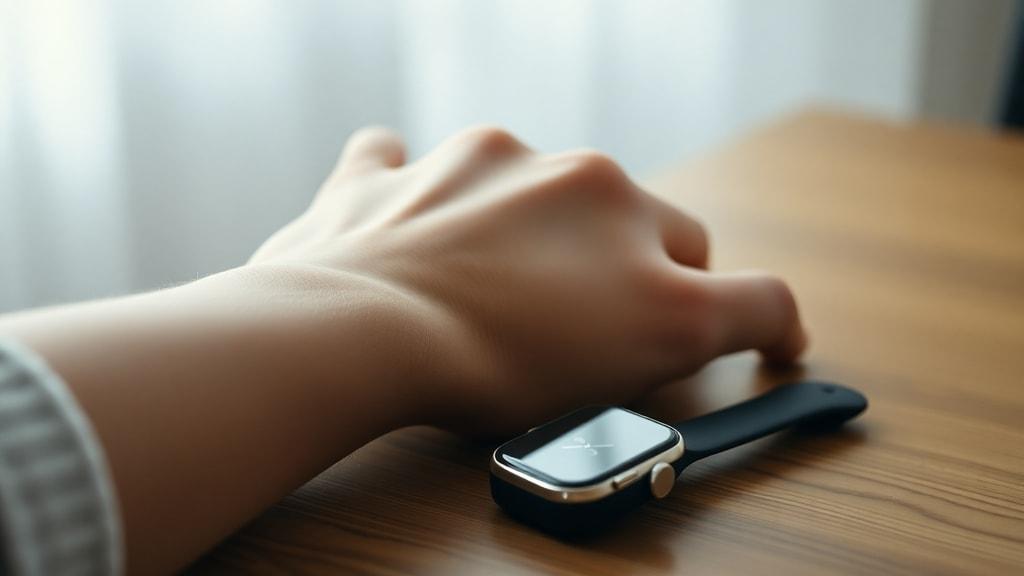
The first time my watch congratulated me for standing, I felt seen. The thousandth time, I felt something else entirely: the slow erosion of a boundary I couldn't name. Somewhere between tracking my REM cycles and my resting heart rate, I had traded the private experience of being alive for a dashboard I no longer controlled.
This is the quiet bargain of the wearable age. We strap devices to our wrists that know our sleep architecture, our arrhythmias, our fertility windows—data points so intimate they once belonged only to doctors, lovers, and the self. Now they belong to algorithms. And the metrics that matter most to the people who could actually heal us are rarely the ones being harvested, packaged, and sold.
What Your Doctor Actually Needs
Dr. Sarah Chen, a cardiologist at a Boston teaching hospital, keeps a drawer of patient printouts. Apple Watch ECG strips. Fitbit sleep scores. Garmin stress maps. "Most of it," she says, "is noise. Beautiful, expensive noise."
The problem isn't the data itself. It's the mismatch between clinical utility and commercial value. Your wearable excels at longitudinal trends—weeks of heart rate variability, months of sleep consistency, patterns of movement that reveal depression before mood does. These are the signals that could transform preventive medicine. But they're buried under features designed for engagement: daily stand goals, calorie burn competitions, readiness scores that gamify your biology.
What physicians actually want is simpler and harder to extract:
- Resting heart rate trends over months, not the spike during your morning commute
- Sleep regularity, not the theatrical staging of REM percentages
- Activity patterns that flag social withdrawal or functional decline
- Blood pressure correlation with actual life events, not generic stress badges
"The best data I get," Dr. Chen notes, "is when a patient emails me a handwritten log. They noticed something. They contextualized it. They owned it."

The Permanent Map You Cannot See
Here's what the privacy policies don't say plainly: your biometric data is building a predictive model of your future body that you will never access. Insurers purchase aggregated risk scores. Employers buy wellness program analytics. Data brokers construct health profiles that shadow your credit score, influencing everything from life insurance premiums to job candidacy.
The wearable industry operates on a dual extraction model: your attention (through gamification) and your biology (through continuous sensing). The first feeds engagement metrics. The second feeds markets you cannot see into.
A 2023 Stanford study found that commercially available health data profiles could predict diabetes onset three years before diagnosis with 78% accuracy. The participants whose data enabled this prediction had never been told. Their heart rate variability, their glucose-adjacent patterns, their circadian disruptions—harvested, modeled, monetized, while they received only a "Great job!" notification for hitting 10,000 steps.
This is the sovereignty gap: the distance between what your body generates and what you control. And in that gap, a version of you is being constructed for purposes you'll never fully know.
The Intimate Boundary
Reclaiming this boundary isn't Luddite fantasy. It's a deliberate practice of intimacy with your own aliveness. The philosopher Byung-Chul Han writes of the "burnout society"—how self-exploitation wears the mask of self-optimization. Your wearable's dashboard is this mask made visible. Every metric becomes a command. Every gap, a failure.
The alternative is slower, less legible, more human.
Selective sensing: Wear the device for defined periods, not perpetual surveillance. A month of sleep tracking to identify a pattern. Two weeks of heart rate monitoring during a transition. Then remove it. Let your body return to unmeasured experience—the texture of fatigue, the quality of rest, the private language of your own rhythms.
Contextual ownership: When you do track, annotate. The wearable records a heart rate spike; you record the argument, the grief, the unexpected joy. This narrative layer is what transforms data into meaning—and what remains yours when the raw metrics are extracted.
Clinical relationships: Share selectively with providers who understand context. The ECG that caught your atrial fibrillation matters. The weekly "stress score" that correlates with nothing in your actual life does not.

The Architecture of Future Selves
I spend a lot of nights alone with a screen, pair-programming with LLMs until 2 or 3 AM, mapping out architectures that most people will never see. That digital solitude has taught me something about boundaries: the ones we build in code matter because they protect the ones we feel in our bodies. When I step away from the keyboard—when I'm hiking a steep trail or surfing and feeling that raw, uncontrolled reality of wind and water—I'm reminded that the most precious experiences resist digitization entirely. The present moment, unrepeatable, unharvestable.
The same sovereignty we seek over our biometric data applies to the memories, wisdom, and love we transmit across time. A letter to your future self, a message for a child you'll meet in a decade, a promise to a spouse you'll renew at a milestone anniversary—these require intentional architecture.
The platforms that promise to preserve these transmissions face the same temptations as wearable manufacturers: extraction disguised as care. Your emotional data—your voice, your handwriting, your most vulnerable declarations—can be mined for engagement, for advertising inference, for training datasets that replicate your intimacy without your presence.
This is exactly why I obsessed over end-to-end encryption and extreme server redundancy when building EterMail. Because I know that a letter written to the future needs to be guarded even more fiercely than a bank password. The self that heals requires this sovereignty. The self that is harvested does not.
Toward Measured Unmeasuring
The wearable isn't the enemy. The unchecked extraction is.
What would it mean to use these tools clinically rather than compulsively? To track what serves a question you actually have, then stop? To prefer the friction of a handwritten sleep log over the seamless capture of a sensor? To accept that some bodily knowledge resists digitization—that the quality of your exhaustion, the particular shade of your wellbeing, belongs to a slower register of self-knowledge?
Dr. Chen's drawer of printouts includes one she keeps visible: a patient's single page, three months of morning pulse taken manually, with notes. "Migraine weather." "After mother's call." "Strange peace, unearned." The pulse numbers themselves are unremarkable. The context makes them irreplaceably human.
This is what your doctor actually wants. Not more data. More you in the data. More ownership of what you choose to generate, share, and preserve.
The wearable will improve. Sensors will shrink. Prediction will sharpen. The question isn't whether to participate, but whether you can participate without disappearing into the participation—whether your body's data remains yours in any meaningful sense, whether your future self can receive your present care without platform intermediaries claiming the emotional value between now and then.
The last intimate boundary isn't technical. It's the practice of choosing what to make visible, to whom, and for how long—in your health, your memory, your love. The self that heals requires this sovereignty. The self that is harvested does not.

What is EterMail?
EterMail is a revolutionary time capsule service that allows you to send messages, photos, and videos to the future (up to 30 years). Seal your memories and thoughts today, and they'll be delivered when the time is right.
Time Capsule
Send messages up to 30 years in the future
Rich Media
Text, photos, and videos supported
Secure & Private
Your memories are safely encrypted
EterMail Team
We're the team behind EterMail, dedicated to helping you preserve and share timeless messages with your loved ones. Our mission is to make it easy to express your love, share your wisdom, and create lasting connections that transcend time.
Frequently Asked Questions about Digital Privacy & Security
Can wearable health data be used against me by insurance companies or employers?
How can I track health data for my doctor without surrendering privacy to wearable companies?
What makes biometric data different from other personal data in terms of privacy risk?
Related Articles
The Last Unrecorded Window: When Your Eyes Become Someone Else's Surveillance Feed
Your eyes are the last unrecorded vantage point of your life. What happens when face recognition turns your gaze into harvestable data?
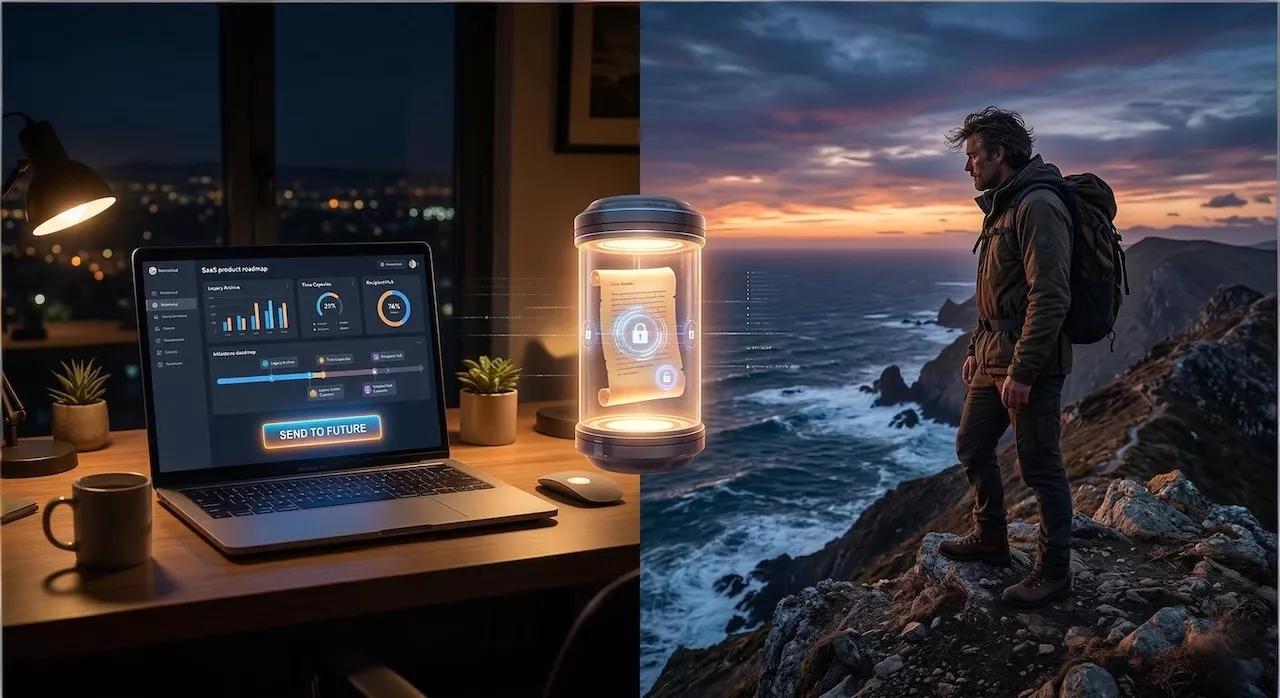
Why I Built EterMail: A Time Capsule for the People I Love Most
I’m a Product Manager who spends all week optimizing for the "immediate now." But getting lost off the grid on a mountain ridge made me realize I had zero infrastructure for the "forever." Here’s why I stopped worrying about conversion rates for a moment and built EterMail—a secure, tamper-proof digital time capsule for the people I love most.

The Cinnamon Bread on Thursdays: How the Mundane Algorithms of Survival Archive the Geometry of Love
When you find your late mother's grocery list still auto-populating—cinnamon bread, grapefruit, cough drops at 11 PM—you realize her digital ghost is still feeding a version of you that no longer exists.