The Deposit Slip for a Life Almost Lived
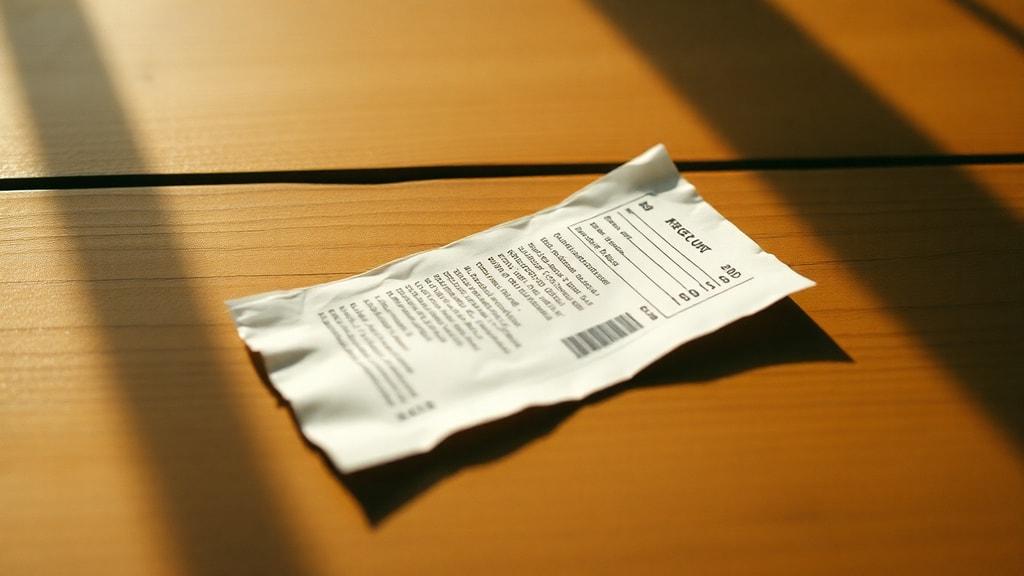
I found it in a shoebox labeled "TAXES 2019," buried beneath coffee-stained W-2s and a CVS receipt long enough to qualify as a novella. A deposit slip. $2,400. First month's rent plus security for the apartment on Bergen Street, the one with the fire escape we planned to turn into a herb garden. We never moved in. I never got that money back. The slip's thermal paper has turned the color of old aspirin, but the date remains sharp: March 14, 2017. Six days before she told me she'd taken the job in Seattle without discussing it, or perhaps six days before I finally admitted I'd seen the offer letter on her desk and said nothing.
We keep these fragments. Not because the IRS might audit our grief, but because receipts are the only language the future speaks before it arrives. They are prophecies we pay for in advance, written in fading ink on paper designed to disappear.
The Warranty Outlasts the Marriage
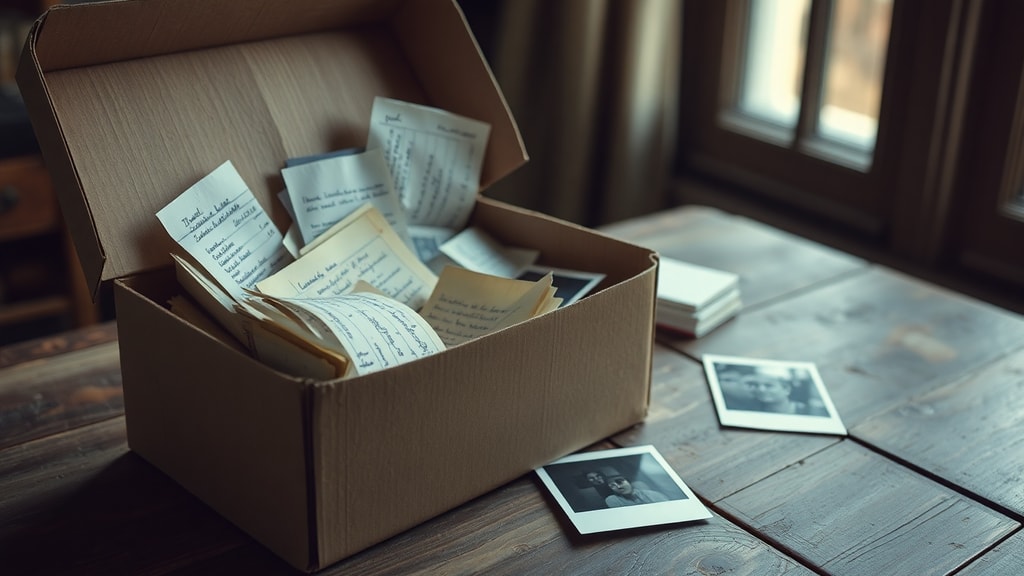
Consider the warranty. That peculiar document that promises the refrigerator will survive longer than the love that chose it. I know a man who, during his divorce, discovered he had kept every warranty for every appliance purchased during his twelve-year marriage. The KitchenAid mixer, still under extended coverage. The Dyson vacuum, registered in both names. The Tempur-Pedic mattress, whose twenty-year guarantee now seemed like dark comedy.
"I couldn't throw them away," he told me. "They felt like... evidence. Proof that we'd planned to stay."
We predict our futures through the things we buy and the promises we attach to them. The warranty is a particular kind of optimism—a belief that we will still be around to need repairs, that the life we've built will require maintenance. When the marriage ends but the refrigerator hums on, the warranty becomes something else entirely. A relic. A receipt for a future that honored its contract better than we did.
The junk drawer becomes a museum of these miscalculations. The restaurant matchbook from where we predicted annual anniversaries. The concert ticket stub for the band we swore we'd see together every tour. The handwritten total from the wine bar where we calculated, on a napkin, the down payment for a house that exists now only in Zillow alerts neither of us has bothered to disable.
The Mathematics of Hope
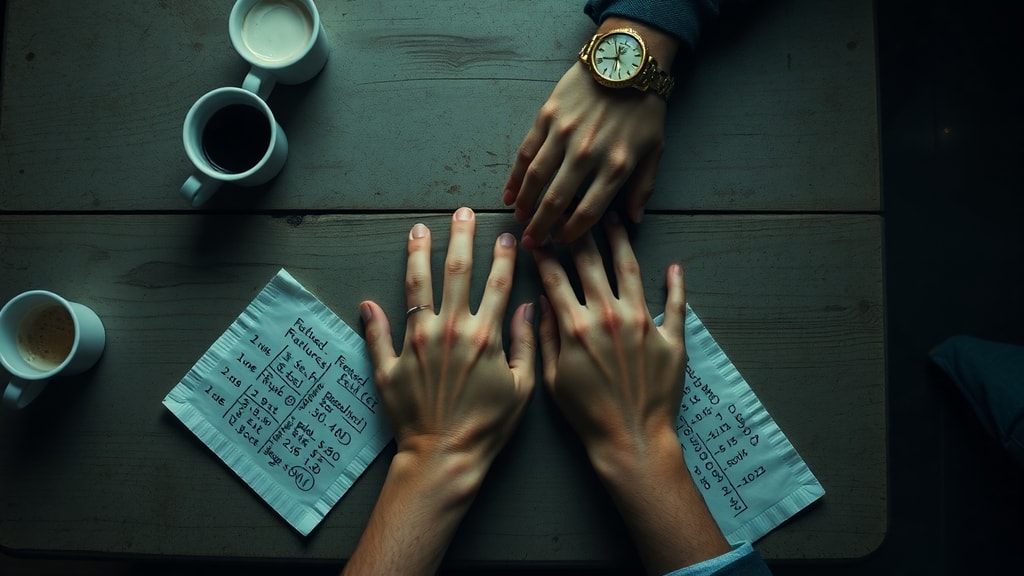
There's a peculiar intimacy to handwritten totals. The server's calculation, the tip added in a different pen, the final sum that represented an evening's worth of conversation about what came next. I have a receipt from a diner in Providence, Rhode Island, where at 2:00 AM we mapped out five years on paper napkins. Her handwriting: "Portland by 2020?" Mine, beneath: "Dog first, then baby." The check came to $34.67. I have paid more for therapy sessions that unearthed less.
These paper prophecies accumulate because they represent a version of ourselves we found convincing enough to document. The person who ordered the second bottle of wine believed, with the particular certainty of 11:47 PM, that they knew who they would be in 2024. That person exists now only in ink, in the carbon copy the restaurant kept, in the memory of a waiter who has long since moved to another city.
We do not save receipts for the things that went according to plan. No one frames the receipt for the oil change completed on schedule. We save the irregular, the mispredicted, the deposit slip for apartments never occupied. They become a kind of negative space portraiture—defining who we are by the futures we outline and then step outside of.
Filing Under "Not Deductible"
The tax code offers no relief for losses of this magnitude. You cannot itemize a abandoned future. The accountant will not ask about the engagement ring's appraisal, still saved in a file marked "IMPORTANT," or the nonrefundable deposit on the venue that became, instead, the location of a conversation about "needing space."
At some point, we must sort these accumulations. The shoebox phase gives way to the spreadsheet phase gives way to the shredder phase. "Not deductible," we write in the margins of our own history, and the sound of the machine becomes its own kind of closure. The thermal paper curls and blackens. The future we purchased dissolves into noise.
But not all of it. Some receipts migrate. From shoebox to memory book. From junk drawer to safety deposit box. From the pile marked "shred" to the folder we never quite label, the one we find ourselves opening on anniversaries of nothing in particular.
What the Shredder Cannot Reach
The physical receipt is dying. Venmo notifications replace handwritten totals. Digital tickets delete themselves thirty days after the event. Our prophecies now live in cloud storage, in auto-deleting stories, in the ephemera of platforms designed to make forgetting the default.
This should feel like liberation. The junk drawer empties itself. The shoebox never fills. Yet something unsettling accompanies this convenience. When every transaction becomes weightless, what anchors our memory of who we thought we'd become?
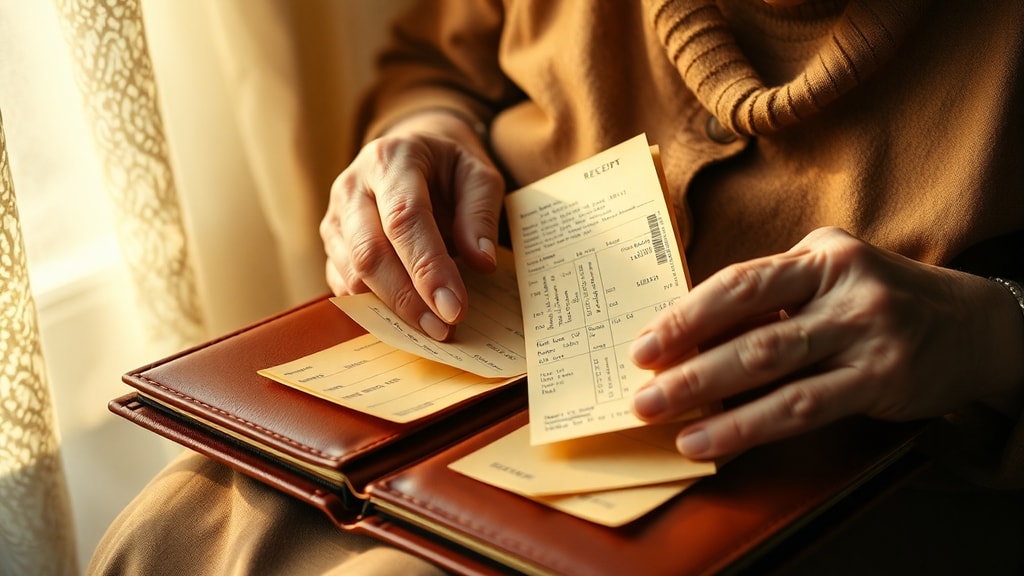
I think of my mother, who kept every receipt from her first year in America. The Woolworth's where she bought her first winter coat, not understanding what "winter" meant in Boston. The grocery store where she learned the word "cantaloupe" by pointing. The bus ticket to the interview that became the job that became the life that made my life possible. These receipts were not financial records. They were a narrative, dated and sequential, of a future being constructed in real time by someone who could not yet imagine its conclusion.
The Letters We Write Instead
There is another way to preserve the futures we predict. Not in the accidental archive of commerce, but in the intentional act of address. A letter to the self who will open it, or to the child who does not yet know to ask, or to the partner whose hand we cannot yet imagine releasing.
I know this impulse intimately. I am the person who sits at my desk until 2 or 3 AM, "pair programming" with LLMs, mapping architectures on glowing screens in the dead of night. That extreme solitude—just me and the machine, building something that doesn't exist yet—has taught me how much we need to feel addressed by our past selves. The digital world I help construct is full of noise and forgetting. But the letters we write across time? They are something else. They are bridges we build between who we were and who we become, as real as any code I ship to a server.
These are receipts too, in their way. Deposits placed against a future we cannot verify, paid in the currency of honesty and time. They carry the same risk as the apartment deposit, the same possibility of loss. But they also carry something the thermal paper cannot: the voice of the predictor, preserved not in what they purchased but in what they believed worth saying.
The receipt records what we thought we wanted. The letter records who we were while wanting it. Together, they offer something like completeness. The transaction and the intention. The object and the longing.
The Quiet Precision of What Remains
I still have the deposit slip. The shoebox has been winnowed, reorganized, subjected to annual purges. But this fragment remains, its ink now barely visible, its date more assertion than fact. March 14, 2017. A Thursday. The day we paid for a future that existed, briefly, in the space between two signatures on a lease application.
I keep it not because I mourn the apartment, or even, finally, because I mourn her. I keep it because it reminds me that I was once capable of a particular kind of belief—the kind that translated into action, into money withdrawn and handed over, into a plan concrete enough to generate paperwork. The receipt proves I was present for my own hope. That I showed up, with funds, ready to occupy the future I had imagined.
This is what the receipts we keep ultimately document. Not the futures that arrived or failed to arrive. But the self who predicted them, who stood at some counter or table and said, with wallet or pen, this is what comes next. That self deserves witness. Even when wrong. Especially when wrong. The receipt is their portrait, drawn in the negative space of what never came to pass.
And sometimes, now, I write letters to replace the ones I never sent. To the self who made that deposit, who believed in shared addresses and fire escape gardens. I tell him what I know now, which is not much more than he knew then, only different. I seal these letters against a future I cannot predict, but which I am learning, finally, to address with something more durable than thermal paper. With words that will wait, that will survive the shredder, that will arrive when the self who needs them has forgotten how to ask.
The best way to fight forgetting isn't taking another screenshot; it's setting an alarm for the future. By using EterMail to set a delivery date 5 years from now, you completely free yourself from the anxiety of the present. The letter becomes a promise that time itself will keep.
The receipts accumulate. We file them, or we don't. We learn, gradually, to distinguish between the futures we purchased and the ones we merely imagined. And sometimes, in the quiet of sorting, we find the courage to write something new. A prophecy not of what we will buy, but of what we might still become.
What is EterMail?
EterMail is a revolutionary time capsule service that allows you to send messages, photos, and videos to the future (up to 30 years). Seal your memories and thoughts today, and they'll be delivered when the time is right.
Time Capsule
Send messages up to 30 years in the future
Rich Media
Text, photos, and videos supported
Secure & Private
Your memories are safely encrypted
EterMail Team
We're the team behind EterMail, dedicated to helping you preserve and share timeless messages with your loved ones. Our mission is to make it easy to express your love, share your wisdom, and create lasting connections that transcend time.
Frequently Asked Questions about Future Predictions
Why do people save receipts and paper memorabilia that have no financial value?
How can writing letters to your future self help process unexpected life changes?
What makes physical time capsules more meaningful than digital archives for preserving personal history?
Related Articles
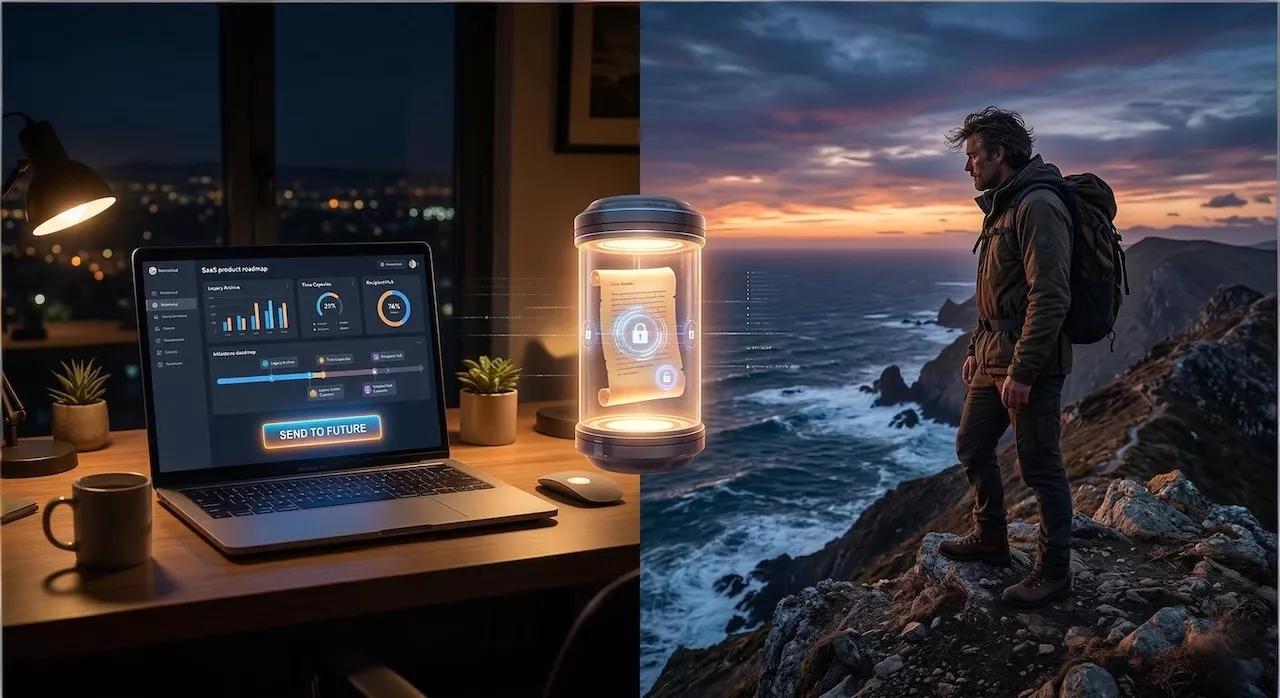
Why I Built EterMail: A Time Capsule for the People I Love Most
I’m a Product Manager who spends all week optimizing for the "immediate now." But getting lost off the grid on a mountain ridge made me realize I had zero infrastructure for the "forever." Here’s why I stopped worrying about conversion rates for a moment and built EterMail—a secure, tamper-proof digital time capsule for the people I love most.
The Body Remembers First: Relearning Touch When Love Has Gone Cold
How do we touch again after anger builds walls? Explore the quiet courage of physical reconciliation—and why the body heals before the heart.
When Grief Becomes Content: Who Owns Our Mourning After the Algorithm Forgets?
When grief becomes viral content, what happens to our mourning when platforms die? Explore the fragile paradox of digital legacies and how to preserve what matters.