
You are standing in a restaurant you have never visited, holding a menu you have not memorized, and your finger hovers over a dish that tastes like you—not like compromise, not like the ghost of someone else's preferences. The waiter is waiting. Your heart is hammering. You order it anyway. The first bite is salt and panic and something else you cannot yet name.
This is not a story about moving on. Moving on is a lie we tell the well-meaning. This is about the terrifying rehabilitation of wanting—the slow, clumsy process of remembering that you are a person who desires things, independent of anyone else's appetite, independent of the love you lost.
The Body Keeps Score of What We Denied Ourselves
Grief is clever. It disguises itself as loyalty, as honor, as the only acceptable proof that what you had mattered. We perform this grief through self-denial. We stop eating the foods they found too pungent, too ethnic, too much. We abandon the music that made us dance alone in kitchens. We let our bodies go quiet, as if pleasure itself were a betrayal of the dead thing we are still tending.
The body, though, does not forget. It stores these renunciations in the shoulders, in the jaw, in the way we hold our breath when someone attractive enters the room. We become experts at not-wanting, and this expertise feels like safety. If you do not want, you cannot be disappointed. If you do not reach, you cannot be seen reaching for the wrong hand.
But there comes a moment—usually small, usually uninvited—when the body rebels. You are in a bookstore and your hand moves toward a novel without checking whether the genre would have bored them. You are in a city you never visited together and you feel something loosen in your chest that you did not know was clenched. These are not victories yet. They are symptoms of a self trying to resurface.

When Availability Feels Like a Trap
The first person who wants you after the big loss arrives like a stranger at a door you have barricaded from the inside. You do not trust them. More precisely, you do not trust yourself with them. Availability has become synonymous with vulnerability, and vulnerability has become synonymous with the particular annihilation you are still recovering from.
So you sabotage. You arrive late. You mention the ex within seventeen minutes. You fixate on some small incompatibility—a laugh too loud, a political hesitation, a preference for early mornings—and you inflate it into a wall. You tell yourself you are being selective. You are being terrified.
The terror is not irrational. You have learned that wanting opens the door to losing. The mathematics feel sound: if you do not acquire, you cannot be dispossessed. But this mathematics leaves you in a shrinking room, surrounded by everything you have refused, and the air grows thin there.
There is a particular cruelty to this phase: you are lonely, and you have made loneliness your proof of devotion. You wear it like a hairshirt. You do not yet understand that the person you lost would not have wanted this monument of your suffering, that their love—if it was worth anything—was always hoping you would be happy, not that you would be permanently sad on their behalf.
The Scar on Your Knee Stops Needing a Origin Story
Some milestones announce themselves quietly. You are on a third date that you did not cancel. The person across from you reaches for your hand, and their thumb brushes the raised scar on your knee—the one from the hiking trip, the one you always explained in exhaustive detail because the story was a test, a way to see if they would listen, if they would remember, if they would stay.
This time, you say nothing. The touch continues. You realize, with something like vertigo, that you have stopped auditioning for permanence. The scar is just a scar. The story is yours to keep or release. You do not owe anyone your autobiography as collateral against their departure.
This is the milestone no one writes songs about: the moment you understand that your history is not a burden to be disclosed in installments, that you are not a damaged thing requiring special handling. The scar is not a warning label. It is just topography, evidence of a body that has moved through the world and survived.

Grief Impersonating Loyalty
We must name this deception clearly: grief is not the same as love. They are adjacent rooms, and we confuse their doors. We think that as long as we hurt, we are still loving properly. We think that healing is a kind of abandonment, that the dead relationship will feel our recovery as an insult.
But grief is a visitor, not a tenant. It does not pay rent. It does not get to redecorate your future. The loyalty you imagine you are demonstrating is often just fear wearing a nobler costume—the fear that if you stop hurting, the whole thing will have meant nothing, that you will have been foolish to have invested so much in something so perishable.
The truth is harsher and more liberating: the meaning of what you had does not depend on your continued suffering. It depended on what it was when it existed. You do not honor a fire by freezing in the ashes. You honor it by building the next thing with the warmth you remember, with the knowledge that heat is possible, that you are capable of generating it again.
Becoming Greedy for Your Own Life
There is a word we are taught to fear in love: greedy. It is the accusation that haunts the person who wants too much, who wants the wrong things, who wants without sufficient justification. But after loss, greediness becomes a radical act. To want again, specifically and unapologetically, is to reclaim territory.
You want the apartment with the light they would have found too bright. You want the job in the city they refused to consider. You want the body that ages in its own direction, ungoverned by someone else's aesthetic preferences. You want a future that does not include their name in every sentence, and this wanting feels like theft until it feels like breathing.
The greed is not for things, finally. It is for the self that got folded too small, that learned to want only in the negative space of another person's desires. This self is not waiting to be discovered like some buried artifact. It is waiting to be built, choice by choice, meal by meal, touch by tentative touch.
The Letter You Write to the Person You Are Becoming
There is a practice that helps in this reconstruction: writing to the self who will exist after the wanting has become natural again. Not the self who is healed—that self is a myth, a finality that does not arrive—but the self who is in the habit of desire, who orders without anxiety, who touches without inventorying scars.
This letter is not a promise. It is a map drawn in the dark, a way of signaling to your future self that you knew this was possible, that you began the work even when the work felt like betrayal. You describe the small greedinesses you are permitting yourself. You describe the terror. You describe the moment—the one that has not happened yet—when wanting feels less like danger and more like home.
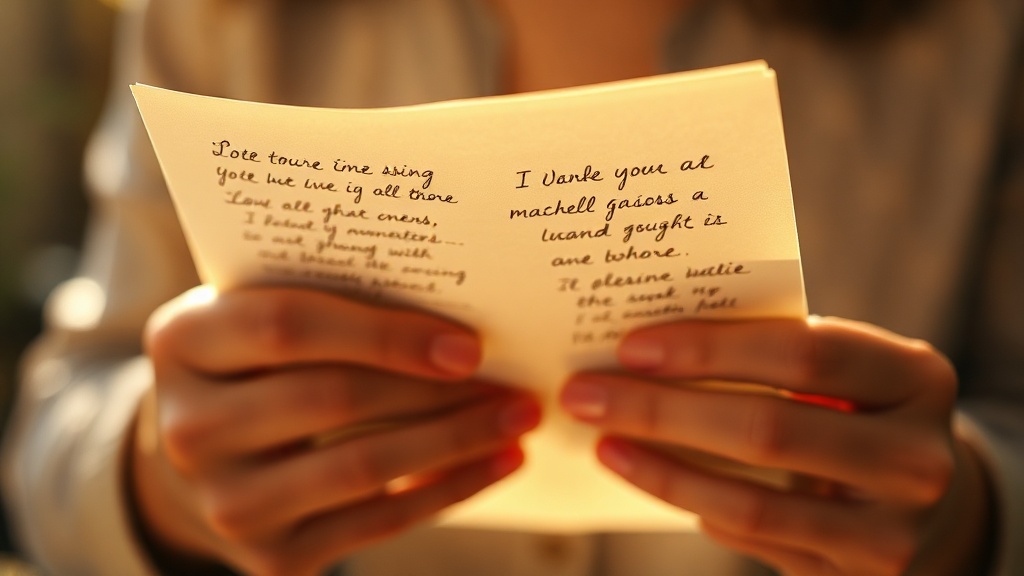
I know something about writing letters to futures I cannot yet see. For years, I have spent my nights alone with glowing screens—pair-programming with AI systems, mapping architectures until 2 or 3 AM, chasing the edge of what technology can make possible. That extreme digital solitude taught me how loneliness and longing can coexist, how a dialogue across time can feel more real than conversations happening in the same room. I started building tools for this exact sensation: the strange, human need to speak to someone who does not exist yet, including the person you are still becoming.
The best way to fight forgetting isn't taking another screenshot; it's setting an alarm for the future. By using EterMail to set a delivery date 5 years from now, you completely free yourself from the anxiety of the present. You write the letter. You seal it. You let time do the rest. Your past self becomes a witness for your future self, proof that you believed in your capacity to change, to want, to survive your own survival.
The letter you send yourself in two years, in five, in ten—it does not need to contain wisdom. It needs to contain permission. The permission to have become greedy for your own life. The permission to have stopped explaining the scar.
The Future That Does Not Include Their Name
You will catch yourself doing it: imagining a Tuesday. The Tuesday has no particular significance. You are in a kitchen that is not theirs, cooking for a hunger that is entirely yours, and someone is laughing in the next room—a laugh you have not yet learned to fear. You are not performing happiness. You are not proving anything to the ghost who still receives your mail. You are simply in a Tuesday, wanting what is in front of you, and the wanting does not hurt.
This is the truest milestone. Not the love we mourn with our permanent sorrow, but the courage to become greedy again, to calculate nothing against the memory of what we lost, to understand that the best honor we can offer the past is a present that is fully inhabited.
The dish arrives. You eat it slowly. It tastes exactly like you.
What is EterMail?
EterMail is a revolutionary time capsule service that allows you to send messages, photos, and videos to the future (up to 30 years). Seal your memories and thoughts today, and they'll be delivered when the time is right.
Time Capsule
Send messages up to 30 years in the future
Rich Media
Text, photos, and videos supported
Secure & Private
Your memories are safely encrypted
EterMail Team
We're the team behind EterMail, dedicated to helping you preserve and share timeless messages with your loved ones. Our mission is to make it easy to express your love, share your wisdom, and create lasting connections that transcend time.
Frequently Asked Questions about Love & Milestones
How do you start wanting things again after a painful breakup?
Why does feeling attracted to someone new feel terrifying after heartbreak?
Is it disloyal to move on from grief and start enjoying life again?
Related Articles

Why I Built EterMail: A Time Capsule for the People I Love Most
I’m a Product Manager who spends all week optimizing for the "immediate now." But getting lost off the grid on a mountain ridge made me realize I had zero infrastructure for the "forever." Here’s why I stopped worrying about conversion rates for a moment and built EterMail—a secure, tamper-proof digital time capsule for the people I love most.

The Body Remembers First: Relearning Touch When Love Has Gone Cold
How do we touch again after anger builds walls? Explore the quiet courage of physical reconciliation—and why the body heals before the heart.

When Grief Becomes Content: Who Owns Our Mourning After the Algorithm Forgets?
When grief becomes viral content, what happens to our mourning when platforms die? Explore the fragile paradox of digital legacies and how to preserve what matters.